As 2025 draws to a close, Media Play News is once again taking a look at the headlines that rocked the home entertainment world.
Stories were selected by the Media Play News editorial staff, and are listed in countdown form.
10. Box Office Blues — The 2025 theatrical market got off to a terrible start, with year-to-date North American ticket sales down 7% to $1.34 billion through March 25, according to Comscore. The March 14-16 weekend tally posted the slowest theatrical start for the month of March in 29 years. Cinema executives began to sound the alarm, blaming shortened windows, but fortunately hits such as A Minecraft Movie rode to the rescue. Still, Netflix co-CEO Ted Sarandos’ disregard for the theatrical window loomed over discussions about the future of theatrical exhibition — and indeed the streamer’s purchase of Warner Bros. Discovery’s assets. Arguably the biggest surprise hit feature of the year — KPop Demon Hunters — didn’t find its audience on the big screen. The Sony Animation-produced film started streaming on Netflix first, before mounting a short and successful theatrical run after it became a pop culture phenomenon. Speaking at a September conference, Sony Pictures CEO Ravi Ahuja admitted that the studio may have traded away a box office blockbuster. “At the time, it made sense [to give Netflix distribution],” Ahuja said. “But now you look at the success and think maybe it could have been theatrical. Obviously, in hindsight, it’s such a big hit.”
9. YouTube Throws Its Weight Around — YouTube got into the sports game in a big way in 2025, exclusively live-streaming the first game of the 2025 NFL season. The game, featuring the Los Angeles Chargers and the Kansas City Chiefs in São Paulo, Brazil, on Sept. 5, was streamed to a worldwide audience — outside North America — on YouTube and YouTube TV. It marked the first exclusive NFL game to be streamed live and for free in its entirety on YouTube. YouTube threw its weight around later in the year tangling with Disney over carriage costs on its OTT pay-TV platform YouTube TV. The dustup left YouTube TV subscribers unable to watch content from Disney networks, including ESPN, ABC, Disney Channel, FX, National Geographic and Freeform — and even extended to Google/YouTube pulling out of the Movies Anywhere digital locker service (it’s scheduled to return). The two companies settled their dispute, but the fracas showed YouTube was ready to go toe-to-toe with traditional media giants. As a coda to YouTube’s shift into the traditional TV space in 2025, the Academy of Motion Picture Arts and Sciences signed a multiyear deal giving YouTube exclusive global rights to the Oscars — a broadcast TV staple — from 2029 to 2033. The agreement kicks off with the 101st Oscar ceremony and includes red carpet coverage, behind-the-scenes footage, Governors Ball access and more content available live and for free to more than 2 billion viewers around the world on YouTube, and to YouTube TV subscribers in the United States.
8. The Break-Up — Before Warner Bros. Discovery attracted numerous deep-pocketed suitors, the plan was to split up the company. WBD was not alone in seeing the advantages of the strategy. Comcast Corp. mounted a separation of it cable television networks and digital platforms from its remaining businesses, creating an independent, publicly traded company named Versant Media Group, taking Fandango and its Fandango at Home transactional digital service with it.
7. Foreign Affairs — U.S. streamers courted partners for international growth as subscriber expansion in the domestic marketplace hit a wall. To attract foreign audiences, streamers such as Disney+, HBO Max and even Netflix, which has prided itself on boosting local productions, looked to partner with, or acquire, local content distributors and producers.
6. FAST Becomes a Fixture — After exponential growth, the free-ad-supported streaming television (FAST) marketplace began to mature into a fixture of the ecosystem. Firmly established as an integral part of the smart-TV lineup, FAST channels became another permanent menu item in the streaming landscape.
Subscribe HERE to the FREE Media Play News Daily Newsletter!
5. License to Bill — Universal animated movies and AMC series were a staple on Netflix in 2025, as content owners began to be less interested in keeping titles on their own services. Late in the year, Netflix secured rights from Amazon MGM to stream a collection of James Bond films (which had been streaming on competitor Prime Video), as well as other MGM features such as Legally Blonde.
4. Subscription Prices Hikes — Netflix kicked off 2025 increasing prices for all U.S. plans, raising the ad-supported plan to $7.99, the standard ad-free plan to $17.99, and the premium plan to $24.99 monthly. The Apple TV+ (renamed Apple TV) subscription streaming service lifted its monthly fee $3 to $12.99, from $9.99, effective Aug. 21 for new consumers, and within 30 days for existing subscribers. HBO Max Oct. 21 disclosed it was raising the monthly subscription price across all tiers, effective immediately for new subscribers, and on Nov. 21 for existing subs. Disney Sept. 23 announced it was raising monthly subscription prices across all streaming platforms for the third time in three years, effective Oct. 21, except for the ad-free Disney+/Hulu bundle, which remains unchanged at $19.99 per month.
3. Sports Goes Streaming — Sports streaming entered the big leagues in 2025, beginning with Fox-owned Tubi becoming the first AVOD platform to live-stream Super Bowl LIX on Feb. 9. Sports streaming is continuing to overtake linear TV with ESPN, Netflix, Peacock, Paramount+, HBO Max and Prime Video embracing the genre. Upwards of 118 million viewers were expected to stream sports monthly by year’s end, up 71% from 2021 — fueled by the NFL and NBA incorporating over-the-top video distribution in new media distribution deals that began in 2025, according to Nielsen. Broadcast still thrives for major events (e.g., the Super Bowl as the most-watched TV show ever), but standalone sports streaming went mainstream in August with Disney’s rollout of ESPN Unlimited, and Fox One offering subscribers access to all its licensed live sports (the two apps later formed a bundle for an even bigger sports draw). Netflix live-streamed three exclusive boxing fight cards in 2025 drawing millions of global viewers. Netflix again spearheaded a streaming-centric NFL Christmas week with two games on Dec. 25, followed by Prime Video’s Thursday Night Football. Peacock and Paramount live-streamed NFL games on Dec. 27. “Instead of competing and conflicting with their linear TV components, streaming platforms like Hulu, Paramount+,and Peacock have really come into their own as key connections to streaming-native consumers,” said Brian Fuhrer, SVP of product strategy and thought leadership at Nielsen.
2. Bundling Up — As consumers were taking a harder look at their growing subscription streaming bills, services stepped up bundling with others. The discounted ESPN Unlimited/Fox One bundle launched Oct. 2. Apple and NBCUniversal announced the launch of the Apple TV and Peacock Bundle, available beginning Oct. 20. NBCUniversal inked a new bundle distribution deal with Amazon that makes the Peacock streaming service accessible via Prime Video Channels and Amazon Fire TV devices, while renewing access to Universal Pictures’ movies available for digital rent or purchase on Prime Video. In return, the Prime Video streaming service continued to be made available to Comcast Xfinity X1 premium television subscribers. Those were just some of the moves in 2025 to bundle up.
1. Consolidation Fever — Media company consolidation took center stage in 2025. The year culminated in Warner Bros. Discovery accepting a bid from Netflix for its studio and streaming assets. Meanwhile, Paramount Skydance refused to let go of its attempt to acquire the whole company, mounting a hostile takeover bid. Paramount Skydance itself had formed just over the summer after Skydance Media closed its acquisition of Paramount Global. On the indie front, New York-based film and television studio and streaming network FilmRise merged with Los Angeles-based Shout! Studios following its acquisition by Oaktree Capital, which renamed the combined company Radial Entertainment.




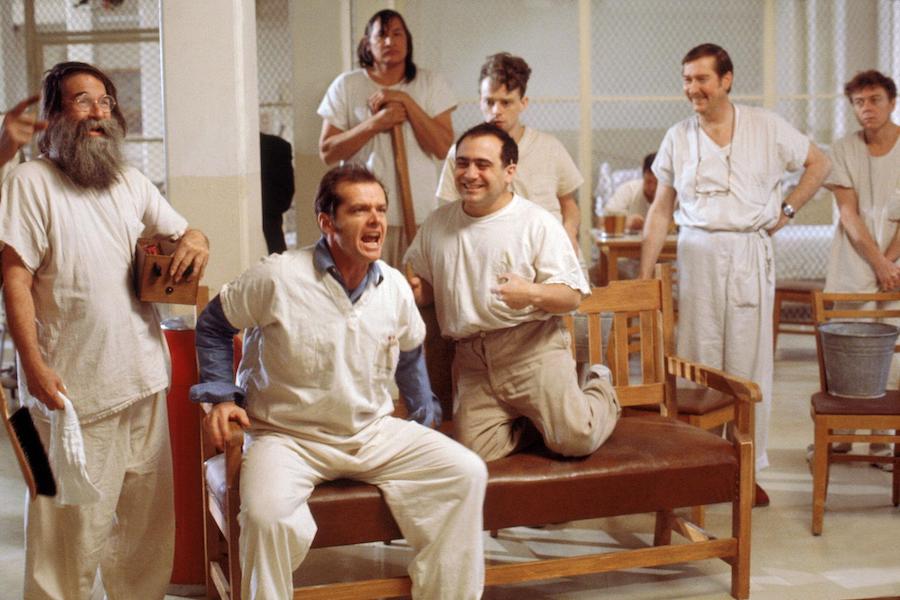
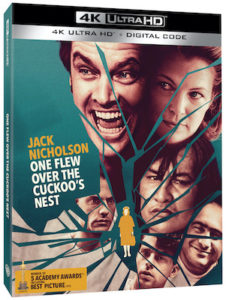 Warner Bros. Discovery Home Entertainment will release the 1975 classic One Flew Over the Cuckoo’s Nest, from filmmaker Miloš Forman and starring Jack Nicholson in his first Academy Award-winning role, for purchase digitally in 4K Ultra HD and on 4K UHD Blu-ray Disc on Nov. 11, timed to the 50th anniversary of the film’s release on Nov. 19, 1975.

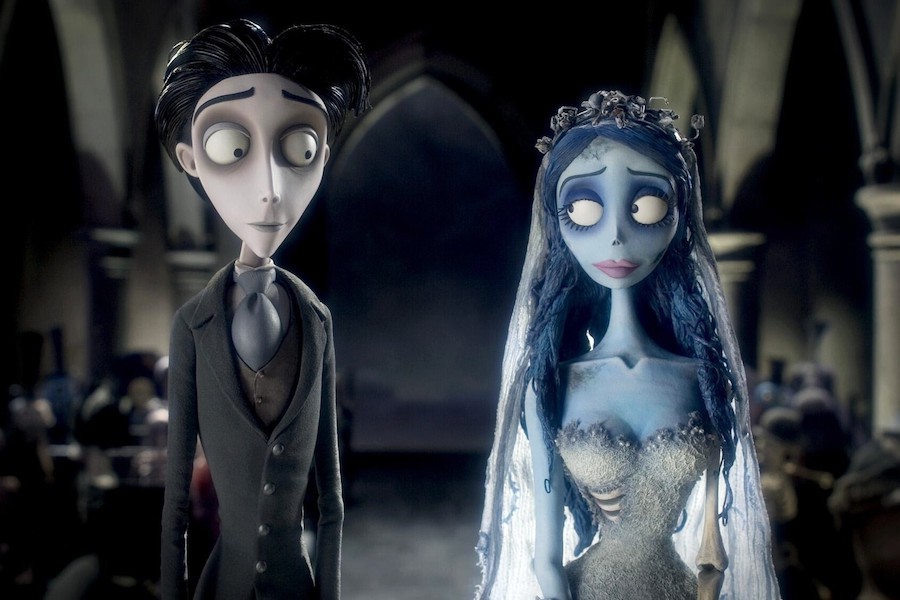
 Returning to the painstaking stop-motion animation he employed with success in The Nightmare Before Christmas, Tim Burton presented Corpse Bride, a legend based on a 19th-century Russian folktale.

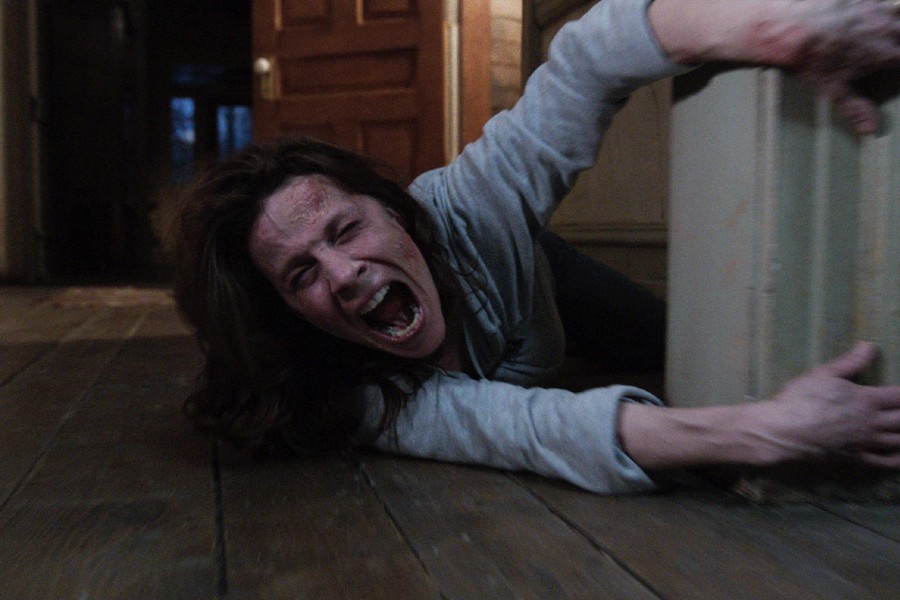

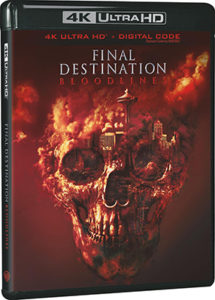 The horror flick Final Destination Bloodlines will be released for premium digital rental and sale on June 17, and on DVD, Blu-ray and 4K Ultra HD disc July 22 from Warner Bros. Discovery Home Entertainment.
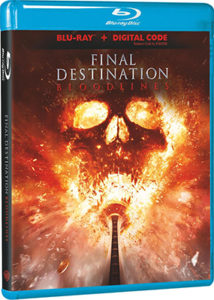 The sixth film in New Line Cinema’s “Final Destination” franchise takes audiences back to the very beginning of Death’s twisted sense of justice. In the film, plagued by a violent recurring nightmare, college student Stefani heads home to track down the one person who might be able to break the cycle — her grandmother Iris — and save her family from the grisly demise that inevitably awaits them all.