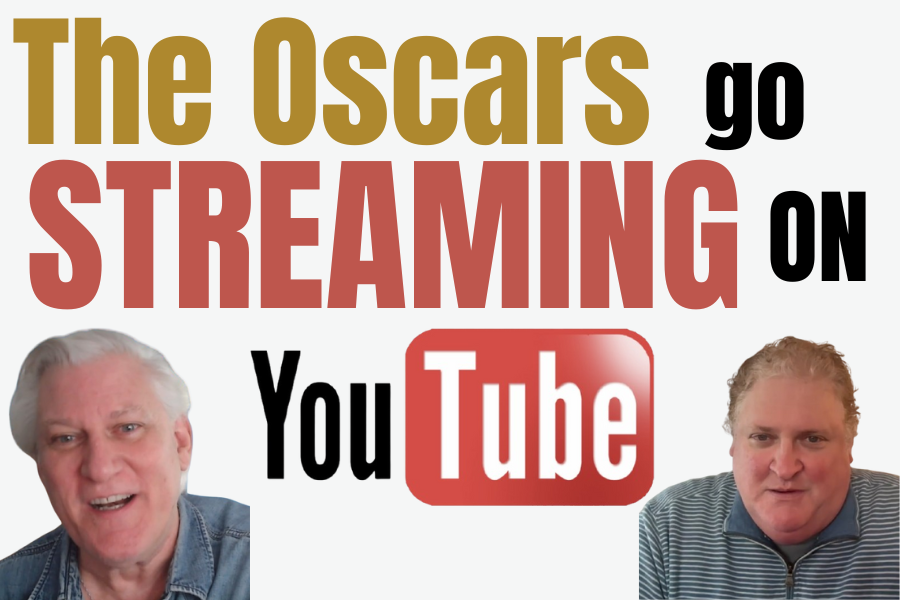
The rise of YouTube as a global force in the connected living room took another big step this week when the Academy of Motion Picture Arts and Sciences signed over exclusive global TV rights to the Alphabet-owned company for four years starting in 2029.
This means the Oscars, which averaged a still-very-impressive 19.7 million viewers on ABC back on March 2, will be available in the U.S. only via virtual pay-TV service YouTube TV and internationally via free-to-use, ad-supported YouTube.
What does this mean for streaming? For broadcast? For viewers? Next TMT’s David Bloom and Daniel Frankel ponder the possibilities here in the second installment in a series of thought-provoking video podcasts brought to you by Media Play News on MPN’s YouTube channel and, soon, audio podcasts on Spotify and other top platforms.
Media Play News is pleased to announce a partnership with Next TMT co-founders Daniel Frankel and David Bloom, who will star in a new series of thought-provoking video podcasts available exclusively on our YouTube channel and, soon, audio podcasts on…
Amazon has reportedly pulled the YouTube app from Fire TV devices – ahead of the Jan. 1, 2018 deadline Google previously imposed on the ecommerce behemoth for its alleged lack of the support for Prime Video on Chromecast. On its…
Google-owned YouTube is reportedly looking to borrow a page from the Amazon Channels playbook with a new platform featuring third-party subscription streaming video services. Amazon launched Channels in 2015 featuring direct access to services such as HBO Now, Dove Channel,…
Google’s subscription streaming video service YouTube Red is expanding service to 100 countries – three years after launching in 2015, YouTube CEO Susan Wojcicki told a technology confab. The $9.99 service is currently available in Australia, Mexico, New Zealand and…