Entertainment in a Brand World

For a century, the relationship between brands and entertainment was simply transactional. We called it “the commercial break.” Brands paid for the privilege of interrupting our stories, hoping that a short intrusion would earn enough loyalty to move a product off the shelf.

That era is dead.

Rob Tonkin

In a world of infinite choice and zero patience, “interruption” has been replaced by “destination.” Hollywood’s gatekeepers no longer hold the exclusive deed to the “greenlight.” The power has shifted to those who hold the capital and the culture. Today, the most ambitious stories aren’t always being told by studios seeking a box office hit; they are also being told by brands seeking a soul. We have moved from Sponsorship to Studio. The future of entertainment is self-liquidating: a world where the “ad” is so valuable that the audience pays to see it, shares it, and lives within it.

Product to Personality

To understand this evolution, we must first redefine the “brand.” In the 20th century, a brand was a product or a service — a static promise of quality. Today, a brand is a living entity, and products have personalities. It can be a corporate giant like Nike, a person like Tom Brady or Pharrell Williams, or a personality like the unhinged Duolingo owl. Even a meme — a fleeting unit of cultural energy — is a brand.

In a brand world, “celebrity” is the marketing department, and the “product” is the ticket to entry. Whether it is a luxury house, a creator on OnlyFans, or a viral joke, a brand is simply a vessel for a story that people want to belong to.

Long-Form Narrative

In the early decades of the 20th century, the airwaves were a quiet, experimental frontier. When radio began to hum to life in living rooms across America, the relationship between commerce and art was a subsidized arrangement. Families would gather around a heavy wooden cabinet, waiting for the vacuum tubes to cast a warm amber glow behind the dial. As the static cleared, a human voice would emerge, but it wasn’t alone.

Procter & Gamble and Colgate-Palmolive didn’t just want to sell soap; they wanted to buy time. They understood that if they provided the capital to keep the “lights on,” they could whisper their messages during the intermission. This was the dawn of the “age of the patron,” a time when the “soap opera” was engineered — not in a writers room in Hollywood, but in the marketing departments of household cleaners. The brand was the silent landlord of the airwaves, happy to stay behind the velvet rope as long as the sponsor’s name was on the marquee.

As the century turned toward the neon glow of the 1980s and ’90s, that polite distance began to dissolve. Brands realized they could no longer just stand next to the story; they had to become a character within it. This was the “age of the guest.” Pepsi-Cola shattered the mold by taking massive leaps, betting millions on icons like Michael Jackson and Britney Spears to create commercials that felt like high-budget music videos rather than sales pitches. This spirit reached a fever pitch when a bag of Reese’s Pieces became a literal plot point in Steven Spielberg’s E.T. Soon, brands weren’t just guest starring in films; they were building their own traveling festivals. We saw the rise of music sponsorship, in which the brand was the curator of the experience. The Vans Warped Tour and the Honda Civic Tour weren’t just logo placements; they were fully integrated cultural movements. Fans didn’t feel “advertised to” — they felt like they were part of a brand-sanctioned tribe. The product became the subculture’s parallel.

By the mid-2000s, Red Bull took this further, proving a brand could become a global media conglomerate. Through Red Bull Media House, they didn’t just sponsor extreme sports; they owned the record labels, the film studios, and the cultural events themselves. When Felix Baumgartner jumped from the edge of space, the world didn’t see an advertisement; they saw a brand-owned intellectual property that generated its own revenue. The marketing had begun to self-liquidate.

In 2026, we have entered the Age of the Architect. High-level entertainment executives have moved from major studios into corporate roles at retail giants like The Gap. They aren’t there to make and buy spots; they are there to treat a clothing line like a media franchise. In this landscape, traditional talent agencies like CAA and WME have reinvented themselves as “venture architects,” building equity-based empires for talent that bypass the traditional studio “greenlight” entirely.

This shift has signaled the death of the traditional brand ambassador. The static, polished celebrity spokesperson of the past has been replaced by the influencer — a cultural translator who doesn’t just “pose” with a product, but integrates it into a raw, daily narrative.

However, the most radical shift in this new world is the move from “polished perfection” to the “friction economy.” Brands have discovered that in a world of infinite content, the only way to pierce the cynicism of the scroll is to create a moment of genuine, jagged discomfort. This is the weaponization of rage-baiting and cringe-baiting. A “brand studio” today might release a sixty-second “prestige mini-drama” in which the protagonist commits a social “crime” — perhaps wearing socks with sandals or eating pizza with a fork. The “rage” ignites the algorithm, as thousands flood the comments to correct the behavior, inadvertently catapulting the video into the feeds of millions. To seal the deal, the brand leans into the “cringe,” releasing content so intentionally awkward or “unhinged” that it bypasses consumers’ defensive filters.

As the public grows weary of algorithmic feeds, the conversation is moving underground into “shadow channels” — platforms like Patreon, Fansly, and OnlyFans. This is the most complex frontier of the brand world. These platforms were pioneered by an explicit, adult industry where “shadow culture” mastered the art of the one-to-one connection. It is a dark and direct economy where pornographic enablers proved that intimacy is the ultimate self-liquidating product.

The infrastructure for this new world is the “digital mall.” Streaming giants like Netflix and Amazon have become the malls — neutral spaces providing the infrastructure for traffic — while FAST Channels (free ad-supported streaming TV) and social media act as the storefronts. While these entities exist on different technical planes, they function as a single economic ecosystem: Streamers provide the “real estate” of attention, while brand-owned channels and social feeds serve as the dedicated “storefronts” where the actual transaction of culture — and commerce — takes place. We see this play out with “anchor tenants” who no longer wait for a network invite. Red Bull TV owns its own 24/7 channel on Roku and Vizio, while Starbucks Studios places its “flagship store” inside the Netflix mall to capture a massive reach. Even in gaming, Nike built Nikeland as a persistent boutique within the virtual mall of Roblox.

In the gaming worlds of Fortnite and Roblox, this cycle completes itself. Players now pay real money for digital “skins” to fit out their avatars in Nike or Balenciaga. The “ad” has become a profit center. The space between a “cringe” laugh and a checkout button has evaporated.

The brands that succeed are those that realize they must act like studios first and marketers second. They must protect the narrative — even the uncomfortable parts — at all costs. The most successful entertainment company of 2030 may not be a legacy studio in Los Angeles; it might be a brand — whether it is a person, a product, or a meme — that finally realized it was a storyteller all along.

Survival of Art

The risk is that the production feels too contrived — where the corporate influence becomes overly obvious, and the art seems like just a checklist. But in today’s friction economy and era of private access, true authenticity isn’t about the perfect pitch; it’s often found in the imperfect moments. When a brand can get past its own “cringe” and find a place in your private subscription feed, it stops feeling like an outsider. Instead, it becomes a meaningful part of the story you tell about yourself.

Subscribe HERE to the FREE Media Play News Daily Newsletter!
How Streamers Can Win Thanksgiving Week: What CTV Promotions Reveal About the Next Big Battle for Attention

Every November, the entertainment industry hits its version of the Super Bowl.

Francesca Pezzoli

Thanksgiving week is no longer just a retail battleground. It’s one of the most valuable media windows of the year, where live sports, blockbuster streaming premieres, and Black Friday subscription deals converge on the biggest screen in the home: television.

According to Samsung smart-TV viewership data, streaming activity jumps 11% during Thanksgiving week compared with average non-holiday weeks. With audiences off work, on the couch, and primed to browse, the Thanksgiving window has become a high-stakes promotional moment for streamers, studios and sports leagues.

To understand what actually worked in 2024 and what will shape a competitive advantage in 2025, Looper Insights analyzed promotional activity on major connected TV platforms, evaluating thousands of placements using its MPV (Media Placement Value) metric, which measures on-screen visibility, and $MPV (Dollar MPV), which assigns an equivalent media dollar value based on placement prominence.

Our “Thanksgiving 2025 Playbook” report reveals a new truth about streaming success during peak windows: Visibility is currency. If audiences can’t see the content title, they can’t click, stream, rent or subscribe.

The NFL Dominated the Screen

Thanksgiving has always belonged to the NFL, but on connected TVs, the league didn’t just win viewership; it won real estate.

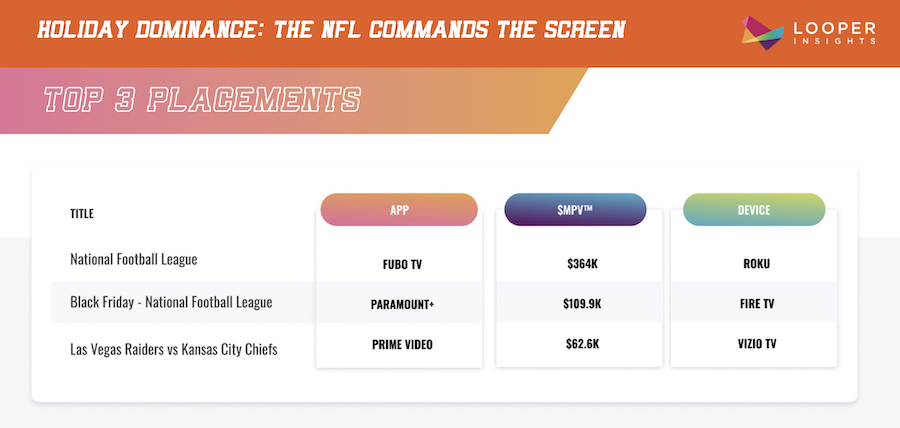
Looper’s analysis shows that the top three NFL promotional placements across Roku, Fire TV and Vizio each achieved the maximum MPV score of 24, ranking them in the top 2% of all U.S. connected-TV promotions during the week.

Those three placements delivered a combined $536,000 in $MPV, led by Fubo TV’s “Turkey Day Football” takeover on Roku.

What made them so effective? Fubo TV’s “Turkey Day Football” on Roku used festive Thanksgiving visuals to spark excitement; Fire TV paired NFL action with other sports in a dynamic Black Friday split-screen offer; and Vizio highlighted the “Raiders vs. Chiefs” matchup with bold rivalry imagery and a strong call to action. Together, these placements show how tailored creative and premium placements drive standout visibility during one of the NFL’s biggest viewing weeks.

And the NFL didn’t stop at the games. Spin-offs such as Madden NFL, NFL Icons and NFL Slimetime carried that momentum into other formats, ranking among the week’s highest-performing secondary promotions. Even during tentpole moments, the league used its IP to stay visible before, during, and after the games.

Black Friday Becomes a Streaming Holiday

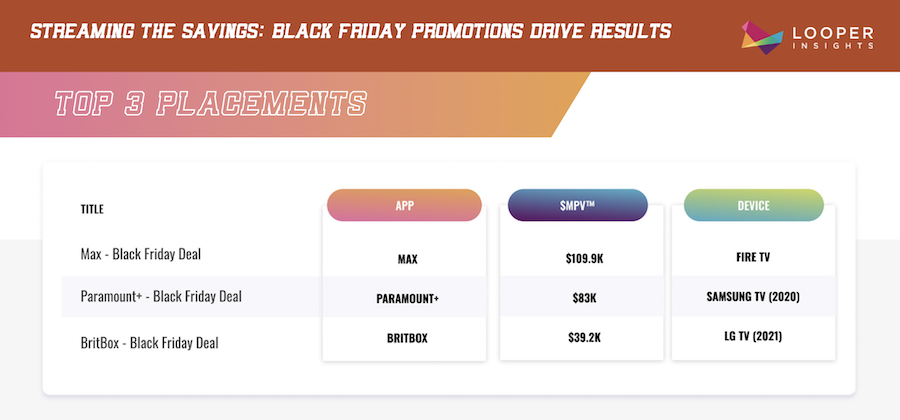
Black Friday has become just as important for streaming services as it is for retail, with major platforms using the holiday to promote subscription deals aggressively. However, the results showed a surprising trend: a longer offer duration is more effective than a deeper price discount. Both Max and Paramount+ had the same subscription price, but Max provided a longer promotional window and ultimately came out on top.

The New Rules of Holiday Streaming

Our analysis surfaced five clear strategies for Thanksgiving 2025:

  • Put your marquee IP in the most premium placement and surround it with supporting content. The properties that dominated Thanksgiving didn’t just appear on the homepage; they owned the hero units, full-width banners, and the top position in rotators. When you anchor your priority title with supporting spin-off content, you extend engagement beyond the main event and multiply visibility hours.
  • Control the platform, control the outcome. Streamers who control the distribution environment (device OS, app store, or app UI) can guarantee top placement when it matters most. Placement is not a creative choice; it’s a competitive advantage.
  • Longer offer windows beat deeper discounts. Our data shows that the duration of a promotional offer drives more conversions than the size of the discount. Viewers are more likely to start a trial when they feel they have time to enjoy the content, not when forced to decide under time pressure.
  • Match the CTA to the device for simplicity to win. On mobile and app-store environments, flexible CTAs like “Subscribe at a discounted price” outperform price-specific messaging because users are already in transaction mode. On CTV home screens, performance improves when CTAs focus on immediate action, such as “Watch Live” or “Stream Now.”
  • Always-on repetition beats a one-day splash. The best-performing campaigns didn’t rely on a single takeover tile; they used multiple recurring placements across rows and carousels to stay persistently visible throughout the week. Frequency drives familiarity, and familiarity drives clicks.


The Bottom Line

Thanksgiving week is no longer just a ratings race. It’s a visibility race.

In a world where more than half of users decide what to watch from the CTV home screen, the titles that win the screen win the week. And as films and franchises such as “Stranger Things,” Wicked: For Good, and multiple NFL matchups will compete for audience attention this Thanksgiving, streamers will need every advantage they can get.

Francesca Pezzoli is VP of marketing at Looper Insights, which specializes in providing granular, real-time analytics and insights on the promotional impact of content on connected TV platforms (CTV). 

Content Overload is in the Eye of the Streamer

A recent guest blogger on this site lamented the time he spent looking for content to stream across his various streaming services. He longed for an app that would simplify content choice back to the days of the weekly TV Guide magazine, when you could count the number of watchable TV channels on one hand.

The blogger needn’t worry. Help is already here. Just a few clicks away.

While Netflix co-CEO Ted Sarandos long ago admitted there was more streaming content available than any one person could consume in a lifetime, finding something watch is not difficult. It’s actually easy thanks to recommendation algorithms and email marketing already employed by most streaming platforms — as well as reading Media Play News.

You just have to act upon the data right in front of you.

I’ve been binging a lot of crime reality lately, including shows such as “48 Hours,” “20/20,” and “Dateline” across Paramount+, Hulu and Peacock.  I’m now inundated with similar programming across Prime Video, Netflix and Max. Streaming one episode of “48 Hours” on my laptop has resulted in an avalanche of similar content available on YouTube.

A downside to those algorithms is often finding the same crimes repackaged with new headlines and a slightly different narrative across a different streaming platform. Nothing worse than realizing you already know who committed the murder!

That said, content alternatives are as plentiful and easy to find as scrolling the TV screen or reading an email. Peacock today sent me the following message: “What do you feel like?” with the following interactive buttons: “I’m looking for drama,” “I want to laugh,” “I want to dive deep,” and “I’m feeling spontaneous”. Upon clicking a button I was directed to a handful of programming I could begin streaming immediately on my laptop or TV screen.

The process took a few seconds.

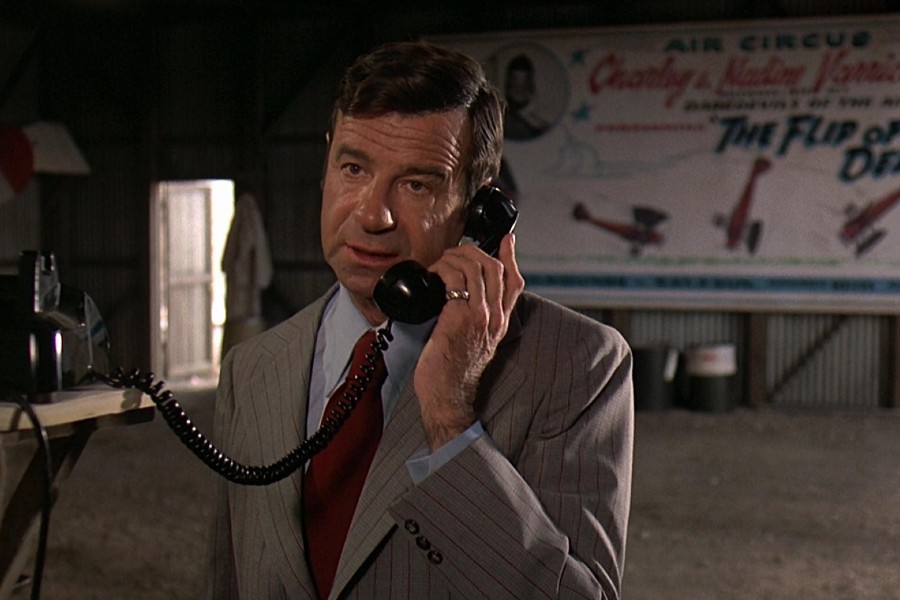
Netflix has launched a sizable selection (30 titles) of 1970s movies it licensed from Universal Pictures, Warner Bros. Pictures and MGM, which include, among others, the 51-year-old actioner Charley Varrick, starring Walter Matthau, Black Belt Jones, the 1973 Blaxploitation film starring Bruce Lee sidekick Jim Kelly, and Oscar-winning One Flew Over the Cuckoo’s Nest with Jack Nicholson.

I chose Charley Varrick (Matthau never disappoints) after about two minutes of scrolling.

Media Play News posts weekly updates from JustWatch.com, Reelgood.com, Samba TV, Nielsen and Netflix showcasing the most-popular movies and TV shows streamed that week. Each chart is like a virtual Top 10 TV Guide.

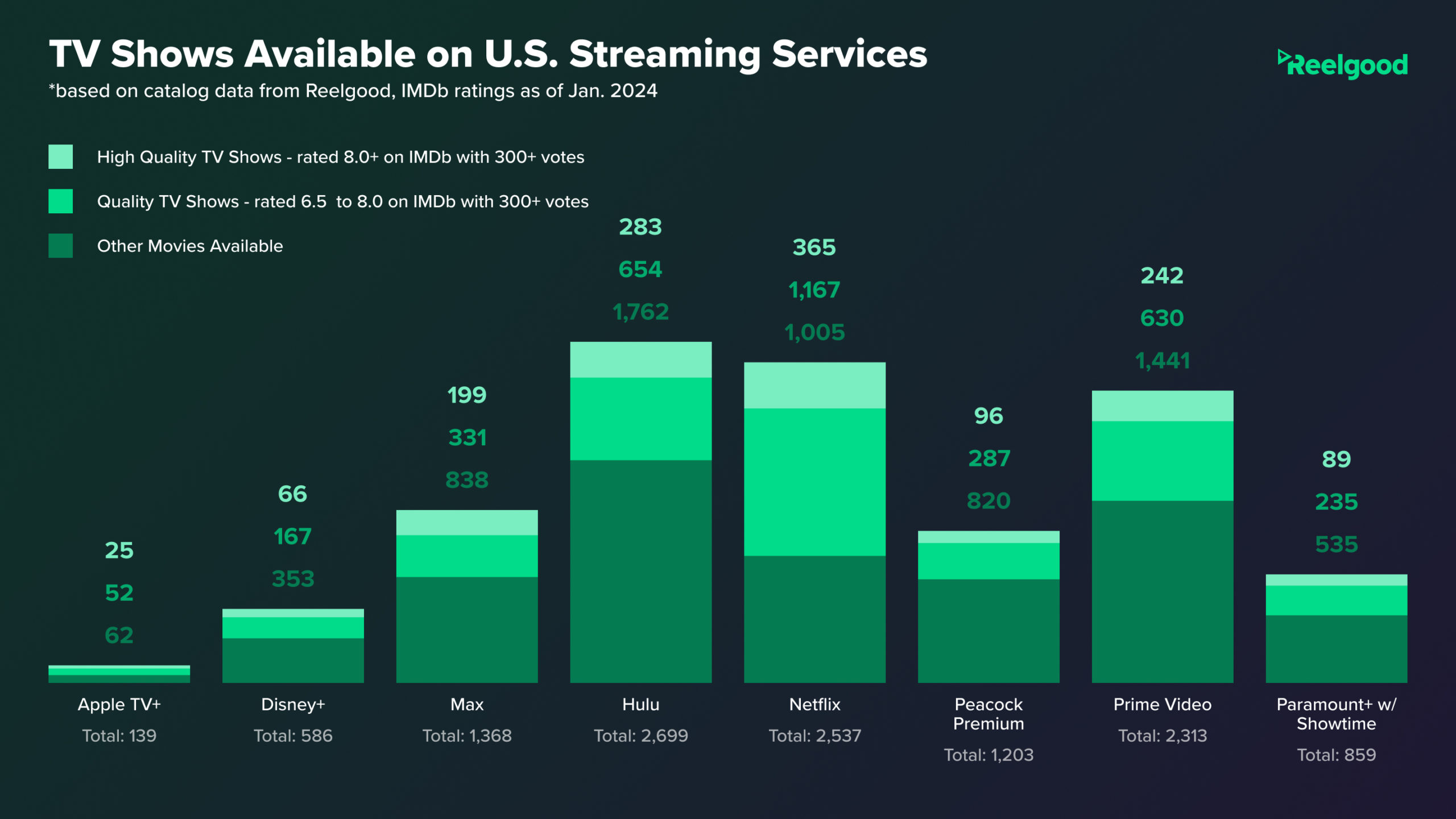
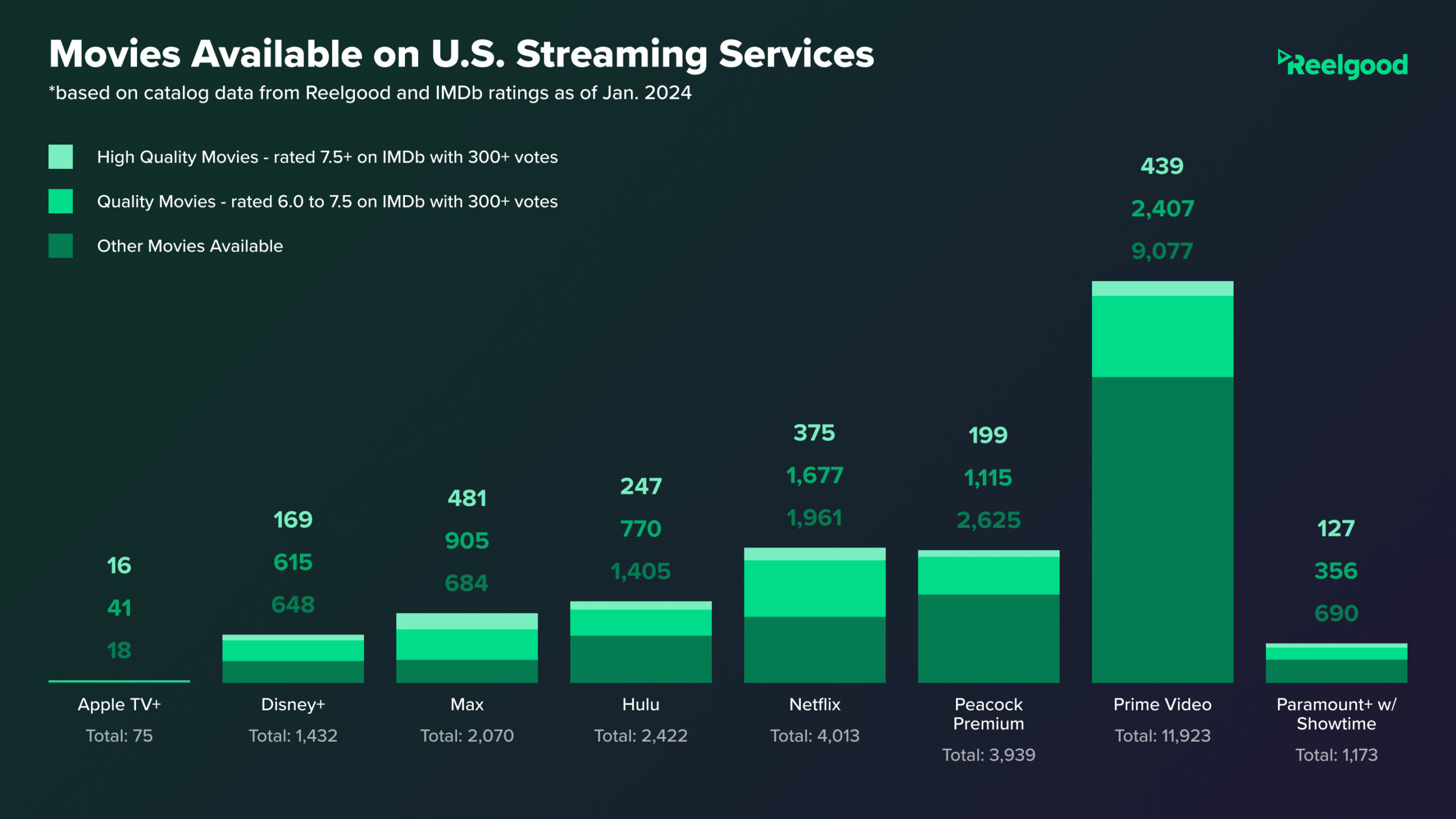
Reelgood today sent separate charts outlining the top “quality” and “high quality” TV shows streaming in January based on IMDb.com recommendations. It also charted the number of movies and TV shows each streaming service offers per dollar spent on a subscription. Hulu, Netflix and Prime Video sequentially offer the most TV content for money spent on a subscription. Prime Video offers the most movies.

Today’s “TV Guide” may be supersized algorithms, but content selection really just revolves around making a decision and clicking a button.

Ending a Relationship

It had been a long time coming.

Cable TV had been a big part of our lives for decades, a constant entertainment companion, but being together so much during the pandemic took a toll on the relationship. Suddenly, those ever-expanding commercial breaks seemed endless after watching ad-free streaming services such as Netflix, Disney+ and Amazon Prime. Even Hulu, which we watched with ads, served up a more palatable break — and conveniently offered a little countdown to tell us when it would be over.

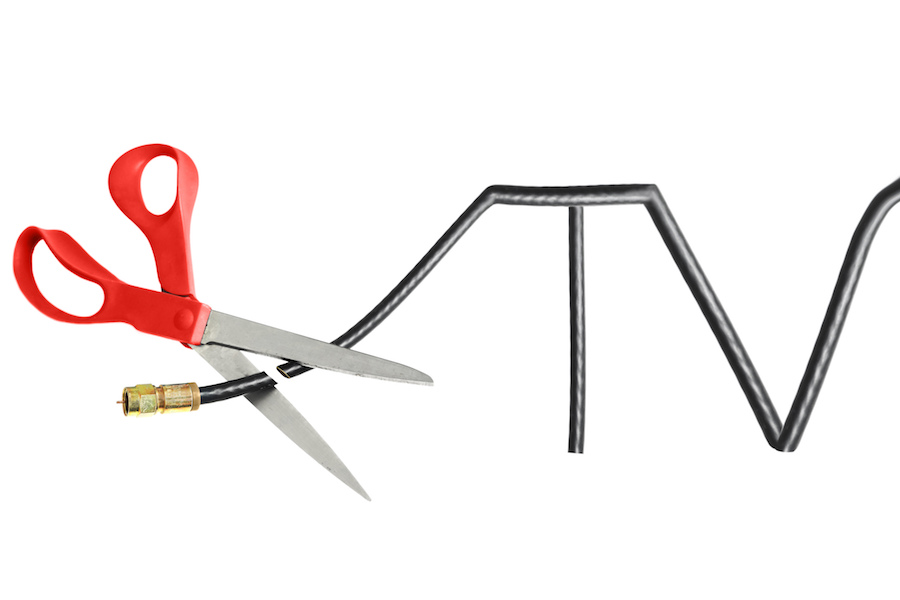
We picked up YouTube TV for live programming, and that was it. The cable relationship was over. We cut the cord.

Apparently, we are not alone. A Roku survey found one in three U.S. households are cord cutters, and many have decided to make the change in recent months, citing the pandemic, the abundance of free AVOD services, and lack of live sports, among other factors.

Aside from the learning curve on how to work the remote to get to the channel or program I want, it’s been a smooth divorce. Kicking cable out also gave us more space. We gained some shelves by ditching the boxes.

Subscribe HERE to the FREE Media Play News Daily Newsletter!

So far, I don’t miss the old companion. I haven’t found a program or channel that I previously had on cable that I can’t find or approximate on our new streaming combo. Sure, I don’t have the convenient clock on the box to see the time. It takes a little more effort to figure out what I want to watch among all the new choices, but, honestly, I don’t miss cable.

It was the growing relationship with our SVOD services, the new-and-improved version of live TV on YouTube TV and the cable bill’s increasing drain on our finances that drew us away.

When we announced the decision to end it, my daughters looked up from their phones and sarcastically said, “Oh, no! We watch so much cable.”

Goodbye old friend.

Trump Wades Into ‘Roseanne’ Debacle

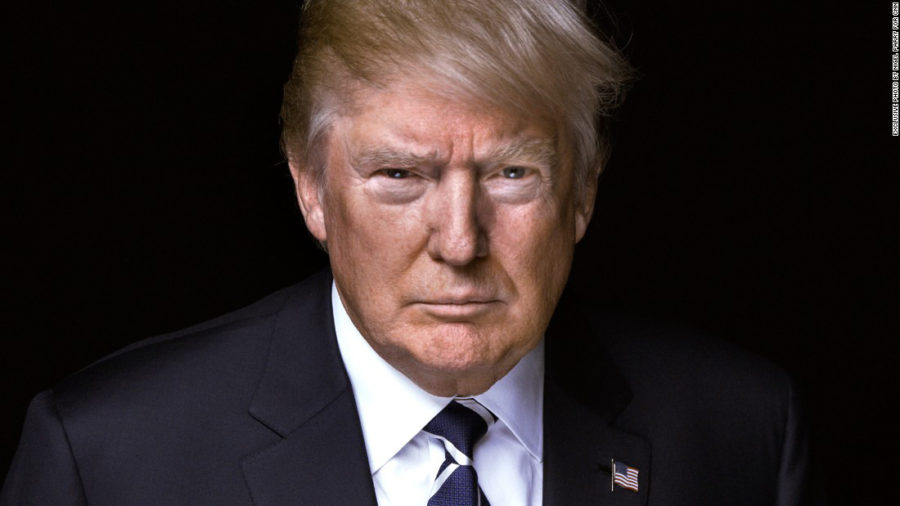
Leave it to President Donald Trump to make Roseanne Barr’s May 29 racist tweet about a former Obama Administration official about him — and turn it into a social media attack on Bob Iger, CEO of The Walt Disney Co.

Barr’s comments resulted in widespread condemnation in the media (including from Fox News rightwing firebrand Sean Hannity) and cancellation by Disney-owned ABC of her top-rated “Roseanne” TV show reboot.

While Barr has apologized, she also blamed the incident on her use of insomnia medication Ambien, to which the drug’s manufacturer responded that racism is not a known side effect.

Iger, who called cancellation of the “Roseanne” show the “right thing to do,” reportedly reached out to Valarie Jarret, the former senior advisor to Obama at the center of Barr’s racist tweet.

That was enough to irk Trump, who first took to social media May 30 asking for his own apology — from Iger.

“Bob Iger of ABC called Valerie Jarrett to let her know that “ABC does not tolerate comments like those” made by Roseanne Barr. Gee, he never called President Donald J. Trump to apologize for the HORRIBLE statements made and said about me on ABC. Maybe I just didn’t get the call?” Trump tweeted.

The same day, Trump’s press enabler, Sarah Huckabee Sanders, called out ABC and Disney-owned ESPN on a list of alleged political wrongs originated by the media giant’s personalities.

Trump was referring to an “ABC News” report last year by Brian Ross that alleged former national security advisor Michael Flynn had been instructed by Trump to contact Russian sources prior to the 2016 election. That turned out to be false. Flynn had been in contact with the Russians on his own accord, which he later lied about to Congress and was subsequently fired for by Trump.

Ross apologized for the inaccurate report and was suspended.

But to Trump, who remains in the crosshairs of a Russian collusion investigation headed by former FBI leader Robert Mueller — with Flynn cooperating as part of a plea agreement — the grievance remains personal.

“Iger, where is my call of apology? You and ABC have offended millions of people, and they demand a response. How is Brian Ross doing? He tanked the market with an ABC lie, yet no apology. Double Standard!” Trump tweeted May 31.

Iger, who seeks to acquire 20th Century Fox Film in a deal that would require regulatory approval, has not responded. Nor should he.

From Around the Web