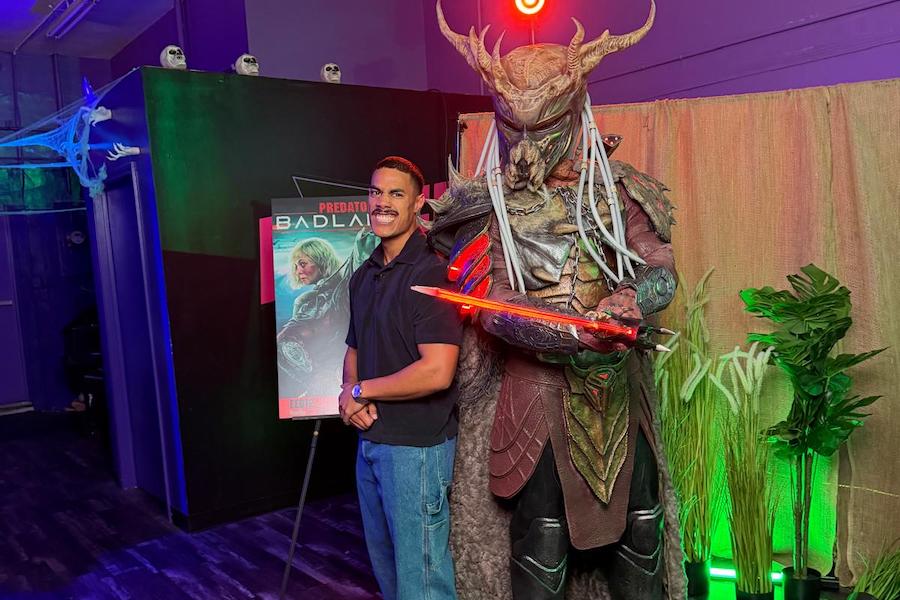
This month, “Predator” fans enjoyed a hunt of their own, as they visited local Los Angeles horror venues — Slasher World, Horror Vibes Coffee and Killer Fitness — for photo opps, custom beverages, and a Yautja-themed workout during the week leading up to the Feb. 12 Hulu streaming and Feb. 17 DVD, Blu-ray and 4K Ultra HD disc release of Predator: Badlands.
Each venue gave away movie merchandise, along with pairs of tickets to an exclusive screening event featuring Predator: Killer of Killers and Predator: Badlands on Feb. 11, with a “Father Predator” meet and greet, followed by a Q&A with director Dan Trachtenberg, “Dek” actor Dimitrius Schuster-Koloamatangi, and special FX supervisor Alec Gillis.
For a century, the relationship between brands and entertainment was simply transactional. We called it “the commercial break.” Brands paid for the privilege of interrupting our stories, hoping that a short intrusion would earn enough loyalty to move a product off the shelf.
That era is dead.
Rob Tonkin
In a world of infinite choice and zero patience, “interruption” has been replaced by “destination.” Hollywood’s gatekeepers no longer hold the exclusive deed to the “greenlight.” The power has shifted to those who hold the capital and the culture. Today, the most ambitious stories aren’t always being told by studios seeking a box office hit; they are also being told by brands seeking a soul. We have moved from Sponsorship to Studio. The future of entertainment is self-liquidating: a world where the “ad” is so valuable that the audience pays to see it, shares it, and lives within it.
Product to Personality
To understand this evolution, we must first redefine the “brand.” In the 20th century, a brand was a product or a service — a static promise of quality. Today, a brand is a living entity, and products have personalities. It can be a corporate giant like Nike, a person like Tom Brady or Pharrell Williams, or a personality like the unhinged Duolingo owl. Even a meme — a fleeting unit of cultural energy — is a brand.
In a brand world, “celebrity” is the marketing department, and the “product” is the ticket to entry. Whether it is a luxury house, a creator on OnlyFans, or a viral joke, a brand is simply a vessel for a story that people want to belong to.
Long-Form Narrative
In the early decades of the 20th century, the airwaves were a quiet, experimental frontier. When radio began to hum to life in living rooms across America, the relationship between commerce and art was a subsidized arrangement. Families would gather around a heavy wooden cabinet, waiting for the vacuum tubes to cast a warm amber glow behind the dial. As the static cleared, a human voice would emerge, but it wasn’t alone.
Procter & Gamble and Colgate-Palmolive didn’t just want to sell soap; they wanted to buy time. They understood that if they provided the capital to keep the “lights on,” they could whisper their messages during the intermission. This was the dawn of the “age of the patron,” a time when the “soap opera” was engineered — not in a writers room in Hollywood, but in the marketing departments of household cleaners. The brand was the silent landlord of the airwaves, happy to stay behind the velvet rope as long as the sponsor’s name was on the marquee.
As the century turned toward the neon glow of the 1980s and ’90s, that polite distance began to dissolve. Brands realized they could no longer just stand next to the story; they had to become a character within it. This was the “age of the guest.” Pepsi-Cola shattered the mold by taking massive leaps, betting millions on icons like Michael Jackson and Britney Spears to create commercials that felt like high-budget music videos rather than sales pitches. This spirit reached a fever pitch when a bag of Reese’s Pieces became a literal plot point in Steven Spielberg’s E.T. Soon, brands weren’t just guest starring in films; they were building their own traveling festivals. We saw the rise of music sponsorship, in which the brand was the curator of the experience. The Vans Warped Tour and the Honda Civic Tour weren’t just logo placements; they were fully integrated cultural movements. Fans didn’t feel “advertised to” — they felt like they were part of a brand-sanctioned tribe. The product became the subculture’s parallel.
By the mid-2000s, Red Bull took this further, proving a brand could become a global media conglomerate. Through Red Bull Media House, they didn’t just sponsor extreme sports; they owned the record labels, the film studios, and the cultural events themselves. When Felix Baumgartner jumped from the edge of space, the world didn’t see an advertisement; they saw a brand-owned intellectual property that generated its own revenue. The marketing had begun to self-liquidate.
In 2026, we have entered the Age of the Architect. High-level entertainment executives have moved from major studios into corporate roles at retail giants like The Gap. They aren’t there to make and buy spots; they are there to treat a clothing line like a media franchise. In this landscape, traditional talent agencies like CAA and WME have reinvented themselves as “venture architects,” building equity-based empires for talent that bypass the traditional studio “greenlight” entirely.
This shift has signaled the death of the traditional brand ambassador. The static, polished celebrity spokesperson of the past has been replaced by the influencer — a cultural translator who doesn’t just “pose” with a product, but integrates it into a raw, daily narrative.
However, the most radical shift in this new world is the move from “polished perfection” to the “friction economy.” Brands have discovered that in a world of infinite content, the only way to pierce the cynicism of the scroll is to create a moment of genuine, jagged discomfort. This is the weaponization of rage-baiting and cringe-baiting. A “brand studio” today might release a sixty-second “prestige mini-drama” in which the protagonist commits a social “crime” — perhaps wearing socks with sandals or eating pizza with a fork. The “rage” ignites the algorithm, as thousands flood the comments to correct the behavior, inadvertently catapulting the video into the feeds of millions. To seal the deal, the brand leans into the “cringe,” releasing content so intentionally awkward or “unhinged” that it bypasses consumers’ defensive filters.
As the public grows weary of algorithmic feeds, the conversation is moving underground into “shadow channels” — platforms like Patreon, Fansly, and OnlyFans. This is the most complex frontier of the brand world. These platforms were pioneered by an explicit, adult industry where “shadow culture” mastered the art of the one-to-one connection. It is a dark and direct economy where pornographic enablers proved that intimacy is the ultimate self-liquidating product.
The infrastructure for this new world is the “digital mall.” Streaming giants like Netflix and Amazon have become the malls — neutral spaces providing the infrastructure for traffic — while FAST Channels (free ad-supported streaming TV) and social media act as the storefronts. While these entities exist on different technical planes, they function as a single economic ecosystem: Streamers provide the “real estate” of attention, while brand-owned channels and social feeds serve as the dedicated “storefronts” where the actual transaction of culture — and commerce — takes place. We see this play out with “anchor tenants” who no longer wait for a network invite. Red Bull TV owns its own 24/7 channel on Roku and Vizio, while Starbucks Studios places its “flagship store” inside the Netflix mall to capture a massive reach. Even in gaming, Nike built Nikeland as a persistent boutique within the virtual mall of Roblox.
In the gaming worlds of Fortnite and Roblox, this cycle completes itself. Players now pay real money for digital “skins” to fit out their avatars in Nike or Balenciaga. The “ad” has become a profit center. The space between a “cringe” laugh and a checkout button has evaporated.
The brands that succeed are those that realize they must act like studios first and marketers second. They must protect the narrative — even the uncomfortable parts — at all costs. The most successful entertainment company of 2030 may not be a legacy studio in Los Angeles; it might be a brand — whether it is a person, a product, or a meme — that finally realized it was a storyteller all along.
Survival of Art
The risk is that the production feels too contrived — where the corporate influence becomes overly obvious, and the art seems like just a checklist. But in today’s friction economy and era of private access, true authenticity isn’t about the perfect pitch; it’s often found in the imperfect moments. When a brand can get past its own “cringe” and find a place in your private subscription feed, it stops feeling like an outsider. Instead, it becomes a meaningful part of the story you tell about yourself.
The Oscar-nominated film One Battle After Another, streaming on HBO Max, and Prime Video topped Looper Insights’ Streamer of the Month Report charts for January.
The report breaks down the top 10 entertainment streaming apps and titles promoted across CTV platforms in the United States and is ranked using Looper’s proprietary Dollar Media Placement Value ($MPV) metric.
Warner Bros. Pictures’ award-lauded One Battle After Another, which rose from No. 5 on the title chart the previous month, started streaming on HBO Max Dec. 19. Written, directed and produced by Paul Thomas Anderson, the dark comedy actioner follows washed-up revolutionary Bob (Leonardo DiCaprio), who exists in a state of stoned paranoia, surviving off-grid with his spirited, self-reliant daughter Willa. When his evil nemesis (Sean Penn) resurfaces after 16 years and she goes missing, the former radical scrambles to find her, father and daughter both battling the consequences of his past.
Top apps by $MPV were Prime Video, which led with $162.9 million, followed by Tubi ($131.7 million) and The Roku Channel ($120.6 million).
Coming in at No. 2 on the title chart was Universal’s Oscar-nominated dark comedy Bugonia, which started streaming on Peacock Dec. 26. The film follows two conspiracy obsessed young men who kidnap the high-powered CEO of a major company, convinced that she is an alien intent on destroying planet Earth. The cast includes Emma Stone, Jesse Plemons, Aidan Delbis, Stavros Halkias and Alicia Silverstone.
Landing at No. 3 on the title chart was the medical drama “The Pitt,” season two of which started streaming on HBO Max Jan. 8. It stars Noah Wyle as Dr. Michael “Robby” Robinavitch, the chief attendant in Pittsburgh Trauma Medical Hospital’s emergency room. The series follows Robby’s team during a 15-hour shift in the ER, with each episode depicting one hour.
At No. 4 on the chart was the competition reality series “The Traitors,” season four of which began streaming on Peacock Jan. 8. In the series, “faithful” reality TV veteran contestants must root out the “traitors” among them to win the $250,000 grand prize.
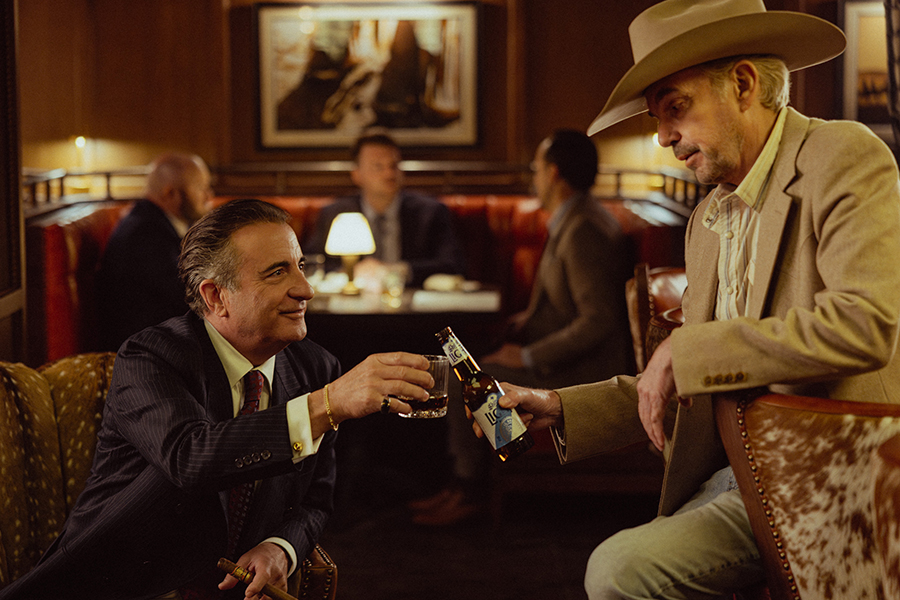
“Landman,” season two of which started streaming on Paramount+ Nov. 16, fell from the top spot on the title chart the previous month to No. 5 in January. The Taylor Sheridan oil industry series stars Billy Bob Thornton, Ali Larter, Demi Moore, Sam Elliott and Andy Garcia, among others. Season two finds Tommy Norris (Thornton) facing mounting pressure from employer M-Tex Oil, Cami Miller (Moore) and the shadow of his kin.
Falling three spots to No. 6 on the title chart was “Fallout,” season two of which debuted on Prime Video Dec. 16. The post-apocalyptic series is based on the role-playing video game franchise.
Landing at No. 7 on the title chart was “Heated Rivalry,” which debuted Nov. 28 on HBO Max. The series chronicles the story of rival hockey players Shane Hollander (Hudson Williams) and Ilya Rozanov (Connor Storrie), two of the biggest stars in Major League Hockey. What begins as a secret fling between two fresh-faced rookies evolves into a years-long journey of love, denial and self-discovery.
Coming in at No. 8 on the title chart was Warner Bros.’ Oscar-nominated feature Sinners, which began streaming on HBO Max way back on July 4. In the film, trying to leave their troubled lives behind, twin brothers (both played by Michael B. Jordan) return to their hometown to start again, only to discover that an even greater evil is waiting to welcome them back.
Falling five spots from its December position to No. 9 on the title chart in January was “It: Welcome to Derry,” which debuted on HBO Max on Oct. 26. The series is set in the world of Stephen King’s “It” horror universe. It’s based on King’s novel and expands the vision established by filmmaker Andy Muschietti in the feature films It: Chapter One and It: Chapter Two.
Falling eight spots to No. 10 on the title chart was “Pluribus,” which debuted on Apple TV Nov. 7. The sci-fi drama from writer and director Vince Gilligan, the creator of “Breaking Bad” and co-creator of “Better Call Saul,” stars “Better Call Saul” alum Rhea Seehorn as a woman fighting to retain her individuality when an alien virus turns the rest of humanity into a hive mind.
Paramount+’s “Landman” and Prime Video topped Looper Insights’ Streamer of the Month Report charts for December.
The report breaks down the top 10 entertainment streaming apps and titles promoted across CTV platforms in the United States and is ranked using Looper’s proprietary Dollar Media Placement Value ($MPV) metric.
“Landman,” season two of which started streaming on Paramount+ Nov. 16, rose from No. 5 on the title chart the previous month. The Taylor Sheridan oil industry series stars Billy Bob Thornton, Ali Larter, Demi Moore, Sam Elliott and Andy Garcia, among others. Season two finds Tommy Norris (Thornton) facing mounting pressure from employer M-Tex Oil, Cami Miller (Moore) and the shadow of his kin.
Top apps by $MPV were Prime Video, which led with $138.4 million, followed by Paramount+ ($105.5 million) and HBO Max ($98 million).
Landing at No. 2 on the title chart was “Pluribus,” which debuted on Apple TV Nov. 7. The sci-fi drama from writer and director Vince Gilligan, the creator of “Breaking Bad” and co-creator of “Better Call Saul,” stars “Better Call Saul” alum Rhea Seehorn as a woman fighting to retain her individuality when an alien virus turns the rest of humanity into a hive mind.
Debuting at No. 3 on the title chart was “Fallout,” season two of which debuted on Prime Video Dec. 16. The post-apocalyptic series is based on the role-playing video game franchise.
Falling from No. 1 in November to No. 4 on the title chart in December was “It: Welcome to Derry,” which debuted on HBO and HBO Max on Oct. 26. The series is set in the world of Stephen King’s “It” horror universe. It’s based on King’s novel and expands the vision established by filmmaker Andy Muschietti in the feature films It: Chapter One and It: Chapter Two.
Landing at No. 5 on the title chart was Warner Bros. Pictures’ Golden Globe-winning One Battle After Another, which starting streaming on HBO Max Dec. 19. Written, directed and produced by Paul Thomas Anderson, the dark comedy actioner follows washed-up revolutionary Bob (Leonardo DiCaprio), who exists in a state of stoned paranoia, surviving off-grid with his spirited, self-reliant daughter Willa. When his evil nemesis (Sean Penn) resurfaces after 16 years and she goes missing, the former radical scrambles to find her, father and daughter both battling the consequences of his past. The film picked up Globes for Best Motion Picture — Musical or Comedy, Best Performance by a Female Actor in a Supporting Role for Teyana Taylor, and Best Director — Motion Picture and Best Screenplay — Motion Picture for Anderson.
Coming in at no. 6 on the title chart was the Tom Cruise actioner Mission: Impossible — The Final Reckoning, which debuted on Paramount+ Nov. 25. The film is the eighth installment in the “Mission: Impossible” franchise with Cruise returning as IMF team leader Ethan Hunt. In the film, Hunt and the Impossible Mission Force (IMF) continue their search for the Entity, a terroristic AI that has infiltrated intelligence networks across the globe.
Landing at No. 7 on the title chart was “Percy Jackson and the Olympians,” season two of which started streaming on Disney+ Dec. 10. Based on The Sea of Monsters, the second book in Rick Riordan’s best-selling series, the new season features new monsters, action-packed mayhem and higher stakes as the young demigods embark on a perilous quest to save Camp Half-Blood and their friend Grover.
Falling from No. 6 in November to No. 8 on the title chart was “Tulsa King.” Season three of the mob series starring Sylvester Stallone started streaming on Paramount+ Sept. 21 and wrapped up Nov. 23.
Landing at No. 9 on the title chart was the Christmas comedy Oh. What. Fun., which premiered on Prime Video Dec. 3. Starring Michelle Pfeiffer and Felicity Jones, Oh. What. Fun. tells the story of mom Claire Clauster (Pfeiffer), whose efforts to make Christmas special for her family each year go unnoticed until she goes missing, setting off a chaotic search by her family.
Falling from No. 7 in November to No. 10 on the title chart was the CBS series “Tracker,” season three of which debuted Oct. 19 and streams on Paramount+. It follows a skilled survivalist and tracker who earns his living by assisting law enforcement and private citizens in exchange for reward money.
Recent headlines about Warner Bros. Discovery, from the accepted deal with Netflix to a hostile bid by Paramount, have focused on libraries, IP valuation, and the future of individual services. But here’s the question almost no one is asking: if Netflix controls the IP, does that automatically translate to more visibility for Warner Bros. titles across the CTV home screen?
Francesca Pezzoli
Underneath the deal speculation lies a more consequential battle: who owns the digital shelf where that content is merchandised in the CTV ecosystem?
In a linear world, owning a studio meant owning a catalog, and distribution followed a relatively predictable path. In today’s CTV-dominated landscape, control is far more fragmented and arguably more valuable. With streaming, what matters is not simply what you own, but who controls the “front door” of discovery across devices, platforms, and operating systems.
The New Home Screen Power Brokers
Smart TV platforms and connected TV operating systems, including Roku, Fire TV, Google TV, Samsung and LG, now control access to audiences at the moment of choice. They determine which title is promoted, where it appears on the home screen, which carousel it surfaces in, and which franchises receive premium placement.
Owning the IP is one aspect; managing visibility is an entirely different challenge. Owning HBO doesn’t automatically translate into owning the HBO slot on Samsung. Even if Netflix were to acquire Warner Bros. Discovery, the visibility of their titles on Samsung devices or Fire TV homepages would still need to be negotiated inside the merchandising economics of those platforms.
The High Stakes of Premium Real Estate
Premium placements on home screens are already dominated by a small number of global players. Independent CTV visibility data shows that week after week, the same companies capture a disproportionate share of high-impact merchandising slots. This imbalance is likely to grow, not shrink, as consolidation increases.
In that context, the Netflix-WBD deal is about more than bringing beloved franchises under one roof. It’s about controlling more opportunities to surface that content across third-party operating systems, especially as those platforms continue to build their own advertising, promotion and merchandising businesses.
Why This Matters
Even the biggest studios today do not control their promotional destiny across the CTV ecosystem. They depend on platform relations teams, merchandising spend, and retail-style negotiations to secure shelf space.
And that’s what makes the WBD case so interesting: studio ownership doesn’t guarantee on-screen visibility. Visibility is rented, not owned. No matter who controls the IP, the studio still has to compete for placement inside the merchandising architecture of Roku, Samsung, LG and others.
The Industry Question No One Is Asking Yet
As consolidation accelerates, the strategic question becomes: If content ownership shifts, does merchandising power shift with it? The short answer is: not automatically.
Owning a studio doesn’t necessarily mean owning the most valuable promotional real estate in the ecosystem. That belongs to the devices, the OS layer, and the merchandising engines that shape what audiences see first.
If WBD is acquired, the fundamental challenge remains the same: what percentage of the CTV shelf do they really own and at what cost?
If the future of streaming is being decided on the home screen, visibility is the currency everyone now has to measure. And as M&A reshapes the competitive landscape, the winners will be the companies that understand not just the value of their IP, but also its discoverability across the devices audiences use every day.
Prime Video and HBO Max’s Stephen King series “It: Welcome to Derry” topped Looper Insights’ Streamer of the Month Report charts for November.
The report breaks down the top 10 entertainment streaming apps and titles promoted across CTV platforms in the United States and is ranked using Looper’s proprietary Dollar Media Placement Value ($MPV) metric.
“It: Welcome to Derry,” which debuted on HBO and HBO Max on Oct. 26, is set in the world of Stephen King’s “It” horror universe. It’s based on King’s novel and expands the vision established by filmmaker Andy Muschietti in the feature films It: Chapter One and It: Chapter Two.
Top apps by $MPV were Prime Video, which led with $125 million, followed by Disney+ ($104.6 million) and Paramount+ ($84.6 million).
Landing at No. 2 on the title chart was the 1990 holiday classic feature Home Alone, streaming on Disney+. The film, starring Macauley Culkin as a kid left at home during the holidays, is being celebrated for its 35th anniversary.
Debuting at No. 3 on the title chart was Marvel Studios’ The Fantastic Four: First Steps, which started streaming on Disney+ Nov. 5. It reboots the franchise featuring the classic Marvel superhero team, as they defend Earth against Galactus, an existential threat to humanity who seeks to devour the planet.
Coming in at No. 4 on the title chart was the thriller series “All Her Fault,” which started streaming on Peacock Nov. 6. In the series, Marissa Irvine (Sarah Snook) arrives to collect her young son Milo from his first playdate, but the woman who answers the door isn’t a mother she recognizes. She claims she doesn’t have Milo and has never heard of him.
Landing at No. 5 on the title chart was “Landman,” season two of which started streaming on Paramount+ Nov. 16. The Taylor Sheridan oil industry series stars Billy Bob Thornton, Ali Larter, Demi Moore, Sam Elliott, Jacob Lofland, Michelle Randolph, Paulina Chávez, Kayla Wallace, Mark Collie, James Jordan and Colm Feore. Season two finds Tommy Norris (Thornton) facing mounting pressure from employer M-Tex Oil, Cami Miller (Moore) and the shadow of his kin.
Falling from No. 4 in October to No. 6 on the title chart was “Tulsa King.” Season three of the mob series starring Sylvester Stallone started streaming on Paramount+ Sept. 21 and wrapped up Nov. 23.
Coming in at No. 7 on the title chart was the CBS series “Tracker,” season three of which debuted Oct. 19 and streams on Paramount+. It follows a skilled survivalist and tracker who earns his living by assisting law enforcement and private citizens in exchange for reward money.
Landing at No. 8 on the title chart was the New Line Cinema feature Weapons, which started streaming on HBO Max Oct. 24. From Zach Cregger, the mind behind Barbarian, Weapons has all but one child from the same class mysteriously vanishing on the same night, at exactly the same time — leaving a community questioning who or what is behind their disappearance. It stars Josh Brolin.
Falling from No. 3 in October to No. 9 on the title list was “High Potential,” season two of which started streaming on Hulu Sept. 16. It follows an intellectually gifted cleaning woman who becomes a police consultant.
Debuting at No. 10 on the title chart was the Universal Pictures feature Jurassic World Rebirth, which started streaming on Peacock Oct. 30. The seventh film in the “Jurassic” franchise follows a team of mercenaries hired by a medical research company to retrieve DNA from rare dinosaurs living on a tropical island that once housed a research facility that conducted genetic experiments.
Nielsen’s Gracenote is aiming to enable better connected-TV ad planning, buying and reporting with the launch of Gracenote Content Connect.
The new platform provides agencies, brands, supply-side platforms (SSPs) and demand-side platforms (DSPs) access to Gracenote’s standardized program-level metadata to facilitate precise program-level ad targeting, better CTV campaign performance and transparent post-campaign reporting.
Media buyers can use Gracenote Content Connect in a range of ways to suit their workflows. They can either directly access the platform for “hands-on-keyboard” creation of private marketplace (PMP) and programmatic guaranteed (PG) deals, or they can leverage their partner SSPs or DSPs to create, manage and activate deals on their behalf.
The platform taps Gracenote’s proprietary content ID graph made up of standardized program metadata organized in a structured taxonomy and connected by unique identifiers. This ensures both ad buyers and sellers are using a common language in relation to programming, a key necessity when shows are widely available across different ad-supported CTV platforms and services.
“Gracenote data is widely recognized as the media industry’s gold-standard for powering consumer entertainment search and discovery broadly,” Kanishk Prasad, VP of product at Gracenote, said in a statement. “By opening up access to content-based signals which enable smarter CTV ad targeting and better campaign performance, we’re taking a big step towards giving advertisers transparency, control and maximum scale across all CTV platforms.”
With visibility into key content signals such as genre, rating and mood, users can bid on CTV inventory and target messages at the program level. This gives them full control over brand safety and ensures privacy-compliant placements while still delivering the scale needed to meet campaign objectives, according to Gracenote.
Gracenote will preview the new Content Connect platform at CES running January 6-8, 2026, in Las Vegas.
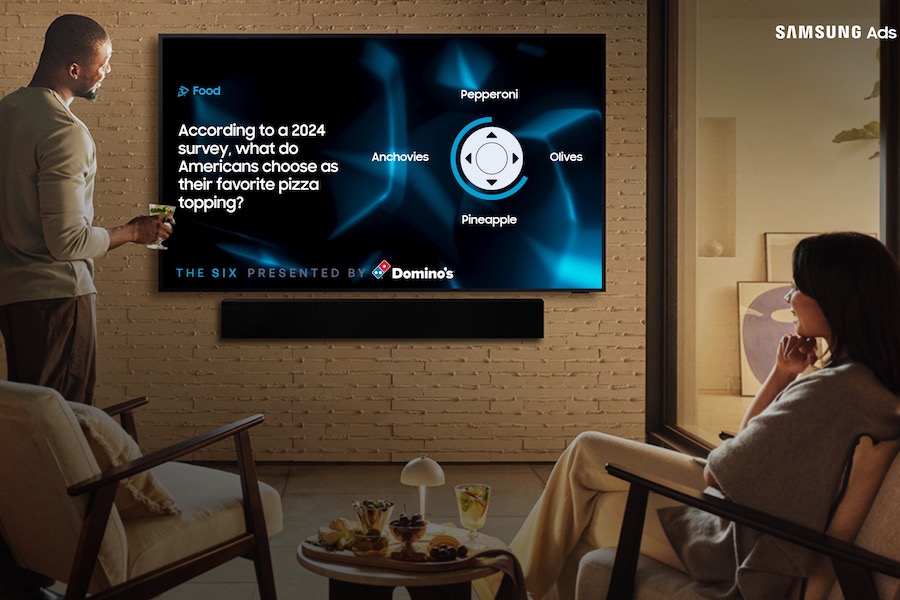
Samsung Ads, the advertising arm of Samsung Electronics’ media division, Domino’s Pizza and Havas have released results of the first European advertising campaign to use Samsung Ads’ GameBreaks ad unit, which replaces the conventional ad with a branded, remote control-powered trivia quiz or game. The campaign delivered an engagement rate of 3.84%, and a 31% uplift in brand consideration.
The Domino’s campaign presented viewers with a pizza-related trivia question: “According to a 2024 national survey, what do Americans choose as their favourite pizza topping?”, along with four possible answers. Viewers could select their answer using the TV’s remote control, with an onscreen message telling them if they were right or wrong (The answer was pepperoni). The quiz section was then followed by a 10-second section promoting Domino’s Ultimate Gunpower Chicken pizza, part of the Ultimate Indian Feast.
The results mirror those of an independent study of GameBreaks ads carried out by MediaScience in the United States, which found they deliver a 53% lift in unaided brand recall, outperforming standard video ads by 1.5 times. The study also found that 89% of viewers preferred GameBreaks over traditional commercial breaks.
GameBreaks launched earlier this year, initially in the United States and Canada, rolling out to the United Kingdom over the summer. Advertisers can customise trivia questions, themes, and design elements within GameBreaks ads to align with campaign goals.
“Domino’s has always been something of a crowd-pleaser and this impacts consideration which, in turn, impacts purchase intent,” Harry Packshaw, head of AV at Domino’s media agency, Havas, said in a statement. “There’s a lot of data to show how gamification moves the dial on brand metrics so it was no surprise to us to see that the campaign was so warmly received and performed so well.”
“Interactivity is at the heart of CTV, so there’s no reason why the ads should not also embrace the idea,” Lauren Barnett, head of U.K. sales at Samsung Ads, said in a statement. “We’re delighted, though not surprised, at the success Domino’s have seen with their GameBreaks campaign and we look forward to working with them on more in the future.”
Every November, the entertainment industry hits its version of the Super Bowl.
Francesca Pezzoli
Thanksgiving week is no longer just a retail battleground. It’s one of the most valuable media windows of the year, where live sports, blockbuster streaming premieres, and Black Friday subscription deals converge on the biggest screen in the home: television.
According to Samsung smart-TV viewership data, streaming activity jumps 11% during Thanksgiving week compared with average non-holiday weeks. With audiences off work, on the couch, and primed to browse, the Thanksgiving window has become a high-stakes promotional moment for streamers, studios and sports leagues.
To understand what actually worked in 2024 and what will shape a competitive advantage in 2025, Looper Insights analyzed promotional activity on major connected TV platforms, evaluating thousands of placements using its MPV (Media Placement Value) metric, which measures on-screen visibility, and $MPV (Dollar MPV), which assigns an equivalent media dollar value based on placement prominence.
Our “Thanksgiving 2025 Playbook” report reveals a new truth about streaming success during peak windows: Visibility is currency. If audiences can’t see the content title, they can’t click, stream, rent or subscribe.
The NFL Dominated the Screen
Thanksgiving has always belonged to the NFL, but on connected TVs, the league didn’t just win viewership; it won real estate.
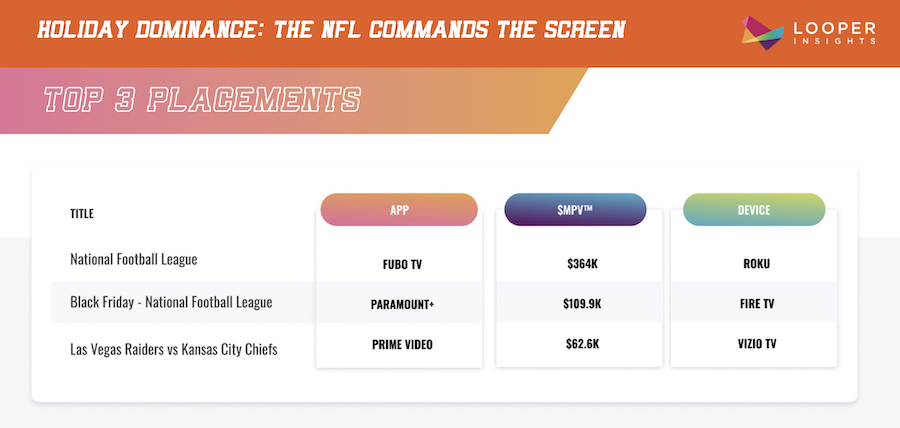
Looper’s analysis shows that the top three NFL promotional placements across Roku, Fire TV and Vizio each achieved the maximum MPV score of 24, ranking them in the top 2% of all U.S. connected-TV promotions during the week.
Those three placements delivered a combined $536,000 in $MPV, led by Fubo TV’s “Turkey Day Football” takeover on Roku.
What made them so effective? Fubo TV’s “Turkey Day Football” on Roku used festive Thanksgiving visuals to spark excitement; Fire TV paired NFL action with other sports in a dynamic Black Friday split-screen offer; and Vizio highlighted the “Raiders vs. Chiefs” matchup with bold rivalry imagery and a strong call to action. Together, these placements show how tailored creative and premium placements drive standout visibility during one of the NFL’s biggest viewing weeks.
And the NFL didn’t stop at the games. Spin-offs such as Madden NFL, NFL Icons and NFL Slimetime carried that momentum into other formats, ranking among the week’s highest-performing secondary promotions. Even during tentpole moments, the league used its IP to stay visible before, during, and after the games.
Black Friday Becomes a Streaming Holiday
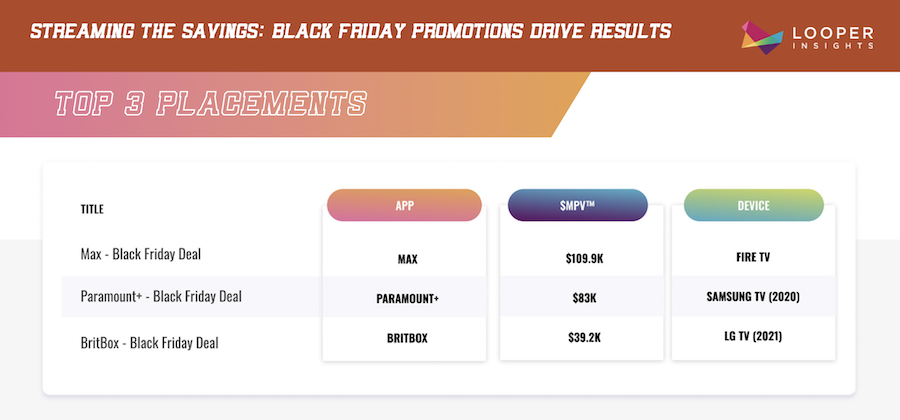
Black Friday has become just as important for streaming services as it is for retail, with major platforms using the holiday to promote subscription deals aggressively. However, the results showed a surprising trend: a longer offer duration is more effective than a deeper price discount. Both Max and Paramount+ had the same subscription price, but Max provided a longer promotional window and ultimately came out on top.
The New Rules of Holiday Streaming
Our analysis surfaced five clear strategies for Thanksgiving 2025:
Put your marquee IP in the most premium placement and surround it with supporting content. The properties that dominated Thanksgiving didn’t just appear on the homepage; they owned the hero units, full-width banners, and the top position in rotators. When you anchor your priority title with supporting spin-off content, you extend engagement beyond the main event and multiply visibility hours.
Control the platform, control the outcome. Streamers who control the distribution environment (device OS, app store, or app UI) can guarantee top placement when it matters most. Placement is not a creative choice; it’s a competitive advantage.
Longer offer windows beat deeper discounts. Our data shows that the duration of a promotional offer drives more conversions than the size of the discount. Viewers are more likely to start a trial when they feel they have time to enjoy the content, not when forced to decide under time pressure.
Match the CTA to the device for simplicity to win. On mobile and app-store environments, flexible CTAs like “Subscribe at a discounted price” outperform price-specific messaging because users are already in transaction mode. On CTV home screens, performance improves when CTAs focus on immediate action, such as “Watch Live” or “Stream Now.”
Always-on repetition beats a one-day splash. The best-performing campaigns didn’t rely on a single takeover tile; they used multiple recurring placements across rows and carousels to stay persistently visible throughout the week. Frequency drives familiarity, and familiarity drives clicks.
The Bottom Line
Thanksgiving week is no longer just a ratings race. It’s a visibility race.
In a world where more than half of users decide what to watch from the CTV home screen, the titles that win the screen win the week. And as films and franchises such as “Stranger Things,” Wicked: For Good, and multiple NFL matchups will compete for audience attention this Thanksgiving, streamers will need every advantage they can get.
Francesca Pezzoli is VP of marketing at Looper Insights, which specializes in providing granular, real-time analytics and insights on the promotional impact of content on connected TV platforms (CTV).
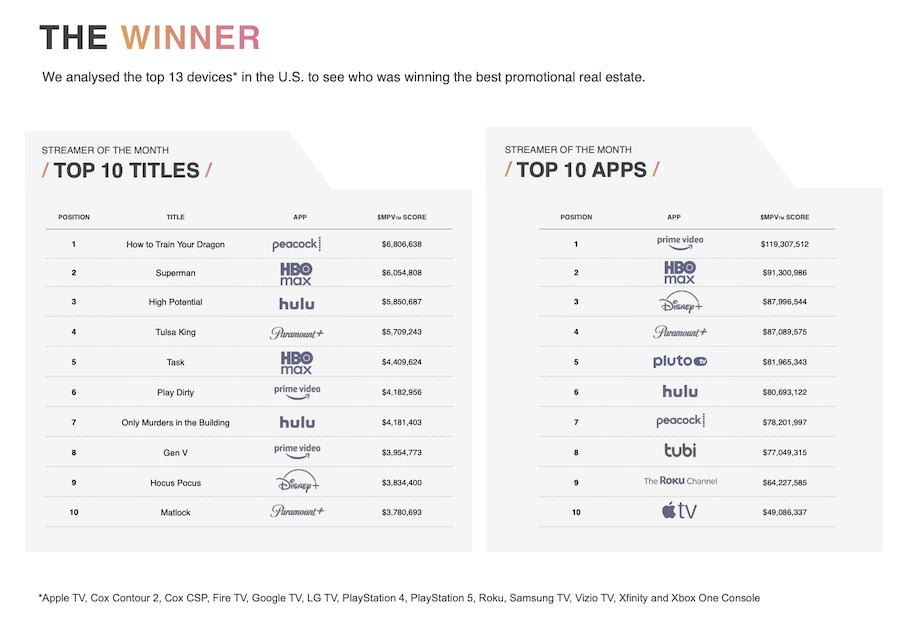
Prime Video and Universal Pictures’ live-action theatrical remake How to Train Your Dragon, streaming on Peacock, topped Looper Insights’ Streamer of the Month Report charts for October.
The report breaks down the top 10 entertainment streaming apps and titles promoted across CTV platforms in the United States and is ranked using Looper’s proprietary Dollar Media Placement Value ($MPV) metric.
How to Train Your Dragon, which started streaming on Peacock Oct. 10, centers on the dragon-fighting Vikings of the island of Berk, where Hiccup (Mason Thames), the son of Chief Stoick the Vast (Gerard Butler), hopes to prove himself as a great warrior, but secretly befriends a dragon named Toothless who is injured in an attack.
Top apps by $MPV were Prime Video, which led with $119.3 million, followed by HBO Max ($91.3 million) and Disney+ ($87.1 million).
Rising from No. 9 in September to No. 2 on the title chart was the latest DC character feature reboot Superman, which started streaming on HBO Max Sept. 19. In the film, director James Gunn presents a newly imagined DC universe as Superman is drawn into conflicts both abroad and at home, his actions to protect humankind are questioned, and his vulnerability allows tech billionaire and master deceiver Lex Luthor to leverage the opportunity to get Superman out of the way for good.
Rising from No. 7 in September to No. 3 on the title list was “High Potential,” season two of which started streaming on Hulu Sept. 16. It follows an intellectually gifted cleaning woman who becomes a police consultant.
Landing at No. 4 on the title chart was “Tulsa King.” Season three of the mob series starring Sylvester Stallone started streaming on Paramount+ Sept. 21.
Coming in at No. 5 on the title chart was the drama series “Task,” which starting streaming on HBO Max Sept. 7. The show, from creator Brad Ingelsby (“Mare of Easttown”), is set in the working-class suburbs of Philadelphia and centers on an FBI agent (Mark Ruffalo) who heads a task force to put an end to a string of violent robberies led by an unsuspecting family man (Tom Pelphrey).
Landing at No. 6 on the title chart was the actioner Play Dirty, which debuted on Prime Video Oct. 1. Starring Mark Wahlberg and LaKeith Stanfield, the film, from director Shane Black, follows a skilled crew that stumbles onto a score that pits them against the New York mob. The movie is based on Donald E. Westlake’s Parker crime books that were written under the pseudonym Richard Stark.
Falling from the top spot in September to No. 7 on the title chart was “Only Murders in the Building.” Season five of the murder mystery series, starring Steve Martin, Martin Short and Selena Gomez, began streaming on Hulu Sept. 9.
Landing at No. 8 on the title chart was “Gen V.” The satirical series, a spinoff of “The Boys” about a university that trains superheroes, completed its second season Oct. 22.
Coming in at No. 9 on the title chart was the 1993 comedy Hocus Pocus, streaming on Disney+. It stars Bette Midler, Sarah Jessica Parker and Kathy Najimy as a coven of evil witches.
Landing at No. 10 on the title chart was “Matlock,” starring Kathy Bates as a trial lawyer who takes on the name of her favorite TV attorney. Season two of the CBS series debuted Oct. 12 on Paramount+.