Landman: Season 2

STREAMING REVIEW:

Paramount+;
Drama;
Not rated.
Stars Billy Bob Thornton, Ali Larter, Jacob Lofland, Michelle Randolph, Paulina Chavez, Kayla Wallace, Mark Collie, Guy Burnet, James Jordan, Colm Feore, Demi Moore, Andy Garcia, Sam Elliott.

In the sprawling, sun-scorched expanse of the Permian Basin — that massive sedimentary deposit in West Texas and Southeastern New Mexico that serves as the beating heart of the American energy empire — Taylor Sheridan has found his latest industrial altar. Season two of “Landman” arrives not just as a continuation of a story, but as a reinforcement of the “Sheridan Formula”: a potent cocktail of blue-collar philosophy, industrial espionage, and the kind of high-gloss artifice that only a massive budget can buy. To understand the series’ relentless entertainment, one must look at the architect himself. Sheridan’s rise to the heights of modern episodic storytelling is the stuff of Hollywood legend; a former actor who pivoted to writing with a visceral trilogy — Sicario, Hell or High Water and Wind River — that reclaimed the American West. Today, he is a prolific tycoon, commanding big stars and bigger budgets by giving the “flyover” heartland a cinematic voice that is simultaneously grounded and operatic.

The second season launches with a seismic shift in the corporate landscape. The ruthless tycoon Monty Miller (Jon Hamm), whose heart finally gave out at the end of the first season, is gone, leaving a power vacuum that Tommy Norris (Billy Bob Thornton) and Monty’s widow, Cami Miller (Demi Moore), must scramble to fill. Now elevated to the presidency of M-Tex, Tommy’s world has expanded from the mud of the oil patch to the leather seats of a corporate jet. He spends the season commanding the skies and his Ford-tough pick-up truck, shuttling relentlessly back and forth between the grit of Midland, the gleaming skyscrapers of Fort Worth, and points in between.

There is a fascinating contradiction at the heart of this production that mirrors the oil business itself. Sheridan has a penchant for casting legends who seem to have embraced the modern Hollywood “look” — from massive Botox and facial reconstructions to showcased boob jobs and meticulously restored hairlines. Yet, despite this aesthetic fakery, “Landman” drips with authentic grit. We follow Tommy as he chain-smokes his way through the stress, navigating a hierarchy that feels like a modern-day caste system. This world becomes even more dangerous with the arrival of Gallino (Andy Garcia), a slick criminal vulture who circles the vulnerable M-Tex like a shark. Garcia plays him with a predatory charm that makes every boardroom scene feel like a hostage negotiation. The season leans heavily into industrial espionage, portraying the high-stakes race to control geological data and bury the $400 million insurance secret regarding Monty Miller’s abandoned offshore well before rivals can use it as leverage to dismantle the company.

For those of us uninitiated in the Texas oil business, season two is a thrilling, educational adventure that shows us how the gears break. Throughout this journey, the legendary Sam Elliott serves as the vital presence of T.L. Norris, Tommy’s estranged father. While he is a constant thread, he enters the fray more prominently following the death of Tommy’s mother, Dorothy. Tommy’s outward reaction is one of cold relief — a survival mechanism born from a traumatic childhood — but T.L.’s presence forces a reckoning with that history, acting as a calming force that balances Tommy’s frantic energy.

This season also highlights a sharp contrast between the “rig grit” of the roughnecks and the “boardroom grit” required to survive the corporate shark tank. Demi Moore’s Cami Miller proves a woman can become a total badass in her own right, asserting dominance in the boardroom.

Adding a different kind of flair is the introduction of a new geologist, Charlie Newsom, played by Guy Burnet. Burnet brings a disarming energy and a now-famous mullet to the role, but one has to wonder if the name Newsom was slipped in for political reasons — a subtle, Sheridan-esque jab given the show’s West Texas setting. He quickly becomes the romantic focus of Rebecca Falcone (Kayla Wallace), a fierce young corporate liability lawyer. Rebecca isn’t looking for a mentor; she is cocky enough to think she can handle the patch with or without help. This creates a delicious friction as she is thrown together with the more experienced corporate lawyer Nathan (Colm Feore). They don’t so much collaborate as they spar, with Rebecca’s modern audacity clashing against Nathan’s patronizing, old-school legal tactics. Their world is further colored by the political climate of the region; Trump is mentioned a few times, and his influence surfaces in petty but telling ways — like the ongoing debate over whether to refer to the “Gulf of Mexico” or the newly branded “Gulf of America.”

Amid the industrial chaos, a softer yet no less complex theme emerges through Cooper Norris (Jacob Lofland) and his earnest quest for stability. Cooper’s desire to get married to his girlfriend, Ariana (Paulina Chávez), becomes a central pillar of his arc — a desperate attempt to anchor himself to a “normal” life while the world around him remains volatile. This craving for a traditional home is ironically juxtaposed against the bizarre “dormitory” man-camp at Tommy’s house in Midland. This residence functions as a glorified frat house where Tommy, Dale (James Jordan), and Nathan live like aging college roommates. The domestic structure is routinely shattered by chaotic, over-the-top themed dinner parties — like the infamous “Pirate Dinner” — that feel more like bacchanals than family meals. In this environment, privacy is a non-existent luxury; it’s not random women in the halls, but the constant presence of Angela (Ali Larter) and Ainsley (Michelle Randolph) — specifically Ainsley, whose striking confidence stops the men in their tracks — that keeps the domestic energy high-strung.

It is this frantic, Midland dormitory life that Angela is hell-bent on escaping. She is determined to up the ante, eyeing massive mansions in Fort Worth to distance herself from the Midland dust and secure a different kind of status. Her focus is entirely consumed by her “mini-me” daughter, Ainsley, who is headed to Texas Christian University (TCU) with singular dreams of becoming a star cheerleader. The move to Fort Worth is driven by the prestige of this religious institution, though it leads to a disastrous interview with the admissions director. During the exchange, Ainsley’s “athletic ascent” is revealed to be less about academic rigor and more about a bizarre “red-pill” theory regarding “super-babies,” a debate the director clearly finds repulsive despite the fact that Ainsley is ultimately admitted simply because the school needs her on the cheer squad. While the men are mired in the grit of the patch, Angela and Ainsley remain the show’s primary friction points, their ditzy shenanigans serving as a silly, sometimes pointless distraction.

Part of the “Sheridan Formula” is his blatant recycling of his favorite actors. James Jordan is the ultimate “Where’s Waldo?” of this universe, while Michelle Randolph and Billy Bob Thornton both have roots in the “Yellowstone” prequels. Ultimately, Sheridan’s genius lies in his unapologetic embrace of the obvious. He knows exactly how to play up clichés and weaponize the familiar. Viewers flock to his shows because he transforms the predictable into exaggerated drama, expertly packaged in layers of industrial grime.

As the story moves through catastrophes and legal firestorms, the pressure remains relentless. By the time we reach the finale, “Black Gold,” it’s clear that season two is less about the oil itself and more about the human cost of extraction.

Looking ahead to season three, one has to wonder if Sheridan’s ambitions aren’t larger than any single studio. Though his massive move to Universal isn’t slated until 2029, the trajectory is already clear; with a Midas touch that has produced an unprecedented volume of popular formulaic content, he seems to be vying for his own network. “Landman” is proof that Sheridan knows exactly how to drill for the cultural zeitgeist. It is a show of contradictions — fake faces in a real world, elite wealth built on immigrant sweat — but it remains a relentless ride that refuses to let go.

Subscribe HERE to the FREE Media Play News Daily Newsletter!
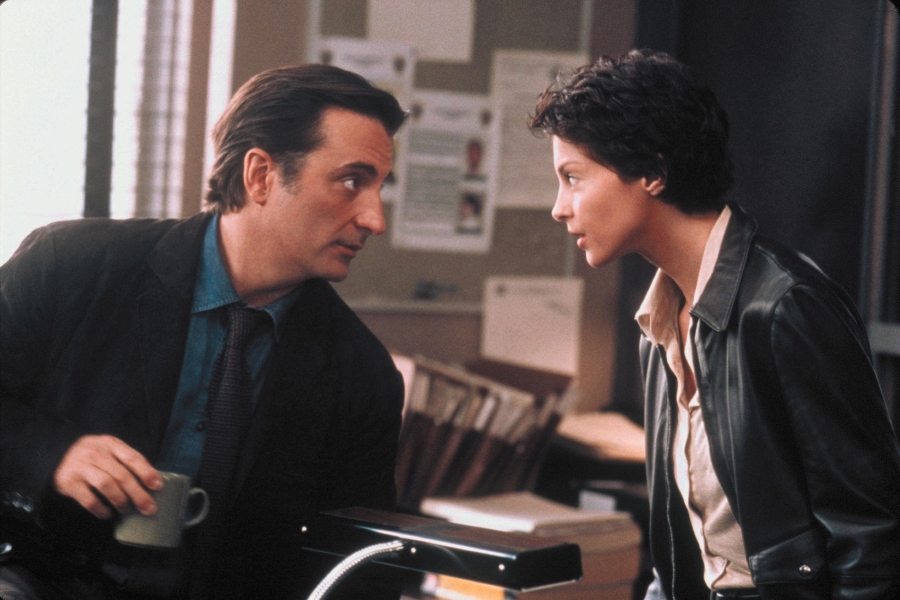
Kino Lorber Sets July 30 Blu-ray Disc Release Date for 2004’s ‘Twisted’

Kino Lorber on July 30 will release the 2004 psychological drama Twisted on Blu-ray Disc.

The film, originally released to theaters and on disc by Paramount Pictures, is being reissued on Blu-ray under Kino Lorber’s Studio Classics line.

Twisted follows San Francisco police inspector Jessica Shepard (Ashley Judd) prowling the wharf for a serial killer. The investigation becomes more and more twisted as her partner (Andy Garcia, Internal Affairs) behaves strangely, and the police commissioner (Samuel L. Jackson, Changing Lanes) is being asked to remove her from the investigation as she is a prime suspect. All the clues point to her and even Jessica herself begins to suspect that she might be the killer she is looking for.

Directed by Philip Kaufman (The Wanderers, Invasion of the Body
Snatchers, The Right Stuff), Twisted features a supporting cast that includes David Strathairn, Leland Orser, Titus Welliver, Russell Wong, Camryn Manheim, Mark Pellegrino, D.W. Moffett and Richard T. Jones.

The film comes to Blu-ray Disc from a new HD master from a 4K scan of the original camera negative and includes behind-the-scenes footage of the production of the film, an audio commentary from director Kaufman, deleted scenes and the original theatrical trailer.

‘Ocean’s’ Trilogy Arrives on 4K Ultra HD April 30

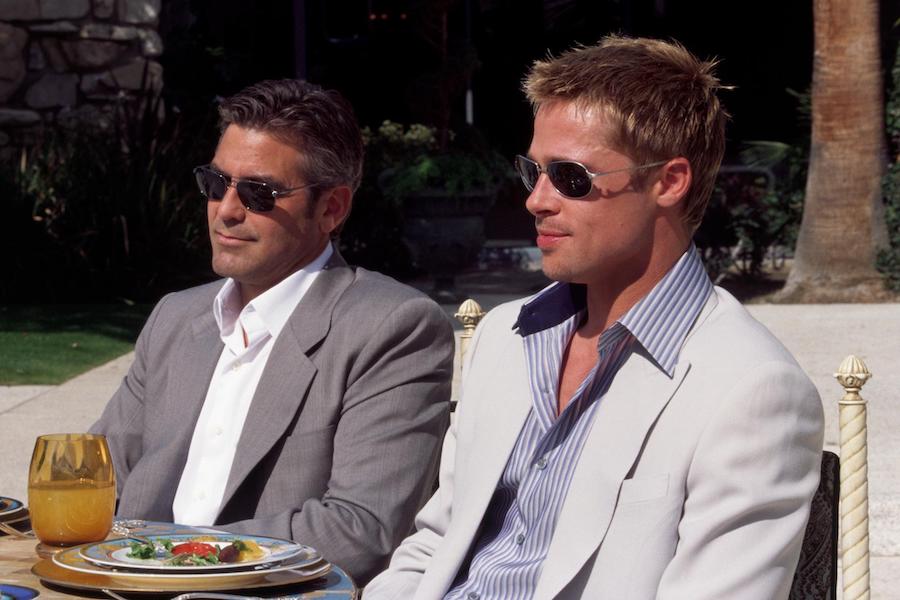
Steven Soderbergh’s “Ocean’s” trilogy of crime heist films — Ocean’s Eleven, Ocean’s Twelve and Ocean’s Thirteen — will be available for purchase on 4K Ultra HD Blu-ray Disc and digitally for the first time April 30 from Warner Bros. Discovery Home Entertainment.

Inspired by and based on the 1960 heist film Ocean’s 11, the three films are directed by Academy Award winner Soderbergh and feature ensemble casts including George Clooney, Brad Pitt, Matt Damon, Andy Garcia, Julia Roberts, Casey Affleck, Scott Caan, Elliott Gould, Bernie Mac, Carl Reiner, Catherine Zeta-Jones, Andy Garcia, Don Cheadle, Ellen Barkin, Al Pacino, Scott Caan, Eddie Jemison and Shaobo Qin.

The 4K remasters of Ocean’s Eleven (2001), Ocean’s Twelve (2004) and Ocean’s Thirteen (2007) were completed at Warner Bros. Discovery’s Motion Picture Imaging (MPI) with the participation of Soderbergh. The restored 5.1 digital audio mix was overseen by original re-recording sound mixer and sound editor Larry Blake.

Subscribe HERE to the FREE Media Play News Daily Newsletter!

The “Ocean’s” trilogy Ultra HD Blu-ray discs and digital contains the following previously released special features:

Ocean’s Eleven

  • Commentary by Steven Soderbergh and Ted Griffin
  • Commentary by Brad Pitt, Matt Damon and Andy Garcia
  • “Are You In or Out? The Making of Ocean’s Eleven”
  • “Pros & Cons: Inside Ocean’s Outfit”
  • “The Style of Steal”
  • “The Look of the Con”
  • “Original Ocean’s, Original Cool”


Ocean’s Twelve

  • Commentary by Steven Soderbergh and George Nolfi
  • “Ready, Jet Set, Go: The Making of Ocean’s Twelve”
  • “HBO First Look: Twelve Is the New Eleven: The Making of Ocean’s Twelve”
  • deleted scenes


Ocean’s Thirteen

  • Commentary by Steven Soderbergh, Brian Koppelman and David Levien
  • “Third’s a Charm: The Making of Ocean’s Thirteen
  • “Ahab with a Piggyback: The Means & Machines of Ocean’s”
  • “Jerry Weintraub Walk and Talk”
  • “Masters of the Heist”
  • deleted scenes

The Expendables 4

4K ULTRA HD BLU-RAY REVIEW:

Street Date 11/21/23;
Lionsgate;
Action;
Box Office $16.71 million;
$29.96 DVD, $39.99 Blu-ray, $42.99 UHD BD;
Rated ‘R’ for strong/bloody violence throughout, language and sexual material.
Stars Jason Statham, Sylvester Stallone, Curtis “50 Cent” Jackson, Megan Fox, Dolph Lundgren, Tony Jaa, Iko Uwais, Randy Couture, Jacob Scipio, Levy Tran, Andy Garcia.

The first “Expendables” film in 2010 offered the intriguing premise of assembling a team of action all-stars as a paramilitary mercenary squad tasked with carrying out dangerous international missions. Subsequent installments expanded the roster to an almost absurd level of action talent, even if some of the bigger stars were basically relegated to cameos. The box office underperformance of the third film in 2014, however left some doubt as to the sustainability of the franchise.

Thus, despite receiving a theatrical release and a comprehensive marketing campaign, The Expendables 4 (or Expend4bles in the parlance of Hollywood’s cutesy naming conventions) almost feels like one of those direct-to-video franchise extensions that used to be more prevalent in the heyday of DVD.

At least they dragged out a few of its geriatric regulars to try to justify its existence, though a majority of the cast ends up being sidelined for most of the movie, turning it for the most part into just another Jason Statham action vehicle.

The story involves Statham’s Lee Christmas character seeking revenge when a member of the Expendables is killed during a botched mission to stop terrorists from gaining access to nuclear weapons. When Christmas is benched by the Expendables’ new CIA handler (Andy Garcia) on the subsequent mission to stop the terrorists from using the stolen nukes to ignite World War III, he decides to go anyway, which comes in handy when the rest of the team is captured.

Statham does his best to carry the proceedings across the finish line, but he isn’t given much to work with. The screenplay is saddled with trite dialogue, stilted performances and plot twists that, while predictable, ultimately don’t make a lot of sense.

Though billed at 103 minutes, the story manages to resolve itself in just over an hour and a half, leaving a whopping 11 minutes of credits.

Subscribe HERE to the FREE Media Play News Daily Newsletter!

Expend4bles might offer a few moments of enjoyment for the franchise’s most ardent fans, but this is clearly a franchise that is a shell of its former self.

The bulk of the action takes place in two extended set pieces — first a chemical weapons plant in Libya, then a barge transporting the nukes to be detonated off the coast of Russia. It’s amusing to see the producers in the bonus materials talk about wanting to film “real” action in order to live up to the reputation of the franchise, when the final product looks like it was passed through a CGI filter.

This may be a case where the need for a ultra-high-definition presentation didn’t do the film any favors, as the visual effects look so clean they might as well be from a video game, rather than have the kind of gritty look a film like this needs. Too many close-ups of the actual stars in the middle of stunts look like obvious process shots.

The director for this installment is Scott Waugh, whose previous works include 2012’s Act of Valor, an actioner that employs the gimmick of casting real Navy SEALs, and the recent Hidden Strike, the Jackie Chan-John Cena team-up filmed in 2018 that was shelved for five years before surfacing on Netflix.

The Blu-ray includes a solo commentary track from Waugh, as well as two behind-the-scenes featurettes: the 17-minute “Bigger, Bolder, Badder: The Expendables in Action” about the stunts, and the 19-minute “More Than a Team: New Blood Meets Old Blood” about the cast. Also included is the film’s theatrical trailer. The extras are included on both the 4K disc and the regular Blu-ray of the film.

A Steelbook collection of all four “Expendables” films on both Blu-ray and 4K disc is available at Walmart for $69.99.

Walmart exclusive “Expendables” collection Steelbook

Wrath of Man

BLU-RAY REVIEW:

Street Date 7/13/21;
Warner/MGM;
Action;
Box Office $27.4 million;
$29.98 DVD, $34.98 Blu-ray;
Rated ‘R’ for strong violence throughout, pervasive language, and some sexual references.
Stars Jason Statham, Scott Eastwood, Andy Garcia, Holt McCallany, Jeffrey Donovan, Josh Hartnett, Laz Alonso, Chris Reilly, DeObia Oparei, Rob Delaney, Eddie Marsan.

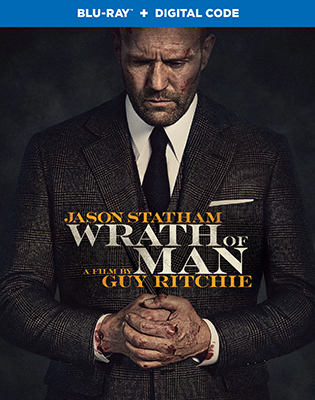
Jason Statham’s fourth film with director Guy Ritchie is a brutal revenge thriller that uses a time-shifting narrative to maintain the mystery of its characters’ motivations and true identities.

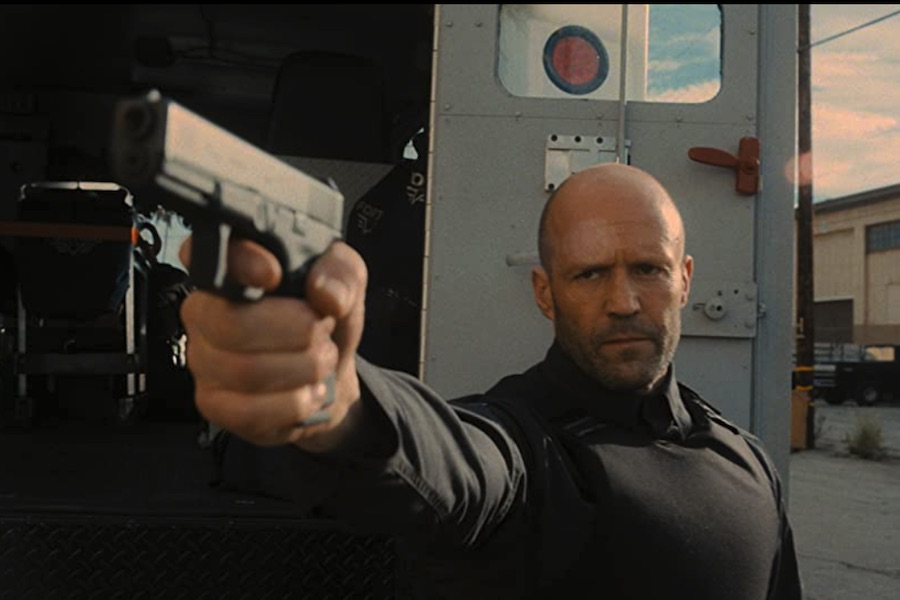
Statham plays the newest employee of an armored truck company that is frequently targeted by a highly armed squad of thieves. His co-workers don’t think much of his icy demeanor until he single-handedly takes out a gang of attackers, which earns him the respect of his colleagues.

Yet it soon becomes clear he has another agenda, which relates to avenging one of the victims of the heist that opens the film — fantastically depicted in a single take from inside the van.

Ritchie, who also co-wrote the screenplay, which is based on the 2004 French film Cash Truck, directs with his usual flair for kinetic and brutal action, resulting in several extended shootouts that will leave the audience wondering who to trust.

The Blu-ray has contains no extras.

Subscribe HERE to the FREE Media Play News Daily Newsletter!

Guy Ritchie’s ‘Wrath of Man’ Due on Digital June 29, Disc July 13

The revenge heist film Wrath of Man is coming to digital June 29 and DVD and Blu-ray July 13 from Warner Bros. Home Entertainment.

Director Guy Ritchie (RocknRolla, Sherlock Holmes, Sherlock Holmes: A Game of Shadows, The Gentlemen) teams up with Jason Statham (Lock, Stock and Two Smoking Barrels, Snatch, the “Fast & Furious” franchise) for a story about a mysterious security guard out to settle a score. The film is Ritchie’s fourth directorial collaboration with Statham.

In the film, mysterious and wild-eyed, a new security guard for a cash truck surprises his co-workers when he unleashes precision skills during a heist. The crew is left wondering who he is and where he came from. Soon, the marksman’s ultimate motive becomes clear as he takes dramatic and irrevocable steps to settle a score.

Subscribe HERE to the FREE Media Play News Daily Newsletter!

The actioner, based on the 2004 French film Cash Truck, also stars Scott Eastwood (The Fate of the Furious, Pacific Rim: Uprising), Andy Garcia (The Mule, Oceans Thirteen), Holt McCallany (Three Kings, Fight Club), Jeffrey Donovan (Hitch, Sicario, TV’s “Burn Notice”), Josh Hartnett (Pearl Harbor, Black Hawk Down), Laz Alonso (Avatar, “Fast & Furious”), Chris Reilly (TV’s “Game of Thrones”), Raul Castillo (television’s “Looking”), DeObia Oparei (television’s “Game of Thrones,” Moulin Rouge!) and Eddie Marsan (The Gentlemen, Sherlock Holmes, Sherlock Holmes: A Game of Shadows).

‘Redemption Day’ Coming to DVD Feb. 23 From Paramount

The action thriller Redemption Day will come out on DVD Feb. 23 from Paramount Home Entertainment.

The film is available in select theaters, on digital and on demand.

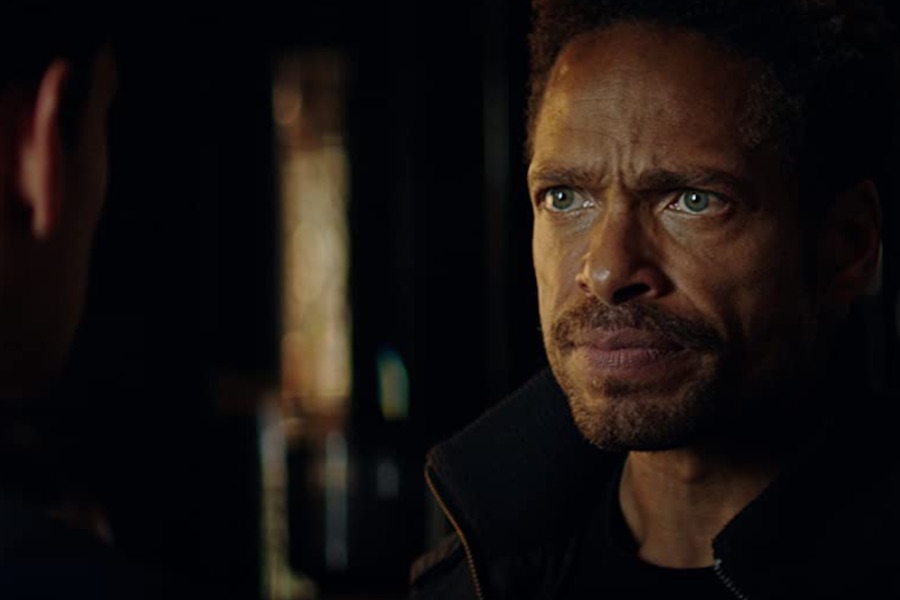
Having just returned home, decorated U.S. Marine Captain Brad Paxton (Gary Dourdan) finds his wife Katie kidnapped by a terrorist group while working in Morocco. He is forced back into action for a daring and deadly operation to save the women he loves.

The film also stars Serinda Swan, Martin Donovan, Ernie Hudson, Sami Naceri and Andy Garcia.

Subscribe HERE to the FREE Media Play News Daily Newsletter!

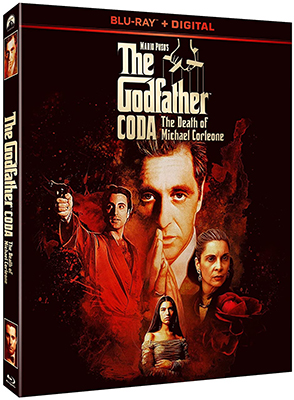
Mario Puzo’s The Godfather, Coda: The Death of Michael Corleone

BLU-RAY REVIEW: 

Street Date 12/8/20;
Paramount;
Drama;
$22.98 Blu-ray;
Rated ‘R’ for violence and language.
Stars Al Pacino, Andy Garcia, Talia Shire, Sofia Coppola, George Hamilton, Diane Keaton, Eli Wallach, Joe Mantegna, Bridget Fonda, Richard Bright, Donal Donnelly, Raf Vallone.

For his latest trick, director Francis Ford Coppola has taken on the challenge of re-editing the oft-maligned The Godfather Part III into something a bit more palatable for fans of the first two “Godfather” films.

The legendary filmmaker has been busy lately quite literally reimagining his career. Last year saw new edits of Apocalypse Now and Cotton Club hit Blu-ray (in the form of Apocalypse Now: Final Cut and Cotton Club Encore, respectively). Those efforts may have given him the nerve to revisit the concluding film of the “Godfather” saga for its 30th anniversary.

Coppola has trimmed the film by 13 minutes (from 170 minutes to a tighter 157), rearranged a few scenes to improve the main story’s pacing, and reworked the film’s opening and closing scenes. He also reverted the title to what he preferred it to be when he was making it with original “Godfather” novelist and screenwriter Mario Puzo. In calling it a Coda with the subtitle “The Death of Michael Corleone,” Coppola sees the film more along the lines of his original intentions — as an epilogue to the story of the original films.

Follow us on Instagram!

In the third movie, set in 1979 and 1980, the aging Michael Corleone (Al Pacino) reflects on his decades in charge of one of America’s most notorious crime families, and continues to strive for the legitimacy he claimed to be pursuing in the first two films, which took place in the 1940s and 1950s. He embarks on a scheme to buy out a European conglomerate partly owned by the Vatican, but runs headlong into church corruption and rivals unwilling to give up the old ways.

The story quite cleverly plays into a few real-life events from the late 1970s and early 1980s, namely the death of Pope John Paul I after just a month after his ascendency, and a church banking scandal — though the script has to massage the actual timeline in order to fit the fictional Corleones into the proceedings.

Coppola’s new vision of the third “Godfather” comes complete with a sumptuous new digital restoration. The Blu-ray presentation of the new version comes devoid of extras save for a minute-and-a-half introduction from Coppola, who basically recounts his reasons for the new edit that were already quoted in Paramount’s press release announcing it.

In terms of the film’s new structure, however, some of the cosmetic changes and the shorter running time make the film a bit easier to handle as a standalone movie, but many of the problems that plagued the film upon its original release aren’t so easy to erase.

The first two “Godfather” films on their own tell an almost perfect circular narrative — the contrast in the rise of power between Vito Corleone and his son, Michael, 30 or so years apart. That they were made within two years of each other — 1972 and 1974 — only deepens the connection between the two films as broader, singular work.

It’s no coincidence, then, that supercuts of the first two films in chronological order were already being broadcast on TV by 1977.

Thus, when the third film, released 16 years after the second, by design focuses solely on Michael’s older years and his attempts to transition the family away from crime, it is only natural to compare it with the original, in which the older Vito also hinted at wanting to go legit after tiring of bloodshed. It is not a comparison that works favorably to Part III, despite its many positive traits.

That inevitable comparison may have been why Coppola was reluctant to make a third film to begin with, and when he finally agreed to do it (after reportedly encountering financial problems due to some of his films underperforming in the 1980s), his instincts told him to make it more of an epilogue to the saga rather than a continuation of it. It was the studio that saddled the film with the Part III moniker, and likely the pressure to make it an epic on the scale of the first two (both of which won Best Picture Oscars).

Interestingly, in recutting the film, Coppola discards the leisurely pacing of the original edit, and the entire ceremony of Michael being honored by the Vatican, by moving the scene of Vatican’s banking representative asking Michael for help to be the new opening scene. This new structure is similar enough to how the first film opens, with the mortician asking Don Vito for help, that the obvious intention is to further explore the parallels between the father and son crime lords. If there’s no way to rework the foundations of the film as a whole to get it to measure up, at least its ambitions as a character study give it weight.

It’s an interesting contrast. Vito’s eldest son, Sonny, is so eager to replace his father as a criminal mastermind that his shortsightedness gets him killed, putting Michael in line to take over the family business, a path Vito never intended. The only ambitions of Michael’s eldest son, Anthony, lead him to becoming an opera singer. With Michael’s daughter, Mary, the lynchpin of his attempts to legitimize, Michael has nowhere to turn but his nephew, Vincent, Sonny’s illegitimate son, to serve as the new Don.

Subscribe HERE to the FREE Media Play News Daily Newsletter!

Coppola’s new ending seems to tread on the subtitle as more of a symbolic notion of the main character’s death, rather than the literal one that seemed tacked onto the original theatrical cut.

The further examination of Michael and his ill-fated attempts to scrub his sins are still the film’s greatest asset, even if Pacino’s portrayal seems more akin to his prototypical ’90s persona than his earlier performances as the character. The film’s most-glaring weakness, however, remains the casting of Sofia Coppola in the key role of Mary. The part had originally been intended for Julia Roberts, who dropped out due to scheduling conflicts, and then Winona Ryder, who left just before production due to nervous exhaustion, leaving the director to cast his own daughter in the role.

On paper, Mary’s pivotal place in Michael’s final arc is clear: She’s the shining beacon who will salvage the family’s legacy, much in the same way Vito originally envisioned Michael, but those expectations are threatened when she literally flirts with the criminal underpinnings of the family business, in the form of her cousin, Vincent (Andy Garcia). A more talented performer would have imbued Mary with a life and vibrance that forces the audience to care about her in a way that elevates the film’s reliance on her character. As much as she evolved into a talented director and screenwriter in her own right, Sofia is just not an actress, and her flat performance serves mostly to distract from the strong inter-generational dynamics between Pacino and Garcia — a criticism leveled as much at the film in 1990 as it is today. Given Mary’s foundational position to the story’s emotional underpinnings, no amount of re-editing can minimize that impact.

However, at least Mary’s arc is there for viewers to interpret. A more fundamental problem for the film is the complete absence of Tom Hagen, Robert Duvall’s character from the first two films who was practically another son to Vito and served as the family’s lawyer. Duvall opted out of the project due to a pay dispute, so Hagen was said to have died offscreen and George Hamilton was brought in to play a new family lawyer in a perfunctory role. Without Duvall, the screenplay was forced to put more emphasis on Vincent and especially Mary.

There’s no telling how much an expanded role for Duvall, with Hagen at the heart of the Corleone moral quandaries, would have elevated the film’s potential to stand alongside its predecessors.

‘Mamma Mia! Here We Go Again’ Dancing to Digital Oct. 9, Disc Oct. 23 From Universal

The Mamma Mia! Here We Go Again Sing-Along Edition will come out on digital (including Movies Anywhere) Oct. 9 and on 4K Ultra HD, Blu-ray, DVD and on demand Oct. 23 from Universal Pictures Home Entertainment.

The film earned more than $118 million in theaters.

Ten years after Mamma Mia! The Movie, the prequel/sequel set to the music of ABBA features returning stars Meryl Streep, Pierce Brosnan, Colin Firth, Stellan Skarsgard, Julie Walters, Dominic Cooper, Amanda Seyfried and Christine Baranski alongside new additions Lily James, Cher and Andy Garcia. The film follows two stories: present day as Sophie Sheridan (Seyfried) prepares for the grand reopening of her mother Donna’s (Streep) hotel and 1979 when young Donna (James) first arrives on the island. Sophie learns about her mother’s adventures with the young Dynamos, Tanya (Jessica Keenan-Wynn) and Rosie (Alexa Davies), and how young Donna first met her three possible dads Harry (Hugh Skinner), Bill (Josh Dylan) and Sam (Jeremy Irvine).

Bonus features, some exclusive to 4K Ultra HD, Blu-ray and digital, include deleted/extended songs and scenes with commentary by director/screenplay writer Ol Parker; enhanced sing-alongs; cast meets cast, in which those playing young and older versions of certain cast members discuss their parts; cast chats between those playing the three young Dynamos and the young dads; a featurette on the choreography; featurettes on the development of the story, the character of Sophie, on Cher’s joining the cast, the costumes and more; and feature commentaries with Parker and producer Judy Craymer.

The film will be available on 4K Ultra HD in a combo pack which includes 4K Ultra HD Blu-ray, Blu-ray and Digital. The 4K Ultra HD disc will include the same bonus features as the Blu-ray version, all in 4K.

From Around the Web