DIGITAL REVIEW:
Warner;
Comedy;
Box Office $71.6 million;
Streaming on HBO Max;
$6.99 VOD, $19.99 Sellthrough, $24.98 DVD, $29.98 Blu-ray, $34.98 UHD;
Rated ‘R’ for pervasive language, violence, sexual content, and drug use.
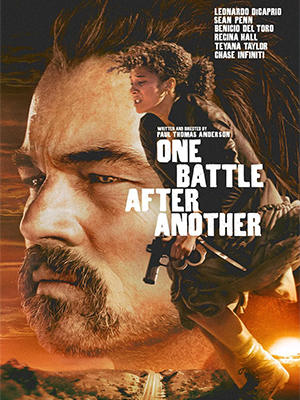
Stars Leonardo DiCaprio, Sean Penn, Benicio del Toro, Regina Hall, Teyana Taylor, Chase Infiniti, Tony Goldwyn, John Hoogenakker, Kevin Tighe, Jim Downey.
In One Battle After Another, Paul Thomas Anderson has crafted a film that feels like a jagged transmission from an immediate future. Anderson, the Studio City, Calif.-born visionary director best known for modern classics like Boogie Nights, Magnolia and There Will Be Blood, has always been a master of immersive worlds, but here he pushes that immersion to its limit. For me, it took a solid 30 minutes or more of deep focus to figure out what was going on, but once the film finds its rhythm, it never lets you up for air. Battle doesn’t offer a traditional “way in”; instead, you are dropped directly into a scene as if the story had been running long before you arrived. It is a frenzied, exhilarating experience as your mind frantically dissects the options and tries to guess what is about to happen next, and that breathless “ride” sensation continues for the full three-hour duration.
The story opens with a prologue set 16 years earlier, tracing the origin of the “French 75,” a radical leftist group led by the fierce “Perfidia Beverly Hills,” a character played by Teyana Taylor. After a raid on a detention center and a botched bank heist, the movement scatters. One member, “Ghetto” Pat Calhoun (Leonardo DiCaprio), vanishes into the shadows of present-day Northern California, reinventing himself as Bob Ferguson: a man trying to raise a daughter while the world he once tried to blow up slowly closes in on him.
This epic was brought to life by Warner Bros. executives Michael De Luca and Pamela Abdy, who handed Anderson an estimated (and staggering) $150 million budget. It remains a rare, almost defiant vote of confidence for a three-hour, ‘R’-rated odyssey that lacks a traditional hook. While the film rights weren’t won in a typical Hollywood bidding war, the project was born from Anderson’s decades-long obsession with the “unfilmable” novelist at the heart of the story.
The film’s eerie foresight is rooted in its source material, Thomas Pynchon’s Vineland, which was a massive literary event and a New York Times best-seller upon its release. This is not Anderson’s first time at bat with the author, following 2014’s Inherent Vice, a film that struggled to find an audience. The timing of this latest adaptation is optimal. By updating Pynchon’s Reagan-era warnings for the mid-2020s, Anderson has effectively bridged two eras of national anxiety, proving that the author’s themes are relevant and terrifyingly durable. Pynchon is still alive at 87 as of January 2026, and his notoriously reclusive presence was recently felt with the release of his latest novel, Shadow Ticket, on Oct. 7, 2025. This unconventional mystery, set in the 1930s Great Depression, was his first new book in 12 years and arrived to critical acclaim just as One Battle After Another was becoming a cultural flashpoint. There is a haunting subtext here; by choosing to look back at the economic collapse of the 1930s now, Pynchon may be signaling that history is about to repeat itself, suggesting that the “impossible timing” of this film isn’t a fluke, but a head-on collision with a future he is already beginning to map out in his newer work.
To document a warning of this magnitude, Anderson required a canvas as wide as the history it mirrors, so to capture that sprawling landscape, Anderson used vintage cameras. VistaVision was a high-definition widescreen process created in the 1950s that ran 35mm film horizontally through the camera rather than vertically. This creates a much larger negative area, resulting in a picture with incredible depth, sharp detail, and a “bigness” that digital cameras often struggle to replicate. By using this technology, Anderson gives the modern chaos an organic, timeless grit, making the film feel like a rediscovered classic from a future that hasn’t happened yet. This attention to detail extends to the character names, which deserve recognition as both comical flourishes and sharp narrative shorthand. Names like Perfidia Beverly Hills, Steven J. Lockjaw, and Sergio St. Carlos aren’t just absurd; they are clear signals for what kind of person you’re dealing with. They highlight the cartoonish intensity of American archetypes — the underground icon turned revolutionary, the rigid military zealot, the zen-like karate master — anchoring the film in a hyper-reality where the humor is as pointed as the political critique.
The film’s profound accuracy likely stems from the unique collaboration between Anderson and Pynchon. It is widely believed that the two share a direct line of communication. Buzz suggests the author didn’t just give his blessing but actively participated, possibly even consulting on the script to help translate his 1980s paranoia into the 2026 landscape. This likely participation explains why the dialogue feels so authentically Pynchonian while remaining so sharp in its engagement with current events.
Battle delivers an essence of our “sensory whiteout” present-day political landscape, presenting a “fascist police state” that critics on both sides have claimed as a mirror to their own anxieties. Anderson remains remarkably neutral, mocking the left’s obsession with purity tests — as seen when a revolutionary on a payphone scolds Bob for not “studying the text” while his life is in danger — just as sharply as he skewers the hypocritical “racial purity” of the right-wing elite. However, viewers should be warned: This is a relentlessly violent film. The brutality on screen is often as raw as the narrative, and for many, the core message may be better served by returning to the source book, where Pynchon’s prose allows for a more contemplative digestion of these heavy themes. Simultaneously, some softened edges ground this thriller in the intimate, messy bond between a father and his daughter, where Anderson creates something explosive and deeply human.
DiCaprio delivers a stellar lead performance, with supreme comedic range, as Bob, a perpetually stoned, bathrobe-clad “degenerate” who navigates his paranoid existence with a roach clip or beer constantly in hand. He looks more like a suburban casualty than a former revolutionary, yet beneath the suds and clouds of smoke, DiCaprio keeps Bob sharp, portraying a father whose bumbling exterior masks a desperate, protective instinct. While DiCaprio provides the comedy pulse, Sean Penn is its terrifying, indelible engine. As Colonel Steven J. Lockjaw, Penn marvelously plays a sandblasted officer whose psychosexual obsession with the woman he’s hunting — Perfidia — drives the plot into dark territory. He seeks to join the “Christmas Adventurers Club,” a fictional white supremacist secret society of billionaires that feels uncomfortably close to real-world headlines. Penn brings a relentless, almost supernatural energy to the character; no matter the wreckage or the odds, Lockjaw simply never dies.
Opposite this darkness is Taylor, who makes a superstar turn as Perfidia. A former choreographer for Beyoncé, Taylor brings a “badass” energy to the screen that suggests she could easily anchor a major superhero franchise, yet she grounds the character in the grit of a woman who has sacrificed everything for a cause. Or did she? Anderson leaves us with a lingering, uncomfortable doubt: After her proximity to Penn’s Lockjaw, the film makes us wonder if her fire for the resistance was extinguished or merely traded for a different kind of survival. Another discovery of the film, however, is Chase Infiniti as Bob’s daughter, Willa. In her film debut, Infiniti acts as the story’s moral anchor and heart. The entire movie eventually revolves around her; she is the prize everyone is trying to get, whether to protect or destroy. Her performance is quiet and resolute, holding its own against heavyweights like Benicio Del Toro, who plays Sergio St. Carlos, Willa’s karate sensei. Del Toro is the film’s “soulful counterweight” — cool, collected and slightly tipsy — operating a modern-day underground railroad with a nonchalant grace. He is essentially a “Latino Harriet Tubman,” echoing the heroic 19th-century abolitionist who led others to safety through a secret network of safe houses; here, Del Toro provides that same sanctuary, offering Bob weapons, coverage and wisdom without ever breaking his nonchalant vibe.
Everything culminates in a finale shot in the desert over rolling hills — a one-of-a-kind car chase dubbed the “River of Hills.” Unlike the typical curves or lane-passing of standard action cinema, the undulating landscape here acts as a character in its own right, with cars vanishing and reappearing over steep, vertical peaks. The nail-biting cinematography, paired with a Jonny Greenwood score that ramps up the heart rate like a metronome of suspense, creates hairy tension. The sequence might even turn road topography into a metaphor for the blind dips of our American future.
Ultimately, One Battle After Another will be remembered as the definitive, prescient document of the mid-2020s. It captures the specific vibration of a nation holding its breath, waiting for a storm that is already here. It suggests that while the names of the “battles” change and the actors on the stage rotate, the fundamental struggle to remain human in an inhumane system is eternal. In a filmscape of disposable blockbusters, Anderson has delivered a rare, heavy artifact: a film that is more than a movie; it is an urgent, unflinching statement about the state of America today — a warning and a brilliant work of art all at once.
Subscribe HERE to the FREE Media Play News Daily Newsletter!
The film is now available for streaming on HBO Max, and for digital purchase or rental. It arrives on DVD, Blu-ray and 4K Ultra HD disc Jan. 20 without bonus materials. Some supplements are being prepared for a 4K Steelbook slated for March.

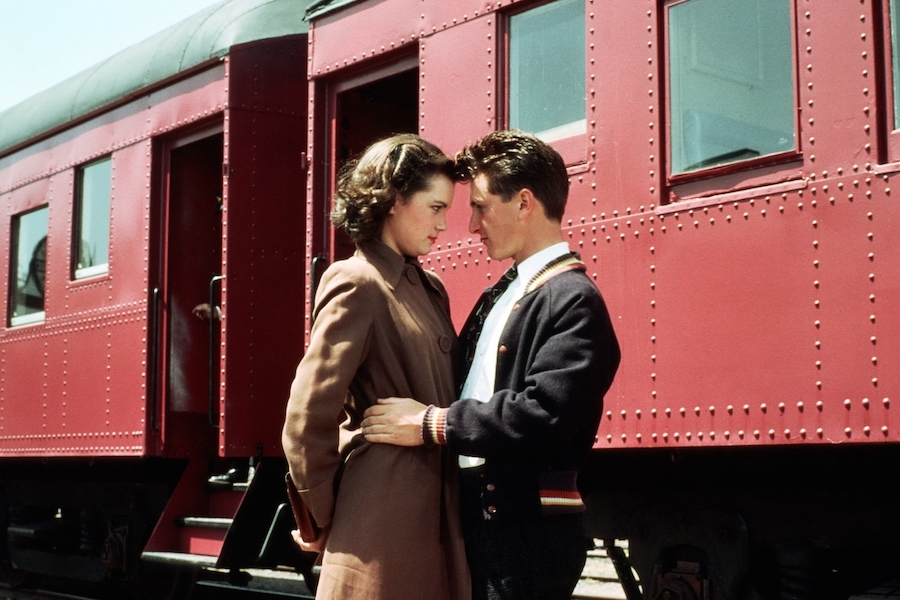
 Artfully directed by Richard Benjamin (My Favorite Year), Racing with the Moon is set in 1943 as young men are counting the days before they go off to war. It’s the story of Henry “Hopper” Nash (Sean Penn, Fast Times at Ridgemont High) and his buddy Nicky (Nicolas Cage, Valley Girl) enjoying their last boyish exploits before they enter the Marines. Elizabeth McGovern (Ordinary People, “Downton Abbey”) portrays Henry’s mysterious girlfriend. What ensues is a sensitive, bittersweet tale of lost innocence and the trauma of growing up too fast. Critically-acclaimed upon its 1984 release and starring three of the brightest acting talents to emerge in that decade, Racing with the Moon also features the work of cinematographer John Bailey (American Gigolo), costume designer Patricia Norris (Days of Heaven), production designer David L. Snyder (Blade Runner), set decorators Jerry Wunderlich (The Exorcist) and Jeannine Oppewall (L.A. Confidential), composer Dave Grusin (My Bodyguard), and writer Steve Kloves (The Fabulous Baker Boys) with his debut script. The film has been remastered from a new 4K scan of its original 35mm camera negative for the worldwide Blu-ray debut. Special features include an image gallery; a double-sided wrap with legacy artwork; a booklet with a new essay by Walter Chaw (first pressing only); audio commentary by Bill Ackerman and Marya E. Gates; archival audio commentary by director Richard Benjamin; and an archival making-of featurette.
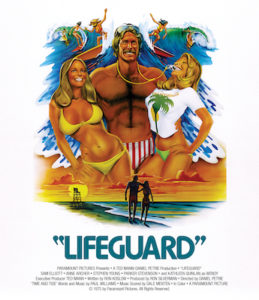 Lifeguard stars Sam Elliot (Tombstone, The Big Lebowski) as Rick Carlson, who at first glance looks like he has it made. He’s bright and good-looking. He’s also the lifeguard on a stretch of California beach that has more than its fair share of tanned bodies and beautiful girls. But Rick is at the crossroads of his life. His friends and family are pushing him to get a “real” job but, at this point, Rick’s not so sure what “real” is. It’s an agonizing decision compounded on one side by an adoring beach groupie (Kathleen Quinlan, Apollo 13) and on the other side by a former high school flame (Anne Archer, Fatal Attraction) who’s game for rekindling, but only if he’s serious about trading in his swimsuits for three-piecers. Elliott drew waves of accolades for his sensitive and sexy portrayal of the aging title character who’s compelled to reassess his life and career. Director Daniel Petrie’s (Buster and Billie) picture is an introspective character piece with a protagonist who struggles against societal norms in order to hold onto his sense of self and find personal fulfillment. The script by first-time writer Ron Koslow (Firstborn) is based on his experiences as a California lifeguard. The musical voice of so many ’70s dramas, Paul Williams contributes the aptly-titled “Time and Tide” to the film’s soundtrack. Filmed in Southern California locales by DP Ralph Woolsey (Rafferty and the Gold Dust Twins), Lifeguard has been remastered from a 4K scan of its original camera negative for this first-ever Blu-ray release. Special features include audio commentary by Jim Healy and Ben Reiser; a booklet with a new essay by Cristina Cacioppo (first pressing only); a double-sided wrap with legacy artwork; and an image gallery.
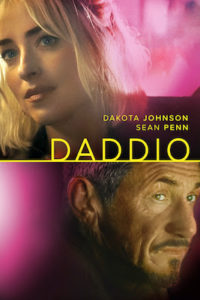 The film follows a young woman (Johnson) who jumps into the backseat of a yellow taxi. The cabbie (Sean Penn) throws the vehicle into drive as they leave JFK airport and head into the night toward Manhattan, engaging in a conversation that takes them both on a single remarkable journey. As the two navigate the very human connection between passenger and driver in the world’s biggest city, they locate a common ground that helps each of them see the other’s point of view — bringing them both closer to figuring out themselves.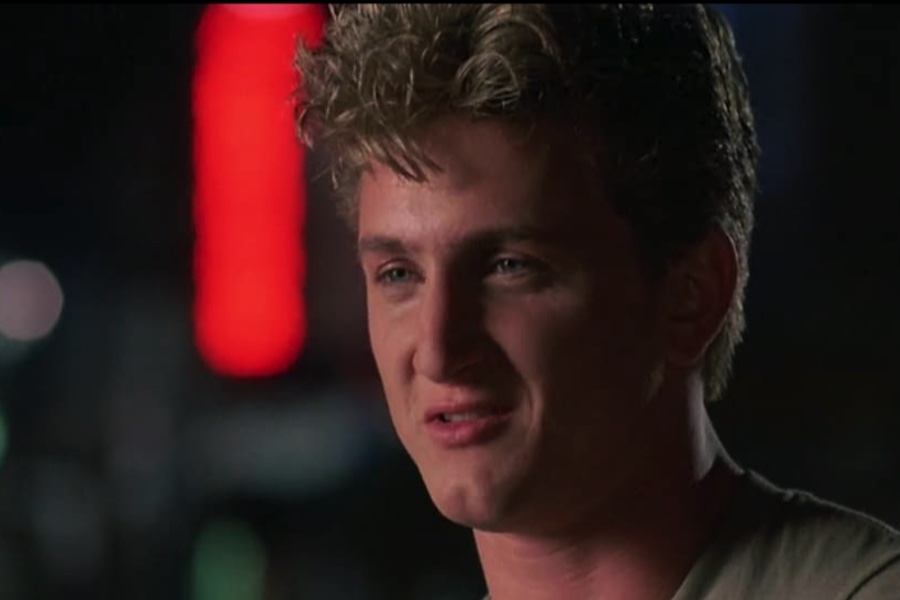
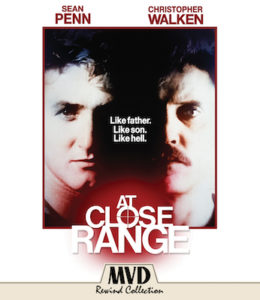 In the film, a teenage farm boy looking for excitement finds himself on a collision course with his smooth-talking gang leader father in this tale based on the story of real-life killer Bruce Johnston.