
Train Dreams

STREAMING REVIEWS:

Netflix;
Drama;
Rated PG-13 for some violence and sexuality.
Stars Joel Edgerton, Felicity Jones, Kerry Condon, William H. Macy, Nathaniel Arcand, John Diehl, Paul Schneider, Clifton Collins Jr., Will Patton.

Clint Bentley’s Train Dreams is not a film that moves with the frantic pulse of modern cinema, but rather one that breathes with the slow, deliberate respiration of the Earth itself. Adapted from Denis Johnson’s 2011 novella, the movie serves as an ode to a lost American era, centering on the life of Robert Grainier, a man whose existence is defined by the very landscape he helped scar and settle. The production design at times feels a bit too “magic hour” and curated for a period known for its documented grit, but there is an undeniable, haunting power in its aesthetic. It presents the Idaho Panhandle not as it strictly was, but as it remains, in the haze of a long-lived memory: a cathedral of timber and ghosts.

This approach evokes the spirit of Robert Redford’s 1992 A River Runs Through It. Much like that film, which earned an Academy Award for best cinematography, Train Dreams uses the natural world as a primary character. However, where Redford’s Montana was a place of grace and familial bonding, Bentley’s Idaho and Oregon are landscapes of brutal isolation. The cinematography by Adolpho Veloso captures the vastness of the Pacific Northwest through a naturalist lens, making the human figures within it look almost fragile and temporary. The panoramas of the Columbia River Gorge and the dense, claustrophobic groves of the Panhandle create a visual tension between the beauty of the wilderness and the violence required to “tame” it for the railroad.

Joel Edgerton delivers a performance of profound quiet as Grainier, an itinerant laborer. We meet him in a rugged world of “misery whip” saws and horse-drawn sleds, where the physical cost of progress is measured in the broken bodies of men like Arn Peeples. Played with a sharp, philosophical wit by William H. Macy, Arn is the camp’s resident intellectual until a falling tree branch — a “widow-maker” — clocks him into a tragic mental decline. Watching Macy transition from a man who muses that “the dead tree is as important as the living one,” to a shell-shocked dimwit whose presence quickly vanishes from the camp, is a stark reminder that while the railroad was building a nation, it was simultaneously discarding the men who laid its tracks.

The film pivots on the Great Fire of 1910, a historical “palisade of flame” that remains one of the most destructive events in American history. In reality, the “Big Burn” consumed three million acres — an area the size of Connecticut — in a mere two days, killing 87 people and leaving behind a charred landscape. In the film, this fire consumes Grainier’s home and his family. Felicity Jones brings a luminous, fleeting warmth to the role of Gladys, Grainier’s wife. Their love is portrayed through brief, tender domesticities — planning where a bed might sit in a cabin not yet built — which makes the forest’s subsequent silence all the more deafening. When the fire roars through, sounding like a thousand freight trains, it robs Grainier of his wife and their young daughter, Kate. This loss turns the film into a psychological study of grief, where the scenery begins to mirror Grainier’s fractured mind.

Between these moments of tragedy are quiet men gathered around campfires, where the movie attempts to grapple with an environmental angle. Here, the laborers speak of the “murder” of the forest for the growth of the railroad and the nation. While these dialogues are beautifully written, they feel disconnected from the characters’ reality. It is difficult to believe that hardened laborers in the early 1900s, struggling for survival in a “pre-OSHA” world, would possess such modern, eco-conscious sensibilities. This choice feels like a contemporary perspective forced into a historical context. The men were surely aware of the destruction, but the way they philosophize about it feels more like the voice of a 21st-century screenwriter than a 20th-century logger.

The movie continues to challenge our imagination through its depictions of the mystical. In a haunting sequence, Grainier encounters wolf howls followed by a feral child, played with startling, animalistic intensity by Zoe Rose Short. In the film’s literal eye, she is a girl raised by the wild, but I interpreted this encounter as a profound hallucination born of long-term isolation. To me, Grainier was caring for an injured wolf, his mind so warped by sorrow that he projected the image of his lost daughter onto the beast. When he wakes to find the “girl” gone and the window open, it feels less like a child has run away and more like the wild has reclaimed a memory he was never meant to keep, a form of grieving that transcends words.

As the story progresses over its concise yet weighty 1 hour and 45 minutes, Grainier’s subtle aging mirrors the West’s modernization. It took me a beat to realize that the world had shifted until the horse was replaced by the automobile and the hand-saw by the introduction of the chainsaw. Grainier, now too old for the dangerous work, becomes a relic. The film relies heavily on Will Patton’s narration, whose gravelly, rhythmic cadence provides the necessary “clocks” for this journey. While I prefer a film to show its story visually rather than rely on a voiceover, Patton’s performance is the exception, his voice feeling as though it were pulled directly from the bark of the trees.

Subscribe HERE to the FREE Media Play News Daily Newsletter!

Train Dreams played in select “arthouse” cinemas in major U.S. cities (such as New York, L.A. and Chicago) and across regions of the Pacific Northwest (Spokane and Seattle), where it was filmed. Now it’s widely available on Netflix, where it has found a second life in streaming, reaching a global audience that can appreciate its slow-burn intensity from home.

In the final act, we encounter a Department of Forestry worker, Claire, who lives in a watchtower overlooking the expanse. She speaks of loss and how the forest returns from fire with surprising speed. It is a provocative thought: that nature is indifferent to human tragedy. This is punctuated by the closing image of Grainier finally riding a train, looking out the window at the land he once walked on foot. He is a passenger now, a man who lived to see his world finally fold into history. This is a moving, atmospheric work that honors the unremembered laborers of history. It reminds us that beneath every modern vista lies a palisade of flame and the quiet, haunted dreams of those who stood before it.


 

The Running Man (2025)

DIGITAL REVIEW:

Paramount;
Action;
Box Office $37.8 million;
$19.99 VOD, $24.99 Sellthrough;
Rated ‘R’ for strong violence, some gore, and language.
Stars Glen Powell, William H. Macy, Lee Pace, Michael Cera, Emilia Jones, Daniel Ezra, Angelo Gray, Jayme Lawson, Katy O’Brian, Martin Herlihy, Debi Mazar, Sean Hayes, Colman Domingo, Josh Brolin.

The 1987 film The Running Man is considered one of the core hits from Arnold Schwarzenegger’s run of action movie successes in the 1980s and 1990s. However, while the film was based on the 1982 novel of the same name by Stephen King (writing under the pseudonym Richard Bachman), it took a lot of liberties with the source material, keeping a few character names and the general idea of a dystopian future where the population is distracted by the allure of deadly game shows.

The book was set in 2025, which made this the perfect year for a fresh look at the material, and director Edgar Wright’s new adaptation of The Running Man is much more faithful to King’s novel than the 1987 film.

The new version stars Glen Powell as Ben Richards, the role played by Schwarzenegger in the original, though he isn’t a rogue cop this time around. As in the novel, Powell’s Richards is a man desperate for a job so he can raise money to treat his sick daughter. In a near future dominated by the Network corporation, he’s been blacklisted from most jobs for leaking secrets about workplace dangers to union activists. As a last resort, he tries to make it onto one of the many game shows produced by the company to placate the masses, the most popular of which is “The Running Man,” in which three ostensibly undesirable members of society have 30 days to survive being tracked down by a team of hunters in exchange for huge cash prizes. The contestants can travel throughout the country to hide (as opposed to the limited arena of Earthquake-damaged Los Angeles in the 1987 film), but citizens are encouraged to report on their whereabouts for cash prizes.

Richards doesn’t want to risk his life for the show, but seen as an ideal candidate by the show’s producer, Dan Killian (Josh Brolin) due to his athletic abilities and his short temper. Since even lasting only a few days could bring more money to his family than the other game shows, Richards agrees, and the hunt begins. The longer he survives, however, the more Richards becomes a symbol of hope for the downtrodden.

Aside from shared themes of corporate power, audience manipulation and the popularity of trash TV, and a prominent visual cameo, Wright’s film mostly steers clear of any association with the original, and its closer adherence to King’s novel tends to nullify any real comparisons between them (the 1987 film was found to have plagiarized a 1983 French film called Le Prix du Danger (The Prize of Danger), based on the 1958 short story The Prize of Peril, which itself shares similarities with King’s novel).

Wright also uses a retro-futuristic aesthetic to depict his dystopian version of America, imagining a potential future that echoes our own world (for instance, the way Network alters Ben’s messages to the audience will be recognizable to anyone who’s seen the AI slop that pops up on the internet), but smartly infuses more of an analog feel that should give the film more of a timeless quality going forward, as if it too were a product of the 1980s trying to predict how technology and politics would unfold.

The film’s mix of satire and action should provide a reasonably entertaining viewing experience for audiences looking for a bit of subversive escapism.

The home entertainment version of The Running Man is accompanied by a trove of extras, starting with an informative commentary from Wright, Powell and co-writer Michael Bacall.

There’s also a slew of behind-the-scenes material that runs more than 100 minutes, contained primarily in four featurettes: the 11-and-a-half-minute “The Hunt Begins” details the efforts to make a new adaptation; the 16-and-a-half-minute  “The Hunters and the Hunted” profiles the characters and the performers who play them; the 17-minute “Welcome to The Running Man — Designing The World” explores the film’s retro-futuristic style; and the 29-minute “Surviving the Game: Shooting The Running Man” delves into the action sequences. Supplementing these are a two-minute montage of stunt rehearsals, and a 26-minute compilation of hair, makeup and costume tests for various characters.

Also included are 12 deleted and extended scenes that total 11 minutes, plus eight minutes of the film’s trailers and promotional spots.

More on the fun side are a collection of the videos from the in-universe programming that play on the background video monitors throughout the film. These include eight-and-a-half minutes of “The Americanos,” a parody of “The Kardashians” with Debi Mazar playing the matriarch of a vapid wealthy family whose members are constantly bickering with each other.

There is a two-minute clip from the “Speed the Wheel” game show, in which overweight contestants must run on a giant hamster wheel while answering trivia questions.

And then there is a full array of raw footage from “The Running Man,” including four-and-a-half minutes of footage from the show including a highlight reel, the opening titles and a rules vignette; two-and-a-half minutes of commercials; and 15 minutes of self-tape submissions from various contestants.

Finally there are the two videos from The Apostle, running four-and-a-half minutes, exposing the lies of the Network and “The Running Man.”

Subscribe HERE to the FREE Media Play News Daily Newsletter!

Kingdom of the Planet of the Apes

4K ULTRA HD BLU-RAY REVIEW:

Street 8/27/24;
20th Century;
Sci-Fi;
Box Office $171.13 million;
$34.99 DVD, $40.99 Blu-ray, $49.99 UHD BD, $65.99 UHD Steelbook;

Rated ‘PG-13’ for intense sequences of sci-fi violence/action.
Stars Owen Teague, Freya Allan, Kevin Durand, Peter Macon, William H. Macy.

Amazing visual effects carry this intriguing new chapter in the “Planet of the Apes” franchise that follows up the events of the 2011-17 reboot trilogy.

Those films — Rise of, Dawn of and War for the Planet of the Apes — focused on the origins of the apes civilization that would come to supplant humanity on Earth, through the story of Caesar, the first ape to speak thanks to an evolutionary virus that also dumbed down man.

Set several generations after the reign of Caesar, Kingdom focuses on a conflict among the divergent ape tribes to harness the remnants of human technology. The story centers on Noa (Owen Teague), a young ape from a tribe that specializes in falconry. After his clan is captured by the forces of another tribe, Noa sets off to track them down. Along the way he encounters a human girl (Freya Allan) who seems to have her own agenda. Noa eventually discovers his family has been forced to join the tribe of Proximus Caesar (Kevin Durand), a ruthless ape who seeks to rule in the name of the original Caesar by learning the secrets contained within a human military installation he’s trying to break into.

The film does a nice job giving us a glimpse into how the dystopian Earth continues to evolve to be dominated by apes, though it isn’t there yet. The story also hints of a continued effort by some unaffected humans to reclaim the planet, which should provide sufficient fodder for conflict for future films up to and if the producers decide to remake the original 1968 Planet of the Apes. As it is, the film contains plenty of reverential homages to the original, from the music to a number of visual references.

The Kingdom 4K Blu-ray combo pack includes a 4K disc of just the film, and a Blu-ray Disc that includes bonus materials and the “Inside the Lens: The Raw Cut” version of the film.

Those extras are a 23-minute behind-the-scenes featurette that provides a good overview of the production, and 14 deleted scenes that run a total of 32 minutes, and are available with optional commentary from director Wes Ball.

“Inside the Lens” is a split-screen presentation of the film with the theatrical cut above a version of the raw footage without the visual effects, providing a fascinating showcase of the effort it takes to complete a film such as this. Unfortunately, “Inside the Lens” is not an alternate viewing mode, as it can’t be toggled on or off, but it does include an optional commentary track with the filmmakers.

The disc offered with the standalone Blu-ray edition includes the theatrical cut of the film with just the featurette and deleted scenes, so anyone who wants the theatrical cut on both 4K and regular Blu-ray discs would have to acquire both combo packs.

Final Season of ‘Shameless’ Coming to DVD July 20

Warner Bros. Home Entertainment will release Shameless: The Eleventh and Final Season on DVD July 20. It will be available for digital purchase May 17.
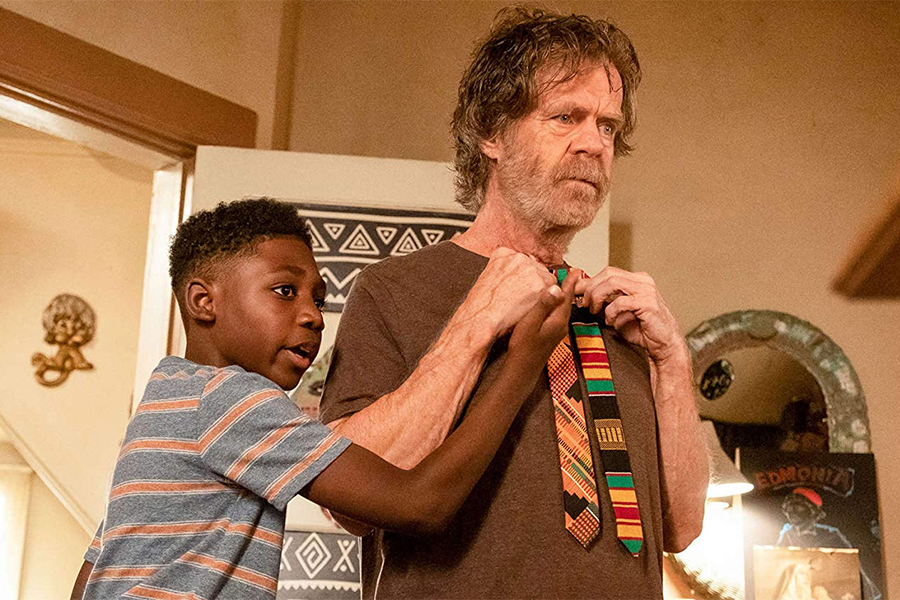

The three-DVD set will include all 12 episodes from the final season of the comedic Showtime series, which follows the irreverent lower-class Gallagher family as they scheme and struggle to get by on Chicago’s South Side.

The show stars William H. Macy as Frank Gallagher, the outspoken, alcoholic patriarch of the clan whose independent-minded children do their best to be rid of him. The final season finds Frank’s health failing as he deals with dementia, while the rest of the clan considers going their separate ways after selling the family house.

The cast also includes Jeremy Allen White, Ethan Cutkosky, Shanola Hampton, Steve Howey, Emma Kenney, Cameron Monaghan, Noel Fisher. Christian Isaiah and Kate Miner.

Extras include the featurette “The Last Call,” Showtime’s hour-long post-finale virtual cast reunion, plus DVD-exclusive deleted scenes.

Subscribe HERE to the FREE Media Play News Daily Newsletter!

Season 10 of ‘Shameless’ on DVD May 12

Warner Bros. Home Entertainment will release the 10th season of Showtime’s “Shameless” on DVD May 12 (order date April 7). The season will also be available through digital retailers Feb. 25 on standard-definition and high-definition.
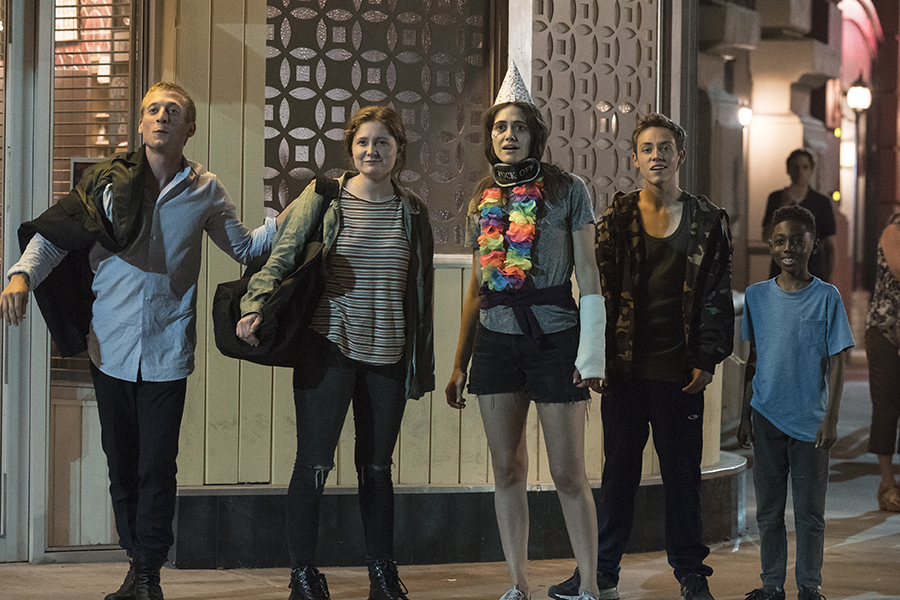

Based on the long-running British series of the same name, the irreverent and humorous “Shameless” focuses on the misadventures of a large low-income family getting by on Chicago’s South Side. Season 10 finds the Gallaghers adjusting to life without Fiona (following Emmy Rossum’s departure from the series at the end of season nine). Patriarch Frank (William H. Macy) enconters an old friend, Debbie (Emma Kenney) rules over the household with an iron fist, and Lip (Jeremy Allen White) and Tami (Kate Miner) navigate the difficulties of taking care of their newborn. Cameron Monaghan also returns to the show as Ian, rekindling the “Gallavich” romance with longtime love Mickey (Noel Fisher).

The cast also includes Ethan Cutkosky, Shanola Hampton, Steve Howey and Christian Isaiah.

Subscribe HERE to the FREE Media Play News Daily Newsletter!

The Shameless: The Complete Tenth Season DVD will include all 12 episodes and deleted scenes.

Even in its 10th season, “Shameless” ranks as one of the highest rated shows in all demos on Showtime, which has renewed the series for an 11th and final season to air later this year.

Follow us on Instagram!

‘Shameless’ Season 9 on DVD April 23

Warner Bros. Home Entertainment will release Shameless: The Complete Ninth Season on DVD April 23. Warner Archive will release the season on Blu-ray as well.

The ninth season of the Showtime series that chronicles the misadventures of the Gallagher family sees Frank (William H. Macy) stepping up his campaign on behalf of the working man while Fiona (Emmy Rossum in her final season) tries to build on her real estate success. Debbie (Emma Kenney) takes up more responsibilities at home, while Carl (Ethan Cutkosky) steps up his efforts to get into West Point. The cast also includes Cameron Monaghan, Jeremy Allen White, Steve Howey, Shanola Hampton, Richard Flood and Christian Isaiah.

The DVD and Blu-ray will include deleted scenes.

All 14 episodes of the season will be available for digital download April 8.

From Around the Web