


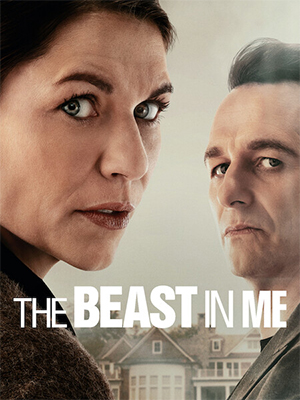
The Beast in Me

STREAMING REVIEW:

Netflix;
Thriller;
Not rated.
Stars Claire Danes, Matthew Rhys, Brittany Snow, Natalie Morales, Jonathan Banks, David Lyons, Tim Guinee, Hettienne Park, Deidre O’Connell, Aleyse Shannon, Will Brill, Kate Burton, Bill Irwin, Amir Arison, Julie Ann Emery.

This eight-episode Netflix limited series, a high-profile reunion for its star and showrunner from “Homeland” (Claire Danes and Howard Gordon), immediately cuts to a terrifying universal truth: we all harbor a dark side, a capacity for both good and bad deeds. “The Beast in Me,” which references this theme through its title, is a complex psychological thriller that asks viewers to confront their own moral limits. (A necessary spoiler warning: The series does have a gruesome scene or two that are difficult to stomach, so queasy viewers should be prepared.)

The miniseries is visually captivating, evoking a lush, anxiety-provoking East Coast atmosphere — one defined by endless greenery, changing seasons, and expansive, dark houses that isolate its characters. It’s in this wealthy, ill-defined suburb set in the Long Island/Westchester orbit, called Oyster Bay (a minor, yet confusing, continuity flaw), that we meet Aggie Wiggs (Danes), a grieving and blocked nonfiction author. Aggie lives alone, struggling with the emotional aftermath of losing her pre-teen child in a traffic accident caused by a local young man, Teddy Fenig. Danes, notably excellent in the 2010 HBO miniseries Temple Grandin, is masterful here, portraying Aggie’s trauma with visceral tension and unsettling emotional fragility that makes her uncomfortable to watch, functioning as a raw nerve exposed to the world. We also meet Aggie’s ex-wife, the artist Shelley (played by queer actor Natalie Morales), who provides a necessary, grounding contrast to Aggie’s spiraling obsession.

Aggie’s shattered peace is completely broken by the arrival of her new neighbor, Nile Jarvis (Matthew Rhys). He’s an infamous, wealthy developer and heir to a corrupt real estate empire, already suspected of murdering a previous wife. Rhys, a Welsh actor who ironically perfected his American accent in “The Americans,” embodies the central, defective villain (and you’ll probably notice subtle differences in hairstyle, length or color saturation between scenes, sometimes even within the same episode — this minor inconsistency briefly breaks the illusion of his seamless control). The contrast with Danes is the magnetic source of the series’ tension: While Aggie is exposed, Nile is entirely contained, all calculated composure and ruthless charm. Nile, believing he is right and entitled, embodies a man whose power is absolute. His initial interactions are deeply unsettling. When Nile’s dogs bark aggressively and brazenly wander into Aggie’s yard, we see the passive-aggressive man who believes he can do no wrong. This establishes the central, agonizing dilemma: Are you entitled to peace against a man protected not just by a fleet of lawyers, but by nefarious connections and the brutal actions of his thug uncle and fixer, Rick Jarvis? Aggie might even think she should move, knowing Nile will never bend.

Aggie initially resists him, squeamish and flummoxed when he tries to steamroll her to sign an easement for the construction of a rural running track in the neighboring woods. Yet, Nile knows how to exert pressure. Nile ultimately traps and convinces Aggie to go to lunch, where he doesn’t follow traditional conversation rules; he keeps digging deeper, subtly moving the interaction past standard fare and forging an unnerving connection. Driven by her need for money and her dark desire for vengeance, Aggie casually agrees to write Nile’s biography. This journalistic pursuit provides a horrifying outlet for her inner beast. Nile, in turn, weaponizes her fragility. The tension is amplified by the fact that Nile’s current, younger, ambitious wife, Nina Jarvis (Brittany Snow), is revealed to have been the best friend and employee of Nile’s outwardly stunning but inwardly broken, brutally murdered previous wife, Madison, adding layers of tragic intrigue.

While the overarching plot is admittedly somewhat predictable — by the end of the first episode, viewers quickly intuit Nile is the villain — the series wisely compensates by making the story nuanced. The actual dramatic arc is not what happened, but how the psychological game plays out, keeping us asking: Where exactly is this going? Is this a traditional ramping up of hostilities, or something far more sinister?

Despite a few flaws here and there, this is still a must-watch series with first-rate acting. The inconsistencies include several pacing flaws (regarding the running track easement) and continuity errors (such as a contradictory scene involving Teddy’s body and a minor dog-naming mistake).                                             

This series is so engrossing, however, that you barely notice the production flaws as they fly by. The acting and the psychological depth of the moral conflict elevate this thriller far beyond its minor inconsistencies.

Subscribe HERE to the FREE Media Play News Daily Newsletter!
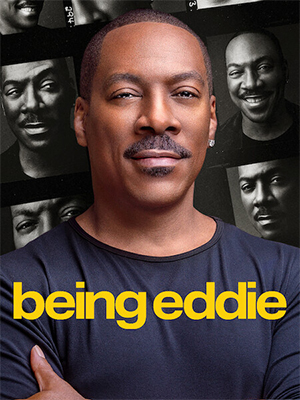
Being Eddie

STREAMING REVIEW:

Netflix;
Documentary;
Rated ‘R’ for language throughout, sexual references and brief nudity.
Features Eddie Murphy, Dave Chappelle, Jerry Seinfeld, Charlie Murphy, Arsenio Hall, Tracy Morgan, Barry Blaustein, Chris Rock, Tracee Ellis Ross, Jamie Foxx, Jeffrey Katzenberg, Elvis Mitchell, John Landis, Kevin Hart, Pete Davidson, Jerry Bruckheimer, Ruth Carter.

The new Netflix documentary Being Eddie offers a compelling, yet guarded, portrait of a superstar. The film’s very existence is a direct result of Murphy’s big strategic brand partnership with Netflix, which secured the rights to his stand-up return, Beverly Hills Cop: Axel F, and designated the streamer as the primary home for his next career phase — a relationship solidified by the critical success of Dolemite Is My Name. Produced by Brian Grazer (who appears in the doc) and directed by Reginald Hudlin (who also appears and shares a long history with Murphy, having directed him in Boomerang), the one-hour and forty-three-minute documentary is clearly an authorized celebration. 

While it provides unprecedented access to the reflective composure of the 64-year-old icon and features high praise from friends and peers such as Chris Rock, Dave Chappelle, Arsenio Hall, Jerry Seinfeld, Kevin Hart and Pete Davidson, the narrative stops short of revealing the man on a truly deep level. We receive tantalizing bits and pieces, but the central question — Who is Eddie Murphy, the intensely private person —remains unanswered. For instance, the documentary only scratches the surface of the complex reality of the man who is a devoted family guy with 10 children from relationships with five different women, leaving the viewer with only a surface appreciation of his unique life.

The Eddie Murphy we see today sits within the quiet luxury of his massive home compound, which is like a resort hotel setting — somewhat understated but impeccable — a striking contrast to the garish red leather suit of Delirious and the equally garish purple suit of Raw, specials he acknowledges were true stories of his life up to that time.

His career, which began when he was so young and new that he was not all that familiar with “Saturday Night Live,” was quickly championed by a major industry player. The studio production head, Jeffrey Katzenberg, recognized his star power and, remarkably, prevented him from being fired just two weeks into filming his huge mass appeal hit, 48 Hours. This early break and the subsequent whirlwind matured into a defining self-awareness. He refuses to be categorized simply as a comedian or an actor, stating that he is an “artist” capable of many mediums. He is confident in his achievements, which include thoughtfully breaking new ground for Black people across varied genres, like leading a romantic comedy, and his unique mastery of playing multiple characters, achieved effectively with extensive costuming and make-up in films such as The Nutty Professor and with limited costuming and make-up in Bowfinger. Despite his impact, he notes the one major accolade he has never won: an Academy Award.

His artistic influences were colossal, but his greatest comedy influence was Richard Pryor. The documentary highlights that discovering Pryor’s comedy was a pivotal moment that shaped his entire comedic voice. He not only admires Pryor as the greatest comedian of all time but also had the unique opportunity to direct him in a film, Harlem Nights. He also cites Elvis Presley for the flash and excitement that inspired his iconic ’80s stand-up outfits. However, his personal hero is Muhammad Ali, whom he praises not just for his charisma, but for standing up for himself in the face of racism and during the Civil Rights movement. The film features a surprising photo reveal, where Murphy recounts the unique story of punching Ali in the face one night after the boxer “talked too much shit.” The film also mentions the sad losses of peers such as Michael Jackson, Prince and Whitney Houston, further emphasizing his own strategic self-preservation.

Murphy’s longevity is rooted in discipline. He knew what he wanted to do from a very young age and feels he knows himself and is not seeking validation outside himself. This conviction is the source of his famous sobriety, though the film presents a curious visual tension. While he has been very open about his choice, stating he has abstained from alcohol and hard drugs throughout his life (a highly unusual feat for a comedian who rose to fame during the drug-fueled Hollywood scene of the 1980s), there is a brief moment where he appears to be holding a clear bottle with a yellowish liquid, resembling a Corona beer. He recounts the famous story of declining cocaine at age 19 with Robin Williams and John Belushi (who died two years later), attributing the choice to a lack of curiosity, self-love and providence. He notes the exception that he tried marijuana much later in life, when he was 30 years old, but that this is the full extent of his drug use.

The arc of his life is complete, having reached a phase in which he found himself surprised when he had lunch one day with Steve Martin in San Francisco and walked 10 blocks without bodyguards or being mobbed, realizing women were no longer chasing him. His highly publicized 2019 return to “SNL” was something of a burying of the hatchet, closing a quiet boycott that had lasted many years after he took earlier criticism personally; it marked his outward reemergence after a break from performing and cemented his new chapter of “artistry.” Now, he knows that family and love are keys to success and happiness in life. He has 10 children from relationships with five different women, has been married twice, and welcomed his 10th and most recent child at 57. His current wife is Paige Butcher, who is 46. The most poignant section of the film is reserved for his older brother, the comedian Charlie Murphy, who sadly passed away in 2017 at the age of 57 from leukemia. Eddie speaks with palpable grief and love, declaring, “Charlie was the funniest person alive,” noting Charlie’s fame on “Chappelle’s Show” and how he had kept the severity of his illness private.

The film ultimately suggests that the true Hollywood champion is not the one with the loudest stage presence, but the one who builds a quiet, rich, and protected interior life—a foundation of peace that has sustained his creative fire for decades, making his grounded persona his most interesting and enduring role, even if that role only partially reveals the man beneath the artistry. As Dave Chappelle concludes in the doc: “Surviving being Eddie Murphy is a hell of an accomplishment.”

Subscribe HERE to the FREE Media Play News Daily Newsletter!
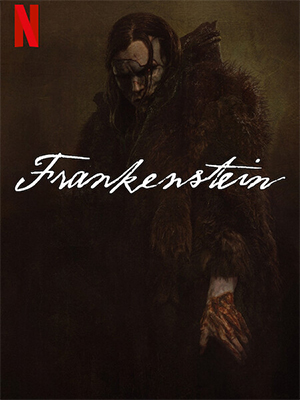
Frankenstein (2025)

STREAMING REVIEW:

Netflix;
Sci-Fi;
Rated ‘R’ for bloody violence and grisly images.
Stars Oscar Isaac, Jacob Elordi, Mia Goth, Christoph Waltz.

Guillermo del Toro’s Frankenstein is epic, a beautiful story brought to life with modern special effects and a deeply soulful storyline that explores the enduring tragedy of Mary Shelley’s novel. Even for someone who is generally not the world’s biggest sci-fi fan, the drama and emotional heart of this film make it so enjoyable and accessible. The tale originated with the publication of Mary Shelley’s Frankenstein; or, The Modern Prometheus in 1818, and the fact that this single book has spawned films, plays, and television shows over more than two centuries is astounding.

The story’s cinematic history has been vast: Ninety-four years ago, James Whale’s 1931 classic gave the wretch the iconic, bolted, flat-headed look that became the lasting pop culture image, cementing the franchise’s legacy alongside its sequel, Bride of Frankenstein. The influence even extends to television, where Herman Munster lovingly parodied the monster in the 1960s sitcom “The Munsters.” Other major cinematic achievements include Mel Brooks’s brilliant 1974 comedy classic Young Frankenstein, now more than 50 years old.

This new adaptation is faithful to the novel’s core themes — like scientific arrogance and the devastating consequences of neglect — and to its unique structure, which begins and ends with the desolate Arctic setting. This vision follows in the footsteps of Kenneth Branagh’s Mary Shelley’s Frankenstein (1994), a film that, despite its ambition, was generally considered a financial failure. While previous efforts have seen hits and misses, del Toro’s $120 million adaptation, released globally on Netflix Nov. 7, does the novel justice.

The film’s structure is wonderfully clear and engaging. It’s cleverly divided into parts that make the non-linear story easy to follow, which is a real accomplishment. Although the beginning shows us the ending first, the way the story unfolds over 2.5 hours — with flashbacks carefully timed and executed — everything flows smoothly and naturally. Visually, the movie is breathtaking, featuring intricate costumes that merge gothic romance with the director’s distinctive dark fantasy style.

 The production design is entirely believable, which is crucial; the detailed craftsmanship thankfully avoids the pitfalls of a contrived approach. One especially memorable moment is the laboratory scene where brother William’s fiancée’s father, Heinrich Harlander (Christoph Waltz), who funds Victor’s groundbreaking experiments, joins him to use lightning as a life-giving force — an impressive and cinematic triumph.

Del Toro’s most compelling narrative highlight is the deep exploration of the creator’s flaws, intensifying the idea that Victor Frankenstein (Oscar Isaac) is the “real monster.” His desperate drive to extend human life stems from the sudden loss of his pregnant mother, but his cruelty is a product of inherited abuse; his father’s corporal punishment of him creates a cycle of violence that Victor inflicts upon his creation, making him his father in that way.

The supporting cast, especially Elizabeth Lavenza, played beautifully by Mia Goth — an actress already established in modern horror and indie films — provides crucial emotional grounding. Elizabeth’s complex character (who is Victor’s cousin or adopted sister and destined bride in the original novel, but here becomes his brother William’s wife) introduces a deep tension, fueled by an undeniable tinge of romance with Victor himself. This relationship highlights the tragedy of Victor’s neglect because he is fully capable of human commitment and care, yet he immediately abandons the creation, his scientific “son.” Elizabeth’s quiet suffering and eventual recognition of his madness are powerful, even amid moments of dark comedy, such as the truly remarkable scene in which Victor poses as a priest while Elizabeth gives confession — a moment that brilliantly underscores Victor’s personal hubris and the deceit that ultimately defines his relationship with his creation.

It’s an emotional triumph to feel compassion for the mad doctor and the monster, a feat achieved by imbuing the creation with an immense sense of sentimentality. Jacob Elordi’s portrayal of the creation is arguably the most sympathetic on film, aided by a unique design that is statuesque and charming. He is created in a scene reimagined not as chaos, but as the creation of a “waltz” — an intimate and artistic act for Victor. This makes the subsequent rejection all the more tragic, leading to the soulful moment when the creation meets a sweet, old, blind man and learns life’s lessons. His humanity is further endeared when he is shown fighting off wolves to protect the man and his family, a sequence that leads to the dramatic climax in which the creation discovers his creator, Victor.

The director and his crew did an exceptional job translating the heartache of Shelley’s work for a modern audience. The film’s clear technical achievements position it as a strong contender for the upcoming Academy Awards in multiple categories. The emotional impact and sheer visual ambition make this Frankenstein a truly landmark cinematic event, easily justifying an ad-free premium Netflix subscription to experience this masterpiece.


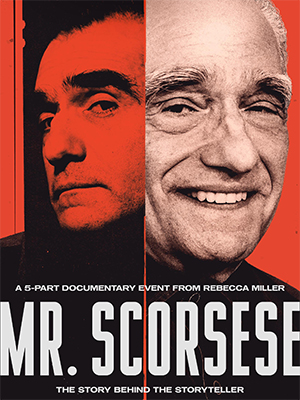
Mr. Scorsese

STREAMING REVIEW:

Apple TV;
Documentary;
Not rated.
Features Martin Scorsese, Robert De Niro, Brian De Palma, Thelma Schoonmaker, Jay Cocks, Domenica Cameron-Scorsese, Steven Spielberg, Daniel Day-Lewis, Jodie Foster, Spike Lee, Nicholas Pileggi, Paul Schrader, Cathy Scorsese, Irwin Winkler, Isabella Rossellini,
Sharon Stone, Margot Robbie, Leonardo DiCaprio, Rebecca Miller.

Martin Scorsese is a diminutive figure whose outsized body of work stands in stark contrast to his size. His distinct eyebrows and thick-rimmed glasses are a trademark, but they mask a delicate soul harboring a deep well of creativity. He is an old-school filmmaker, perpetually drawn to stories — many of them steeped in darkness, violence and crime — that reflect his own life and preoccupations.

His long-running, on-again, off-again relationship with Robert De Niro was showcased in early masterpieces such as Taxi Driver and Raging Bull. They were seemingly never far apart creatively, even when their careers diverged. Scorsese is also a father of three daughters, and one of them observes that each has a different “Marty,” even though they share the same dad.

The five-part documentary “Mr. Scorsese” offers a rare peek behind the camera, exploring the man who was born in New York City, moved away briefly as a child, and then returned in his youth. The film highlights his family life, including his extroverted Italian mother, who famously ad-libbed a memorable scene in Goodfellas while feeding the gangsters breakfast in her kitchen. For many, including me, Goodfellas is a favorite film because the tension builds consistently, creating an intense and totally believable experience.

The documentary also delves into a challenging period of his life in Los Angeles, where he was heavily involved with cocaine and came close to death. He later cleaned up, and it wasn’t until later in life that he achieved significant mass-market appeal with The Wolf of Wall Street, which was his fifth collaboration with Leonardo DiCaprio. Ironically, it was De Niro who originally spotted DiCaprio’s potential and told Scorsese, “Watch that kid, he has something special.”

Both De Niro and DiCaprio speak highly and candidly of their friend, “Marty,” the master who brings stories to life on the canvas of cinema. The powerful message of his impact is echoed by others, including his longtime editor, Thelma Schoonmaker, whose profound admiration for his attention to detail is evident. The series features Daniel Day-Lewis, Isabella Rossellini (his third wife), and Steven Spielberg, who speaks to the soulful connection and emotions felt when watching Scorsese’s films. The series further reveals his collaborative nature with stories from his leading women: Sharon Stone recounts how she gained his respect on the set of Casino by ordering his favorite food and inviting him to breakfast in her trailer, while Margot Robbie recalls working until 3 a.m. with Scorsese and DiCaprio to rewrite the divorce scene in The Wolf of Wall Street, highlighting his commitment to the best story, no matter the hour or the source. This mastery extends to his legendary use of music; he often pre-selects iconic tracks and even dreams about scenes through the lens of that pre-selected score.

Acclaimed filmmaker Rebecca Miller directed the film portrait of Scorsese. You might recognize Miller as the writer and director of independent films such as Maggie’s Plan, The Private Lives of Pippa Lee and The Ballad of Jack and Rose. She secured this job and the exclusive, unrestricted access by leveraging an existing connection: she is married to Daniel Day-Lewis (who starred in Scorsese’s Gangs of New York) and had previously approached Scorsese for filmmaking advice. Having seen her work, Scorsese respected her directorial vision and finally agreed to let her craft the portrait, which she stated grew into multiple parts because his “work and life are so vast and so compelling.”

Delving into his personal life, the film reveals how his obsession with his craft and with telling stories — often containing pieces of himself — has at times led him to nervous breakdowns. It becomes clear he has lived, professionally and personally, not just one life, but several, having been married five times before settling with his current wife of 26 years, Helen Morris. Helen suffers from Parkinson’s disease, and a couple of gut-wrenching scenes showcase their strong bond despite her limitations. He credits “love” for saving him. He discusses his topsy-turvy relationship with Christ and his Christian faith, as evidenced in his work, including The Last Temptation of Christ and scenes throughout his filmography.

What an utterly massive body of work, what a layered life this man has had. As Leo says it best, “he’d be doing this even if he wasn’t being paid.” I highly recommend this five-part documentary for anyone who has ever wondered who is behind the glasses and eyebrows of Mr. Scorsese, beyond what we see on screen.

Subscribe HERE to the FREE Media Play News Daily Newsletter!
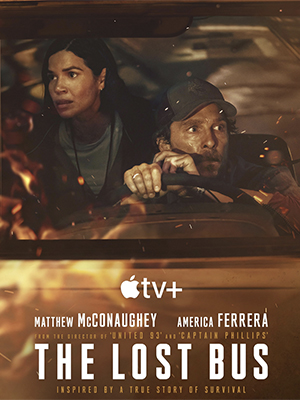
The Lost Bus

STREAMING REVIEW:

Apple TV;
Drama;
Rated ‘R’ for language.
Stars Matthew McConaughey, America Ferrera, Yul Vazquez, Ashlie Atkinson, Katie Wharton.

The survival drama The Lost Bus, which streams exclusively on Apple TV, is the latest film from director Paul Greengrass, known for gritty docu-dramas such as United 93 and Captain Phillips, alongside his work on the “Bourne” action franchise. As a resident of a high fire danger area in California, my antenna went up when this film was announced as a must-see, knowing the immediate, visceral reality of this threat. Starring ‘A’-lister Matthew McConaughey as bus driver Kevin McKay — a man grappling with personal troubles who volunteers for the desperate rescue — and America Ferrera as teacher Mary Ludwig, the initial combination promises an amazing, high-budget, high-stakes retelling of a true story from the 2018 Camp Fire, which became the most-destructive wildfire in U.S. history and the deadliest in California history with 85 fatalities. To its credit, the film does nail the sheer terror of the event; the fire itself seems believable, and I genuinely felt the suspense and the panic of being trapped, something I’d like to avoid.

However, that’s where the positive feelings largely stop, because, overall, the film feels a bit lame. The massive talent and production value raise expectations so high, which is why the disappointment is so palpable.

Where the production design and special effects succeed in creating a terrifying spectacle of flame, the human element — crucial to a survival drama — fails to connect. The children on the bus, who are at the epicenter of the danger, never seem freaked out enough to be believable. Their reactions often feel unnatural and muted, which is incredibly distracting and pulled me right out of the moment that the fire effects are trying to create. It gives the whole thing a slightly contrived feeling, which is a real shame given the serious subject matter.

Another odd note is the quiet tension building between McKay and Ludwig. I couldn’t help but wonder if the script was subtly hinting at a romantic future. This beat felt entirely unnecessary and tonally bizarre, given the death and destruction surrounding them. This odd, evolving chemistry serves as yet another distraction from the primary life-or-death survival story. On a related note, the only side character who makes a lasting impression is the school bus dispatcher, Ruby Bishop (played by Ashlie Atkinson), whose tough exterior and constant pressure on the already downtrodden McKay make her the perfect character you love to hate.

The film attempts to utilize its technical prowess to capture the scale of the Camp Fire, detailing how the blaze originated from the failure of an improperly maintained PG&E transmission line and how high winds instantly transformed a spark into an uncontrollable inferno that engulfed Paradise. The narrative focuses on the initial chaos of the town’s evacuation, with Fire Chief Ray Martinez (played by Yul Vazquez) ultimately forced to abandon fighting the fire and focus solely on saving lives. This backdrop provides urgency for McKay’s mission, showcasing the gridlocked, fire-encircled roads he was forced to navigate.

Yet, despite acknowledging this devastating scenario — including the criminal negligence of PG&E — I still felt the movie failed to give the fire the historical gravity it deserved, instead treating the tragedy as mere scenery for a clunky, closed-quarters drama with underdeveloped characters. Given that this is a true story about real heroes, it feels unfair to focus so much on Hollywood-style drama.

The climax is arguably the most baffling segment. After sheltering in place briefly, the bus makes a high-speed dash, driving directly through the walls of fire on what appear to be a narrow, perhaps cliffside, road. It’s chaotic and visually unclear, and I was left staring at the screen, wondering exactly how they navigated it or what was even happening. Despite the constant, high-level dread the film generates throughout its run time, the resulting happy ending, while a relief for the characters, feels unearned and poorly executed, leaving a confusing and messy impression rather than providing catharsis. It is a testament to the crew’s dedication, however, that McConaughey was able to maintain his soot-covered, exhausted look over the weeks of filming in New Mexico’s stand-in locations.

Ultimately, The Lost Bus manages to capture the fear of fire but loses the plot in its attempts to create conventional, Hollywood-style suspense, delivering unbelievable performances and a frustrating lack of clarity in its most pivotal moments.

Subscribe HERE to the FREE Media Play News Daily Newsletter!
Monster: The Ed Gein Story

STREAMING REVIEW:

Netflix;
Drama;
Not rated.
Stars Charlie Hunnam, Suzanna Son, Vicky Krieps, Laurie Metcalf, Tom Hollander.

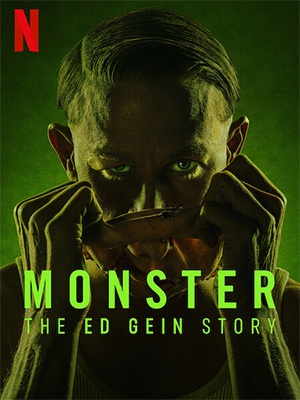
The third chapter in Ryan Murphy’s true crime “Monster” franchise offers grotesque visuals and high production values as expected, but drowns the terrifying truth of the “Plainfield Ghoul” in cheap fictional drama and unnecessary Hollywood subplots. If you come to this series seeking a faithful historical account of the infamous man whose wholly unacceptable crimes inspired Psycho, The Texas Chainsaw Massacre and the chilling body manipulation and skin-suit horror seen in The Silence of the Lambs — be warned: this is less a documentary and more a graphic, high-budget psychological fantasy layered thinly over fact. However, “Monster: The Ed Gein Story” forces you to confront the darkest aspects of the human condition and our own complex fascination with case histories of killers. It succeeds in being viscerally unsettling, and if you’re a fan of Murphy’s shows that use trauma and a murderer’s mental state to push boundaries, you’ll love this offering.

The production design, costuming and cinematography are terrific, crafting a dark, oppressive atmosphere appropriate for the mid-century Midwest. The special effects depicting Gein’s macabre creations, from the lampshades of human skin to the notorious “woman suit,” are rendered with a sickening realism. However, these shots often linger, crossing the line from frightening observation into needless shock. This darkness, both literal and thematic, is frequently irksome and contributes to the feeling of a story stretched beyond its capacity — much like Gein’s creations, it feels awkwardly stitched together from mismatched parts. While it doesn’t usually move too slowly, this is an eight-episode series that could have been told more concisely in six.

The show’s blurring of fact and imagination, particularly with characters such as Adeline Watkins, also brings some confusion for viewers. “Monster” positions her as Gein’s long-time sociopathic soulmate. This catalyst actively pushed his transition from grave robber to murderer, feeding him gruesome Nazi-influenced comic books and morbid photographs. A spectacular piece of fictional writing, based on the barest thread of truth (a woman who briefly knew Gein and retracted sensational claims) feels unnecessary, overshadowing the far more terrifying truth of Gein’s singular, isolated psychosis driven by his mother. The fictionalization is hammered home when Adeline returns in the finale to confess her own current list of murder fantasies, cementing her as a dramatic foil. Plus, the brief appearance of an acclaimed actor like Elliott Gould in a minor, insignificant role only amplifies the feeling that the producers were too focused on stunt casting rather than substantive storytelling.

While the production surrounding his character is flawless, I found the core performance of Charlie Hunnam as Ed Gein to be genuinely distracting and a massive weakness. Beyond the erratic voice work, which constantly varies between a perturbing whine and something entirely unbelievable, Hunnam attempts to portray Gein as a childlike, simpleton figure. The inherent lunacy of Gein’s documented acts should have been enough; the production decision to mandate, or allow, an affectation was nonessential. The choice to cast Hunnam, a British actor, to play a Wisconsin-born man whose family was American with German roots, creates an epic disadvantage for the performance, leaving a shifting, jarringly inaccurate and annoying dialect. I could also tell that the actor put all of himself into the role, and his effort deserves accolades despite it not hitting the mark. 

The series refuses to seriously explore the roots of Gein’s pathology; key details like his psychosexual confusion, obsession with wearing women’s clothing, and his mother’s condemnation of “Jezebels” are never placed into a meaningful context, leaving the audience as confused as Gein himself. Similarly, the final victim’s son also eerily referred to his mother as “Mother,” just like Gein, but this key parallel to Psycho is introduced but never leveraged or explained.

The show’s attempt at commentary about commentary — using the story of Gein to critique crime fiction and pop culture — is most visible in the subplot involving Alfred Hitchcock and the making of Psycho. The deeper ambition of this scheme is to highlight Psycho‘s enduring legacy: The film redefined fear by ending the era of external, non-human monsters and forcing audiences to confront the terrifying realization that the monster was human, living inside us. While the actual link between Gein and Norman Bates is essential to cultural history, the decision to physically depict Hitchcock, Anthony Perkins, and sex scenes involving Tab Hunter feels cheap. These spectacles are gratuitous detours that meander away from the core tragedy of Plainfield. They muddle things, adding layers of needless fictionalization. The fascinating story of how Gein’s legend influenced Hollywood could have been a separate, far more compelling film or series in its own right, rather than shoehorned into an already overstuffed narrative.

Ultimately, season three of “Monster” fails to answer the most profound questions: We are left with no satisfactory understanding of why Ed Gein did what he did, whether his pathology was born or manufactured, or the true complexity of what led to his madness. The show introduces Ed’s abusive, drunken father and his brother — who Ed is shown killing early on — but uses these devastating family dynamics as mere plot points, failing to explore how the entire family suffered profound dysfunction. 

While we get a strong sense that Gein’s insanity is rooted in his “puppy-dog worship” and secret rebellion against his mother, the nuance and consistent exploration of this central relationship lack the required intellectual takeaway. By failing to investigate and showcase this devastating psychological lineage, the show only succeeds in exploiting the terrifying legacy of Ed Gein, rather than helping us understand him. In the final episodes, his diagnosis of schizophrenia and the revelation that he was suffering from deep delusions (like his ham radio conversations being just himself talking) is treated as a storytelling tool rather than an anchor for subconscious insight. This performance culminates in a bizarre, hallucinatory musical number where Gein, on his deathbed, is celebrated by other real and fictional killers, including Charles Manson, as the “Godfather” of the genre. It ends up being purely sensational Hollywood entertainment, which is also “the show inside the show.” I kept craving more authenticity and suspense. Watch it (with a friend) for the exceptional and highly explicit gore, but be wary of its confused truthfulness.

Subscribe HERE to the FREE Media Play News Daily Newsletter!
John Candy: I Like Me

STREAMING REVIEW:

Prime Video;
Documentary;
Rated ‘PG-13’ for smoking, some strong language, drug material and suggestive material.
Features John Candy, Bill Murray, Chris Candy, Jennifer Candy-Sullivan, Rose Candy, Steve Aker, Dan Aykroyd, Dave Thomas, Martin Short, Eugene Levy, Catherine O’Hara, Andrea Martin, Tom Hanks, Macaulay Culkin, Robin Duke.

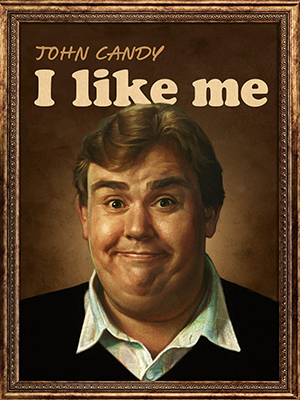
The new documentary John Candy: I Like Me, streaming on Prime, isn’t just a love letter, it’s a eulogy laced with hard truths. My memories of Candy are all sunshine and laughs — the genius improv of “SCTV,” the relentless traveler in Planes, Trains and Automobiles, and the big-hearted Uncle Buck. He was the ultimate “awe, shucks,” guy, and for a long time, that’s all we needed to know.

But this film goes deeper, and it’s both amazing and incredibly sad.

What makes the documentary work is its simple, unvarnished honesty. It confirms everything we suspected: Candy was a genuinely good, dependable and generous man. The use of clips showcasing his childhood, family life and behind-the-scenes trajectory reveals how he authentically became a true Hollywood legend. After 31 years, he’s far from forgotten, but the film does a terrific job of reminding us how profound his contribution was to comedy and entertainment. His peers — icons such as Tom Hanks, Steve Martin, Martin Short, Catherine O’Hara, Eugene Levy and Dave Thomas — all show up to confirm his immense talent and his innate goodness. 

The documentary also features testimony from Macaulay Culkin, who speaks movingly about the paternal care Candy showed him on the Uncle Buck set — a profound kindness that contrasted sharply with his difficult real-life father — and notes he was sadly never able to thank the comedian as an adult, highlighting how Candy treated his young co-stars with the same respect he afforded his legendary colleagues.

Roles were often written for his personality, and he could ad-lib them into gold, adding feeling and meaning that only he could bring. This was never clearer than in his deep partnership with writer and director John Hughes, who became like family and crafted some of Candy’s most enduring roles specifically to leverage his unique, lovable genius. Even the legendary chaos of Hollywood is captured in a funny story, like when he embraced Jack Nicholson’s sudden visit for an all-night party — and then used that legitimate exhaustion to fuel the hilarious racquetball scene in Splash with Tom Hanks.

Yet, lurking beneath the laughs was a darkness, a wound that never healed. We learn the brutal simplicity of it: The sudden loss of his father at age 5 drove a deep, unresolved pain. Instead of tackling that grief healthily, he became a drinker and an eater, allowing his already large frame to balloon past 300 pounds. He flat-out shunned doctors and anyone who told him to change. He embraced the chaos, and the documentary is unflinching in showing the cruel fat-shaming interviews he endured in the late 1970s and ’80s — moments that, by today’s standards, are just unacceptable and genuinely painful to watch.

His dedication was fierce — to his high school sweetheart, Rose, who seems to have been the only true grounding he had, and to his beloved nation, Canada. This dedication led to his final, painful hurrah: buying a Canadian Football Team with Wayne Gretzky, only to be betrayed and financially ruined by an investor he trusted, Bruce McNall, who was later revealed to be a crook.

The parallel that hits you in the gut, the truly tragic part, is the timeline: His father succumbed to a heart attack at 35, and Candy himself died at 43. He was found dead in his sleep in Durango, Mexico, while on location filming the Western comedy Wagons East! in 1994. This final film, which he reportedly made purely for contractual reasons, was completed using body doubles and released posthumously, resulting in both critical and commercial failure. It was a premature, heartbreaking end. He was supposedly reading the Bible just before he went to sleep, only to be found by the side of his bed the next morning.

Thanks to the work of Colin Hanks (who’s proving his nepo-baby status with stellar documentary skills, following up his great Tower Records film) and producer Ryan Reynolds, the film is insightful, enlightening, and deeply respectful. It lets Candy’s kids — who have clearly spent countless hours in therapy — process and honor the complicated, beautiful and broken man their father truly was.

Ultimately, this film reveals the beautiful paradox: What we saw on screen was truly him — the genuine, sweet man. But it was his technical genius — that impeccable timing, the subtle delivery, the perfect turn of the head — that transformed him into a comedic great. This isn’t just a tribute; it’s a complicated love story about a man who gave us what appeared to be effortless joy while struggling to find it for himself. It’s sad, sure, but it’s essential viewing.

Subscribe HERE to the FREE Media Play News Daily Newsletter!
Honey Don’t!

STREAMING REVIEW:

Peacock;
Comedy;
Rated ‘R’ for strong sexual content, graphic nudity, some strong violence, and language.
Stars Margaret Qualley, Aubrey Plaza, Chris Evans, Charlie Day.

It only takes the opening moments of Honey Don’t! to realize the story is taking place in Bakersfield, Calif. For this viewer, who lived in the city nearly 44 years ago for a nanosecond, the distinct vibe of the Central Valley town felt immediately and accurately captured. This aesthetic success, however, ultimately highlights the film’s main failing: a stylish shell wrapped around a hollow core.

The directorial effort from Ethan Coen, co-creator of genre classics such as Fargo and The Big Lebowski, and co-writer Tricia Cooke, whose seasoned knowledge of pace and narrative timing comes from editing films like O Brother, Where Art Thou?, shines brightest in its sense of place. The film’s opening montage immediately establishes the setting with evocative glimpses of local landmarks — the Fox Theater, the Bakersfield Police Department, and the Nile Theater — juxtaposed with grittier downtown shots. To ensure this authenticity, the creative pair even traveled to Bakersfield after principal photography wrapped to capture additional scenery for the title sequence.

Though the story is firmly set in Bakersfield, the film was primarily shot in Albuquerque, NM. Oscar-nominated production designer Stefan Dechant (who worked on The Tragedy of Macbeth) faced the unique challenge of recreating Bakersfield’s modest architecture. Drawing inspiration from classic noir detective stories in the vein of Dashiell Hammett, Dechant utilized research on local trailer parks, storefront churches, and lived-in homes to build the sun-drenched, small-town world of P.I. Honey O’Donahue. Only one sequence, a road scene filmed on Kern Canyon Rd. in Bodfish, actually took place in Kern County.

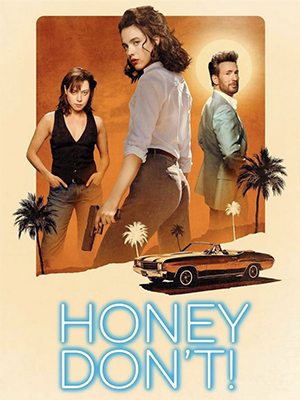
The film features a strong ensemble cast, with Margaret Qualley, known from her acclaimed role in Netflix’s Maid series, leading this group as the private investigator Honey O’Donahue, who probes a series of strange deaths tied to a mysterious local church. A recognizable ensemble, including intense deadpan Aubrey Plaza, Charlie Day, and Chris Evans, supports Qualley. Qualley and Plaza share a notable dynamic as Honey begins a steamy affair with Plaza’s curt police officer, M.G. Falcone, an explicit queer twist rarely seen in a neo-noir film of this scale. This is counterbalanced by the recurring, often clumsy comedy provided by Charlie Day’s homicide detective, Marty Metakawitch, who repeatedly pursues Honey despite her constant assertion that she “likes girls.”

Cooke praises costume designer Peggy Schnitzer for creating a wardrobe — heels in the dirt — that is both “hyper-feminine, super sexy, but also grounded in Bakersfield,” reflecting Honey’s complex presence as she navigates a world of seduction, lies and stylized action. Qualley, a dancer, uses her physicality to great effect.

The concept — blending a private-eye story with a murder mystery, drawing inspiration from noir classics — has immense promise. However, despite the six years spent writing this detective adventure, the narrative lacks the necessary density and coherent drive. While it attempts to emulate the style of a film noir, it falls short of the dry, knowing humor found in classics such as The Big Sleep, Rear Window or The Grifters — films that benefit from the narrative depth of their “novel” source material.

Honey Don’t! runs for a tight 89 minutes, a good length for this type of genre piece, and is visually arresting with its cool, stylized vibe. Yet, the film’s central issue is its execution of the story. Despite finding some of the acting and depictions stimulating and entertaining, the narrative ultimately failed to hold this viewer’s attention, instead unfolding as a series of vibrant, disconnected vignettes rather than a cohesive, compelling mystery. This artistic incoherence was reflected commercially, as I learned the film struggled, grossing approximately $7.3 million worldwide against an estimated budget of $20 million.

Subscribe HERE to the FREE Media Play News Daily Newsletter!
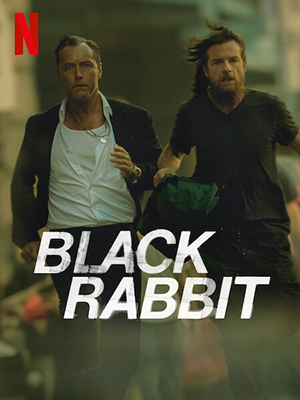
Black Rabbit

STREAMING REVIEW:

Netflix;
Thriller;
Not rated.
Stars Jude Law, Jason Bateman, Cleopatra Coleman, Sope Dirisu, Amaka Okafor, Troy Kotsur.

Let me be completely honest: I almost bailed on “Black Rabbit.” About 30 minutes into the first episode, the lighting was so dim and the plot felt so aggressively chaotic that I considered turning it off. But something — the raw, electric tension between Jude Law and Jason Bateman — kept me going. I’m telling you now, if you’re a potential viewer, you absolutely need to push through that initial confusion, because what unfolds is a dark, gripping, and profoundly tragic story that demands a second watch to truly appreciate. The series offers a harsh look at how a glamorous, high-end restaurant can serve as a front for toxicity underbelly.

The series centers on two brothers: Jake Friedken (Jude Law), the sleek and ambitious face of their Lower Manhattan hotspot, Black Rabbit. While Law is overall a strong lead character, his American accent sometimes descends into a weird variation at times. Despite that, Jake’s world is on the verge of major success, including a coveted New York Times review and plans for a new venture, but this world is upended by the return of his older brother, Vince (Jason Bateman). Vince is immediately accosted by henchmen of a powerful, deaf loan shark, Joe Mancuso (Troy Kotsur), to whom he owes $140,000. 

The show does an excellent job of creating tension for the viewer and drawing you into the screen, as well as the intense emotions everyone is feeling. I truly felt, as a viewer over several evenings of the series, that I was in Black Rabbit, soaking up the camaraderie, food, drinks and conversation. Even the artistic details are there from the start; if you can catch them, the stylized, animated vignettes in the opening credits are subtle clues — a stack of coins or an implied TikTok logo — foreshadowing the specific drama of the episode. Crucially, the show’s pedigree extends behind the camera: Jason Bateman directed the first two episodes, setting that frantic tone, and his former “Ozark” co-star, Laura Linney, directed a couple of episodes as well, cementing the quality of the filmmaking.

Spoiler Alert: Plot and Character Details Follow

What truly elevates this show is the psychological excavation of Vince Friedken, which explains every destructive choice he makes. I initially found his almost-cocky nonchalance in the face of death “off-character,” but I realized that very trait is a symptom of his profound damage. Vince is the family’s secret, self-sabotaging protector. The trauma of his youth has warped his entire life: He killed his abusive father with a bowling ball to save his mother. He’s been living with that guilt, seeking to mute the pain through addiction and financial ruin. The nonchalance is a likely dissociative coping mechanism — a mask he wears because nothing the bad guys can do is worse than the secret he’s already carried for decades. The production designers did a terrific job with the club: The design aims for a mix of “shabby chic” and “bohemian louche,” drawing inspiration from real, now-closed influential NYC nightlife hotspots, most notably The Spotted Pig. The intent was to create a sophisticated “rock ‘n’ roll DNA” with “anything-goes” layers, which absolutely heightened the tension. The series culminates when the brothers are forced to stage a robbery at Black Rabbit to pay the debt, a plan that goes violently wrong.

This high-calibre storytelling comes at a cost, of course; while Netflix is famously guarded about exact production numbers, securing Law, Bateman and deaf American actor Troy Kotsur, plus filming extensively in high-cost New York City with elaborate soundstage builds, signals a major prestige investment intended to generate global buzz.

The climax of the series — Vince’s gut-wrenching final confession to Jake and his tragic death on the rooftop — is the devastating payoff to this intense character study.

The final verdict remains: “Black Rabbit” is a perfect, self-contained hit of high-octane modern drama with guns, violence, sex, drugs, suicide and grit. It was billed as a limited series, and the ending is definitive — Vince is gone, and the Black Rabbit is closed. However, I did feel that a continuation could be compelling, perhaps focusing on Jake’s life post-Vince and including more flashbacks of Vince to further unravel their history (as those snippets were incredibly helpful in understanding the first eight episodes). The hard truth, though, is that the intense engine of the first season was the volatile Jake/Vince dynamic, and it’s hard to imagine a second season could capture that lightning again and be as good. Perhaps it could be turned into an exciting real-life restaurant and bar scene in Vegas, brought to life by Netflix.

Subscribe HERE to the FREE Media Play News Daily Newsletter!
Live Aid: When Rock ‘n’ Roll Took on the World

STREAMING REVIEW:

HBO Max;
Documentary;
Not rated.

As a big music enthusiast who didn’t get to attend either Live Aid event in person but enjoyed all the screen time, I found the BBC’s four-part documentary Live Aid: When Rock ‘n’ Roll Took on the World, which started streaming on HBO Max in July 2025 to celebrate its 40th anniversary, to be truly excellent and deeply inspiring. The series offers a special behind-the-scenes look at the events and into the thoughts of its inspiring leader, Bob Geldof. It’s a heartfelt tribute to his journey from a fading rock star to an influential international activist, showcasing how “pop and politics” reached new heights in 1985.

The documentary does an outstanding job of telling the story, with a narrative driven by Geldof himself. Through extensive archival footage and new interviews with key figures such as Bono and Sting, the series chronicles Geldof’s journey from seeing a devastating BBC news report on the Ethiopian famine to organizing the single “Do They Know It’s Christmas?” with a who’s-who of British music, highlighting the role of his co-writer, Midge Ure. It then follows the story as the snowball kept rolling, inspiring the creation of USA for Africa’s “We Are the World,” and ultimately leading to the massive, satellite-linked Live Aid concerts. The documentary also highlights how the cause was so powerful that many disbanded groups explicitly reunited for these performances, and it showcases iconic performances from the concerts, like Queen’s legendary set.

The four episodes — “A Band Aid,” “The Global Jukebox,” “The Greatest Show on Earth” and “Live 8 — 2005” — are all rich with fascinating details and emotional moments. The episode covering the concert day itself is particularly cool, with backstage stories like Phil Collins’ historic use of the supersonic Concorde jet to perform in both London and Philadelphia. Both Live Aid and Live 8 broke new ground on carriage and technology; the latter is even noted as a seminal moment for the internet as a massive distribution tool. The final episode, which revisits the brand’s resurfacing as Live 8 for the 2005 G8 summit, shows how Geldof and Bono partnered to pressure world leaders into action. It even features interviews with politicians such as George W. Bush, Condoleezza Rice, and Tony Blair discussing the movement’s political impact, which led to commitments of billions of dollars in aid and debt relief. It also includes a genuinely touching story of a young woman who, as a child near death from starvation, appeared on the original BBC report. Healthy and educated now, she appears in the documentary on stage in 2005 with Madonna, and with her father recently, telling the story of how she was saved from famine — a moment that moved me to tears.

The documentary powerfully illustrates the scale of this achievement. While we now take global communication for granted, Live Aid raised an astounding amount of money, with some sources claiming the total reached upward of $245 million. And while Live 8 was famously not a fundraiser, it was arguably even more successful, using the power of the internet to pressure world leaders into a massive commitment of aid and debt relief for Africa. It all started with one person — a champion named Bob Geldof — who, thanks to his access and a television program, was moved to action.

While the series is a must-watch, it does have one notable flaw. Initially created for a CNN broadcast, it was later shifted to stream on HBO Max, and the producers didn’t take the time to trim some of the repetitive aspects at the head of each episode. This makes the beginning of each installment feel redundant before diving into new details.

Despite this minor issue, the series is a genuinely comprehensive and inspirational piece of work. As a retired music business executive, it brought back vivid memories of the concerts and their monumental impact. It reminded me of the struggle against injustice and how the music community inspired people all over the world to serve a greater good. The film left me with a renewed sense of how music can change the world.

Subscribe HERE to the FREE Media Play News Daily Newsletter!

From Around the Web