Live sports have been steadily moving to streaming, but Feb. 8 may mark a decisive shift. On that day, NBC and Peacock will broadcast both Super Bowl LX and the 2026 Milano Cortina Winter Olympics. For an industry that has long debated whether streaming can support the biggest live sporting events at scale, this month will serve as a real-world, high-stakes test.
Francesca Pezzoli
For Peacock, this moment represents more than a programming milestone; it is an opportunity to validate its ambitions in live sports.
The stakes are high. Live sports viewers are less forgiving than on-demand audiences; even minor issues with access, discovery or technical performance can quickly erode trust. However, the rewards are substantial if Peacock delivers a seamless experience.
Success will not be measured only by subscriber growth or viewing time. It will be defined by visibility, consistency and execution: how often Peacock appears on the home screen, how effectively it surfaces live moments, and how intuitively it guides viewers between events, highlights and replays. In a crowded streaming environment, winning sports isn’t just about having the rights; it’s about owning the digital shelf.
CTV: The New Battleground for Attention
Connected TV (CTV) is becoming increasingly important as live sports viewing shifts to this platform. Currently, 80% of U.S. CTV users stream live sports, according to the “LG Ad Solutions report: Stadium to Screen,” making the TV home screen a critical gateway to reach fans.
On Feb. 8, the competition will extend beyond Peacock versus other streaming services. It will be a visibility contest across Roku, Fire TV, Samsung, LG, and other platforms, where device-level discovery determines which audiences see first. Which apps and live events are featured on home screens, and which platforms successfully convert viewer intent into action, will ultimately determine success.
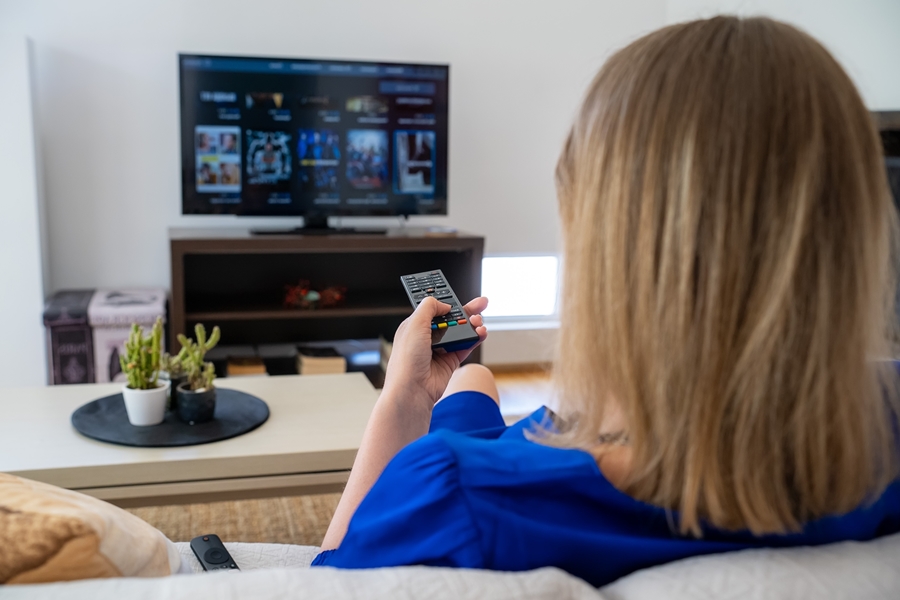
For viewers, the experience will feel simple: turn on the TV and watch. Behind the scenes, however, the CTV merchandising strategy will play a disproportionate role in determining who wins attention during one of the most competitive live sports days of the year. This is the turning point where home-screen visibility becomes as valuable as the rights themselves.
The Paris 2024 Olympics set viewership records across linear, digital and social platforms. The 2026 Winter Olympics are expected to be even more multichannel. Fans will move between live broadcasts, streaming apps, highlights, social clips and second-screen experiences. For Peacock, this means alignment across content strategy, CTV execution and device-level partnerships.
Last year’s Super Bowl on Fox and Tubi was the most-watched Super Bowl and telecast in U.S. history. Tubi provided a top-tier streaming experience for free, a key message highlighted in their most prominent placements across Samsung TV, LG TV and Google TV.
To achieve success this year, Peacock needs to secure premium advertising environments, establish dominant home-screen placements, and ensure effective promotion across CTV devices, including Roku, Amazon Fire TV, and smart TVs.
Why This Matters
February will be an important case study for sports streaming. In addition to the Super Bowl and Olympics, Peacock will air the 2026 NBA All-Star weekend. It will show how audiences behave when major live events are available on streaming platforms, how well CTV environments facilitate discovery, and whether the execution can meet expectations under such demanding live conditions.
Francesca Pezzoli is VP of marketing at Looper Insights, a company that helps major Hollywood studios, global streamers, local broadcasters, and entertainment platforms understand how content is promoted across connected TV and digital storefronts and how that visibility translates into audience engagement and viewership.
Think back to the last time you mindlessly scrolled through TikTok. You probably saw a highly polished ad seamlessly transition into a raw, funny clip from someone’s kitchen, followed by a snippet of a big-budget movie trailer remixed with a trending sound. That is where we are right now: a fascinating, sometimes chaotic, collision of media formats. This is what inspired me to write what some might call a “think piece” — packed with links for deeper dives — about the current media landscape and how it’s likely to evolve in the coming years, driven by shorter user-generated content, influencers, easier editing, and artificial intelligence.
Rob Tonkin
For years, we had relatively distinct categories: the big-screen spectacle of cinema, the serialized storytelling of television, and the bite-sized, authentic (or sometimes performative) content of social media. Each had its own creators, its own consumption habits, its own feel. But things are starting to shift subtly. Look closely, and you’ll see cracks in these traditional walls. High-production value commercials are adopting the visual language of TikTok. Netflix uses AI behind the scenes to optimize workflows. Influencers are creating content that rivals the production quality of early YouTube channels, sometimes even landing their own deals with traditional media. The change is starting in the very tools and techniques being used across the spectrum. The democratization of powerful editing software and the ubiquity of high-quality smartphone cameras have significantly leveled the playing field.
A perfect illustration of this is the burgeoning world of “branded entertainment.” For instance, a recent social media campaign for Pure App, a dating service, created a short, humorous “bit” featuring Amanda McCants. In the sketch, McCants plays two distinct characters: one embodies the dating scene in New York City and the other represents Los Angeles. The humor comes from the contrasting stereotypes and experiences, with McCants showcasing her acting range. This approach mirrors another example in the branded content sphere: the clothing brand Cuts producing short, high-quality videos starring established actors, such as Jeremy Piven, alongside influencers like McCants. These aren’t just quick commercials; they often feature mini-narratives and aim to be entertaining and shareable in their own right. The goal is to create content so compelling that viewers engage with it and share it without feeling like they’re watching an advertisement. The brand isn’t just buying ad space; it’s becoming a media company, producing its own programming with a cast that blurs the line between traditional celebrities and digital creators.
True blending is happening on multiple fronts. Some platforms have emerged to specifically serve the short film market, acting as professional curators and distributors. Services such as ShortsTV, Short of the Week, and Klipist are carving out a niche for high-quality, independent short films. Major distributors such as Mubi are also acquiring and streaming curated shorts alongside their feature-length titles.
It’s tempting to think this means the major streaming networks will just start showing anything from anyone, but the reality is more nuanced. The shorts you see on major platforms such as Netflix and Paramount+ are not typically unsolicited user-generated content. Instead, they are professionally produced pieces from emerging filmmakers. Netflix, for example, has collections such as “Fresh Perspectives,” a series of shorts from U.S. and Canadian filmmakers, and its popular animated anthology “Love, Death + Robots,” which showcases short-form science fiction stories by established studios. These strategies generally focus on exclusive, high-quality content to drive subscriptions, and most streaming services have explicit policies that exclude unsolicited submissions from the general public.
However, a new model is emerging that bridges these two worlds. Companies are now acting as curators, bringing the best of user-generated content to a more traditional streaming environment. In a recent move, FilmRise launched a new service on Amazon Fire TV that features curated short-form videos from popular social media creators such as Preston and Brianna, Uncle Roger, and Unspeakable. While this isn’t an in-house production by a major network, it represents a new way of professionally distributing user-generated content on a streaming platform, signaling a shift toward recognizing the value of these creators’ libraries.
Beyond the content itself, new business models are disrupting the industry from the ground up, and the format and perspective of the content itself define them. This is the phenomenon of verticals — not in the business sense of owning a supply chain, but in the sense of the vertical video format that dominates our phone screens. These aren’t just short videos; they are a new class of hybrid media that’s thriving by monetizing a level of obsession that traditional, horizontal-screen entertainment can’t. Examples of this model are everywhere, from companies that produce cinematic-quality dramas to those that create episodic reality TV, all designed to be consumed on a phone. The goal is to hook viewers with a bingeable, interactive narrative that’s ideally suited to their mobile viewing habits. These businesses can charge a premium for their services, because they’re not just selling content; they’re selling access to a complete, optimized entertainment experience.
In the near term (the next year or two), we can expect to see more experimentation like this. Traditional media companies, feeling the pressure of short attention spans and the allure of “authentic” content, will dabble more with short-form formats and user-generated aesthetics within their professionally produced content. Meanwhile, brands will continue to double down on their role as content creators, competing directly with television and film for our attention on social media.
Looking further ahead (over the next five years), I predict a more significant blending of these trends. The rise of sophisticated AI tools will empower individual creators to produce content that rivals studio quality in certain aspects. This doesn’t mean the end of big-budget filmmaking, but it will likely redefine its purpose. Large studios may focus more on immersive experiences, live events like The Wizard of Oz in AI, or truly groundbreaking visual spectacles that are beyond the reach of individual creators. Meanwhile, a new generation of media platforms may emerge — hybrids that expertly curate and perhaps even incubate high-potential user-generated content, giving it a platform alongside more traditional fare. The skills that make someone a successful social media creator — authenticity, direct audience connection, and an understanding of what goes viral — are now becoming as valuable as a film degree.
How will this affect us as viewers? Our media diet will become even more personalized and fragmented. We’ll flit between highly polished shows and the seemingly unfiltered lives of individuals, consuming content that caters to our specific interests at any given moment. The very definition of “entertainment” might broaden to include more interactive and participatory experiences.
For content makers, the landscape will be both exciting and challenging. The barrier to entry for creating content is lower than ever, but standing out in an increasingly crowded space will be tougher. The old gatekeepers of Hollywood are now looking to social media platforms as the new talent pool. The traditional career path in the entertainment industry might become less linear. We can expect to see more hybrid creators who blend their own independent work with collaborations on larger productions, and new roles will emerge for individuals such as AI-assisted storytellers and community managers who bridge the gap between creators and audiences.
The entertainment industry at large will face an intriguing transformation. Specific traditional roles might be challenged, such as the need for large teams for visual effects or basic video editing, as AI tools become more sophisticated. In this new era, certain traditional film roles are at risk of being automated or outsourced. Sound editors, 3D modelers, and concept artists are among those whose work may be partially replaced by AI tools that can quickly generate visuals or audio. Similarly, entry-level jobs such as storyboarding and some post-production tasks can now be streamlined by AI, potentially making it harder for aspiring professionals to get their foot in the door.
However, this doesn’t mean a mass exodus from the industry. It means a necessary transition. As AI takes on the more repetitive and technical tasks, new roles are emerging for people who can master the art of collaborating with AI. These roles bridge the gap between AI’s generative power and the human needs for authenticity, engagement, and ethical oversight.
New roles such as AI-assisted storyteller, AI creative director, and prompt engineer will focus on using AI as a tool to enhance, rather than replace, human creative vision. An interactive narrative designer will use AI to create dynamic characters and adaptable plots for immersive stories. In the creator economy, roles such as community manager and creator operations manager will be more crucial than ever, focusing on building authentic human connections that AI cannot replicate. Beyond the creative sphere, new jobs such as AI integration specialist and AI ethics officer will guide organizations through the process of adopting AI responsibly, ensuring systems are transparent and unbiased.
Ultimately, history tells us that media formats don’t die — they evolve. The advent of photography didn’t kill painting; it pushed it toward new forms of expression. The explosion of the internet hasn’t killed traditional media, but it has forced it to adapt. We can expect a similar pattern here. High-budget productions and user-generated content won’t necessarily replace each other. Still, they will instead find new ways to coexist and influence one another, ultimately giving us a richer, more diverse, and perhaps more overwhelming media landscape. The key will be adaptability, both for creators and the industry itself, to navigate this great media mashup.
Rob Tonkin is a radio and music industry marketing veteran with a keen interest in film and media. A California native, he is a consultant, advisor and speaker who started in Sacramento radio at the age of 14 and rose to lead the Marketing Factory, producing the two-decade-long Honda Civic Tour, which included The Black Eyed Peas, blink-182, and One Direction. His memoir Asshole documents his self-destruction and eventual redemption.
Most people have probably noticed that things at the supermarket needed all the time, such as milk and eggs, are way at the back of the store, forcing shoppers to walk past loads of items before getting those necessities.
Usually at the front of the aisles — on the endcaps — are specially promoted items, not necessarily stuff people are always looking for.
During a family discussion about streaming home pages recently, someone complained about having to wade through lines of product to find the popular titles. I explained it was the classic “endcap effect.” The titles first seen are often those being promoted for financial or other marketing reasons — not necessarily for the best discovery experience.
While I get that merchandising will always be with us, even in the digital content marketplace, I do agree that endless panels of product to wade through make finding what you want to watch or discovering something new to watch annoying.
At the grocery store, decades of merchandising experience have made the shopping experience less intrusive and more visually appealing for the customer. I think the digital content marketplace still has some way to go in creating a browsing experience that balances the desires of both customers and marketers.
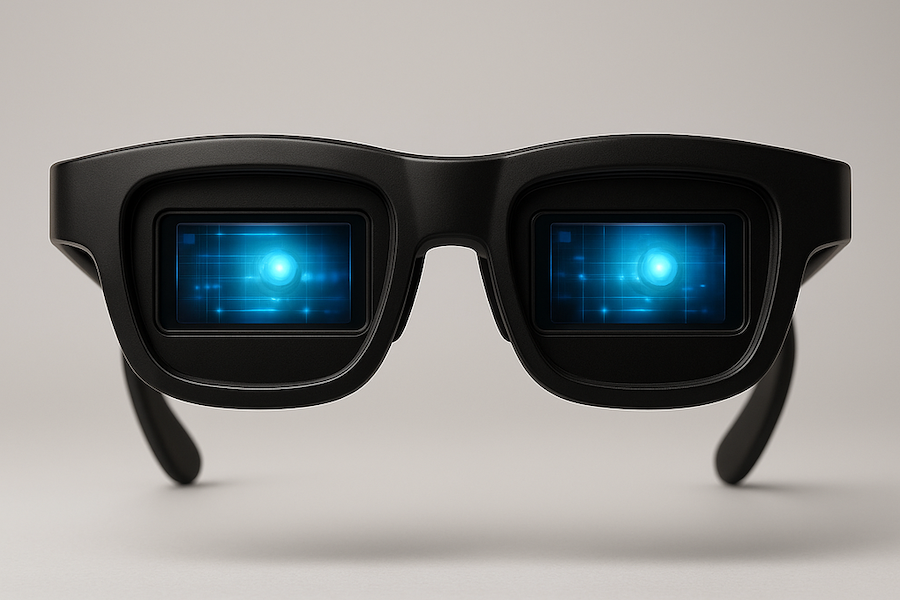
As the horizon of technology continually expands, the imminent evolution in how we interact with digital devices is taking a transformative leap forward. Smart glasses equipped with binocular display systems are emerging not just as a novelty but as a foundational shift in technology. These innovative devices are poised to revolutionize the entertainment industry and potentially replace traditional handheld devices, heralding a new era in personal technology.
The Technology Explained
Binocular display systems utilize dual displays to project images to both eyes, creating a stereoscopic effect that emulates natural human vision. This technology enhances depth perception and allows for a more immersive experience. In smart glasses, this can lead to augmented reality (AR) overlays that integrate seamlessly with the user’s environment, transforming the mundane into the extraordinary. Imagine watching a thriller where the suspense isn’t just on screen — it’s all around you.
Current State of the Market
The wearable technology market is burgeoning, set to expand to $54 billion by 2027, according to GlobalData. Smart glasses are a significant portion of this growth, with an expected CAGR of 13% over the next five years. Industry giants such as Apple, Google, and Meta are leading this surge with a combined investment of more than $10 billion in AR and VR technologies. Their commitment highlights the anticipated shift in primary devices for media consumption, signaling a fundamental change in how we will interact with digital content. Looking ahead, the evolution of smart glasses is set to take a significant leap by 2027, with industry giants such as Meta planning to introduce advanced models such as the Hypernova 2, which will feature binocular displays for both eyes, potentially setting new standards for immersive and interactive media experiences.
Implications for TV and Film
The adoption of smart glasses with binocular display systems could revolutionize viewer engagement. Nielsen reports that AR features can enhance viewer engagement rates by up to 30% over traditional methods. Additionally, PwC forecasts that immersive technologies, including AR, might constitute as much as 23% of all media consumption by 2030. This shift opens up novel content formats and genres that harness AR capabilities, offering interactive narratives and live events with unparalleled immersion.
Revolutionizing Entertainment: How Smart Glasses are Shaping the Future of Media
Enhanced Viewer Engagement: With direct and personalized content overlays, viewers can experience a level of interaction previously unattainable, deepening emotional and cognitive connections to the content.
New Content Formats: Innovations in AR could lead to new genres that leverage immersive environments, potentially reducing production costs through virtual sets and enhanced storytelling techniques.
Advertising and Monetization: Integrated, context-aware advertising could transform how brands engage with consumers, making promotions more subtle and effective.
Production and Distribution: These technologies enable content to be tailored for direct distribution to viewers’ smart glasses, bypassing traditional media channels and fostering a closer creator-audience relationship.
Challenges to Overcome
Despite the promising horizon, several hurdles remain. The Consumer Technology Association indicates that overcoming the initial consumer resistance seen in earlier wearable technologies — where adoption jumped from 12% to 35% within five years — will be crucial for smart glasses. Concerns about privacy and data security remain significant, with 54% of consumers hesitant due to potential privacy violations, according to a Harris Poll.
The Role of Content Creators and Entertainment Executives
As creatives and industry professionals, we must not only adapt to these technological shifts but also drive them. By pioneering and championing content designed for smart glasses, we can guide the industry toward this new paradigm. Collaboration with tech developers will be essential in ensuring that smart glasses meet the unique needs of the entertainment sector and that we have the right monetization strategies in place to capitalize on content and this new viewing experience. The future is at our doorstep, and it invites us not just to step through, but to shape what lies beyond. As studios, creators, viewers, and innovators, let’s embrace this technology and redefine the essence of media consumption. Join us in crafting this exciting future.
The evolution of smart glasses equipped with binocular display systems is poised to fundamentally alter the entertainment landscape. This technology offers more than just a new way to watch; it offers a new way to experience and interact with content. As we navigate this transition, the potential for innovation in storytelling, viewer engagement, and content personalization is immense. The integration of smart glasses into everyday life signals a shift deeper than just enhancing entertainment — it promises a comprehensive evolution in human-technology interaction. These devices suggest a future where traditional handhelds may become obsolete, overtaken by wearable technology that offers more enriched, connected, and immersive experiences. This shift challenges us to rethink not only how we consume media but how we incorporate digital technology into our daily lives. As this technology advances, it will redefine personal connectivity in ways we are just beginning to understand.
Jerry Inman is the chief marketing officer of Whip Media, which helps the world’s leading entertainment companies connect content to consumers, and track content performance anywhere.
The March 14-16 tally was the worst overall domestic weekend box office of the year and the slowest theatrical start for the month of March in 29 years. The 2025 theatrical market is off to a terrible start, with year-to-date North American ticket sales down 7% to $1.34 billion through March 25, according to Comscore.
It’s the shorter theatrical windows ailing theaters, according to theatrical executives and advocates.
Speaking Feb. 25 on a fiscal call, Adam Aron, CEO of AMC Entertainment, the world’s largest movie exhibitor, said shortened windows, including 17-day and 30-day slots spearheaded by NBCUniversal after the pandemic, should be abolished, adding that
the minimum window should move back to 45 days and beyond (60-74 days) depending on the movie.
“I think that the current industry experiment on windows has failed,” Aron said, adding longer windows would benefit a title’s incremental revenue potential.
Speaking April 1 at the CinemaCon 2025 confab in Las Vegas, Michael O’Leary, CEO of Cinema United, the theatrical trade group formerly known as the National Association of Theatre Owners (NATO), said extending — not shortening — the exclusive window for new release movies in movie theaters is key to the survival of the box office and Hollywood.
Indeed, the box office launch has long offered a significant marketing push for movies in the subsequent release windows — with the take often touted as a measure of a title’s audience appeal.
Netflix’s Ted Sarandos has said consumers are voting with their feet and has called theaters “a fairly inefficient way to distribute some movies.” That may be true for some films, but if more revenue doesn’t come in, the box office may hit a breaking point.
The industry has long been held up with tentpole titles, but as those are whisked into home venues it may not be enough to sustain the theatrical business.
Hold onto your hats, folks, because Sylvester Stallone, Jon Voight, and Mel Gibson are on the presidential case to tackle Hollywood’s woes.
Now, before we dive headfirst into this bygone-era blockbuster trio, let’s get one thing straight: Hollywood ain’t exactly on life support. Sure, it’s facing some challenges, but it’s far from flatlining.
So, what’s the perceived problem? Well, according to the doomsayers, Hollywood’s creativity has gone the way of the dinosaur, replaced by an endless parade of superhero flicks, reboots and sequels. They bemoan the lack of originality, the obsession with political correctness, and the feeling that Hollywood’s become an elitist echo chamber, out of touch with the average Joe (and Jane).
But the real game-changer, the one that’s truly shaken Hollywood to its core, is the rise of the streaming giants. Remember those halcyon days of Blockbuster, where we’d brawl over the last copy of Gibson’s Lethal Weapon? Yeah, those days are as extinct as the dinosaurs. Netflix, Amazon and Apple are the new titans, wielding billions of dollars and armies of algorithms to conquer the entertainment landscape. They’re churning out content faster than a Stooges eye-poke, leaving traditional studios scrambling to keep up.
Meanwhile, the long-running production exodus that has been plaguing Hollywood for years is still a thorn in the industry’s side. FilmLA, the folks who track on-location filming in Los Angeles, are reporting a serious drop in shoot days. Why? Because those productions are skipping town faster than you can say, “Show me the money!” And where are they going? Well, it ain’t just some far-off land with lax labor laws.
Canada, our friendly neighbor to the north, has become “Hollywood North” with Vancouver and Toronto luring productions with their siren song of tax breaks, skilled crews, and diverse locations. Georgia’s also muscled its way into the game, transforming Atlanta into a Southern Hollywood hub (still part of the U.S.) with its own generous incentives and charming landscapes. And let’s not forget the international players — the U.K., Australia, New Zealand and even Eastern Europe are rolling out the red carpet for Hollywood productions, offering everything from medieval castles to state-of-the-art studios at a fraction of the cost.
So, back to our presidential posse. Can Sly, Voight and Gibson really wrangle this runaway train? While Sly’s still got the “Rocky” legacy and recent “Tulsa King” success, his blockbuster film days are in the rearview mirror. Ditto Mel Gibson, who’s also weighed down by controversy. As for Voight, he’s an Oscar-winning veteran, but that plaudit happened way back in 1979 — well before the advent of the internet and his starring role in Trump’s world.
The real power in Hollywood lies with the studio chiefs such as Alan Bergman at Disney, David Zaslav at Warner Bros. Discovery, and Donna Langley at Universal. They’re the ones greenlighting the big-budget spectacles and deciding which franchises get resurrected. Then there are the streaming titans such as Ted Sarandos at Netflix and Jennifer Salke at Amazon, who are shaping the viewing habits of millions with their data-driven decisions. And let’s not forget Zack Van Amburg and Jamie Erlicht, the heads of worldwide video programming at Apple, who are greenlighting shows such as “Ted Lasso” and “Severance.”
Now, this whole “aging action heroes saving Hollywood” scenario got me thinking —and perhaps it’s the decades I spent in the music business that sparked this comparison — but what if this was the music biz? Imagine the President tapping Ted Nugent, Gene Simmons and Kid Rock to rescue the industry from the clutches of streaming giants and dwindling profits. You’d have the Motor City Madman battling Daniel Ek at Spotify, the Demon negotiating with Oliver Schusser at Apple Music, and Kid Rock … well, Kid Rock would probably just be Kid Rock, stirring up a potent cocktail of controversy and patriotic anthems, maybe even trying to take down Michael Rapino and his Live Nation empire.
But just as in Hollywood, the real power in the music biz lies with the execs such as Lucian Grainge at Universal Music Group, Rob Stringer at Sony Music Entertainment, and Robert Kyncl at Warner Music Group. They’re the ones calling the shots, not a bunch of aging rockers reliving their glory days.
So, while we can chuckle at the notion of these “Three Stooges” task forces — whether they’re tackling Hollywood or the music biz — let’s not lose sight of the real challenges facing these industries. It’s a complex web of economic forces, technological disruptions and shifting power dynamics. And it’s gonna take more than a few “nyuks” and “soitenlys” (or power chords and rebellious screams) to untangle it. But hey, at least we can enjoy the show while it lasts. After all, in Hollywood and the music biz even the biggest crises can be turned into an entertaining spectacle.
The rise and fall of Quibi left many questioning the viability of short-form, mobile-first video content. Yet, in 2024, the market is showing explosive growth. According to Appfigures, short drama apps such as ReelShort and DramaBox generated $146 million in global consumer spending in Q1 2024, a stunning 8,000% increase from the previous year. This resurgence in bite-sized, vertical video series suggests Quibi may have been ahead of its time.
The Vertical Video Resurgence
Jerry Inman
Vertical video series, typically consisting of one-to-two-minute episodes, have gained significant traction in the past year, especially on mobile platforms. Apps such as ReelShort and DramaBox have managed to capture audiences with quirky, engaging content that fills the gaps between traditional TV and social media viewing. With 37 million downloads in Q1 2024 alone, these apps are establishing a foothold in the evolving digital content landscape.
Unlike Quibi, which banked on high production values and A-list talent, today’s short drama apps rely on low-budget productions that often embrace campy, soap-opera-like premises. Yet this hasn’t hindered their growth; in fact, the simplicity and accessibility of these stories have attracted millions of users across the globe, particularly in Asia and the United States.
What’s notable about this resurgence is that it builds on an already growing trend in content consumption, particularly among younger audiences. According to March 2024 data from the tracking firm MIDG, Millennials and Gen Z are driving this movement, with 49% and 26%, respectively, of U.S. vertical series viewers falling into these categories. These generations have long embraced the “snackable” content model, which aligns perfectly with their fast-paced, mobile-first lifestyles.
AVOD: A New Frontier for Short-Form Content
The surge in short-form vertical series presents a compelling opportunity for AVOD platforms. As consumers increasingly look for snackable content that fits seamlessly into their busy, mobile-centric lives, AVOD platforms such as YouTube, Tubi, and PlutoTV are ideally positioned to capitalize on this trend. However, while YouTube can easily integrate these bite-sized episodes into its vast, user-driven content ecosystem, premium platforms such as Tubi and PlutoTV may need to be more selective. These platforms, known for their high-quality, longer-form programming, might focus on carefully curating short-form content that aligns with their brand and audience expectations.
For YouTube, short-form episodes fit naturally into its ad-driven model, where viewers are accustomed to diverse content lengths and frequent ads. The rapid-fire nature of vertical dramas creates more opportunities for ad placements, increasing revenue potential without disrupting the viewer experience. Mobile viewers, who are already comfortable with shorter, on-demand content, can consume these episodes quickly, with minimal commitment.
In contrast, Tubi and PlutoTV, as premium platforms, may choose to integrate short-form content more strategically. To maintain their premium positioning, they might focus on curating vertical series with higher production values or thematic relevance, ensuring that the content complements their existing libraries. While these platforms can certainly benefit from short-form content’s ad potential, they will likely be more discerning in how it is presented to maintain the quality and brand consistency that their audiences expect.
Overall, vertical video’s mobile-first focus makes it a natural fit for AVOD platforms, particularly as younger audiences seek quick, engaging content. As AVOD increasingly competes with social video apps such as TikTok and Instagram, integrating vertical series into their offerings could help drive longer engagement while also boosting ad revenue.
Monetization Strategies That Work
One of the most notable differences between Quibi and today’s vertical video apps is their approach to monetization. Rather than relying on subscription models, ReelShort and DramaBox have embraced an à la carte payment system, allowing users to access a few episodes for free before paying to unlock more content. This flexible payment model has proved to be a major driver of the 8,000% revenue growth in the short drama app market.
AVOD platforms, which already rely on advertising to drive revenue, could adopt similar strategies by blending ad-supported viewing with pay-per-content options. This hybrid model could give users greater flexibility while providing platforms with additional revenue streams. Moreover, the massive growth in downloads and consumer spending indicates that users are willing to pay for quick, convenient entertainment when it fits into their daily routines.
Consumer Behavior and the Power of Mobile-First Entertainment
As mobile-first entertainment continues to evolve, understanding consumer behavior becomes critical for platforms. Short drama apps have tapped into a fundamental shift in viewing preferences. Audiences are no longer tied to lengthy viewing sessions or traditional programming schedules. Instead, they prefer on-demand content that can be consumed quickly, whether they’re commuting, waiting in line, or winding down for the night.
Jerry Inman is the chief marketing officer of Whip Media, which helps the world’s leading entertainment companies connect content to consumers, and track content performance anywhere.
FAST/AVOD platforms are transforming the way content is delivered and consumed. Major studios, content providers, and distributors use consumption data to illuminate viewer content affinities, and help explain which program channels align best with the right mix of advertisers.
Jerry Inman
Yet, this is only half the battle. Alongside this innovation come the challenges to track and manage all the complex financial relationships among revenue-sharing and viewership data from platform partners in order to efficiently manage and monetize FAST data.
Standardized data is crucial to optimize revenue performance at the title-level, and resolve primary reporting pain points around viewership for TV and film content rights on FAST platforms. In a world where advertising revenue is king, companies of all sizes must have an easy way to monitor revenue performance prior to, during, and after deals are finalized, as a means to success.
Challenges in Reporting
In this new landscape, content providers are generally paid through revenue-sharing agreements, and they face major hurdles in building payment processes that monitor, reconcile and report on financial operations, and key performance measurements, such as fixed and recoupable fees, inventory share and more.
Finance Infrastructure Development
The fast-paced nature of the media industry has forced FAST/AVOD platforms to hastily establish their finance infrastructures. Often, this process involves numerous spreadsheets and manual processes that are time-consuming and prone to errors. As the platform matures, however, it becomes crucial to streamline and automate payment processes in order to reduce the risk of inaccuracies, improve operational efficiency, and scale partnerships.
Auditability and Traceability Issues
Maintaining auditability and traceability is imperative for maintaining control over financial transactions. As platforms expand their revenue-sharing agreements with content providers, audits increasingly become an inevitable aspect of the business. Ensuring that these audits can be handled with ease requires a comprehensive system that accurately records all financial interactions among the platform and its content providers. This safeguards against discrepancies and fosters trust.
Reporting Intricacies
The intricacies of reporting within the FAST/AVOD landscape are manifold. Other prominent challenges include:
Adjustments for different supply and demand partners: FAST/AVOD platforms often collaborate with various supply and demand partners, each with unique financial terms and conditions. Ensuring accurate adjustments for these differences demands a meticulous approach.
Accounting for contract terms and recoupable expenses: Content providers are compensated through various financial terms, including minimum guarantees (MGs), recoupable fees, fixed fees, and inventory share.
Managing these variables requires precise tracking and calculation.
Generating content provider statements: Generating accurate and comprehensive content provider statements on a regular basis is crucial for transparency and accountability.
Determining advertiser revenue and billing: Monthly tasks involve determining the revenue generated from advertisers, billing, and generating the required Journal Entries (JE) for accurate financial reporting.
How to Overcome Challenges
The challenges mentioned — rapid finance infrastructure development, auditability and traceability concerns, and reporting intricacies — highlight the need for a well-structured and single automated payment system. Such a unified system provides for:
Streamlined Title-Level Revenue Reporting
Meet reporting obligations, improve accuracy and control, and streamline title-level revenue reporting to hundreds of content providers.
Control and Management of Content Cost
ASC 920 and direct-to-consumer are impacting the industry, forcing networks and streaming platforms to revisit the way they account for content costs. It is critical to automate and enforce policy into the way that content is accounted for and paid. Direct integrations to ERP systems increase cost savings and control.
Settlement Processing Acceleration
Having an automated workflow eliminates tedious manual work while ensuring control, accuracy and auditability for all pay TV, free to air and SVOD fees. Automated programmer settlements should directly consume subscriber billing data, calculate all fee types from residential to B2B, generate statements and invoicing, and provide analytics into costs.
The ability to automate a VOD supply chain, and seamlessly connect to studios and content readiness partners, makes financial operations more efficient and provides an advantage and ability to drive growth.
Jerry Inman is the chief marketing officer of Whip Media, which helps the world’s leading entertainment companies connect content to consumers, and track content performance anywhere.
The writers strike, pundits say, is likely to last for a while, cutting the flow of new content. The strike comes just as studios were already cutting back on streaming content and raising prices for subscribers.
Will consumers surrender to the inertia of monthly subscriptions despite these headwinds, or will they unsubscribe?
Recent studies have shown churn (canceling subscriptions once subscribers have watched what they want) was high even before the strike. Deloitte’s recent 17th annual media trends report found that subscriber churn for paid SVOD services during a six-month period was around 40%. For Gen Z and millennial consumers, those numbers jumped to 57% and 62%, respectively. Around half of consumers said they pay too much for the SVOD services they use, and about a third said they intended to reduce their number of entertainment subscriptions. A recent survey from Reviews.org also found nearly 40% of streaming VOD subscribers canceled a service in the past six months. Of the respondents who canceled, 44% cited the need to cut back on monthly expenses, while another 37% cited lack of use.
Indeed, content is key. In a January 2023 Hub Intel study, 41% of respondents said in the past year they had signed up for a new streaming service just to watch one show (up from 35% in 2021). Hub also found the most common reason that people drop a streaming platform is that they “ran out of things to watch.”
The entertainment business has finally smacked up against reality. It’s just not profitable to offer the bulk of a studio’s catalog (including the newest theatrical hits) at a subscription price around $10 a month. Who knew?
Studio executives of yore.
In the rush to cut costs to fill the profit hole left by the subscription streaming craze, perhaps entertainment chiefs should look to those past strategies. Maybe it’s time to reinstall some windows.
Raising SVOD sub prices (as many have done), selling ads (as Netflix and others have done) and cutting costs by laying off 7,000 to save $5.5 billion (a la Disney) are only stop-gap measures. Windows are, and have always been, a way to extract the maximum revenue from content.
Studios need to go back to basics. Offer content in the window (and successive windows) that will extract the best overall return. For some titles, that begins with a theatrical window; for others it starts in the home entertainment pipeline, including streaming. But it makes sense for some very desirable titles to open numerous windows between theatrical and streaming — including newer, higher-priced premium digital purchase (PEST) and rental (PVOD) windows. And let’s not forget regularly priced digital purchase and rental — and disc.
Streaming is only one stop in the entertainment pipeline. It doesn’t necessarily have to be the first or last. Services should get content when it’s the best time for that content to maximize revenue. Streaming — no longer the shiny new kid on the block — should earn its place in the window lineup.