



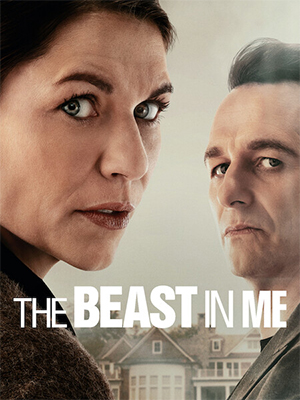
The Beast in Me
November 28, 2025


STREAMING REVIEW:
Netflix;
Thriller;
Not rated.
Stars Claire Danes, Matthew Rhys, Brittany Snow, Natalie Morales, Jonathan Banks, David Lyons, Tim Guinee, Hettienne Park, Deidre O’Connell, Aleyse Shannon, Will Brill, Kate Burton, Bill Irwin, Amir Arison, Julie Ann Emery.
This eight-episode Netflix limited series, a high-profile reunion for its star and showrunner from “Homeland” (Claire Danes and Howard Gordon), immediately cuts to a terrifying universal truth: we all harbor a dark side, a capacity for both good and bad deeds. “The Beast in Me,” which references this theme through its title, is a complex psychological thriller that asks viewers to confront their own moral limits. (A necessary spoiler warning: The series does have a gruesome scene or two that are difficult to stomach, so queasy viewers should be prepared.)
The miniseries is visually captivating, evoking a lush, anxiety-provoking East Coast atmosphere — one defined by endless greenery, changing seasons, and expansive, dark houses that isolate its characters. It’s in this wealthy, ill-defined suburb set in the Long Island/Westchester orbit, called Oyster Bay (a minor, yet confusing, continuity flaw), that we meet Aggie Wiggs (Danes), a grieving and blocked nonfiction author. Aggie lives alone, struggling with the emotional aftermath of losing her pre-teen child in a traffic accident caused by a local young man, Teddy Fenig. Danes, notably excellent in the 2010 HBO miniseries Temple Grandin, is masterful here, portraying Aggie’s trauma with visceral tension and unsettling emotional fragility that makes her uncomfortable to watch, functioning as a raw nerve exposed to the world. We also meet Aggie’s ex-wife, the artist Shelley (played by queer actor Natalie Morales), who provides a necessary, grounding contrast to Aggie’s spiraling obsession.
Aggie’s shattered peace is completely broken by the arrival of her new neighbor, Nile Jarvis (Matthew Rhys). He’s an infamous, wealthy developer and heir to a corrupt real estate empire, already suspected of murdering a previous wife. Rhys, a Welsh actor who ironically perfected his American accent in “The Americans,” embodies the central, defective villain (and you’ll probably notice subtle differences in hairstyle, length or color saturation between scenes, sometimes even within the same episode — this minor inconsistency briefly breaks the illusion of his seamless control). The contrast with Danes is the magnetic source of the series’ tension: While Aggie is exposed, Nile is entirely contained, all calculated composure and ruthless charm. Nile, believing he is right and entitled, embodies a man whose power is absolute. His initial interactions are deeply unsettling. When Nile’s dogs bark aggressively and brazenly wander into Aggie’s yard, we see the passive-aggressive man who believes he can do no wrong. This establishes the central, agonizing dilemma: Are you entitled to peace against a man protected not just by a fleet of lawyers, but by nefarious connections and the brutal actions of his thug uncle and fixer, Rick Jarvis? Aggie might even think she should move, knowing Nile will never bend.
Aggie initially resists him, squeamish and flummoxed when he tries to steamroll her to sign an easement for the construction of a rural running track in the neighboring woods. Yet, Nile knows how to exert pressure. Nile ultimately traps and convinces Aggie to go to lunch, where he doesn’t follow traditional conversation rules; he keeps digging deeper, subtly moving the interaction past standard fare and forging an unnerving connection. Driven by her need for money and her dark desire for vengeance, Aggie casually agrees to write Nile’s biography. This journalistic pursuit provides a horrifying outlet for her inner beast. Nile, in turn, weaponizes her fragility. The tension is amplified by the fact that Nile’s current, younger, ambitious wife, Nina Jarvis (Brittany Snow), is revealed to have been the best friend and employee of Nile’s outwardly stunning but inwardly broken, brutally murdered previous wife, Madison, adding layers of tragic intrigue.
While the overarching plot is admittedly somewhat predictable — by the end of the first episode, viewers quickly intuit Nile is the villain — the series wisely compensates by making the story nuanced. The actual dramatic arc is not what happened, but how the psychological game plays out, keeping us asking: Where exactly is this going? Is this a traditional ramping up of hostilities, or something far more sinister?
Despite a few flaws here and there, this is still a must-watch series with first-rate acting. The inconsistencies include several pacing flaws (regarding the running track easement) and continuity errors (such as a contradictory scene involving Teddy’s body and a minor dog-naming mistake).
This series is so engrossing, however, that you barely notice the production flaws as they fly by. The acting and the psychological depth of the moral conflict elevate this thriller far beyond its minor inconsistencies.
Subscribe HERE to the FREE Media Play News Daily Newsletter!