
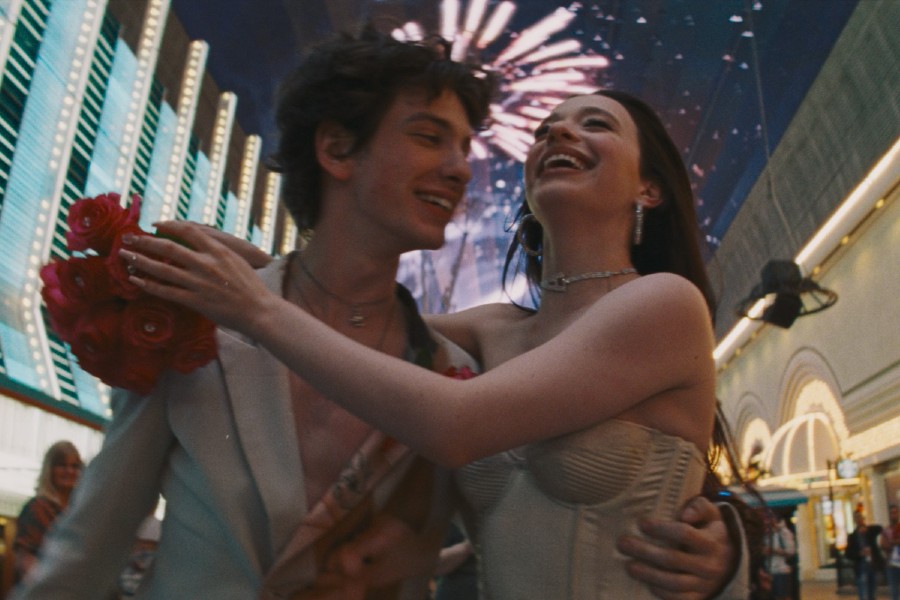
Mark Eydelshteyn (left) and Mikey Madison in Anora



March 14, 2025


Anora has ignited a firestorm, sweeping the Oscars with five prestigious awards and sparking intense debate. Sean Baker’s film, centered on a young woman navigating “transactional intimacy,” has become a cultural touchstone, reflecting our complex relationship with agency, exploitation, and the allure of online visibility.

The sheer volume of Anora‘s Oscar victories underscores the Academy’s evolving tastes and the film’s undeniable impact. However, the film’s reception is not without its critics. Baker, a heterosexual male director, depicting the world of a young woman engaged in a form of sex work, has raised questions about representation and perspective.
While the Academy has made strides in diversifying its voting body, historical imbalances persist. In 2022, women accounted for approximately one-third of all voting members (Source: Statista). Projections suggest this number is closer to 35% currently, indicating a continued male majority.
Anora doesn’t explicitly focus on online behavior, yet its success resonates with the normalization of such behaviors. The concept of the “bop,” representing the blurred lines between influencer and sex worker, provides a crucial cultural context, even if the term isn’t used in the film. The film’s focus is on the strip club and prostitution, which are more traditional forms of sex work. However, the film’s themes are relevant to the online world, where individuals utilize platforms such as TikTok and Instagram to attract subscribers to OnlyFans, raising concerns about potential exploitation. This dynamic echoes the dangers of gateway substances, potentially leading to more harmful behaviors.
Sean Elliott, COO of Authentic Talent, champions the film’s artistic merit and Mikey Madison’s performance: “Mikey Madison is one of the most versatile and incredible actors of her generation. Her performance in Anora was raw, real, powerful, funny and tragic. The film itself is powerful and unpredictable. … It’s a simple, stripped-down film full of nuance and contradictions — just like real life.”
However, this positive view contrasts sharply with the film’s detractors. Some find it chaotic, lacking a clear message, and perpetuating harmful stereotypes. A veteran British female industry actor and writer expressed strong criticism, stating: “The movie was so stereotyped. It made me feel frustrated that real sex workers’ stories were being marginalized on film. The jealous co-worker, the characters who seem to have no life outside their work — tough as nails. The movie felt viewed through the lens of a man. It seriously makes me feel depressed that an OK film won all those awards. A movie is meant to be exceptional to win an Oscar, not just OK. I also didn’t like that in the last scene, when Anora mounted Igor in the car for sex, it was unprotected. She physically attacked him afterwards, then broke down in tears. I did not see one real tear fall from her face. Not moved. Several young women I have spoken to believe this was not a performance worthy of an Academy award, never mind all the other awards the movie won. Editing? Seriously?”
These criticisms highlight concerns about the film’s potential to desensitize viewers to potentially harmful situations, the challenges faced by aging actresses in Hollywood, and the perceived disparity between the film’s accolades and its perceived quality.
The film’s exploration of power dynamics and the pursuit of fame mirrors a broader cultural phenomenon, exemplified by figures such as Julia Fox. Fox, in her memoir Down the Drain, details a life where celebrity encounters, “sugar daddy” relationships, and sex work intertwined with her ambition. Fox’s narrative, like Anora, depicts casual drug use as a normalized aspect of this lifestyle, potentially glamorizing it for young viewers. This raises questions about the blurring lines between empowerment and exploitation. Does the film, by achieving such widespread acclaim, inadvertently endorse this trajectory? Does it normalize the commodification of one’s body and quid pro quo interactions as viable pathways to success, especially for young women in the digital age? Does it normalize the lifestyle of strippers and “bops”?
Defenders argue that Anora offers a nuanced portrayal of a complex reality, not an endorsement. They point to Anora’s eventual realization of her lost dignity as a cautionary message. However, the film’s visual language, depiction of wealth and excess, and overall celebratory tone can be interpreted differently. The film’s style is fluid, simple, and presented in a continuous motion, similar to Baker’s previous work.
The debate extends beyond the film, reflecting evolving attitudes toward sex work, online visibility, drug use, and the pursuit of the “American Dream” in the digital age. The film also underscores the potential dangers of AI-generated information and its ability to create false narratives.
Anora compels us to confront uncomfortable truths about the choices young women are making, the risks they face, and the societal forces that shape their realities. It prompts us to ask: Is Anora a powerful reflection of our times, a celebration of a nuanced performance and story, or a potentially problematic glorification of a deeply complex trend? And, perhaps most importantly, what message does it send to young women navigating the complexities of their own lives? With the genie of online visibility and commodified intimacy out of the bottle, what are the long-term societal consequences, particularly regarding the potential normalization of harmful behaviors? What are your thoughts?