Paramount Boss David Ellison Says His Favorite HBO Show is ‘Game of Thrones’

The recently concluded $111 billion Warner Bros. Discovery auction could be viewed by some as having elements of HBO’s “Game of Thrones,” without the bloodshed, sex or fire-breathing dragons.

Media reports have suggested that the combined Paramount-WBD is now the newly united “Kingdom” attempting to defend its territory against the tech “invaders,” such as Apple, Amazon and Netflix.

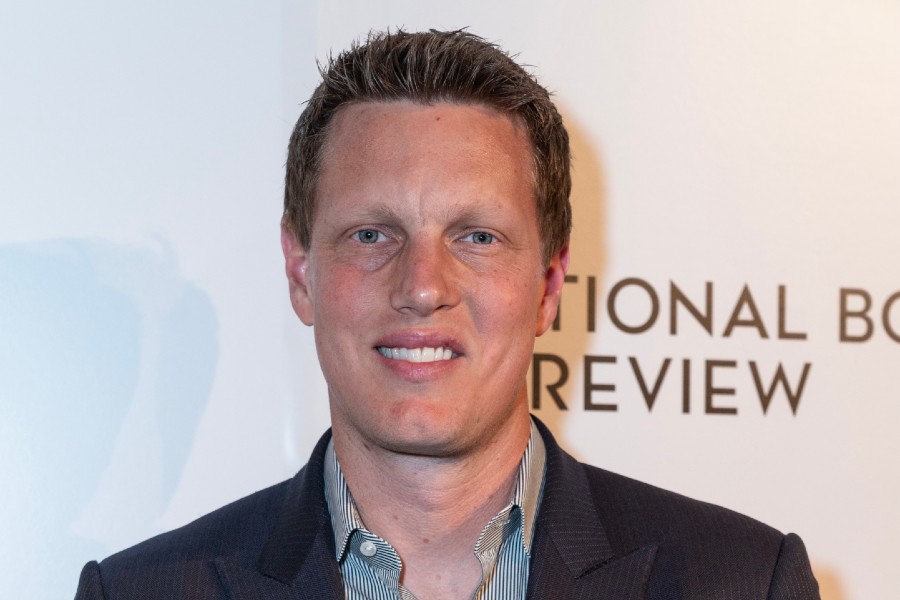
Thus, it was perhaps no surprise that when asked what his favorite HBO show is, Paramount CEO David Ellison, who outlasted Netflix to acquire all WBD assets, including Warner Bros. Studios, HBO, HBO Max and Turner, would mention the George R. R. Martin, D. B. Weiss and David Benioff-created fantasy series,” which concluded its HBO run nearly seven years ago.

Some pundits predict a harsh environment among senior management in the coming months and year across both companies as Paramount decides which executives will “survive” the consolidation of two massive studio operations.

“It’s hard not to say ‘Game of Thrones,'” Ellison said on the March 2 special investor call.

The CEO also agreed that “Sopranos,” a story about a New Jersey mob boss who begins seeing a psychiatrist, was also among his favorites.

“Yes, that’s good too,” Ellison said. “There’s a lot … it’s a long list.”

Paramount Says $6 Billion in Expected Cost Synergies Acquiring WBD Will Not Include Layoffs or Content Production Reduction

Following the $110.9 billion enterprise value acquisition of Warner Bros. Discovery, Paramount Skydance is facing $79 billion in net debt upon closing of the massive media transaction.

To help cut that debt, Paramount is eyeing upwards of $6 billion in cost synergies over the first three years of the merger — cost cutting that will not include layoffs or a reduction in content production, according to chief strategy officer Andrew Gordon.

Paramount has pledged to release 15 theatrical titles this year, up from eight last year, which combined with 15 titles from Warner Bros. Pictures, would result in 30 box office movie releases going forward.

Speaking on the March 2 special investor call, Gordon said the operating cost reductions would come from consolidating streaming technology stacks, i.e., Paramount+, Pluto TV, Discovery+ and HBO Max, among others; expanding global business services and procurement efficiencies; re-evaluating both companies’ global real estate footprint and corporate overhead; improving spending on marketing, including agencies and related tools; and integrating Oracle’s (founded by Larry Ellison) “enterprise resource planning” software and other corporate IT systems.

“These are just few examples of where we believe we will find meaningful synergies as we unite these storied companies,” Gordon said.

CEO David Ellison said the combination of Paramount and WBD’s linear businesses, which include CBS, CNN and TNT, would also expect to boost cash flow, drive efficiencies and help manage market pressures.

The executive said he has no plans to spin-off the linear assets similar to what Comcast did with Versant, and what WBD had planned to do pre-merger with Discovery Global.

“The unified platform will offer advertisers more compelling and impactful opportunities, including in marquee U.S. and international sports leagues and events like the NFL, UFC and internationally, the home of the Olympics,” Ellison said.

CEO David Ellison: Paramount+, HBO Max Combining Into One Streaming Platform With HBO Brand to Remain Separate

Paramount Skydance plans to combine the Paramount+ and HBO Max subscription streaming services into one platform upon closing of Paramount’s $76.9 billion ($110.9 billion enterprise value) merger with Warner Bros. Discovery.

Speaking on a special March 2 investor call, Paramount CEO David Ellison said he planned to allow the HBO brand, currently run by CEO Casey Bloys, to operate independently going forward creating content.

It wasn’t immediately clear how the two streaming services would connect, either with a separate Max tile on the Paramount platform, or something else.

“As we said, we do plan to put the two services together, which today gives us a little over 200 million direct to consumer subscribers,” Ellison said on the call. “We think that really positions us to compete with the leaders in the space.”

Ellison said he thinks that by June, Paramount will consolidate the services, including Discovery+ and Pluto TV, under a unified stack featuring more than 15,000 titles.

“To contextualize, [Paramount+ and HBO Max] is roughly the size of Disney, right? Obviously, competitive with Amazon, competitive with Netflix,” Ellison said. “So, we really do think that, that really positions us to be one of the leading competitors in the DTC space and really accelerates our growth there and achieving scale in DTC.”

SVOD market leader Netflix ended 2025 with more than 315 million global paid subscribers, while Paramount+ lost 100,000 subs in the last 90 days of the year, and Max added 3.5 million subs, ending the year with 131.5 million.

Regarding the HBO brand, Ellison said he would prefer not to disrupt the legacy platform.

“Our viewpoint is HBO should stay HBO,” he said. “They built a phenomenal brand. They are a leader in the space, and we just want them to continue doing more of it.”

Subscribe HERE to the FREE Media Play News Daily Newsletter!

Paramount CEO David Ellison Pledges Support for 45-Day Theatrical Window for WBD, Cites Planned 30-Movie Release Slate for Paramount

Paramount Skydance CEO David Ellison isn’t giving up on his dream of acquiring Warner Bros. Discovery for $108.4 billion in cash — despite being rejected eight times by the WBD board through January.

In an open letter to the U.K. creativity community and European media, Ellison echoed Netflix co-CEO Ted Sarandos’ pledge to honor Warner’s existing theatrical window for box office movies.

“Every film will receive a full theatrical release, with a minimum 45-day window globally before becoming available on paid video-on-demand (VOD), with the intention of 60-90 days or more to maximize the audience for our most successful releases,” Ellison wrote. “We will continue to adhere to the specific windowing commitments we have across the geographies we operate in.”

The executive disclosed that Paramount has upped its theatrical slate from eight releases to 15 since Skydance Media bought the company, with plans to release 30 titles annually.

In the first month of 2026, Paramount had two theatrical releases, the sci-fi thriller Primate and The SpongeBob Movie: Search for SquarePants.

Paramount contends that its combination with WBD would strengthen the entertainment production community, while promoting competition and pro-consumer agendas.

“Both studios will continue to support a vibrant third-party ecosystem by licensing their films and shows across their own and third-party platforms, while remaining active buyers of content from third-party studios and independent producers,” Ellison wrote.

The executive’s charm offensive apparently did not include appearing before Congress this week to allay lawmakers’ antitrust concerns about Netflix or Paramount merging with WBD.

Ellison reportedly said he chose not to attend the hearing since Paramount does not have an accepted offer.

Paramount’s extended offer deadline for WBD expires on Feb. 20.

Paramount Plans to Nominate WBD Board Members, Files Litigation Regarding Asset Sale to Netflix

The bosses at Paramount Skydance, Warner Bros. Discovery and Netflix may have looked chummy (sitting at separate tables) during the Jan. 11 Golden Globes Awards, but the following morning (Jan. 12) brought news that Paramount has filed litigation against WBD, in addition to plans to nominate directors to the latter’s board of directors.

Specifically, Paramount, under the direction of CEO David Ellison, filed litigation in U.S. District Court for the District of Delaware seeking all information it claims would allow WBD shareholders to make a more informed decision regarding the company’s asset sales.

Paramount also wants to install directors to the WBD that could be more favorable to its six-time rejected hostile offer for the company, which currently stands at $108.4 billion and is set to expire on Jan. 21.

Paramount claims WBD has failed to include any disclosure about how it values its Global Networks (TV assets) equity, how it values the overall Netflix transaction, how the purchase price reduction for debt works in the Netflix transaction, and what the WBD’s board basis is for its “risk adjustment” of Paramount’s $30 per share all-cash offer.

“WBD shareholders need this information to make an informed investment decision on our offer — and importantly, Delaware law has consistently required that such information be provided to shareholders,” read Ellison’s letter.

“We do not undertake any of these actions lightly,” Ellison continued. “Make no mistake, our goal remains to have constructive discussions with WBD’s board to reach an agreement that is in the best interests of WBD shareholders.”

WBD currently has an accepted $82.7 billion deal with Netflix for its streaming (HBO Max) and Warner Bros. Studios assets.

Subscribe HERE to the FREE Media Play News Daily Newsletter!

Paramount Skydance Still Insists Its All-Cash $108.4 Billion WBD Offer is Superior to Netflix’s Accepted Offer

If select Warner Bros. Discovery shareholders thought publicly encouraging Paramount Skydance CEO David Ellison to up his $108.4 billion all-cash offer for the media company might increase their payout, they remain disappointed.

Ellison Jan. 8 reiterated in a filing that his company’s existing hostile offer for WBD is superior to Netflix’s accepted offer of $82.7 billion for the studio and streaming assets only.

“Our offer clearly provides WBD investors greater value and a more certain, expedited path to completion,” Ellison said in a statement. “Throughout this process, we have worked hard for WBD shareholders and remain committed to engaging with them on the merits of our superior bid and advancing our ongoing regulatory review process.”

WBD’s board of directors is urging shareholders to approve Netflix’s 80% cash, 20% stock offer, which it says passes fiscal requirements and scrutiny better than Paramount’s, the latter largely relying on an “irrevocable personal guarantee” of $40.4 billion from Ellison’s father, tech billionaire Larry Ellison.

Paramount’s offer, like Netflix’s, requires third-party financing, some of which is reportedly coming from Middle Eastern countries’ sovereign wealth funds.

Paramount claims Netflix’s $27.75-per-share offer has declined in value due to market changes, which it says currently values the offer at $27.42-per share.

That’s due in part because Netflix’s offer included giving WBD shareholders a stake in the pending non-acquired television assets, dubbed Discovery Global. Paramount contends that the TV assets’ value isn’t worth much.

Comcast’s recently spun-off TV property, called Versant Media Group, has seen its stock price plummet more than 28% since Jan. 1.

Netflix shares are down almost 4% since Jan. 1, while Paramount Skydance shares are down 8%.

Through nine months of the fiscal year, ended Sept. 30, 2025, Netflix’s net income was $8.56 billion on revenue of $33.13 billion. Paramount tallied a net loss of $5.96 billion on revenue of $21.22 billion.

Paramount’s revised offer expires Jan. 21.

Subscribe HERE to the FREE Media Play News Daily Newsletter!

WBD’s Fifth-Largest Shareholder Says Paramount’s Updated Offer ‘Not Sufficient’

Paramount Skydance’s updated all-cash $108.4 billion hostile takeover offer for Warner Bros. Discovery reportedly is not enough for WBD’s fifth largest shareholder.

WBD currently has an accepted $82.7 billion offer from Netflix for its studio (Warner Bros.) and streaming (HBO Max) assets. Paramount wants the entire media company, including TV brands such as CNN and Turner. Its offer this week was sweetened when tech billionaire Larry Ellison — whose son, Paramount CEO David Ellison, is spearheading the bid — promised an “irrevocable personal guarantee” of $40.4 billion of the equity financing.

Alex Fitch, portfolio manager at Harris Associates, with a reported 4% stake in WBD stock (the company’s fifth-largest stockholder), told Reuters in an email that the amended offer was “necessary, but not sufficient.”

“We see the two deals as a toss-up, and there is a cost to changing paths. If Paramount is serious about winning, they’re going to need to provide a greater incentive,” Fitch wrote.

Paramount, which is largely relying on the senior Ellison’s deep pockets to backstop its unchanged $30-per-share offer, has reportedly upped its severance fee (the amount it would pay WBD if the deal didn’t close), while extending the offer deadline from Jan. 8 to Jan. 21.

Media reports say just 400,000 of WBD’s 2.59 billion common stock shares have opted for the Paramount bid.

On paper, the fiscal stories between Netflix and Paramount couldn’t be more opposite.

Netflix has a $402 billion market capitalization, compared with $14.5 billion for Paramount. The streamer is riding a $8.5 billion profit through September, compared with a $48 million loss for Paramount, which would absorb $54 billion in debt acquiring WBD. In addition, the company has not nailed down what the interest rates on that debt would be, which could spiral.

“Obviously, that is up to Paramount shareholders, and the Ellisons control Paramount,” Michael Pachter, media analyst with Wedbush Securities in Los Angeles, said in an email.

“HBO throws off a lot of cash and the studio consolidation will likely eliminate a lot of overhead. It shouldn’t matter to WBD if Paramount can’t pay its debt. It’s like selling your house to someone who later defaults on the mortgage; it’s simply not your problem.”

Separately, Mario Gabelli, CEO of GAMCO Investors and a WBD shareholder, Dec. 22 went on social media urging Netflix to make its offer more appealing to shareholders.

Netflix, in turn, has reportedly assembled a temporary $59 billion bridge loan as interim financing until more permanent funding can be secured. They’ve recently restructured part of this bridge loan to make it more efficient and less risky.

Specifically, Netflix obtained a $5 billion revolving credit line, which acts like a flexible credit card for the company — they can borrow up to that amount as needed and repay it over time.

The streamer also lined up two $10 billion delayed-draw term loans (totaling $20 billion), which are commitments from lenders to provide the money later on, but only when Netflix actually needs to draw it (e.g., at closing or in phases). This reportedly helps with timing and interest costs.

Subscribe HERE to the FREE Media Play News Daily Newsletter!

Larry Ellison to Personally Guarantee $40.4 Billion of Paramount’s $108.4 Billion Hostile Takeover of WBD

Tech billionaire Larry Ellison, the world’s No. 2 wealthiest person, is personally guaranteeing $40.4 billion of the $108.4 billion (including debt) all-cash hostile takeover bid for Warner Bros. Discovery by his son, Paramount Skydance CEO David Ellison.

WBD already has an accepted $82.7 billion offer from Netflix for its studio and streaming assets. Paramount wants to acquire WBD’s TV assets as well.

The senior Ellison’s commitment comes after WBD’s board and special committee overseeing the transaction questioned Ellison’s actual financial involvement in the Paramount bid.

In a regulatory filing, Gerry Cardinale, founder and managing partner of private equity group RedBird Capital Partners, which is playing a multifaceted role in Paramount’s takeover bid, downplayed the significance of Ellison’s then $12 billion stake in the bid.

“It’s funny to hear [Ellison is] only in for $12 billion,” Cardinale said in a media interview. “I mean, you are getting the ‘B’ in billion? Aren’t you?”

The younger Ellison, in a previous statement to WBD shareholders, contends Paramount’s $30-per-share offer is superior to Netflix’s $27.75 share offer (for streaming and studio assets only).

“Our acquisition will be superior for all WBD stakeholders as a catalyst for greater content production, greater theatrical output, and more consumer choice,” Ellison wrote. “We expect the board of directors of WBD to take the necessary steps to secure this value-enhancing transaction and preserve and strengthen an iconic Hollywood treasure for the future.”

Ellison’s claim for greater content production going forward flies in the face of reality.

Paramount Skydance, which has a market capitalization of $14.5 billion, in addition to a $48 million net loss through Sept. 30, has pledged to spend $1.5 billion on content in 2026.

Netflix, by comparison, is spending $17 billion on content this year. The streamer has a market cap of $402 billion with a net profit of $8.5 billion through September. The company has never posted a fiscal loss.

Subscribe HERE to the FREE Media Play News Daily Newsletter!

CBS News Pulls ’60 Minutes’ Segment on Trump Deportation Detainees as Parent Paramount Attempts to Acquire WBD

CBS News Dec. 21 pulled a segment about the Trump administration sending illegal immigrants to a maximum security prison in El Salvador from the weekly new program “60 Minutes” just hours before air time.

“The broadcast lineup for tonight’s edition of ’60 Minutes’ has been updated,” the program posted on its social media platform three hours before airtime. “Our report ‘Inside CECOT’ will air in a future broadcast.”

The update came after a preview of the segment, which featured correspondent Sharyn Alfonsi describing how detainees, including about 250 Venezuelans, were “shackled, paraded in front of cameras,” had been airing and streaming online.

CBS News, which is owned and operated by Paramount Skydance, said the segment wasn’t ready for broadcast despite being vetted by the network’s legal department.

Bari Weiss, editor-in-chief at CBS News, told The New York Times that her job is “to make sure that all stories we publish are the best they can be.”

“Holding stories that aren’t ready for whatever reason — that they lack sufficient context, say, or that they are missing critical voices — happens every day in every newsroom,” Weiss said. “I look forward to airing this important piece when it’s ready.”

Alfonsi claims the segment was pulled for political reasons.

In a staff note reported by the Times, Alfonsi said the segment was “screened five times and cleared by both CBS attorneys and standards and practices.”

“It is factually correct. In my view, pulling it now, after every rigorous internal check has been met, is not an editorial decision, it is a political one,” she reportedly said in the note.

Political bias allegations are what got “60 Minutes” in Trump’s crosshairs in 2024 when the then-GOP presidential candidate sued CBS News alleging that an interview with former Vice President Kamala Harris, the Democratic nominee, had been selectively edited, amounting to election interference.

Paramount, which was in the process of being acquired by Skydance Media — the latter whose CEO David Ellison’s father is longtime Trump ally Larry Ellison — agreed to pay Trump $16 million to settle the suit.

In addition, Ellison agreed to install an ombudsman to monitor against alleged media bias at CBS News, in addition to hiring Weiss.

Last week, however, Trump went on his social media platform complaining that Paramount was not treating him fairly.

“For those people that think I am close with the new owners of CBS, please understand that ’60 Minutes’ has treated me far worse since the so-called ‘takeover,’ than they have ever treated me before. If they are friends, I’d hate to see my enemies!” Trump wrote Dec. 16 on Truth Social.

At the same time, Trump has said that will have an input on the regulatory process involving either Netflix or Paramount acquiring stakes in Warner Bros. Discovery — the largest private equity purchase in history. The president has already opined that WBD-owned CNN be sold or gutted after the sale.

Pulling the “60 Minutes” segment for political and fiscal reasons makes the most sense to Michael Pachter, media analyst with Wedbush Securities in Los Angeles.

“I hope that’s the reason,” he wrote in an email. “It is a better one than any other.”

Subscribe HERE to the FREE Media Play News Daily Newsletter!

Paramount Skydance CEO David Ellison Pitches WBD Shareholders With Open Letter

Paramount Skydance CEO David Ellison Dec. 10 sent a letter to Warner Bros. Discovery shareholders reiterating why Paramount’s $108.4 billion all-cash offer would deliver superior value with a faster, more certain path to regulatory completion than the existing Netflix transaction.

Paramount Dec. 8 submitted a hostile bid to WBD’s board and shareholders, three days after Warner accepted a $72 billion mostly-cash offer from Netflix for its streaming and studio assets. Prior to accepting Netflix’s offer, WBD rejected six Paramount proposals over a 12-month period.

In the letter, Ellison encouraged shareholders to tender their shares in order to register their view with the WBD board of directors that they prefer the Paramount offer.

The CEO said Paramount’s offer is fiscally secure enough to endure the 12- to 18-month regulatory process, while claiming Netflix’s cash/stock offer is at the mercy of Wall Street. Indeed, Netflix’s stock price has dropped 20% in value over the past 22 days.

“This reduces the value of Netflix’s offer,” Ellison wrote in the letter.

Netflix’s acquisition of the WBD assets would be funded by $10.3 billion in cash, $50 billion in debt, $10.7 billion in studio and streaming debt, and $11.7 billion in equity consideration, according to a regulatory filing.

Netflix said it expects to realize $2 billion to $3 billion in cost synergies by the third year of the transaction. Paramount said it expects to see $6 billion in cost savings.

Netflix co-CEO Ted Sarandos said the streamer’s goal is to expand its presence in Hollywood.

“We’re not cutting jobs. We’re making jobs,” Sarandos said.

Paramount’s bid would reportedly be funded by $41 billion of new equity backed by the Ellison Family Trust (patriarch Larry Ellison, founder of Oracle, is one of the wealthiest people in the world), RedBird Capital and $54 billion of debt commitments from Bank of America, Citi, Apollo Global Management, and President Trump’s son-in-law Jared Kushner’s Affinity Partners, among others.

Paramount is offering to pay WBD a $5 billion break-up fee — $800 million less than Netflix’s break-up fee.

Ellison claims Netflix faces a much tougher regulatory challenge in the United States, in addition to heightened scrutiny in the United Kingdom and the European Union, where the streamer commands a 51% streaming video market share, compared to Disney’s 10% market share.

Netflix and HBO Max would have a combined 426 million paid subscribers, while Paramount+ and Max would have 204.1 million subscribers.

Yet, melding Paramount and WBD media assets would create the largest U.S. household TV market share — ahead of YouTube, Disney, NBCUniversal, Fox — and Netflix, according to Nielsen.

Subscribe HERE to the FREE Media Play News Daily Newsletter!

From Around the Web