Paramount Boss David Ellison Says His Favorite HBO Show is ‘Game of Thrones’

The recently concluded $111 billion Warner Bros. Discovery auction could be viewed by some as having elements of HBO’s “Game of Thrones,” without the bloodshed, sex or fire-breathing dragons.

Media reports have suggested that the combined Paramount-WBD is now the newly united “Kingdom” attempting to defend its territory against the tech “invaders,” such as Apple, Amazon and Netflix.

Thus, it was perhaps no surprise that when asked what his favorite HBO show is, Paramount CEO David Ellison, who outlasted Netflix to acquire all WBD assets, including Warner Bros. Studios, HBO, HBO Max and Turner, would mention the George R. R. Martin, D. B. Weiss and David Benioff-created fantasy series,” which concluded its HBO run nearly seven years ago.

Some pundits predict a harsh environment among senior management in the coming months and year across both companies as Paramount decides which executives will “survive” the consolidation of two massive studio operations.

“It’s hard not to say ‘Game of Thrones,'” Ellison said on the March 2 special investor call.

The CEO also agreed that “Sopranos,” a story about a New Jersey mob boss who begins seeing a psychiatrist, was also among his favorites.

“Yes, that’s good too,” Ellison said. “There’s a lot … it’s a long list.”

Paramount Says $6 Billion in Expected Cost Synergies Acquiring WBD Will Not Include Layoffs or Content Production Reduction

Following the $110.9 billion enterprise value acquisition of Warner Bros. Discovery, Paramount Skydance is facing $79 billion in net debt upon closing of the massive media transaction.

To help cut that debt, Paramount is eyeing upwards of $6 billion in cost synergies over the first three years of the merger — cost cutting that will not include layoffs or a reduction in content production, according to chief strategy officer Andrew Gordon.

Paramount has pledged to release 15 theatrical titles this year, up from eight last year, which combined with 15 titles from Warner Bros. Pictures, would result in 30 box office movie releases going forward.

Speaking on the March 2 special investor call, Gordon said the operating cost reductions would come from consolidating streaming technology stacks, i.e., Paramount+, Pluto TV, Discovery+ and HBO Max, among others; expanding global business services and procurement efficiencies; re-evaluating both companies’ global real estate footprint and corporate overhead; improving spending on marketing, including agencies and related tools; and integrating Oracle’s (founded by Larry Ellison) “enterprise resource planning” software and other corporate IT systems.

“These are just few examples of where we believe we will find meaningful synergies as we unite these storied companies,” Gordon said.

CEO David Ellison said the combination of Paramount and WBD’s linear businesses, which include CBS, CNN and TNT, would also expect to boost cash flow, drive efficiencies and help manage market pressures.

The executive said he has no plans to spin-off the linear assets similar to what Comcast did with Versant, and what WBD had planned to do pre-merger with Discovery Global.

“The unified platform will offer advertisers more compelling and impactful opportunities, including in marquee U.S. and international sports leagues and events like the NFL, UFC and internationally, the home of the Olympics,” Ellison said.

Netflix’s Ted Sarandos: We Were Dealing With ‘Unusual, Irrational’ Competitor in WBD Sweepstakes

On the heels of Netflix declining to match Paramount Skydance’s $31-per-share all-cash ($110.9 billion equity value) bid for Warner Bros. Discovery, Netflix co-CEO Ted Sarandos says the decision to walk away was not a difficult one.

“We definitely wanted this asset; We didn’t need it,” Sarandos told Bloomberg News in an interview.

Paramount is now on the hook to pay WBD $76.9 billion in cash, in addition to assuming upwards of $79 billion in net debt, which includes $57.5 billion in new debt financing, $15 billion to refinance WBD’s existing debt load around $33 billion, and $3.5 billion in bridge financing.

Discovery acquired the former WarnerMedia from AT&T for $43 billion in 2022 to create Warner Bros. Discovery.

Paramount also paid Netflix a $2.8 billion termination fee, in addition to guaranteeing a $7 billion termination fee to WBD, and a $650 million quarterly “ticking” fee should the deal not close by the Sept. 30 deadline.

The outsized fiscal size of the deal and Paramount’s relatively modest finances (outside the funds from Larry Ellison, father of Paramount CEO David Ellison, who is offering $45.7 billion in cash; $24 billion in Middle East sovereign wealth funds; and $54 billion bridge loan from Bank of America, Citi and Apollo Capital) surprised Sarandos.

“Unusual, yeah, unusual, irrational, whatever words you want to use in that,” Sarandos said.  “It’ll be fascinating to see the next steps.”

The executive believes that due to the fiscal levering of the deal, Paramount will fast-forward cost synergies and cuts involving at least $6 billion — which Sarandos believes will result in layoffs and a reduction of content production.

“We were in the books of Warner Bros., and the biggest cost centers are people in productions,” he said. “They are telling people who lend them the money that’s gonna happen in 18 months or so. It would be less production, less people working.”

Sarandos said Netflix’s involvement in the M&A deal involved dealing with 50 regulatory bodies around the world, in addition to the Justice Department and Congress in the United States.

“There are easier ways to make $2.8 billion,” Sarandos quipped.

When asked about Netflix shareholder’s apparent dislike for the WBD asset merger involving Warner Bros. Studios and HBO Max, Sarandos said short-term negative reaction on Wall Street is nothing new to the streamer.

Netflix’s stock price shot up 10% following its withdrawal, and was up 13.7% through midmorning trading on March 2.

“We’ve taken short-term hits for long-term gains in our business many times in our 20 years as a public company. And they worked out pretty well,” Sarandos said.

The executive has no idea if the Paramount deal will pass regulatory muster, adding that it should be scrutinized as much as Netflix was.

“It should be looked at with every bit of the same microscope,” Sarandos said. “Remember, we were asked to go and testify [before Congress]. David and I both were. I came.”

Regardless, Sarandos wishes Paramount well going forward, adding that Netflix will continue licensing content from both Paramount and Warner Bros. Discovery.

“I wish them luck,” he said. “They’ve got regulatory hurdles to clear. Even when we were thinking about keeping these businesses together and running, we knew that we had a difficult task ahead of integration. I can’t imagine doing all that and trying to cut billions and billions of dollars. Today, Paramount has half of the people that they had one year ago. So that gives you some sense of where this is heading for the town and for the business.”

Subscribe HERE to the FREE Media Play News Daily Newsletter!

Paramount Skydance-WBD Merger Agreement Officially Announced

Paramount Skydance Corp. and Warner Bros. Discovery Feb. 27 announced they have entered into a definitive merger agreement under which Paramount will acquire WBD.

Under the terms of the agreement, Paramount will pay $31 per share in cash for all outstanding shares of WBD in a deal valued at $110 billion. The transaction has been unanimously approved by the boards of directors of both companies and is expected to close in Q3 2026, subject to customary closing conditions, including regulatory clearances and approval by WBD shareholders, with a vote expected in the early spring of 2026, according to the companies.

In the event the transaction has not closed by Sept.30, 2026, WBD shareholders will receive a 25 cents per share “ticking fee” for each quarter (measured daily) until closing.

“Together, Paramount and WBD will deliver greater choice for consumers through its leading streaming platforms with an exceptional intellectual property portfolio that has produced popular franchises such as ‘Game of Thrones,’ ‘Mission Impossible,’ ‘Harry Potter,’ ‘Top Gun,’ the DC Universe and ‘SpongeBob SquarePants,'” read the release.

“From the very beginning, our pursuit of Warner Bros. Discovery has been guided by a clear purpose: to honor the legacy of two iconic companies while accelerating our vision of building a next-generation media and entertainment company,” David Ellison, chairman and CEO of Paramount, a Skydance Corp., said in a statement. “By bringing together these world-class studios, our complementary streaming platforms, and the extraordinary talent behind them, we will create even greater value for audiences, partners and shareholders — and we couldn’t be more excited for what’s ahead.”

“I’m very pleased with the outcome we achieved for WBD shareholders and the entertainment industry,” David Zaslav, president and CEO of Warner Bros. Discovery, said in a statement. “Our guiding principle throughout this process has been to secure a transaction that maximizes the value of our iconic assets and our century-old studio while delivering as much certainty as possible for our investors. We look forward to working with Paramount to complete this historic transaction.”

Paramount is committed to producing a minimum of 30 theatrical films annually, and to traditional windows. Every film will receive a full theatrical release, with a minimum 45-day window globally before becoming available on paid video-on-demand (VOD), with the intention of 60 to 90 days or more to maximize the audience for our most successful releases, according to Paramount. Both studios will continue to support a “vibrant third-party ecosystem” by licensing their films and shows across their own and third-party platforms, while remaining active buyers of content from third-party studios and independent producers, Paramount announced. Following its theatrical run, each film will transition to the current industry standard home video window, preserving paid video-on-demand prior to availability on subscription streaming services. Paramount will continue to adhere to specific windowing regimes in geographies it operates in, including in France where Paramount maintains its windowing commitments, the company announced.

Subscribe HERE to the FREE Media Play News Daily Newsletter!

Netflix Stock Rebounds as Streamer Walks Away From WBD Deal $2.8 Billion Richer

Netflix shares soared almost 10% after the streamer dropped its $82.7 billion bid for Warner Bros. Discovery’s streaming and studio assets, alleviating investor concerns and boosting the service’s market confidence.

The stock is still down 7% from the streamer’s $100.3-per-share price on Dec. 5, 2025, when WBD announced it had accepted a deal with Netflix.

Netflix Feb. 26 announced it would not counter Paramount Skydance’s revised $110.9 billion offer for the entire WBD, including its television networks, which WBD’s board deemed a superior offer to Netflix’s deal.

With WBD formally accepting Paramount’s bid, Netflix will receive a $2.8 billion termination fee from WBD — paid for by Paramount as part of the latter’s more than $11 billion promised termination and penalty fees should it offer fail to close.

With the deal officially accepted, the clock begins ticking for Paramount, which has until Sept. 30 to close the transaction or risk paying WBD another $650 million for every 90-days the deal doesn’t close.

Currently analysts believe Paramount will have few difficulties passing regulatory approval in the United States. Doing the same abroad could be a challenge. The deal still faces significant scrutiny from overseas regulators, primarily in the European Union and the United Kingdom.

The EC is reportedly expected to conduct a rigorous review focusing on market implications across the region. Analysts note that while the EC rarely blocks media mergers outright, it may impose “light-touch remedies,” such as small divestitures or commitments to local content production.

California attorney general Rob Bonta also promised a vigorous review of the transaction at the state level, and could sue to stop it in federal court if found to be problematic.

The Center for Journalism and Liberty at Open Markets Feb. 27 released a statement urging regulators and lawmakers to reject Paramount’s bid.

“U.S. regulators and Congress should strongly oppose any attempt by Paramount to acquire Warner Bros. Discovery,” Dr. Courtney Radsch, director of of the organization, said in a statement. “As we have made clear in response to other potential bidders — including Netflix — further consolidation of this industry would deepen already dangerous concentrations of power over film, television, news and information.”

Radsch cited media reports that Netflix co-CEO Ted Sarandos abandoned the deal after a direct meeting with President Trump — underscoring an unprecedented level of politically motivated involvement in media consolidation as Trump seeks to defang major news networks such as Warner Bros.-owned CNN, according to Radshh.

“This is not normal market behavior,” she says. “It raises serious concerns about whether decisions shaping the nation’s information infrastructure are being influenced by political pressure rather than law, fair competition or the public good.”

Regardless, Paramount has already received pending German regulatory approval on Jan. 26. The U.K. competition and markets authority is also expected to weigh in separately on possible antitrust concerns.

Paramount’s stock rose 18% in value, while WBD’s stock fell 2%.

Subscribe HERE to the FREE Media Play News Daily Newsletter!

WBD Calls Paramount’s New Bid ‘Superior’ to Netflix’s Accepted Offer, Gives Streamer Four Days to Submit Counter Bid

Warner Bros. Discovery Feb. 26 announced that its board, following consultation with its independent financial and legal advisors, confirms that Paramount Skydance’s revised $110.9 billion all-cash offer for the entire company is superior to the existing accepted $82.7 billion all-cash offer from Netflix for the company’s studio and streaming assets.

Warner, which is on the hook to pay Netflix a $2.8 billion termination fee should the streamer walk away, has given Netflix four days to counter with another offer.

If the board determines in good faith, after consultation with its financial and legal advisors, that the Paramount proposal is still superior, WBD would be entitled to terminate the Dec. 5, 2025, Netflix merger agreement.

Until that decision has been made, the Netflix merger agreement remains in effect, and the WBD board continues to recommend in favor of the Netflix transaction and has not withdrawn or modified its recommendation.

As disclosed by WBD on Feb. 24, Paramount’s proposal includes a purchase price of $31 per WBD share in cash, plus a daily ticking fee equal to $0.25 per share per quarter, or $650 million total, beginning after Sept. 30, as well as a $7 billion termination fee payable by Paramount in the event the transaction does not close due to regulatory matters, payment by Paramount of Netflix’s $2.8 billion termination fee, an obligation of Larry J. Ellison, Paramount CEO David Ellison’s tech billionaire father, and an associated trust, to contribute additional equity funding to the extent needed to support the solvency certificate required by Paramount’s lending banks.

The new deal also excludes the performance of WBD’s pending Global Linear Networks TV segment spin-off.

Allen & Company, J.P. Morgan and Evercore are serving as financial advisors to Warner Bros. Discovery, and Wachtell, Lipton, Rosen & Katz and Debevoise & Plimpton LLP are serving as legal counsel.

Subscribe HERE to the FREE Media Play News Daily Newsletter!

Paramount Q4 Theatrical Revenue Plummets; Content Licensing Revenue Flat

Paramount Skydance Feb. 25 reported fourth-quarter (ended Dec. 31, 2025) theatrical revenue of $115 million, which is down from revenue of $414 million in the previous-year period.

Paramount Pictures’ top-grossing theatrical releases in the quarter included Regretting You, The SpongeBob Movie: Search for SquarePants and The Running Man. That compared with theatrical releases Smile 2, Sonic the Hedgehog 3 and Gladiator II in the previous-year period — the latter two among the top three grossing theatrical releases in the last 90 days of 2024.

Content licensing revenue — which includes fees earned from licensing film and television titles to third-party television stations, cable networks, and digital streaming platforms worldwide, as well as revenue from the retail distribution of movies and TV shows via digital download, video-on-demand (VOD), and physical media such as DVD and Blu-ray Disc — remained relatively flat at $2.1 billion, from $2.09 billion the year before.

Affiliate and subscription revenue increased 3% to $3.4 billion, from $3.3 billion.

Advertising revenue was $2.52 billion, down 10% from $2.77 billion.

For the fiscal year, theatrical revenue was $629 million, a drop of 22% from revenue of $813 million in 2024. Licensing revenue remained relatively flat at $5.9 billion, from $6 billion in 2024.

Speaking on the company’s fiscal call, CFO Dennis Cinelli said theatrical revenue in 2026 is expected to decline, adding that the studio business is in “a real rebuild phase,” with the box office not expected to improve until 2027.

“Even with the theatrical revenue up and down, we expect better cost management as well as more licensing deals to drive studio profitability up,” he said.

Paramount Skydance saw its overall quarterly operating loss balloon 155% to $573 million, from an operating loss of $223 million in the previous-year period. Revenue increased 2% to $8.1 billion, from $7.9 billion the year before.

Fiscal year revenue dipped 3% to $29.4 billion, from $30.3 billion in 2024.

Subscribe HERE to the FREE Media Play News Daily Newsletter!

Paramount+ Loses 100,000 Subs in Q4, Narrows DTC Fiscal Loss 45%

Paramount Skydance Feb. 25 reported that it completed the fourth quarter (ended Dec. 31, 2025) with 79 million direct-to-consumer streaming subscribers, which was down 100,000 paid subs from the end of the fiscal period through Sept. 30.

Paramount+ quarterly revenue increased 17% to $1.84 billion, from $1.56 billion. DTC revenue increased marginally to $2.21 billion from $2.16 billion in the prior-year period. The operating loss narrowed 45% to $158 million, from a loss of $258 million in the prior year period.

Free ad-supported streaming television platform Pluto TV saw quarterly revenue decline 16%, due in part to monetization challenges, while user engagement increased.

For the fiscal year, the DTC unit posted an operating profit of $230 million on revenue of $8.35 billion, compared with a loss of $497 million on revenue of $8.12 billion in 2024.

“We expect DTC profitability to improve year-over-year as we both grow revenue and manage our investment,” CFO Dennis Cinelli said on the company’s fiscal call.

While Paramount is projecting total revenue of $30 billion in 2026, driven by DTC streaming, the media company says it expects “only modestly higher” paid Paramount+ subs this year due in part to the exit of 4 million to 5 million hard bundle customers with “unattractive economics” in 2025.

Subscribe HERE to the FREE Media Play News Daily Newsletter!

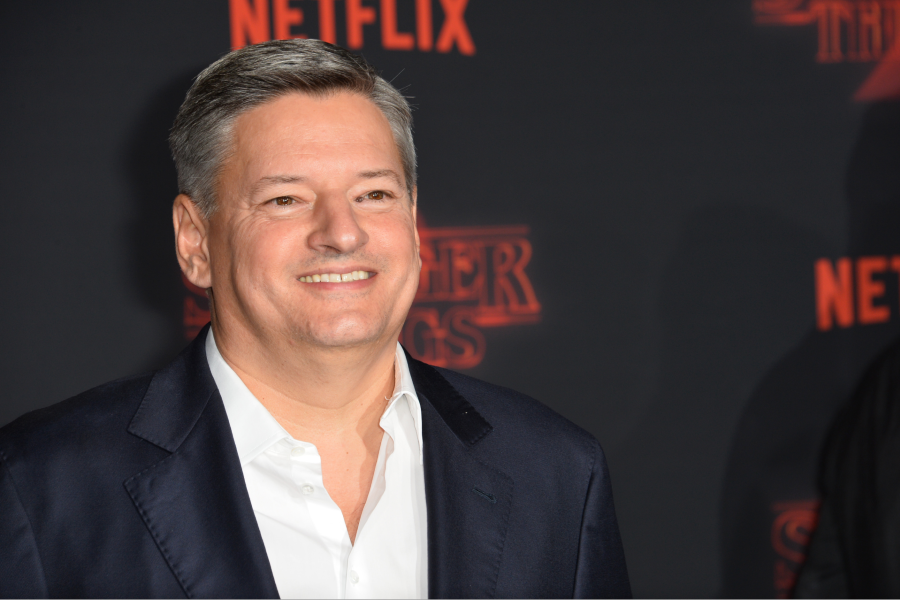
Netflix’s Ted Sarandos to Meet Trump Officials at the White House on Feb. 26

Netflix co-CEO Ted Sarandos is reportedly meeting at the White House with Trump Administration officials on Feb. 26 to discuss issues surrounding the streamer’s accepted $82.7 billion all-cash acquisition of Warner Bros. Discovery’s streaming and studio assets.

As first reported by Politico, the meetings will address President Trump’s social media call for the streamer to fire board member Susan Rice following her negative comments about corporations allegedly “bending at the knee” to the president.

It was not immediately clear if Sarandos would meet with Trump personally.

Sarandos apparently has a cordial relationship with the president, meeting with Trump before his inauguration and last November to discuss the Warner Bros. Discovery deal.

Trump, who initially said he would be personally involved in the transaction, later backed off saying he would remain an observer. That mindset changed on Feb. 21 after Trump saw a social media post from right-wing influencer Laura Loomer, in which she decried comments made by Rice, former U.S. Ambassador to the United Nations and National Security Advisor in the Obama Administration.

“Fire racist, Trump Deranged Susan Rice, IMMEDIATELY, or pay the consequences,” Trump wrote on his Truth Social X account. “She’s got no talent or skills — Purely a political hack! HER POWER IS GONE, AND WILL NEVER BE BACK. How much is she being paid, and for what??? Thank you for your attention to this matter. President DJT.”

Sarandos, in response, downplayed Trump’s comments, arguing the Warner Bros. Discovery transaction is a business decision, not political.

Since then, rival suitor Paramount Skydance has upped its hostile all-cash bid to $110.9 billion, which includes WBD’s television networks. Paramount has also agreed to separately absorb upwards of $11.3 billion in termination fees, penalties and other charges — a stunning pledge considering Skydance Media acquired Paramount Global for $8 billion.

Speaking to British press over the weekend, Sarandos was asked if Netflix would counter a new bid. The executive said the streamer is not dependent upon WBD for its future success, and has a strong history of letting other companies overpay for third-party assets.

If WBD accepts the Paramount deal, Netflix is set to receive a $2.8 billion termination fee.

Subscribe HERE to the FREE Media Play News Daily Newsletter!
Paramount Welcomes WBD’s New ‘Determination,’ Ups Termination Fees, Shortens Closing Date

Paramount Skydance Feb. 25 welcomed the Warner Bros. Discovery board’s agreement to consider its revised $110.9 billion all-cash acquisition bid as potentially “superior” to WBD’s accepted $82.7 billion deal with Netflix for its studio and streaming assets.

WBD’s willingness to consider Paramount’s latest bid follows 10 previous rejections by the board.

“Paramount welcomes the WBD board’s determination and looks forward to continuing to engage constructively with WBD to deliver the benefits of
Paramount’s proposal to WBD shareholders, the creative community and consumers,” Paramount wrote in a regulatory filing.

If WBD accepts the new offer, Netflix would have four days to submit a counter bid.

In addition to adding $2.48 billion in cash to its previous $108.4 billion bid, Paramount agreed to up the termination fee to $7 billion and shortened the so-called “ticking” fee ($650 million per quarter) it would pay WBD for every 90 days the transaction does not close to Sept. 30 from Dec. 31.

When adding the $2.8 billion termination fee due Netflix (if WBD walks away) Paramount says it would pay, plus another $1.5 billion in related penalties, Paramount is promising $11.3 billion in additional spending — 40% more than what Skydance Media paid acquiring Paramount Global last year.

Paramount also agreed to a “Company Material Adverse Effect” definition that excludes the performance of WBD’s pending separate Global Linear Networks business in the deal.

Paramount had previously considered WBD’s declining television networks as essentially having zero equity value.

Paramount releases fourth-quarter fiscal year results later today after the market close.

Subscribe HERE to the FREE Media Play News Daily Newsletter!
From Around the Web