A fifth installment of the “Zombies” Disney movie franchise has been greenlit for Disney+ and the Disney Channel with Malachi Barton and Freya Skye set to return to their roles as Victor and Nova.
Zombies 5 will begin production this spring in New Zealand and an official title will be announced at a later date. Franchise stars Milo Manheim and Meg Donnelly will not return to their roles as Zed and Addison while Trevor Tordjman is slated to return as Bucky, the cheer captain and cousin of Addison from the original trilogy.
In the fifth installment, following the events of Zombies 4: Dawn of the Vampires, the newfound peace between the Daywalkers and Vampires is put to the test when a band of fierce mermaids arrives in Rayburn. Nova and Victor must unite their groups once more to discover what the mermaids are really after in order to protect the fragile harmony they worked so hard to build.
The returning cast also includes Julian Lerner as Ray. New to the franchise are a trio of mysterious mermaids: Diaana Babnicova as Pearl, Taylor Oliver as bad-boy Fin, and Olive Mortimer as tech-wiz Sandy.
“‘Zombies’ has become a defining franchise for the current generation,” Ayo Davis, president, Disney Branded Television, said in a statement. “With each movie, we intentionally push the story somewhere new. Introducing mermaids in Zombies 5opens up a completely different dynamic, while staying true to the music, characters and themes of unity and acceptance that are at the heart of these films.”
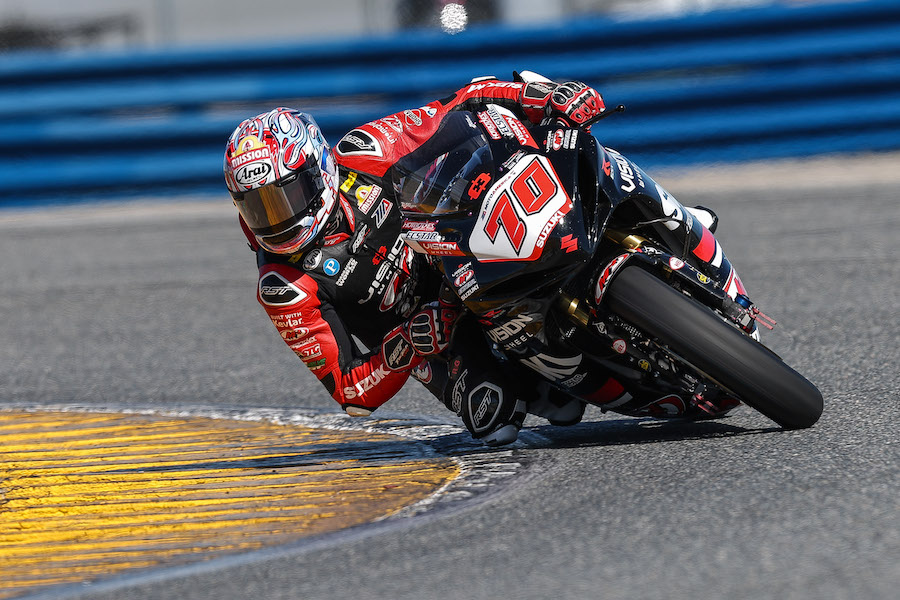
Samsung TV Plus will be the exclusive FAST channel home for live MotoAmerica races for the 2026-27 seasons, the streaming service announced.
Samsung TV Plus and V10 Entertainment have unveiled a partnership with MotoAmerica that will bring viewers every live race and coverage of the seasons.
The 84th running of the Daytona 200 kicks off March 6 on the Samsung TV Network (STN), followed by the debut of MotoAmericaTV, the exclusive Samsung FAST destination slated to launch later this spring. The 24/7 channel will present 200-plus hours of North America’s premier motorcycle road racing series and premium race content, as well as live event streams, full race replays, select practice sessions and qualifiers, and complete race coverage. For the first time ever, every class will be televised, including an all-women’s class and the MotoAmerica premier Superbike class, which is celebrating 2026 as the pinnacle of 50 years of production-based motorcycle racing. Viewers can also catch select live races on STN throughout the season.
“The most enduring sports racing segments are driven, literally and figuratively, by passionate fans. This launch, along with our partnership with MotoAmerica and V10, marks an exciting expansion into new sports franchises with millions of viewers,” Salek Brodsky, SVP and global head of Samsung TV Plus, said in a statement. “As Samsung TV Plus continues to broaden its live sports portfolio, this new content strengthens our lineup by providing an immersive, accessible, and dedicated destination for motorcycle racing.”
The new destination will also deliver a look at behind-the-scenes content and a library of archival videos, including highlight reels. MotoAmerica’s 2026 season will span 10 race weekends from March through September across seven premier classes and 10 states, with events held at legendary circuits, including Daytona International Speedway, WeatherTech Raceway Laguna Seca, and the Circuit of The Americas.
“Having a company like Samsung get behind MotoAmerica is significant for our continued growth and provides a unique opportunity, beginning with the Daytona 200, to bring MotoAmerica to the Samsung TV Plus audience of more than 100 million monthly users,” Chuck Aksland, COO of MotoAmerica, said in a statement. “MotoAmerica premier live races will take center stage on the Samsung TV Network, marking an exciting new chapter for the sport. This is a defining moment for our series, for motorcycle racing, and for the next generation of riders and fans alike.”
Full MotoAmerica Race Schedule:
March 5-7: Daytona International Speedway*
April 17-19: Michelin Raceway Road Atlanta
May 15-17: Barber Motorsports Park
May 29-31: Road America
June 26-28: Ridge Motorsports Park
July 10-12: WeatherTech Raceway Laguna Seca
July 31-Aug 2: Mid-Ohio Sports Car Course
Aug 14-16: Virginia International Raceway
Sept 11-13: Circuit of The Americas
Sept 25-27: New Jersey Motorsports Park
*The Daytona 200 will be available to watch on STN with subsequent races also available on MotoAmericaTV.
In 2025, MotoAmerica closed out its most successful season to date, with a surge in linear-TV viewership, as well as more than 2.5 million digital video views and a social following of more than 4 million fans. Its live-event races brought in more than 400,000 enthusiasts across 12 events, including a record-setting crowd at Road America. MotoAmerica brings to audiences more than 100 live races across seven premier classes, including Superbike, Supersport, King of the Baggers, Twins Cup, Royal Enfield Build.Train.Race., the Super Hooligan National Championship, and the newly launched Talent Cup.
MotoAmerica is the latest addition to Samsung TV Plus’s lineup of live events from sports leagues, including the NHL, MLB, NBA, NFL and FAST-exclusive MLV coverage. Samsung TV Plus, which recently surpassed 100 million monthly active users, offers more than 4,300 channels globally, subscription-free, and is available in 30 countries exclusively across Samsung TVs, Samsung Galaxy phones, XR headsets, Galaxy Tab, Smart Monitor and Family Hub lineups. This includes the new 2026 TV series announced earlier this year at CES, spanning Samsung Micro RGB TV, Neo QLED, OLED, The Frame, The Frame Pro and more.
Building a passionate audience is the key objective at direct-to-consumer services Angel Studios and Fandango, executives said Feb. 25 during DEG: The Digital Entertainment Group’s EnTech Fest conference at the Skirball Cultural Center in Los Angeles.
“We want audiences to care,” said Thomas Hughes, EVP, head of distribution strategy and global partnerships at Angel Studios. “That’s our difference, is to bring audiences in and have them invest in what we do.”
Angel, which he noted has 2.1 million members, is based on a unique model where members vote on films greenlighted and, for a monthly fee (from $12 to $20), are offered tickets to its theatrical movies and access to its a streaming service.
“Nobody [in the executive suite] decides what gets made at Angel; the audience decides,” Hughes said. “Every film, even a licensed film. These days we have licensed films with partners like Lionsgate on our platform, and those films — even if it’s been out for 15 years — they go in front of our audience and the audience chooses whether or not we put our name on it.”
Cameron Douglas, who is SVP of OTT/Streaming for Fandango and heads the company’s transactional (digital sale and rental) streaming service Fandango at Home, agreed that, as at Angel, the audience connection at Fandango is all important.
“We both address very passionate audiences, just in a very different way,” he said.
“I think what’s happening now is the ultimate goal of Fandango being synonymous with fandom. Whether you’re seeing something in the theater or at home — then Fandango will be able to support you,” he added.
Fandango was recently spun off from Comcast under the Versant Media Group monicker.
Cameron Douglas
“[Versant] is managed under four pillars. Political news and opinion. Business news and personal finance. Golf and sports participation. And then sports and genre entertainment and that’s where Fandango is part of that portfolio,” Douglas said. “Now each of those have very passionate audiences. … But Fandango I’d say has the most traditional passionate fan base. That could be the guy who always wants to see opening weekend premium movies coming out at the theater. That could be the person that wants to collect the next superhero movie on Fandango at Home when it comes out, and they’d be willing to pay $20 for that. That is the dad that just wants to have a family night with his kids and go out to the theater. He actually organizes that and buys the tickets through Fandango. That is the fandom that we are talking about, and that’s what we’re leaning into going forward.”
That isn’t to say each of the services works alone.
“With the help of partners like Fandango at Home we distribute well beyond our own platform,” Hughes said. “But we don’t make movies. We don’t develop movies. People bring us movies and series that either go into theaters if it’s a movie or on our platform if it’s a series, and then we do full distribution downstream. We are licensing to third parties, to SVOD platforms in many instances, and again working with transactional partners like Fandango at Home to unlock other revenue streams for these filmmakers. We do it a little bit differently in that we don’t take a distribution fee. … We only participate in the profitability when it becomes profitable.”
Douglas agreed that partnerships are key.
“We identify organizations like Angel Studios that are willing and interested in working with us both with theatrical and at Home entertainment that we’ve built where they can lean into the power of what we can do to market their films,” he said.
At Fandango, the new spin-off company also offers new opportunities, buttressed by the existing flat, but stable, transactional digital entertainment business, Douglas said.
“If we’re looking at who we serve now, we own the transactional customer,” he said. “We have this great ticketing business. We have 41 million addressable consumers every month. We have hundreds of millions of hours consumed on Fandango at Home every year. … Basically that is our current audience.”
The cable channels that came along with Versant also offer new opportunities in the Fandango at Home DTC ad-supported marketplace.
“It is well known that the cable audience is declining and there is a passion for what that traditionally has been, which is an ad-supported business, to go into streaming and digital,” Douglas said. “We’ve always had a nascent AVOD and FAST component at Fandango at Home, post Vudu, but we haven’t invested in it.”
The new, smaller organization at Versant “allows us to focus and make investment in relaunching essentially later this year our FAST business” with these cable assets’ content, including reality and true crime content.
“What actually came along with the spinoff is Versant now has a vast library of originals produced by E! and Syfy and Oxygen, etc. — a lot of reality, a lot of true crime,” he noted. “And true crime is huge in AVOD.”
That kind of ad-supported programming has growth potential, he noted.
“That is really the growing part of the business because the transactional part of our business, which we are very successful at, is a mature market,” Douglas said, noting that Fandango has added PPV and cable TVOD capabilities that also allow it to enter the live streaming market.
Still, attracting and keeping a passionate viewer is the top challenge, both said.
“[The key is] finding customers and keeping them,” Hughes said. “We believe a number of our members believe in us causally, but at the end of the day people want to be entertained, and there has to be enough entertainment value there to extract their money on a month in month out basis. That’s the challenge.”
Ahead of the launch of HBO Max in the United Kingdom and Ireland next month, Warner Bros. Discovery is expanding a foreign crackdown on password sharing among non-subscribers.
WBD, which announced the move Feb. 26 on the fiscal call, rolled out HBO Max service in eight countries in January, primarily focusing on major economies in Central and Southern Europe.
The crackdown notifies subscribers found to be sharing their HBO Max or Discovery+ passwords the option to add out-of-household users for an additional $7.99 per month for the less-expensive ad-supported tier.
Users identified as sharing passwords will see increasingly “fixed” or “assertive” messages requiring action, replacing the previous “soft” notifications that could be easily dismissed, according to JB Perrette, CEO and president of global streaming.
WBD added more than 12 million foreign paid streaming subscribers in the fourth quarter (ended Dec. 31, 2025), to end the year with 72.4 million.
“We are in the second inning of our password sharing enforcement. It is just beginning to get scale,” Perrette said on the company’s fiscal call. “It has not expanded globally at all. That will start in 2026.”
“We are still launching in new markets with our ad tiers, and we think there is further upside,” Perrette added. “Based on the fact that our fill rates are still relatively low internationally, we feel great about the next couple years and the years to come. We have great visibility to a strengthening content slate, which is at the core of everything we do, and the launches in big markets. It all flows together to drive that growth.”
MGM+ on Feb. 24 announced that it renewed the romantic adventure drama series “Robin Hood” for a second season. The 10-episode season will go into production at PFI Studios in Serbia this summer.
MGM+ reported “Robin Hood” is one of its all-time best first-season performers. From Lionsgate Television with showrunner John Glenn and producer-director Jonathan English, the series features a modern take on the classic tale and a heightened focus on the relationship between Robin Hood and Maid Marian.
Season two of “Robin Hood” will expand its world beyond Sherwood and Nottingham into the treacherous courts of England, France, and Rome, where Robin Hood and Marian are drawn into the orbit of kings and queens and forced to wield the instruments of Norman power to secure a future for the Saxons.
Season one of “Robin Hood” starred Jack Patten as Robin Hood, Lauren McQueen as Marian, Sean Bean as the Sheriff of Nottingham, Lydia Peckham as Priscilla of Nottingham, and Connie Nielsen as Queen Eleanor of Aquitaine. MGM+ said season two casting will be announced shortly. Season one of “Robin Hood” premiered on MGM+ in November 2025.
Warner Bros. Discovery Feb. 24 announced that its board of directors, following consultation with its independent financial and legal advisors, has determined that Paramount Skydance adding $2.48 billion in cash to its current $108.4 billion bid might lead to a superior proposal than Netflix’s currently accepted $82.7 billion cash deal for WBD’s studio and streaming assets.
The revised proposal ups Paramount’s current all-cash $30-per-share hostile bid to $31, plus Paramount paying a daily ticking fee equal to $0.25 per share per quarter after Sept. 30, as well as responsibility for a $7 billion regulatory termination fee in the event the transaction does not close due to regulatory matters.
Skydance Media acquired Paramount Global for $8 billion last year.
Paramount is also on the hook for paying Netflix the $2.8 billion termination fee that WBD would be required to offer the streamer, in addition to an obligation to contribute additional equity funding to the extent needed to support the solvency certificate required by Paramount’s lending banks, and a “company material adverse effect” definition that excludes the performance of WBD’s pending Global Linear Networks business spin-off.
WBD said the board has not made a determination as to whether the revised proposal is superior to the merger with Netflix. WBD said it would engage with Paramount further to determine if Paramount’s proposal is in fact better than Netflix’s.
If the board determines that Paramount’s bid is superior, Netflix will have four business days to negotiate with WBD and propose any revisions to the Netflix transaction.
The Netflix merger agreement remains in effect, and the board continues to recommend that WBD shareholders remain in favor of the Netflix transaction and is not withdrawing or modifying its recommendation.
Allen & Company, J.P. Morgan and Evercore are serving as financial advisors to Warner Bros. Discovery, and Wachtell Lipton, Rosen & Katz and Debevoise & Plimpton LLP are serving as legal counsel.
The number of new subscription streaming VOD subscribers in the United States dropped 33% to 18 million in the 2025, from 27 million new subscribers in 2024, according to new data from Antenna.
In the fourth quarter (ended Dec. 31, 2025), subscriber growth cooled to 7%, from 12% growth in the final 90 days of 2024.
Netflix led the pack with 25% of the subscriber growth, followed by Hulu (15%), Disney+ (14%), Paramount+ (13%), Peacock (10%), HBO Max (9%), Apple TV (8%) and Starz (4%), with Discovery+ and Fox One trailing behind.
The biggest single-day sign-up of new SVOD subscribers occurred the day after Thanksgiving when 8.9 million people registered on Prime Video to live-stream the NFL Chicago Bears playing the Philadelphia Eagles.
Paramount+ generated more than 1 million sign-ups for its exclusive UFC 324 mixed martial arts fight and NFL AFC Championship weekend.
Antenna estimates that gross SVOD adds are growing 7%, down from 11% growth in 2024. The trend toward more stable churn (subscribers not renewing) recognized near the end of 2024 continued in 2025.
From September 2024 through August 2025, the SVOD category had flat or lower churn compared with the same month in the prior year; that was true for only two of the previous 21 months, according to the report.
The weighted average churn rate held steady at 4.6% in December, compared with 4.8% in December 2024, marking a 0.2% year-over-year drop.
Disney+ and Hulu experienced dramatic spikes in churn to 7.8% and 9.6%,
respectively, in September 2025 during the Jimmy Kimmel controversy, but
normalized by December 2025 to 4.1% and 4.9%.
Almost 80% of SVOD services showed more stable churn patterns in 2025 versus 2023, with standard deviations in churn rate declining across Paramount+, Discovery+, Apple TV and Netflix.
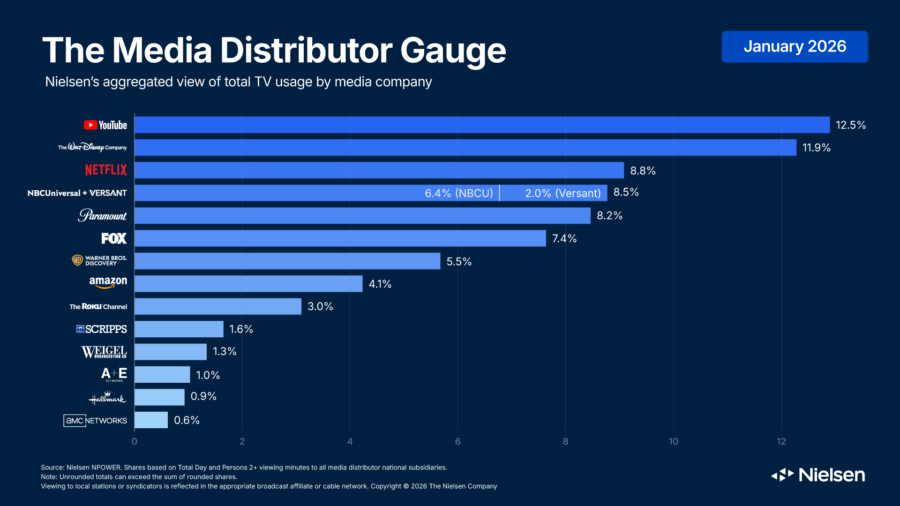
In a month where television viewing reached a 12-month high, Disney captured the largest month-over-month gain in Nielsen’s January Media Distributor Gauge report, a monthly view of total household TV consumption aggregated by parent company.
Disney added 1.2 share points and finished with 11.9% of total television viewing in January, nearly tying its Media Distributor Gauge best (12% in January 2025), and bringing it within 0.6 share points of YouTube’s 12.5% market lead.
Disney’s momentum was primarily fueled by ESPN’s coverage of the College Football Playoffs and Championship games, which drove an 82% monthly viewing increase on the network and contributed nearly a full share point to Disney’s total.
Disney also got a boost from its ABC affiliates, with viewing up 10% on the strength of multiple NFL games, the Citrus Bowl, the return of broadcast dramas, and seasonal staples such as “New Year’s Rockin’ Eve” and “The Rose Bowl Parade.” ABC’s “High Potential” and “ABC World News Tonight” were notably the top broadcast programs in each of their respective genres in January.
Netflix represented 8.8% of TV usage in January and maintained the No. 3 rank among distributors. Netflix’s overall usage was up slightly at 1%, and its original series “Stranger Things” claimed the top streaming program for a second consecutive month.
NFL games carried on NBC, plus streaming simulcasts on Peacock, were a key factor in the 5% overall increase to NBCU-Versant. Peacock also benefited from a new season of its original series “The Traitors.” Additionally, Telemundo affiliates saw a 13% jump in viewership powered by the sports reality hit “Exatlón,” bringing the network’s monthly share contribution to 0.7 points. Overall, NBCU-Versant represented 8.5% of TV viewership, up 0.3 points vs. December.
Fox climbed to 7.4% of TV viewership (+0.4 points). This growth was largely underscored by a 17% jump in viewing on the Fox News Channel, which accounted for more than half (+0.25 points) of Fox’s monthly share increase.
Led by increases on FYI (+46%) and Lifetime (+14%), A&E’s combined viewership climbed 8% (+0.1 point) and moved up one slot in the distributor rankings.
Netflix’s original animated musical drama KPop Demon Hunters (produced by Sony Pictures Animation) won Best Feature honors along with awards in nine other categories at the 53rd Annie Awards on Feb. 21 in Los Angeles on the campus of UCLA.
Launched in 1972, the Annie Awards have long recognized the animation industry’s most talented artists and storytellers.
The movie also won Best FX — Feature (Filippo Macari, Nicola Finizio, Simon Corbaux, Naoki Kato, Daniel La Chappelle); Best Character Animation — Feature (Ryusuke Furuya); Best Character Design — Feature (Scott Watanabe, Ami Thompson); Best Direction — Feature (Maggie Kang, Chris Appelhans).
The movie also won Best Music — Feature (KPop Demon Hunters Music Team); Best Production Design — Feature (Helen Chen, Dave Bleich, Wendell Dalit, Scott Watanabe, Celine Kim); Best Voice Acting — Feature (Arden Cho as Rumi); Best Writing — Feature (Danya Jimenez, Hannah McMechan, Maggie Kang, Chris Appelhans); and Best Editorial — Feature (KPop Demon Hunters Editorial Team).
The movie, which tops Netflix’s all-time movie chart, has recorded approximately 538 million views worldwide since its premiere on June 20, 2025, surpassed the streamer’s Red Notice to become its most popular film of all time within its first 13 weeks on the platform with 325.1 million views.
Notably, KPop has outperformed Netflix’s other massive hits, including “Squid Game” season one, with 265.2 million views, and “Wednesday,” with 252.1 million views.
The return of the Olympic Winter Games to Europe (in Milan and Cortina, Italy) combined with the rollout of HBO Max, along with existing Discovery+ and Eurosport, drove significant growth in viewership and engagement across Warner Bros. Discovery’s European platforms.
WBD’s streaming platforms were the only exclusive platforms to watch every event broadcast live across Europe, while its linear channels Eurosport (Europe) and TNT Sports (U.K. and Ireland) delivered comprehensive Games-time coverage.
NBCUniversal’s Peacock and NBC Sports had exclusive U.S. rights to the Games.
Max and Discovery+ combined to generate the best-ever streaming Olympic Winter Games when compared with Beijing in 2022 and South Korea’s PyeongChang in 2018.
Total hours streamed skyrocketed 103% compared with Beijing 2022, including triple-digit growth in France, Germany, Italy (on Max) and the U.K. (Discovery+), according to Warner Bros. Discovery.
Max was available in select European markets in 2022 following a phased rollout that began in late 2021.
Max and Discovery+ saw three times more viewers (234%) than Beijing 2022. Total subscribers streaming Milano-Cortina 2026 content exceeded those that viewed the entire Beijing 2022 Games after only three days.
Social video views on Eurosport (Europe) and TNT Sports (U.K. and Ireland) accounts exceeded 4 billion.
WBD said Max and Discovery+ helped drive viewership by presenting all 246 sports events live, peaking at 11 concurrent events, including 116 medal contests and 2,900 athletes competing across 19 days.
Approximately 32% of streamers utilized “Olympics Multiview,” allowing viewers to watch up to four Olympics events concurrently on a single screen with their choice of audio.
Streamers were also empowered through “Gold Medal Alerts,” and “Timeline Markers,” offering “Personalized Watch Lists” that were utilized by the majority of users, allowing users to select from up to 21 commentary languages for their live coverage.
“Watching the Games on HBO Max and Discovery+ clearly resonated with audiences in the U.K. and Europe,” Andrew Georgiou, president and managing director for WBD Sports Europe, said in a statement.
“This Olympics has set an incredibly strong foundation as we look to Los Angeles 2028 and the Olympic Winter Games returning to Europe again for French Alps 2030,” he said.
Linear (Eurosport in Europe; TNT Sports in the U.K and Ireland) saw a 3% increase in viewers versus Beijing 2022, marking a reverse of declines in total TV consumption over this period and driving the bulk of overall live viewing.
WBD reported more than 50% linear growth (on Eurosport channels) in hours viewed overall compared to Beijing 2022.
France upped its viewership 47% in hours viewed, Germany was up 50% in hours viewed, and Poland was up 32% in hours viewed. TNT Sports channels (U.K and Ireland only) increased more than 60% versus Beijing 2022.





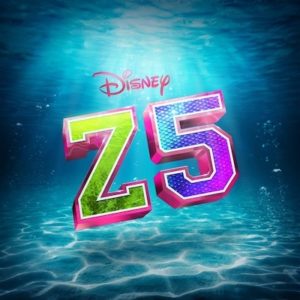 In the fifth installment, following the events of Zombies 4: Dawn of the Vampires, the newfound peace between the Daywalkers and Vampires is put to the test when a band of fierce mermaids arrives in Rayburn. Nova and Victor must unite their groups once more to discover what the mermaids are really after in order to protect the fragile harmony they worked so hard to build.