



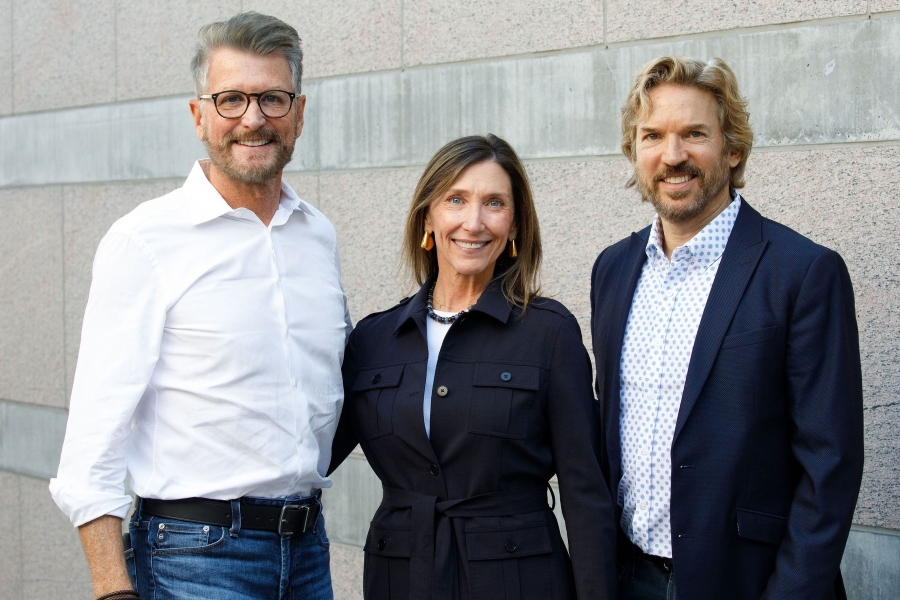
DEG: The Digital Entertainment Group held its fifth annual EnTech Fest at the Skirball Cultural Center in Los Angeles Feb. 25. The one-day event featured keynotes by Cineverse CEO Chris McGurk, Netflix ad chief Amy Reinhard, and Kartel CEO Kevin Reilly; exhibits, panel discussions, case studies and fireside chats; and the DEG’s signature annual reception. Conference topics included emerging technologies, the consumer experience, immersive storytelling, artificial intelligence and advanced content delivery. Launched in 2022, EnTech has become a key event on the digital entertainment world’s annual calendar. (All photos by Media Play News staff)
Tag: Entech
DEG EnTech Keynote: Netflix’s Ad Chief Says Viewer Experience Is Most Important
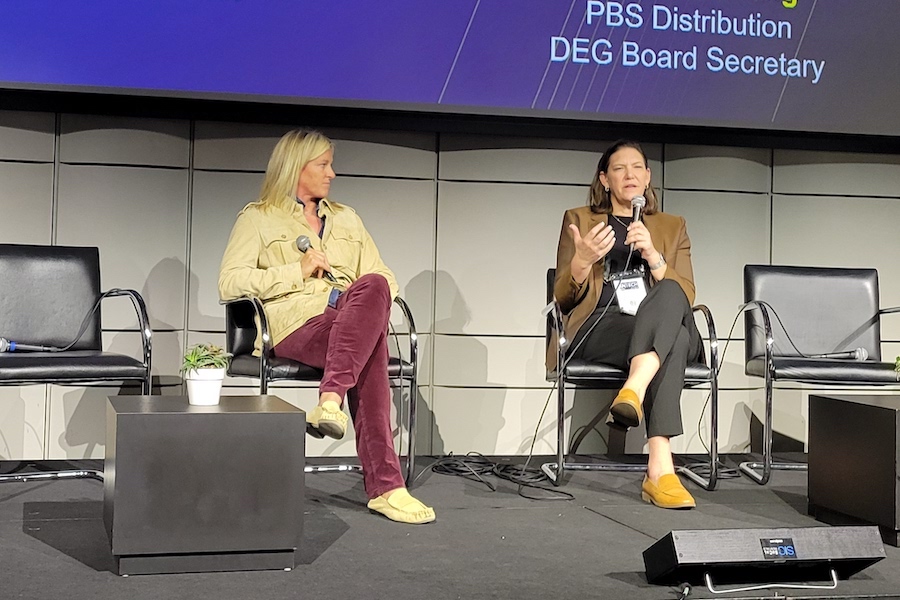
Preserving the quality of the subscriber experience at Netflix is key as the service considers its advertising plan, said Amy Reinhard, Netflix’s president of advertising.
“For us the viewer or member experience is by far the most important thing,” she said during a keynote speech at DEG: The Digital Entertainment Group’s EnTech conference Feb. 25 at the Skirball Cultural Center in Los Angeles.
“We want to make sure we are the first SVOD service that people are logging into,” she said. “We know we’re that last service that people want to cancel so making sure that members keep coming back onto the service to watch that great variety and quality of content is very, very important. At the same time, we think that is very important to advertisers because they want our members to have a really great experience.”
Consequently, Netflix pays head to how members experience ads, she said.
“When we think about things like ad load, we take a long-term view on ad load. We think it’s very, very important that the ad load is light,” she said. “We think about things like frequency capping. We think there’s nothing more frustrating than getting onto a platform and being shown the same ad, the same creative four or five times in a row. So we’re very, very picky about making sure that that member experience is fantastic. And at the end of the day that’s really relevant for advertisers.”
Reinhard also discussed the various franchise tie-ins employed by the service.
“I love our brand marketing,” which has fandom at its heart, she said. She pointed out the Dove soap tie-in with “Bridgerton.”
“It feels very authentic, leans into the brand attributes,” she said.
She also cited the Cheetos tie-in with “Wednesday,” which included the character Thing having Cheetos fingerprints.
The tie-ins are designed to feel “really authentic to the user,” she said.
Reinhard also discussed the company culture and leadership philosophy, saying it’s about “making sure as leaders that you’re not micromanaging.”
“I always think from a leadership perspective, it’s important to hire people who are smarter than us,” she said.
Moderator Andrea Downing, president of PBS Distribution and DEG board secretary, asked Reinhard about the qualities needed for leadership.
“The best leadership advice that I’ve ever gotten came from Ted [Sarandos, Netflix co-CEO],” Reinhard said.
Reinhard said he noted that early in your career you move up because you are an expert, but later, “as you move up it really becomes about being a leader of leaders,” she said. It’s about “communication and collaboration.”
She also stressed the need to be flexible.
“You need to be OK with change,” she said, noting the numerous reorganizations the company has experienced.
Downing also broached the subject of artificial intelligence.
“I am excited about AI,” Reinhard said. “We can be fearful, or we can lean into it. And I take the latter approach.”
She said AI promised productivity gains.
“It will enable us to do more things quicker,” she said, adding “the human creativity is really, really important and we want to make sure we keep that.”
She noted that AI might help with quick production turnarounds.
“This is an area where, given my production background, I’m very excited about dovetailing the opportunities there,” she said.
She cited the surprise success of KPop Demon Hunters.
“We never could have imagined that it was gonna be the kind of cultural phenomenon that it was,” she said.
AI could allow for quick turnaround of marketing, she said, noting that in the past a spot could take six to nine months to produce.
“I think with AI we are able to jump on those kind of opportunities much more quickly,” she said.
Reinhard said Netflix’s move into sports and live event programming was more about creating buzz then boosting advertising.
“Sports is not something that we went into because of advertising,” she said. “It really started with a programming approach.”
Events such as the Jan. 24 free solo climb by Alex Honnold of the 1,667-foot Taipai 101 skyscraper in Taiwan are about “being able to make sure it’s a must watch experience so people tune in at that time,” she said.
“We want to drive big audiences,” she said, noting that the first foray into this strategy was the Mike Tyson-Jake Paul boxing battle.
In addition to the “must watch” experience, the programming team also thinks about the ability to drive the conversation.
The aim is “seeing the social conversation for days, sometimes even weeks after the event,” she said.
“We want to own Christmas Day,” she said of Netflix’s holiday NFL lineup, because families are together on that day.
The service is expanding beyond U.S. sports as well, she said.
Subscribe HERE to the FREE Media Play News Daily Newsletter!
DEG Announces Winners of Fifth Annual EnTech Awards
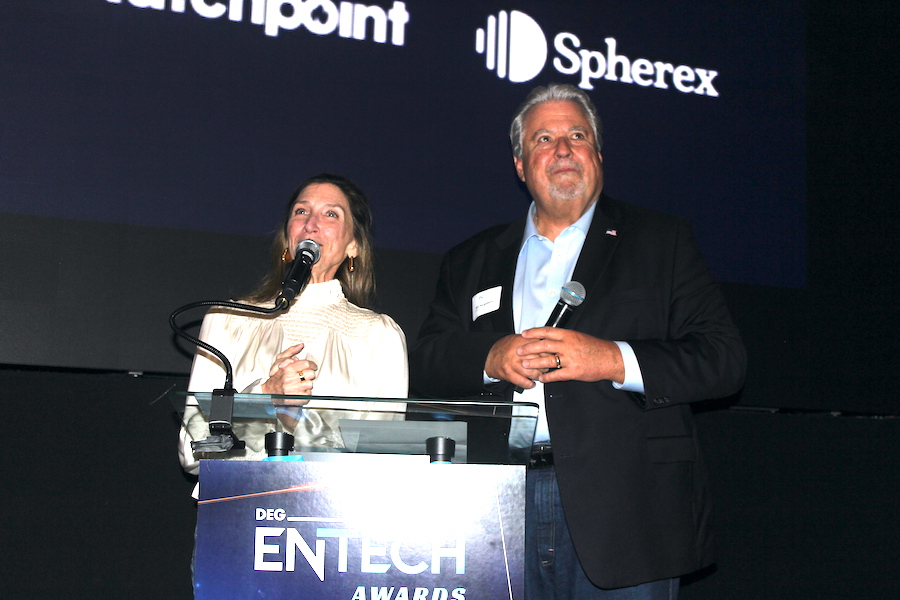
DEG: The Digital Entertainment Group Oct. 7 announced the winners of the fifth annual EnTech Awards at the Culver Theater in Culver City, Calif., with a presentation and cocktail reception.
The DEG EnTech Awards honor exceptional technology accomplishments in the digital supply chain achieved by individuals and teams.
Richard Berger, CEO of MovieLabs, was presented with the Hall of Fame Award.
Category winners included CineSearch (accepted by Tony Huidor) with the Emerging Technology Award for its customizable AI chat bot “Ava” that makes recommendations to users; Christopher Reynolds, Deluxe Media Inc., with the Localization Trailblazer Award; the Sunset Boulevard team, Paramount and Park Post Road, with the Technology Innovation in Catalog Restoration and Preservation Award; Sinners and Black American Sign Language, Warner Bros. Discovery, HBO Max, and Roundabout Entertainment, with the Technology Advancement in Multi-Media Accessibility Award; Spherex AI Agents with the Technology Innovation in Content Delivery Award, accepted by Spherex CEO Teresa Phillips; Compliance Engine, Play Anywhere, with the Technology Innovation in Content Distribution Award; and Megan Mauck, NBCUniversal, with the Technology Leadership Award.
Rising Star honorees for 2025 were James Han, Iyuno; Hunter Clancey, NBCUniversal; Bill Pahutski, Paramount Pictures; Sharon Hsieh, The Sherlock Company; and Alison Falk, Warner Bros. Discovery.
The People’s Choice Award went to Vubiquity’s Catalog Intelligence.
To determine the award winners, the DEG enlisted a distinguished judging panel comprised of a cross-section of leaders representing entertainment technology. Among other factors, the judging panel based its decision on the candidates’ contribution to a key goal or priority within the technology and operations function.
See photos here.
Panelists Discuss Quandary of Streaming Search and Discovery at DEG’s EnTech
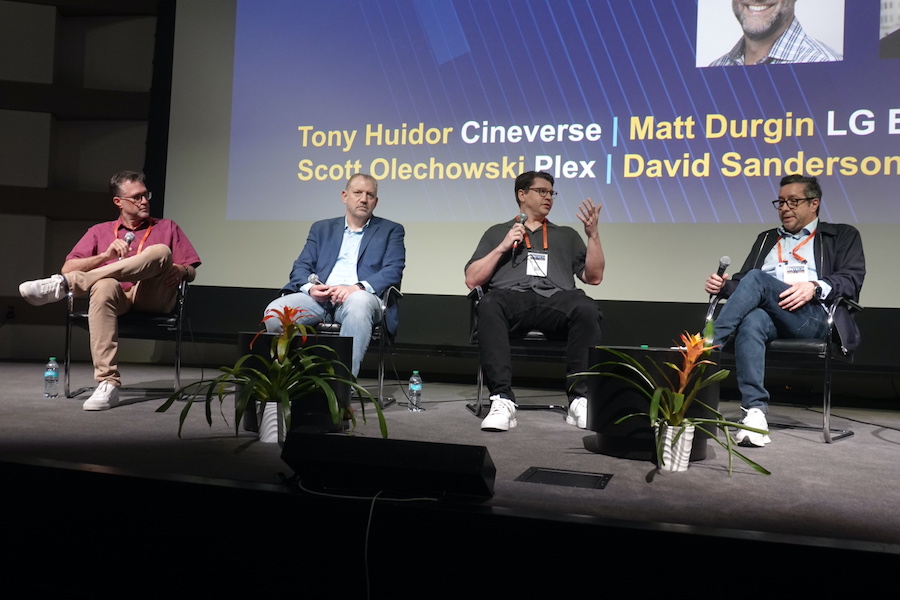
Panelists mulled the fragmented and inadequate system of search and discovery in the streaming marketplace, how it is frustrating consumers, and how its problems might be solved at the EnTech Fest and Summer Symposium presented by DEG: The Digital Entertainment Group June 3.
“I don’t think we’re satisfied with where we are. … From the DEG perspective between the devices committee and the services committee … we spend a lot of time talking about this,” said Matt Durgin, VP of North America content and services for LG Electronics, who is also a DEG board member.
While David Sanderson, founder and CEO of Reelgood, said systems such as EIDR “are on the right track,” he said, “There’s a lack of an industry ID that everyone agrees to.”
“There is no connective tissue between all the different streaming services that reside on the TV,” noted Tony Huidor, president of technology and chief product officer at Cineverse.
It’s a challenge getting all of the players on the same page and cooperating, panelists agreed.
“There’s different stakeholders in this landscape,” Plex’s Scott Olechowski pointed out. “There’s the end user, then there’s the platforms themselves, as well as the content providers on the platform, and no doubt there’s some tension.”
“I think that what you’ve touched on is the No. 1 problem,” LG’s Durgin said. “When we first started our platform, we consistently encountered this issue of ‘Give us the metadata so we can run universal search.’ And I won’t name names, but there are just companies out there that invest a lot into it and believe that this is a differentiator for their service. They also believe that if consumers get used to searching on the platform, that they’ll be less likely to search inside their service so they’ll spend less time inside their service. As a businessperson, I completely understand.”
But walled gardens aren’t the way to go for the consumer, he said.
“We need to move past this,” Durgin said, adding, “If we think of the last decade as our first album, we do not want a sophomore slump.”
Part of the problem is also the metadata, Huidor said. “Search and discovery is broken because we rely on metadata that was built 75 years ago for TV,” he said. “To get good recommendations you need to understand who the user is, what they like and you need to have very robust metadata about the content. That doesn’t exist today. And that’s one of the challenges that we have where all these streaming services are trying to use algorithms to recommend content that relies on metadata that’s not very robust. You’ll never be able to get good recommendations if you don’t have very good metadata.”
For instance, he said that if he says he likes Reservoir Dogs, most services will recommend Pulp Fiction or Django Unchanged (both also directed by Quentin Tarantino), rather than a heist movie or another movie about a robbery gone awry, which is what he is really looking for.
“That’s one of the things we set out to solve with Cinesearch,” he said. The AI-powered search and discovery tool created at Cineverse ingests what the viewers are looking for, solving the question, “What do I want to watch tonight?” It also searches “the entire catalog of everything that’s available anywhere,” Huidor said. “No matter what you’re looking for, we’ll tell you where it is and take you straight there,” he said.
“Ultimately our goal is to start getting it into devices and platforms,” Huidor said.
Solving the discovery and search problem would also help to ameliorate one of the growing problems in the industry — churn, Durgin noted.
“If consumers are able to search and have recommendations and can always connect to the content that they care about … if they did churn out they’d churn right back in and restore that subscription because they’d know what content is now out,” he said.
Subscribe HERE to the FREE Media Play News Daily Newsletter!
Netflix Exec Heather Dowdy Talks About the Value of Accessibility at EnTech Confab
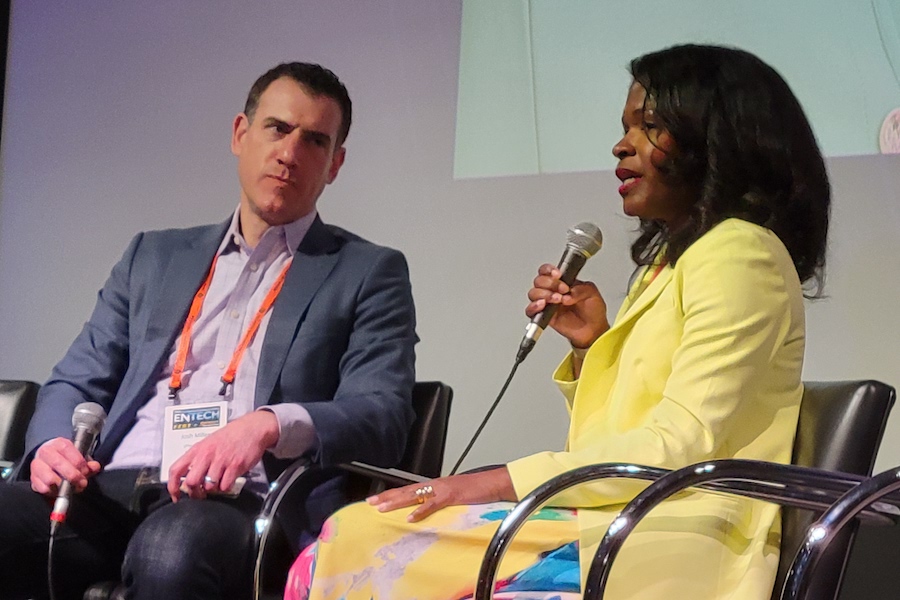
Netflix director of product accessibility Heather Dowdy discussed the importance of captions, audio description and other products to improve the customer experience June 3 at the EnTech Fest and Summer Symposium presented by DEG: The Digital Entertainment Group.
In the keynote chat “Unlocking Accessibility to Expand Your Audience,” Dowdy, who is herself a child of deaf adults and grew up watching captions, said, “It’s always about how are we designing a technology to meet a human need.”
She noted that features such as captions and audio description (in which a voice describes the picture) aren’t just for the sight impaired or hard of hearing.
“Nearly 50% of views on Netflix in the U.S. happen with captions,” she noted.
Audio description can also have an appeal to sighted folks.
“I’ve been told you should check it out for ‘Bridgerton,’” she said.
Dowdy said she is responsible for helping viewers connect to their next content or game. “You cannot entertain the world without accessibility; we can’t show you ‘Squid Games’ without accessibility,” she said.
Captions can also help viewers understand an accent, and audio description might give an assist to the neurodivergent viewer. “We’ve found that many of them really like audio description,” she said.
The feature might also appeal to the viewer that doesn’t admit that they have to use the large font setting on their phone, Dowdy joked.
“What we’re noticing is that there a lot more people using these features than would maybe admit to having a disability,” she said.
She values consumer feedback to find out how the service can better serve them with new features. For instance, the neurodivergent can be overwhelmed by the voluminous catalog.
“If we solve that need, we might think about parents or working parents that are just really tired,” she said.
It’s part of Netflix’s philosophy of “solving for one and extending the benefits to many,” she said.
The company also just announced the option to select subtitles for dialog only without audio cues for those that “don’t necessarily need or want the audio cues.”
It’s about “how are we using technology to make is easy for folks,” she said.
Subscribe HERE to the FREE Media Play News Daily Newsletter!
DEG’s EnTech Fest & Summer Symposium 2025
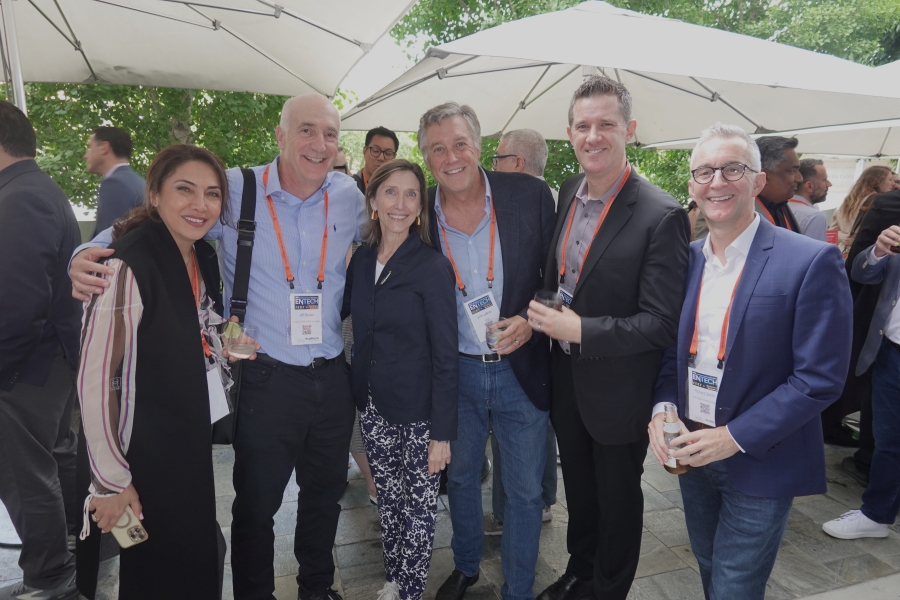
DEG: The Digital Entertainment Group held its fourth annual EnTech Fest at the Skirball Cultural Center in Los Angeles on June 3. The one-day event, combined this year with the digital entertainment trade group’s Summer Symposium, included exhibits, conference sessions, and an annual reception that one attendee said “is the best networking opportunity we have each year.” Conference topics included emerging technologies, the consumer experience, immersive storytelling, artificial intelligence and advanced content delivery. Launched in 2022, EnTech has become one of the most popular events in the digital entertainment world, drawing hundreds of attendees from the top studios, streamers, research houses and technology companies. (All photos by Media Play News staff)
Executives Tout Importance of Legacy Theatrical Business at DEG EnTech Confab
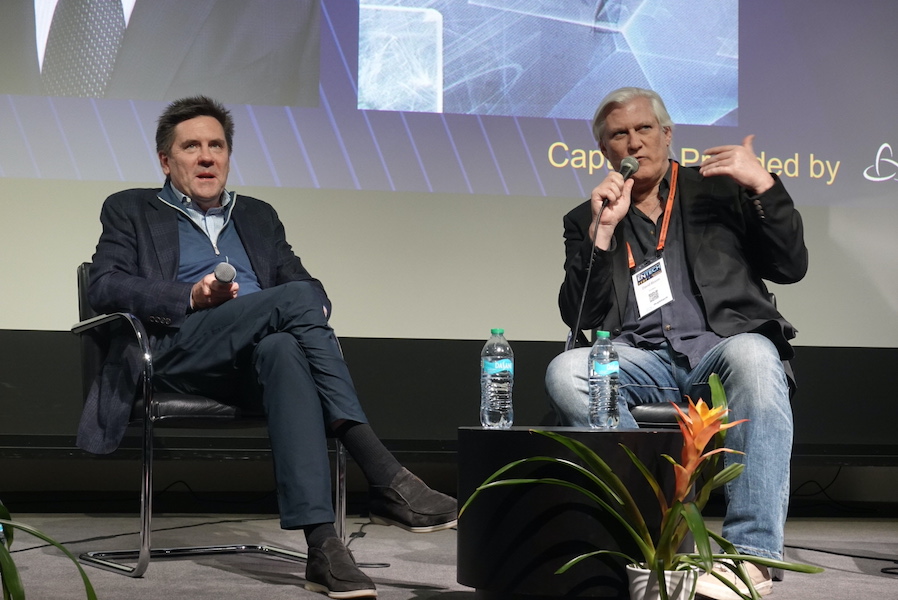
While new technology has come and gone, theaters are still integral to the health of the entertainment business, said executives speaking June 3 at the EnTech Fest and Summer Symposium presented by DEG: The Digital Entertainment Group.
“The movie business has been called dead from 75 to 50 years ago,” said National CineMedia’s Tom Lesinski. “It’s remarkable that it’s still around.”
Lesinski, who was a key player in the early days of DVD and the DEG, noted, “20 years later the DVD business is gone, and cinema is still here.” He now helps theaters survive with pre-screening advertising.
“I am the guy responsible for making you watch advertising in movie theaters,” he said, adding that in 20 years National CineMedia has paid out more than $6 billion to exhibitors.
While it’s been an “interesting” four or five months with theatrical receipts waning and then staging a comeback with films such as A Minecraft Movie and Lilo & Stitch, “still, a great deal of emphasis is placed on the box office,” noted Ron Schwartz, president and chief operating officer, Lionsgate Motion Picture Group.
”I think it’s wildly important, and it drives everything,” added Michael Burns, Lionsgate vice chairman.
While the box office take still hasn’t recovered from the pandemic, Lesinski said the shortening of windows between theatrical and home entertainment outlets such as streaming has stabilized somewhat.
“I think it’s hard to get the genie back in the bottle on the window now,” he said. “I think it’s sort of stable now … but it was really perilous during COVID. I think [exhibitors are] pretty happy that there’s any window now.”
As with every other distribution outlet in entertainment — including the disc business in which Lesinski forged his career — streaming has been a strong competitor to theaters with many films going straight to streaming or streaming simultaneously with a release in theaters, especially during the pandemic.
“The streaming giants haven’t really tried to kill the exhibition business, but they have obviously put a dent in it,” he said.
He remarked that when he was championing DVD years ago, he pushed for shorter windows between theatrical and home entertainment.
“I want longer windows now,” he mused, adding “luckily a lot of the studios have seen the light … and the windows are back.”
“I think that the theatrical window is wildly important,” said Lionsgate’s Burns, adding that a box office release “creates in the consumer mindset that it’s a value proposition.”
Lesinski said that content companies need to support theatrical distribution, though it isn’t crucial that it reaches the revenue heights generated before the pandemic.
“There’s probably half as many movies released now as in 2019 [pre-pandemic],” he noted, adding the “the massive marketing that used to happen in the old days to eventize … has gone away.”
Theaters drive streaming success, he said.
“The highest performing content on streaming is theatrical movies,” he said, adding “even at Netflix today the things that they license from the studios are the highest performing titles.”
Subscribe HERE to the FREE Media Play News Daily Newsletter!
DEG EnTech Speakers Discuss Promise and Pitfalls of Tech in Entertainment
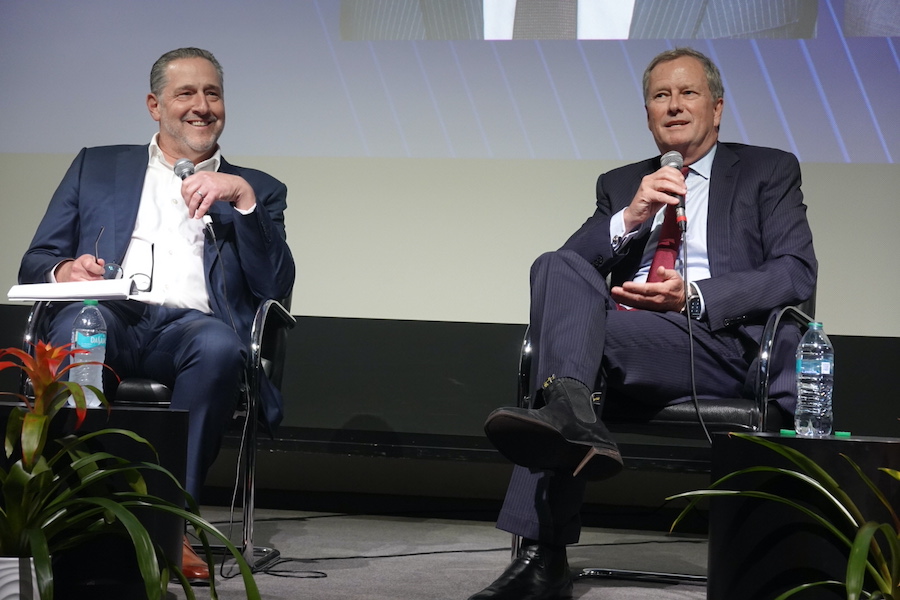
The promise and pitfalls of the infusion of technology — especially AI — into all aspects of content creation, distribution and monetization were discussed June 3 at the EnTech Fest and Summer Symposium presented by DEG: The Digital Entertainment Group.
“In our business, our filmmakers will use AI,” said Michael Burns, Lionsgate vice chairman, in a keynote conversation led by Lionsgate’s Ron Schwartz. The two talked about the studio’s partnership with Runway AI and the effect artificial intelligence will have on the industry.
“A lot of people are going to be out of jobs,” Burns said, but there will be other jobs created.
“We’re going to be able to make movies — AI saves us so much money — that we wouldn’t otherwise be able to make,” he said.
AI has progressed exponentially, he said, adding “It’s like nothing in our lifetime.”
Burns noted that crowd scenes created using AI are incredibly realistic.
“You can’t tell the difference between these people and real people,” he said.
Other speakers, too, praising the possibilities of technology and how it might move content forward.
“What if while watching Star Wars you could exit the cantina and have a conversation with C-3PO and then go back into the cantina,” mused panelist Jed Weintrob of 30 Ninjas during a panel on XR and AI technology in filmmaking.
“I always think about the scary movie where someone does something so stupid and you just want to yell at them. … Now we have the technology to do exactly that … that moment of yelling at the TV and actually getting a response back,” said Google’s Katherine Erdman.
Linking with Google DeepMind’s AI research team, director Darren Aronofsky has partnered with three filmmakers on short films using its generative AI video tools. Attendees were treated to a trailer of one of the shorts, Ancestra, which includes visualizations inside the womb.
“The rationale [of collaborating on the shorts] is working with the people with the highest standards to get a lot better,” DeepMind’s Tom Hume said, adding that the project is also instrumental in helping the company understand the workflow of making a film.
“You do sit in the middle of creativity and technology,” said Google’s Jonathan Zepp, who is also DEG chair. He noted that the shorts will premiere at Tribeca.
On another panel, speakers discussed the potential use of AI to catalog and utilize legacy content in creative ways.
“I think the sky’s the limit,” said Ellen Goodridge who, as head of studio content services at Amazon MGM Studios, is in charge of the large MGM library as well as more recently produced Amazon content.
AI can help find content more easily and make is more searchable, said Gray Ainsworth, EVP of technical operations and delivery at Lionsgate.
“One of the challenges of having a massive library is you can have all the metadata in the world, but if you can’t find it it’s useless,” said Nvidia’s Jason Schugardt. That’s where AI can step in, he said, allowing content owners to “find that one particular clip.”
AI could even take footage and re-create old TV show sets or capture sets and do reshoots without having to rebuild them. It can also “re-create an image from a new vantage point that didn’t exist” in the original footage, Schugardt said.
Among the less flashy applications, Silviu Epure, SVP at Blu Digital Group, said AI can be used to save time and cost. “To me it’s going to be about choice,” he said. “Synthetic voices for dubbing will be another choice offering.”
Spherex CEO and co-founder Teresa Phillips said AI agents can be used for “deep video understanding” to determine suitability and regulatory compliance of content in various territories. For instance, in Scandinavia, where they revere trusted figures, if a character is playing someone who is trusted, like clergy, and he or she does something bad, the age rating will go up. AI agents can also be used to ask humans the right questions, she said, such as if the drinking in a scene is casual or binge drinking.
There will be a loss of jobs, with entry level jobs the first to go, she said, questioning how the industry will bring in new people.
“Our experience so far is that it’s still important to have a human in the loop,” said Iyuno’s Chris Carey.
But, indeed, there will be less humans in the production process, speakers said.
“We’re going to have small teams doing what is used to take hundreds, thousands of people to do,” said Secret Level CEO Eric Shamlin, adding that AI also “brings down the barrier” for many independent creators to make films.
Twelve Labs’ Soyoung Lee agreed that there will be a “democratization of creativity.”
In the panel “Providing a Richer Viewer Experience With Advance Storytelling Technologies,” speakers discussed the advances of devices such as the Apple Vision Pro augmented reality headset.
“A lot of us in the industry thought that was going to be a sea change moment,” said CREE8’s Lisa Watts, noting its high price was a problem.
“We’ve got technology aplenty; it’s a matter of how we apply it to storytelling,” she said.
“I need to worry about that 10- or even 15-year-old device that’s in the home,” added Disney’s Joe Rice.
Rice discussed the complexities of bringing a concert experience such as Taylor Swift or Queen to the streaming audience and trying to “provide the highest degree of verisimilitude to what the creator intended.” Disney and Imax, for instance, consulted with Queen’s sound producers to make sure that the presentation of the band’s concert was optimal.
“We champion the filmmaker,” said Imax’s Saj Jamal. “Making the filmmaker audience bond is essential.”
Future live experiences in sports might allow different viewers to follow different players, Watts suggested. “AI is very helpful in processing these massive data sets for a more personalized experience,” she said.
Subscribe HERE to the FREE Media Play News Daily Newsletter!
In the panel “Shoppable Video: Bringing Quality Shopping Experiences to Screen,” speakers discussed technology allowing viewers to buy items presented in content and the monetization possibilities.
Legality barriers make it hard to employ in scripted catalog content, noted Gary KERV Interactive’s Gary Mittman, making reality programming more attractive.
NBTV’s Nick Buzzel said his company creates shoppable video with its Spirits Network channel and the cooking show “The Pantry” with Tom Colicchio, where viewers can purchase items used onscreen.
“Destination shopping is dead,” said Susan Akbarpour of Candou Ventures/Markit.Place. “We need to create new destinations.”
AI can help to mine shopping profit from content, allowing all participants to get paid passive income, she said.
DEG Announces Keynote Speakers for June 3 EnTech Fest & Summer Symposium

DEG: The Digital Entertainment Group has confirmed the lineup of keynote speakers for its EnTech Fest & Summer Symposium, taking place June 3 at the Skirball Cultural Center in Los Angeles.
 The speakers, spanning a major motion picture studio, leading streaming platform, premium video ad platform, immersive innovation, and market research, each will offer unique perspectives on the dynamic and tech-driven future of digital entertainment.
Keynote speakers include:
- Michael Burns, Lionsgate vice chair in conversation with Ron Schwartz, president and COO, Lionsgate Motion Picture Group: Burns will discuss the state of the film industry, how digital in-home formats ranging from premium transactional to AVOD and FAST are driving revenue growth and strengthening the economic model of the content lifecycle, and how new technologies have the potential to reshape everything from production efficiency and cost savings to the quality of the consumer experience.
- Heather Dowdy, Netflix director of product accessibility in conversation with Josh Miller, co-founder and co-CEO, 3Play Media: Dowdy will discuss the opportunity to captivate new audiences by expanding accessibility beyond basic support. Reimagining the viewer experience not just for today, but for the future, will require embracing the diverse needs of individuals with disabilities, aging populations and more.
- Tom Lesinksi, National CineMedia CEO in conversation with David Bloom, senior contributor, Forbes: Lesinski will share data gathered by National CineMedia to paint the evolution of the media industry from today’s reality to tomorrow’s future.
- Eric Shamlin, Secret Level CEO, and Amy Jupiter, By Jove: A Collective of Perspective founder and chief experience designer in conversation with Barbara Ford Grant, industry advisor and filmmaker: This fireside chat will focus on the transformative potential of AI and Extended Reality (XR) in shaping the future of entertainment experiences. The discussion will delve into the intersection of these technologies, exploring how they will revolutionize various aspects of the entertainment industry, from film and live streaming to games and immersive experiences.
- John Dick, CivicScience CEO: The socio-cultural, political, and economic upheavals of the last several years have impacted every corner of consumerism, from how people shop, to how they eat, to how — and what — they watch. Dick will share insights into how forces like tribalism, post-pandemic well-being, and other macro trends are changing the face of media and entertainment in striking and unexpected ways.
The one-day EnTech event includes exhibits, conference programming, and the DEG’s annual industry reception.
Focus exhibit categories include emerging technology, consumer experience, immersive storytelling, artificial intelligence and advanced content delivery.
Admission to EnTech Fest 2025 is free for DEG members. Non-members can attend for $695. Register here.
Due to the L.A. wildfires, DEG’s EnTech Fest was moved from its original Feb. 5 date to June 3 and combined with the group’s EnTech Summer Symposium.
Subscribe HERE to the FREE Media Play News Daily Newsletter!
DEG Postpones EnTech Fest Due to Los Angeles Wildfires; New Date is June 3
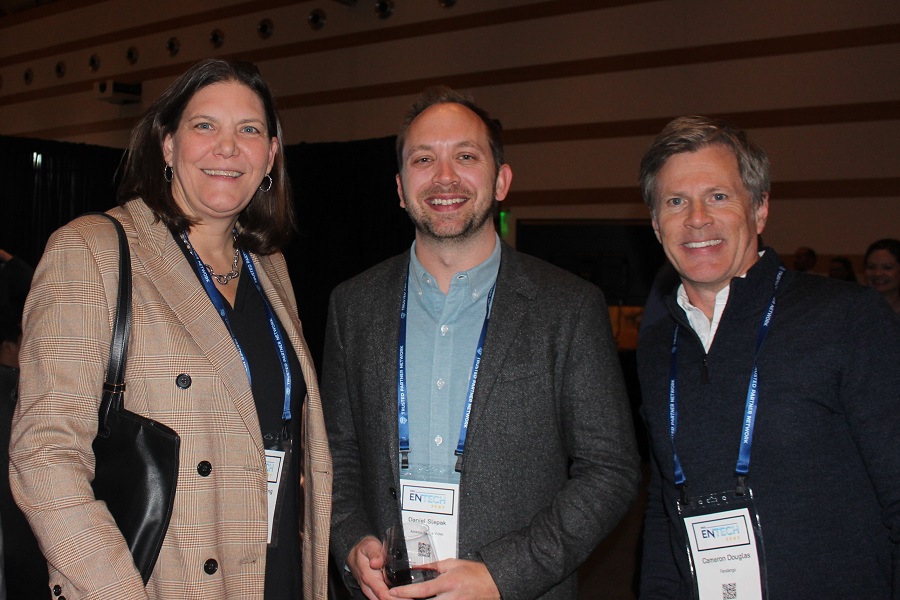
Citing last week’s disastrous fires that ravaged parts of Los Angeles, DEG: The Digital Entertainment is postponing its annual EnTech Fest to June 3.
The event, along with DEG’s annual reception, had been slated for Feb. 3 at the Skirball Cultural Center in west Los Angeles, on the eastern edge of the Palisades Fire’s evacuation zone.
The rescheduled event will be combined with the EnTech Summer Symposium, a summer companion conference launched in 2024 that had been initially been scheduled for July 30.
The DEG-hosted Media Play News 40 Under 40 party, which last year capped the EnTech Summer Symposium, will be held on an as-yet-to-be-determined date.
Subscribe HERE to the FREE Media Play News Daily Newsletter!
DEG CEO and president Amy Jo Smith said 50% of non-member ticket sales will be donated to fire relief efforts. Admission to EnTech Fest is free to DEG member companies and their employees, but costs $695 for non-members. Tickets may be purchased here.
“In good times and bad, DEG is committed to supporting our members, and the larger industry, by creating spaces like EnTech Fest for creative collaboration,” Smith said. “All of us at DEG are confident that our digital entertainment industry will demonstrate resilience in the face of this adversity. As our community works through this together, we encourage all members to take special care and to put your personal safety and well-being, and that of your family, first.”
The fourth annual EnTech Fest, according to DEG, will offer exhibits as well as conference program and networking opportunities “for entertainment technology leaders to come together in a vibrant exchange of knowledge and ideas, to learn about new technologies and products, make new industry connections, and strengthen existing relationships.”
All existing registrations will be automatically moved to June 3.