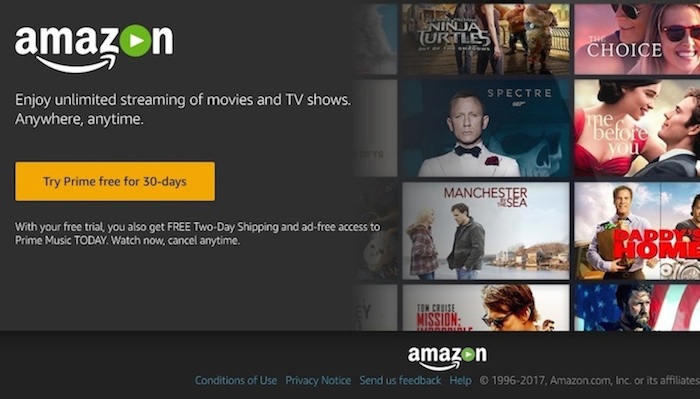
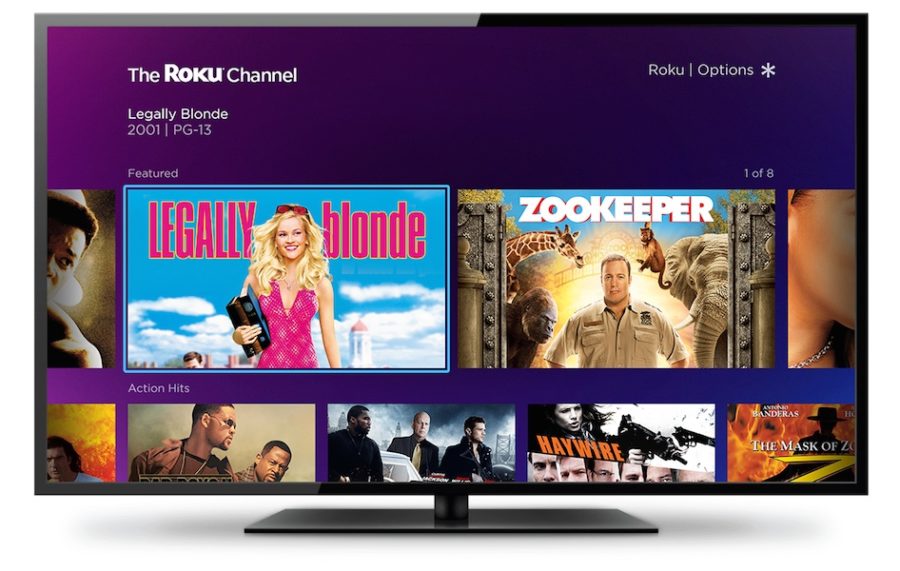
As technology advances, new platforms, formats and distribution channels continue to proliferate. Even the very definition of content has changed, with movies and TV shows forced to make room for webisodes, Snapchats and Facebook Live streams. YouTubers are mobbed like A-list movie stars; people are consuming, and sharing, content on their phones, on their iPads, and through their PlayStations.
The home entertainment industry, rocked by the Internet and disrupted by Netflix, hasn’t sat idly by as the world around it changes. Far from it — indeed, innovation and experimentation have become the order of the day. In addition to supporting the new, enhanced 4K Ultra HD format with high dynamic range, studios are delving into virtual reality — the use of computer technology to create a simulated environment — and augmented reality — in which an enhanced version of reality is created by the use of technology to add digital information on an image of the physical world.
Here’s a look at some of the highlights of 2017 — and a glimpse of what is to come in 2018 and beyond.
Movies Anywhere — A Watershed Moment for Digital Movie Sales
In what observers are calling a major breakthrough in getting consumers to buy movies digitally, five of the six major studios — and four key retailers — joined forces in late 2017 for the launch of Movies Anywhere.
The cloud-based service, an outgrowth of Walt Disney’s Disney Movies Anywhere, lets people store and access their purchased movies across a wide variety of platforms, from TVs to iPhones, for immediate viewing wherever and whenever they want to — regardless of whether the movies are acquired digitally or on disc. Consumers can do so through Movies Anywhere apps or through the website.
“It’s a seamless experience, designed with the consumer in mind,” said one veteran industry observer. “Enter the code and the movie pops up on your phone, on your TV — everywhere your account is linked.”
“Movies Anywhere is just the latest example of studios and distributors working together to provide more value to the consumer and setting a new bar for digital movie ownership,” said Michael Bonner, EVP of digital distribution for Universal Pictures Home Entertainment.
“Movies Anywhere, [like] Premium VOD … will shake up the basic tenets of distribution and how and when consumers get content,” noted Mark Fisher, president and CEO of the Entertainment Merchants Association.
Movies Anywhere launched on Oct. 11, 2017, with support from Disney (including Pixar, Marvel Studios and Lucasfilm), Sony Pictures, 20th Century Fox, Universal Pictures and Warner Bros. Movies are redeemed through digital retailers Amazon Video, Google Play, iTunes and Vudu (owned by Walmart). Movies Anywhere is a Disney-owned entity that operates independently with input from an advisory committee with members from each of the participating studios
“Movies Anywhere enables movie fans to sync their collection from the five studios across retailers, devices, and platforms. It’s a game changer for consumers. It elevates the movie purchasing, collecting and viewing experience and is simple and easy to use,” said Movies Anywhere GM Karin Gilford.
It’s an interface that will ultimately make digital movie collection seamless, said the executive, who formerly worked at Comcast Interactive Media and Yahoo! The launch comes after several fits and starts, including the stalled UltraViolet digital locker service and Disney’s launch of its own proprietary service, Disney Movies Anywhere. Observers say the studios signed up for Disney’s model because the technology is superior.
Consumers can download a free Movies Anywhere app, create an account and link to any of the four digital retailers. The service will automatically populate consumers’ digital libraries from any of the participating retailers on Movies Anywhere. Consumers can immediately stream or download any film from their Movies Anywhere library
“The magic really happens when you link to retailer accounts because you get to see that whole collection come together,” Gilford said. “There’s that sort of aha moment that happens when all of the titles that you bought from one of our five studios on any of our four digital retailers all come together.”
Consumers can also buy new digital movies on the app through Movies Anywhere retailers and redeem codes from DVDs or Blu-ray Discs they have purchased to gain immediate access to more digital movies. Starting next year, physical discs will feature Movies Anywhere branding.
Movies Anywhere allows consumers to have up to five subaccounts, in addition to the master account. Subaccounts can have personalized recommendations and restrictions, allowing the master account holder to ban access to ‘R’-rated films for a child, for instance. Purchases may only be made from the master account. Viewers can start streaming a movie on one device and finish it on another. Two viewers can watch the same title on different devices at one time, and up to four viewers can stream different content on different devices at the same time. Consumers can access their library on Amazon Fire devices, Android mobile and tablet devices, Android TV, Apple TV, Chromecast, iPhone, iPad, iPod Touch, the Roku platform and popular Web browsers.
The service launched with a five-free-movies offer has a comprehensive marketing strategy.
“We have a robust and year-round paid media strategy that leans heavily into mobile user and Web acquisition tactics, and are engaging consumers with ongoing and targeted email, push, and in-app marketing tactics,” Gilford said. “And last but not least, we have the unprecedented support from our studio partners who are helping us build the Movies Anywhere brand through their title marketing efforts.”
There have been several improvements in the service since launch.
“Movies Anywhere was built with consumers in mind to add more value to their movie purchases,” Gilford said. “As such, our first priority is responding to customer feedback about the product. We have amazing movie fans in Movies Anywhere with large collections. We heard loud and clear that they want more control over their library. We answered with improved sort capabilities across platforms and we will continue to look for ways to help consumers manage their collections.”
Consumers have responded well to the interface, she said.
“We are seeing strong engagement with users spending time on the Explore page, interacting with the seasonal, franchise and many of collections we showcase in that area,” she said.
Overall, the service is a hit with consumers, she said.
“The consumer response to Movies Anywhere has been incredible, and the feedback and engagement with the app is strong as consumers experience the ease of bringing digital movie collections together,” she said. “The strength of the studios and digital retailers that have come together at launch is unprecedented, and consumers are recognizing this.”
Studio Standouts — A Look at What’s Up the Majors’ Sleeves
20th Century Fox
The Fox Innovation Lab, 21st Century Fox’s research and development center, was established to drive the advancement of groundbreaking technology and new consumer experiences across all platforms and distribution models.
The Lab works across all 21st Century Fox film and television divisions as well as key external partners on advancements in next-generation technologies, including high dynamic range technology; 5G and mobile content delivery; virtual, augmented, and mixed reality content; and hardware, machine learning, artificial intelligence and advanced data analytics.
Fox’s collaboration with leading technology partners to drive industry innovation is seen in its latest work with HDR10+ to improve the home entertainment viewing experience for audiences. HDR10+ is an open, royalty free technological step forward that optimizes picture quality for next-generation displays through the use of dynamic metadata, which more precisely adjusts content to the capabilities of different TVs.
Danny Kaye, EVP at 20th Century Fox and managing director of the Fox Innovation Lab, added that “working in partnership with Panasonic and Samsung through the Fox Innovation Lab, we are able to bring new platforms like HDR10+ to the market that more accurately realize the vision of our filmmakers beyond the theater.”
It’s a picture that more clearly adjusts to consumers’ TVs.
“Scene by scene and even frame by frame, that movie is being adjusted to be optimized to that particular TV,” Kaye said.
The Fox Innovation Lab serves as a research hub, demonstrating and testing technologies with consumers throughout the development process to obtain qualitative data and hands-on feedback in order to bring innovative and premium products to market.
In addition to premium viewing experiences for traditional entertainment, the division is also working on new forms of entertainment, such as virtual, augmented and mixed reality. Its work on virtual reality resulted in Fox’s groundbreaking first commercial VR product, The Martian, a roughly 20-minute interactive experience that put viewers in the world of the feature film. That virtual reality experimentation helped result in this year’s creation of an entire new business unit at the studio, FoxNext, which not only works on VR, but video games and theme parks.
Fox Innovation Lab now also has its eye on incorporating artificial intelligence, or machine learning, both in the entertainment production and distribution process and in the content itself.
“You could be watching a sporting event and you could have a conversation with your television about stats depending on a sport or a player,” Kaye noted. “You could ask questions, just like people talk to Alexa today or to Google Home.”
Warner Bros.
Warner Bros. Home Entertainment’s innovation efforts are focused on developing a better picture and sound to boost home entertainment sales.
Jim Wuthrich, president of the Americas and global strategy, notes that the physical disc still drives the business and is also the best, most reliable delivery system for 4K Ultra HD with high dynamic range, the new format that provides a picture with greater contrast and more vivid colors.
“4K UHD HDR is a superior consumer experience on physical,” he said. “All the bits are on the disc. Getting them from the player to the television is a guaranteed experience. When you talk about 4K UHD HDR in the digital space there’s a lot of dependencies that we just don’t have control over, so you may have the broadband speed to get it into your house, but once it gets into your house, and it’s got to go across your own network, those bits might get lost, so we can’t guarantee that same experience that you can on physical.
“The other thing you just can’t get away from is the size of these files. There’s so much information that’s packed in these 4K experiences that it takes a long time and a lot of bandwidth in order to deliver that content. Physical solves those problems, and it’s a very efficient way of delivering all of the information.”
The format is already gaining traction.
“Consumers are very excited about 4K UHD television sets and they’ve been buying them in record numbers,” Wuthrich said. “People want to watch this content and utilize those television sets.”
Other new technologies that the studio is keen on are virtual, augmented and mixed reality. The studio released a VR experience for the hit horror film It and plans a home VR experience for Justice League as well.
“We are really bullish and excited about the virtual, augmented, mixed reality marketplace,” he said. “It’s a nascent marketplace, but we think that this is going to be a very important part of the home entertainment/entertainment slate. And we think home entertainment is a natural home for virtual, augmented, mixed reality and the reason is most people are going to experience it in their homes.”
He notes the experiences with It and Justice League in virtual reality are very immersive.
“Basically, it allows the consumer to go into these worlds that they’ve seen on the screen and get closer and interact in that environment,” he said.
As far as pricing for these experiences, Wuthrich said the industry is in the experimental stage.
“We’re experimenting from 99 cents all the way up to the price of more of a traditional game,” he said. “Having said that, again, we think there’s a real opportunity here and we’re going to continue to figure out how you make that an experience consumers can’t live without.”
Lionsgate
Exiting leader Steve Beeks leaves behind a studio/distributor successfully tackling changing distribution business models (OTT video, 4K and virtual reality) while sustaining physical media.
A year after acquiring premium TV distributor Starz, Lionsgate has assimilated home entertainment unit Starz Distribution (and Anchor Bay Home Entertainment) to emerge as the No. 4 home entertainment distributor — led by Jim Packer and Ron Schwartz — with nearly 15% market share and about $1 billion in annual revenue driven by a 16,000-title film and television library.
Through the fiscal half-year (ended Sept. 30), home entertainment movie revenue reached $400 million, compared with $100 million a year earlier. TV content retail sales reached $6.5 million, compared with $10 million in the previous-year period.
Beeks has said home entertainment revenue helps underwrite a “substantial” portion of company overhead costs, which include upstart over-the-top video services such as Kevin Hart’s Laugh Out Loud, Spanish-language Pantaya, Tribeca Shortlist and Comic-Con HQ.
“Over the past several years, we’ve leaned heavily into the library business. Even before all these [distribution] platforms began to proliferate, we felt we could see it coming. All the other studios were slacking their interest [in library],” Beeks said.
Schwartz believes 4K and high dynamic range can resonate with consumers seeking superior visual and audio formats in the home. The distributor last year bowed initial 4K releases around Sicario, The Last Witch Hunter, Ender’s Game and The Expendables 3.
“4K UHD is reinvigorating interest in the high-definition platform and … strengthening HD packaged-media sales,” said Schwartz.
He said early results suggested about triple the sales of comparable Blu-ray Discs — the industry’s last platform launch.
“With our deep library and rich content crossing multiple genres, we feel we can reach consumers many different ways. And we see the momentum continuing as the installed base of 4K televisions continues to grow,” Schwartz said.
Lionsgate continues to scout opportunities to enhance content discovery, including virtual reality.
Over the summer it partnered with United Technologies to develop what it claimed was the first virtual reality movie ad for the October theatrical reboot of the lucrative “Jigsaw” horror franchise.
“As big believers in the power of immersive storytelling, we are incredibly excited to bring Jigsaw into the world of VR,” said David Edwards, SVP of digital marketing.
Universal Pictures
Despite a challenging 2017 theatrical market, Universal Pictures Home Entertainment quietly produced on the bottom line. The studio churned out resilient fiscal results while embracing a new digital distribution business model (Movies Anywhere) and upping its 4K UHD Blu-ray presence.
“Consumer spend has increased each quarter over prior year, with the growth driven by the overall digital business — on both transactional and subscription platforms,” said Eddie Cunningham, president of UPHE.
The executive contends discs still account for the lion’s share of home entertainment spending, as evidenced by the more than 465 million physical transactions recorded domestically in 2016.
“The format remains exceptionally vibrant and viable,” he said earlier this year.
The studio bowed its first 4K Ultra HD Blu-ray Disc release in April 2016 with Jason Bourne. Since then the number of 4K UHD titles in market has more than doubled, with as many as 300 titles available industry-wide by the end of 2017.
Cunningham said 4K UHD Blu-ray with high dynamic range raised the bar in home movie watching. As the 4K ecosystem continues to gain traction, Cunningham said Universal remains committed to delivering more compelling 4K Ultra HD offerings, including catalog gems E.T. — The Extra-Terrestrial and Apollo 13 in September and October, respectively.
“We can expect to see that number [of 4K BD titles] to expand considerably in 2018, as content companies continue to release new and catalog titles in the premium format,” Cunningham said. “As well, 4K movies, TVs and players are selling units in record numbers. There is a clear groundswell around demand and we are highly optimistic about the format’s future prospects. Plan to see Universal increase its overall investment in 4K UHD offerings in the coming year.”
Indeed, Universal in September joined iTunes in offering 4K UHD digital titles through the upgraded Apple TV. Apple TV ranks fourth among streaming media devices, with more than 21 million users, according to eMarketer.
In October, Universal joined Warner, Disney, Sony and Fox in launching the Movies Anywhere cloud-based locker service.
“We are very pleased thus far with the launch of Movies Anywhere, and even more excited about the roadmap ahead,” said Michael Bonner, EVP of digital distribution.
Bonner praised the Movie Anywhere app’s “rich features and the freedom, flexibility and utility.”
“Universal will absolutely be complementing Movie Anywhere marketing initiatives in 2018 as we work toward driving broad consumer awareness and adoption,” he said.
Paramount Pictures
In a year of change at corporate parent Viacom, subsidiary Paramount Home Media Distribution buttressed traditional physical media with expanded digital, 4K and virtual reality campaigns.
For the year, home entertainment revenue from disc and digital retail showed resilience, improving 8% from 2016, reflecting ongoing Teenage Mutant Ninja Turtles: Out of the Shadows carryover revenue, as well as strong catalog sales. Domestic and international home entertainment revenue increased 11% and 3%, respectively.
Paramount joined Lionsgate, Sony Pictures Home Entertainment and Warner Bros. Home Entertainment in incorporating Dolby Vision and Dolby Atmos in 4K UHD Blu-ray Disc and Digital HD releases featuring high dynamic range.
Dolby maintains its new HD audio and visual technology enhances video content with life-like qualities.
Bob Buchi, president of worldwide home media distribution, said he “diligently studied” next-generation home entertainment audio and visual technologies and considers Dolby to be the best.
“The combination of high-quality, immersive audio and dramatic visual imaging truly elevates the home viewing experience,” Buchi said.
Paramount also joined Warner, Sony, Fox, Universal and Lionsgate offering 4K UHD digital movies through iTunes exclusively on Apple TV. It also made the Transformers 5-Movie Collection in 4K UHD available on iTunes.
“We are continually exploring new and creative ways to engage consumers with our content,” said Howard Hsieh, VP of worldwide digital business development.
The company unveiled an augmented reality app for iOS users with the retail release of The Last Knight on 4K Ultra HD. Using Apple ARKit technology, Viacom’s team incorporated content from the movie into the app. The app overlays 3D graphics onto a user’s surrounding physical space, designed as the virtual junkyard of protagonist Cade Yeager as seen in the theatrical release. Players control the actions of movie character Bumblebee, directing his movements while hitting, blowing up and interacting with various objects, which can be added to expand the interactive environment.
“The timing of Apple’s introduction of ARKit along with the proliferation of smartphones with AR capabilities created an ideal confluence of events to promote the ‘Transformers’ franchise on 4K Ultra HD,” Hsieh said. “We will be looking at our slate over the coming year and creating the next wave of immersive storytelling leveraging new technology formats like AR, VR and Live Social to complement our releases, give consumers new ways to interact with our properties, and generate ongoing excitement for our franchises.”
Meanwhile, despite a growing bandwagon of media companies and content creators rushing to develop branded over-the-top video services, Paramount has no plans to join the fray, according to Viacom CEO Jim Gianopulos.
“For Paramount, at this point, a stand-alone OTT service is probably not something near-term for us,” Gianopulos told an investor group. “It may evolve over time in conjunction with Viacom and other content owners, but there is no immediate plan for that.”
Still, with Paramount’s hiring of tech executive Ted Schilowitz as its first-ever “futurist in residence,” change is inevitable. Reporting directly to Gianopulos, Schilowitz is tasked with exploring emerging distribution channels and related formats.
“[Schilowitz] has been a pioneer throughout the industry’s constant technological evolution and can identify what is and what will be relevant and important to moviegoers. He will be an incredible asset to the Paramount team,” said Gianopulos.
Sony Pictures
Sony Pictures Home Entertainment ended the fiscal year in March generating more than $1 billion in revenue, in large part by focusing on evolving distribution channels and consumer habits.
Following last year’s launch of proprietary 4K digital movie rental/retail service ULTRA, SPHE this year joined iTunes in offering 4K UHD titles through the upgraded Apple TV.
In October, Sony joined Fox, Universal, Disney and Warner on the Movies Anywhere cloud-based digital locker platform.
The studio also unveiled the “Clean Version Initiative,” which gives consumers the choice of watching family friendly edited versions of select Sony movies purchased through iTunes, Vudu and FandangoNow. The program launched in June with 24 films, which feature the broadcast or airline edition as part of bonus material included with the theatrical cut.
“Our innovation focus is on creating value for the end consumer and engaging them more with our content,” said Man Jit Singh, president of SPHE.
The executive says helping consumers find Sony content more easily across the distribution divide remains a key strategy. This includes arranging in-store DVD/Blu-ray Disc assortments like online recommendation engines, offering superior retail propositions and giving consumers the largest selection of 4K-HDR product in the market.
“We are always looking to provide consumers with immersive and interactive opportunities to connect with our content and are doing so with virtual reality specifically on 4K-HDR,” Singh said.
Following the launch of a VR product for Ghostbusters: Answer the Call, Sony bowed its first standalone VR campaign with the retail release of space adventure Passengers. The 20-minute ($9.99) vignette, Passengers Awakening: VR Experience, launched day-and-date with the packaged-media release. Users are transported onto the spaceship and presented with myriad challenges to navigate and insure the safety of passengers.
“What we try to accomplish is comfort, so people want to stay in [the spaceship] longer. We want people to feel excited to be inside and give them something immersive and enjoyable,” Jake Zim, SVP of VR for Sony Pictures, said at a press event.
Additional VR vignettes accompanied the Spider-Man: Homecoming release and will come with the future Jumanji retail launch.
Separately, SPHE expanded its international prowess, inking an agreement to distribute in the United Kingdom and Ireland — beginning in January — the film slate of STXinternational, a division of STX Entertainment, across physical and digital formats.
Under the deal, Sony handles distribution and marketing for new releases, beginning with Wind River, starring Jeremy Renner and Elizabeth Olsen. Other titles include romantic comedy Home Again, starring Reese Witherspoon, and Andy Serkis’ feature directorial debut, Breathe, with Andrew Garfield and Claire Foy.
Walt Disney Studios
Disney has been exceptionally busy on the innovation front, with the October 2017 launch of Movies Anywhere just one of several groundbreaking moves.
The studio entered the 4K Ultra HD Blu-ray Disc market for the first time in August with the release of Guardians of the Galaxy Vol. 2.
Separately, Disney announced it will yank all original movies from Netflix in 2019 for its own branded over-the-top video services, including Marvel, Pixar, Lucasfilm (“Star Wars”) — launching as early as next year. Disney’s 2012 landmark SVOD deal with Netflix for original movies ends in 12 months. And the studio wants greater control on movies beyond the retail window in the digital era.
After launching OTT video service Disney Life in 2015 in the United Kingdom — enabling subscribers streaming access to movies, TV shows, music, audiobooks on mobile devices and connected TVs — Disney this year redoubled SVOD efforts domestically. The company’s initial foray early next year involves a streaming sports service around ESPN, followed by the branded OTT video venture priced “significantly less” than Netflix, according to CEO Bob Iger.
“We’re going to launch big and we’re going to launch hot,” Iger said on the September fiscal call.
To facilitate its OTT video aspirations, Disney acquired remaining interest in BamTech, valuing the former subsidiary of MLB Advanced Media at $3.75 billion.
“This represents a big strategic shift for the company,” Iger said. “We felt that having control of a platform we’ve been very impressed with after buying 33% of it a year ago would give us control of our [OTT] destiny.”
Indeed, BamTech provides backend support for HBO Now, MLB.tv, WWE.tv and NHL.
Separately, Disney again operated a program that focuses and funds innovation, called the Disney Accelerator program. This year it funded 11 third-party companies’ technology to better the Disney brand across virtual reality, robotics, real-time entertainment, video games and artificial intelligence, among other things.
Notable achievements included in the theatrical space Atom Tickets, a movie-ticketing app launched for Rogue One: A Star Wars Story; and Samba TV, an in-house data measurement company analyzing over-the-top video and digital media, as well as traditional broadcast and pay-TV.
“Disney Accelerator has provided The Walt Disney Co. incredible opportunities to connect with and be inspired by many talented entrepreneurs from all over the world,” said Michael Abrams, SVP of innovation at Disney. “This year, more than ever, we are working with companies with the potential to help define the future of media and entertainment together with Disney.”
Disney also hosted a tech confab (Grace Hopper Celebration of Women in Computing) in Orlando, Fla., to highlight contributions women are making in tech and entertainment.
“Technology is essential to the evolution of the media industry,” said Jamie Voris, SVP and CTO at Walt Disney Studios. “The way that we tell and consume stories in the future is going to be completely different than it is today, and I think we have this extraordinary opportunity to have a real participation in shaping what that looks like.”
(This article originally appeared in Home Media Magazine.)