Fast Forward Awards 2026: Chris McGurk — Master of Reinvention

Chris McGurk arrives right on time for an  interview at his reserved table at the Beverly Hills Hotel’s iconic Polo Lounge. It’s been his preferred meeting space for years, dating back to when he and his family used to live a few houses down Crescent Drive on the other side of Sunset Boulevard in the Los Angeles suburb of Beverly Hills.

A tall, well-groomed man dressed in smart casual — premium denim jeans with a dark, patterned long-sleeve sweater — McGurk is the master of reinvention. He’s gone from running such major studios as Universal Pictures, Overture Films and MGM to building his own, Cineverse, a publicly traded company he’s headed since 2011 as chairman and CEO.

But Cineverse is not, as they say, “your grandfather’s studio.” It’s an entertainment and streaming technology company McGurk says he believes is built for a time when the traditional studio system that has ruled Hollywood for nearly a century is a shadow of what it once was, and delivering movies and shows directly to consumers over the internet is as lucrative and profitable as the old studio system was during the heyday of theaters.

Content distribution and technology, McGurk says, are “interlocked” at Cineverse. “It’s a true portfolio strategy. And what I love about it is that it completely changes the independent film model. Technology really underpins everything we do. It drives our 30 streaming channels, and it drives our advertising. We have our own advertising tech group and our own ad tech module. And that’s also the key to our theatrical business, where we’ve been opening movies and spending a fraction of the marketing dollars that our competitors spend because we’re using our whole network and system to market these movies in a much smarter way.”

Cineverse distributes content across all windows and platforms, from theatrical to digital to physical. The company has a rich library of more than 71,000 films, series and podcasts that it feeds to more than 50 million unique monthly viewers through a network of digital outlets such as Amazon, Peacock, Tubi and Pluto TV, as well as through movie theaters and physical media. Cineverse also owns more than 30 of its own streaming platforms and channels — subscription, ad-supported and FAST — including the horror media brand Bloody Disgusting and its flagship streaming service, Screambox.

Cineverse additionally has a thriving technology organization that it built alongside its content business. Matchpoint is the company’s core technology suite for delivering streaming content, an automated and workflow platform that prides itself on efficiency, and also provides tools for scalable app creation, analytics and predictive dashboards, and AI-powered quality control and metadata enrichment. Cinesearch is a consumer-facing content search and discovery platform that is powered by Matchpoint. Both are now being positioned not just for internal use, but also as commercial SaaS offerings for studios, streamers and other media companies that want to modernize their supply chains.

For his belief — which he puts into action — that streaming and theatrical are synergistic rather than cannibalistic, and that technology is the engine that allows our industry’s crown jewel, content, to shine brighter than ever, Chris McGurk is being honored with Media Play News’ 2026 Fast Forward Award. The award is given out each year to a person, technology or organization that moves the home entertainment industry forward.

READ — THOMAS K. ARNOLD: REINVENTING A STUDIO

Content Synergy

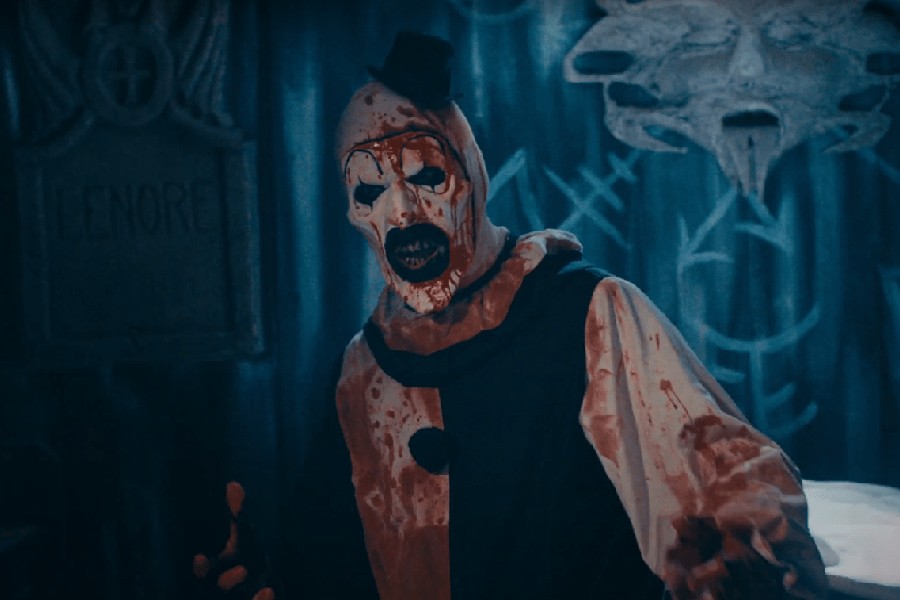
On the content side, Cineverse believes that streaming and theatrical can work very well together. For McGurk, there’s no bigger affirmation of this belief than the company’s experience with Terrifier 2 and Terrifier 3, two low-budget slasher films centered on the murderous Art the Clown. The “Terrifier” franchise was brought to Cineverse through its horror brand, Bloody Disgusting, whose executives told him they thought Art the Clown could be the next Jason Vorhees or Freddy Krueger.

Terrifier 2 was released theatrically in October 2022 and wound up grossing nearly $11 million domestically thanks to a viral marketing campaign centered on Bloody Disgusting and Cineverse’s own streamers. The company spent only about $250,000 on marketing, relying mostly on unused inventory on its own channels.

With Terrifier 3 in the fall of 2024, McGurk and his team used the same playbook, spending just $500,000 on outside marketing and using their own streaming properties as well as some recently acquired podcasts to drive consumer awareness. Terrifier 3 opened at No. 1 on the domestic box office charts and, with a gross of more than $54 million domestically and $90 million globally, ranks as the highest-grossing non-rated
film in U.S. history. Speaking at AFM in November 2024, McGurk said that with Terrifier 3, “we’ve established a new blueprint” for independent films with big viral fan bases.

“In our case, you know, we use our streaming channels to promote our movies without spending any money because we’re using the unused inventory,” McGurk says. “And what we’ve been able to do, because we have our own technology and the technology collects tons of information about what consumers are watching and what they like and what they don’t like, is assemble a huge database, particularly in horror, but also in independent film and in family, that really lets us know what people want and who the audience is.”

McGurk maintains Cineverse’s streaming network, “because it’s very focused on specific fandoms, is an incredibly efficient way for us to activate people to go see movies in theaters — and to see movies in home entertainment as well. So that’s the synergy that we think we’re really bringing to the table.”

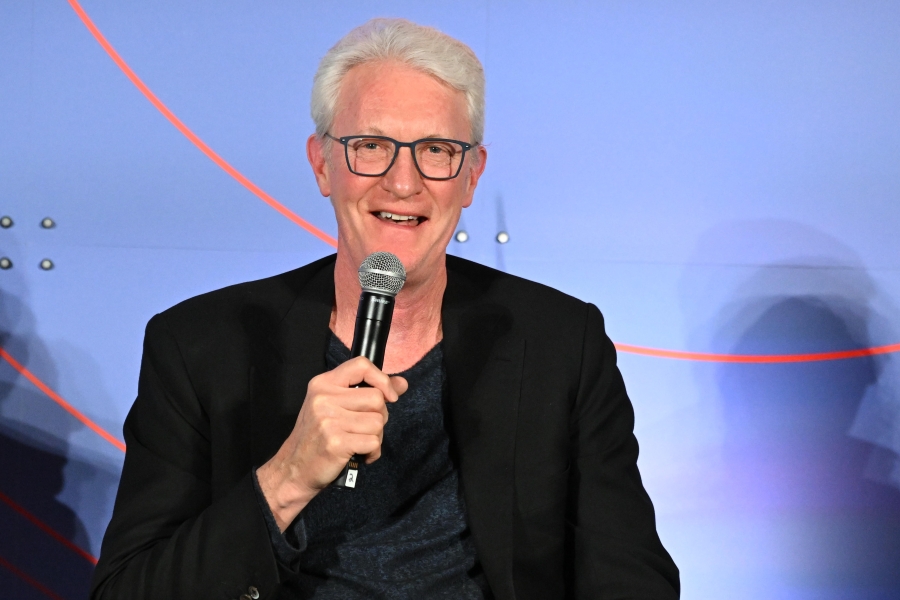
Chris McGurk speaking at AFM 2024 on the success of the “Terrifier” franchise and the synergy between streaming and theatrical. (Photo courtesy of AFM)

Emboldened by the success of the two “Terrifier” movies, Cineverse in May 2025 announced the creation of the Cineverse Motion Pictures Group, led by longtime executive Yolanda Macias, who was named chief motion pictures officer, a new position that replaced her previous chief content officer role. The first two big releases, remakes of 1980s cult hits The Toxic Avenger (starring Peter Dinklage of “Game of Thrones”) and Silent Night, Deadly Night (with Ruby Modine), only grossed a modest $3.5 million and $2.6 million, respectively, but McGurk says both have been extremely profitable thanks to post-theatrical TVOD sales and, in the case of The Toxic Avenger, a recent sale to Hulu.

“Both movies were profitable — very profitable,” McGurk says. “Toxic Avenger and Silent Night, Deadly Night didn’t do great at the box office, but because we spent so little on each one, they’re doing fantastic on home entertainment, so we’re getting a good return on investment on both of those films — well over 50%.

“If you go back and look at Toxic Avenger, we opened against two big studio movies, and I can guarantee you that we were the most profitable movie released that weekend. It’s the same thing with Silent Night, Deadly Night.”

Later this year, Cineverse plans to venture into the family market with a reboot of the “Air Bud” franchise, once controlled by The Walt Disney Co., and is also readying a theatrical run for Guillermo del Toro’s breakthrough film, Pan’s Labyrinth, to coincide with the 20th anniversary of the film’s original theatrical release. Also in the pipeline is a fourth “Terrifier” movie.

“What we’re trying to do, theatrically, is develop a portfolio of movies with known IP that we think we can acquire or produce and market with an all-in investment of less than $5 million,” McGurk says. “And when you’re doing that consistently, you’ve got great upside potential, as we saw on Terrifier 3, and also great downside protection.

“We’re still ramping up our release slate to try to get up to maybe six to eight films a year. We want to go to bat a number of times, knowing that by following our model, you can’t lose any money.”

Another theatrical release, the sequel Return to Silent Hill, was released in theaters Jan. 23 and earned more than $5.5 million domestically and over $42 million worldwide — including $18 million in China. The film is based on the popular “Silent Hill” video game franchise that has seen its latest installment, released a year ago, sell more than 2.5 million copies.

“So we know there’s a current fan base out there that we can activate,” McGurk says.

Also on the content side, Cineverse is moving into short-form video. Last August, the company announced a joint venture with Banyan Ventures, the venture arm of former ABC Entertainment Group and WME Chairman Lloyd Braun, for the pending launch of a studio and AI-based platform creating serialized, short-form (one to three minutes) “micro-dramas” for mobile devices specifically designed for modern viewing habits.

Subscribe HERE to the FREE Media Play News Daily Newsletter!

The announcement was made five months before The Walt Disney Co. made a similar move into short-form content distribution.

The new Cineverse studio, MicroCo, is headed by CEO Jana Winograde, a former president of entertainment for Showtime Networks, and chief creative officer Susan Rovner, former chairman of entertainment content for NBCUniversal television and streaming. The company’s original series will be designed for binge-watching, aiming to expand upon the currently available short-form social media content that has made vertical scrolling ubiquitous. It will span multiple genres, from romance to horror, and will feature both live-action and animated series.

“It’s interesting how so many of the micro-dramas that are currently out there have to do with undercover billionaires and werewolves,” McGurk says with a laugh. “We’re still exploring how we want to attack the micro-drama, which we think is going to be a huge business. We’re primarily looking at opportunities to leverage our technology in that business for our own venture, but possibly for others who are in that business too. We’ve got a real leg up in horror — obviously that’s an area that we can focus on — but we want to expand into other genres as well.”

One challenge is that while production costs are low — as little as $25,000 for 60 minutes of content — the platforms, particularly the ones owned by big Asian technology conglomerates, are spending up to $2 million a day on marketing and customer acquisition.

“And that obviously turns the economic model upside down,” McGurk says. “I’ve talked to a lot of producers in the business who are frustrated because, just like in the film business, they might hand a platform a $100,000 micro-drama, but then in order to make anything above and beyond their guarantee, they’re sitting behind $2 million in marketing. And they’ll never get that back.”

Another challenge, McGurk says, “is that there’s no ancillary market right now. They have a three- or four-week run and then it’s done. There’s no home video, no VOD, there’s nothing.

“We’ve had people come to us and ask us to piece these things together and put them out on DVD, but I don’t think that works, given the way they’re set up, where every episode is a one- to three-minute cliffhanger. So we’re trying to parse through some of the issues in the business right now.”

Follow us on Instagram

Technology in the Spotlight

Cineverse’s trump card is its technology, which is integrated into every aspect of the company’s products, services and inner workings. Under the auspices of Tony Huidor, president of technology and chief product officer, the technology division includes a 150-member engineering team in Calcutta, India, and accounts for about 70% of Cineverse’s total headcount.

McGurk says technology has played a key role in building up Cineverse’s own network of streaming platforms and channels as well as promoting its theatrical films. Going forward, the focus is on building a viable service business with outside clients.

“We’re very focused now on trying to leverage our technology and the AI components of that technology that we’ve built,” McGurk says. “We’re trying to leverage that in really smart ways to have a positive impact on the business. We’re looking to strengthen companies and address problems that exist in the business without having a negative impact on the creative side of the business, which everyone is so concerned about right now.”

One example, he says, is Cinesearch, a search tool for streaming that

Cineverse developed with Google. Cinesearch uses an AI avatar named Ava, “and she’s incredibly smart,” McGurk says. “We’ve got a database of hundreds of thousands of films, which she’s been studying for the last year and a half. And what Ava can do for you is if you have a connected smart TV, she can have a conversation with you and basically search everything on that TV across all platforms, establish a personalized relationship with you, and enable you to find the stuff you want faster than anything that exists right now.

“The current system of menuing that happens on these streaming platforms is archaic. It’s 20 years old. It generally takes somebody 10 minutes to find a film they’re looking for, and that’s not good for the customer. It causes churn because they get frustrated and leave. And that’s not good for the platform.”

Cineverse executives pitched Cinesearch at CES 2026 in early January in Las Vegas, “and we had a lot of promising conversations,” McGurk says. “We’re looking at licensing it to OEMs and smart-TV manufacturers, those types of companies. And we’re hopeful that we’ll have a couple of deals over the line soon. We believe we’re successfully addressing the biggest problem in streaming, search and discovery, with AI. Cinesearch can have a very positive impact on audiences, customers, platforms and the artistic community. And there are very few examples where you can point to AI doing all that.”

(L-R): Overture Films’ Danny Rosett, actor George Clooney and Chris McGurk at the Sept. 11, 2009, ‘The Men Who Stare at Goats’ premiere during the Toronto International Film Festival. (Photo by Alberto E. Rodriguez/Getty Images)

The latest big developments on the services front are two recent acquisitions. In January Cineverse bought Giant Worldwide, a global media services provider serving some of the entertainment industry’s leading Hollywood studios and streaming platforms. Giant has deep operational expertise in digital delivery fulfillment, Master QC, content localization and OTT content testing, along with Preferred Vendor Service badges for top streaming platforms.

Then, Cineverse Feb. 13 announced its acquisition of IndiCue Inc., a connected-television (CTV) monetization platform that provides streaming publishers and operators with the technology infrastructure to manage, optimize and grow their advertising revenue across FAST, AVOD and ad-supported streaming environments. The company’s integrated ad technology stack includes ad serving, supply-side platform (SSP), demand-side platform (DSP), and server-side ad insertion (SSAI) capabilities.
Both acquisitions will be integrated into Matchpoint and, McGurk says, “largely complete our strategy to build a comprehensive, scalable infrastructure solution for the entertainment industry.”

In Giant’s case, this integration will enable the company’s studio and streaming platform clients to benefit from Matchpoint’s automation and integrated AI capabilities — which include automated ingest, frame-by-frame AI-based Video/Audio QC, AI-generated enhanced metadata enrichment, fully transparent automated mastering workflow, and machine learning-driven delivery optimization — to reduce costs, eliminate human error, and scale content distribution to all leading video streaming platforms.

The addition of IndiCue into the Matchpoint ecosystem, meanwhile, completes a critical component of Cineverse’s platform strategy and vision, McGurk says. The combined companies now connect distribution, data and monetization into a single, unified solution, allowing Cineverse and its streaming partners to respond dynamically to performance signals, optimize ad placement, and improve ad yield across the highly fragmented CTV landscape.

The product and engineering teams from Cineverse and IndiCue will leverage Matchpoint technology to jointly develop new ad-tech products and advanced data capabilities designed to deliver improvements within the CTV advertising ecosystem that leverage the unique combined capabilities and expertise of the two companies’ technology teams.

Cineverse expects Giant Worldwide to contribute pro forma revenue of $15 million to $17 million, and pro forma EBITDA of $3.5 million to $4 million, in fiscal-year 2027. The majority of this revenue is recurring in nature, derived from ongoing service relationships with major Hollywood studio and streaming platform clients.

IndiCue is expected to generate approximately $38 million in revenue and $9.6 million in EBITDA in calendar year 2026, representing a 25% EBITDA margin and immediate accretion at close, reflecting the operating leverage of transaction-driven CTV advertising infrastructure.

Cineverse for the quarter ended Dec. 31, 2025, reported revenue of $16.3 million, down 60% from $40.7 million in the last three months of 2024, which included approximately $22.8 million of theatrical revenue from Terrifier 3. The company posted a net loss of $1 million, compared with a profit of $7 million in the prior-year quarter.

For its next fiscal year, which begins April 1, Cineverse expects the new acquisitions to help it achieve revenue of $115 million to $120 million, with technology platforms representing more than 50% of total revenue. Adjusted EBITDA is expected to reach $10 million to $20 million.

Looking Back — And Ahead

McGurk was born in West Springfield, Mass., “a little town that nobody’s heard of and people in Boston don’t even know exists.” After earning his bachelor of science degree in accounting from the Syracuse University School of Management, and an MBA from the University of Chicago Graduate School of Business, McGurk began his career at consultancy Price Waterhouse & Co. in Hartford, Conn.

He later enjoyed a six-year run at PepsiCo, where he held various sales, marketing and finance positions, before joining The Walt Disney Co. in 1988, where over the next eight years he held various progressively more responsible positions before ultimately rising to president of The Walt Disney Motion Picture Group.

“I got recruited at Disney, out of the blue, by Frank Wells and Michael Eisner,” McGurk recalls. “And they gave me this big speech about how, you know, come with us and we’ll be like the dynasty of the Yankees. So I moved out West — it was my third coast-to-coast move in three years — and my first boss was Jeffrey Katzenberg, who’s famous for saying if you don’t come in on Saturday, don’t bother coming in on Sunday. Luckily, my daughter was born on the 4th of July, so I could actually have a day off.”

After leaving Disney in 1996, McGurk subsequently served for three years as president and chief operating officer of Universal Pictures, where he brought in October Films, which evolved into Focus Features. In 1999 McGurk joined MGM, where he was the lead operating executive — and set up United Artists as an independent studio — until the company was sold for approximately $5 billion to a consortium of investors. From 2006 to 2010, McGurk was founder and CEO of Overture Films and CEO of Anchor Bay Entertainment, which distributed Overture Films’ product to the home entertainment industry.

It was quite a career—and quite an education, McGurk says.

“What I learned is that the big studios do things a certain way,” McGurk says. “It’s all about money.

It’s all about covering your ass and not making mistakes, which obviously doesn’t lead to great creativity. That’s why everyone’s so amazed at Mike De Luca at Warner right now, because he’s actually running production at a studio and he is actually not just 100% fixated on making money in franchises. He’s willing to break creative boundaries. And that’s what I liked about the independent side of the business.”
Cineverse, then called Cinedigm, was a small digital cinema company when McGurk took charge in 2011.

“We really were setting out to reinvent the company from what it was before, from a digital cinema company to a company that leveraged digital technology in the home,” McGurk recalls. “And we knew we had to get into the streaming business and we knew, when we looked at Netflix, that Netflix’s real advantage was the fact that they had proprietary technology and leveraged their tech.

“So we said, if we’re going to be a streaming company, we had better figure out a way to smartly control the technology and do it in a cost-efficient way. So we formed a joint venture with a company called Junction TV over in India that had been started up by these two engineers, one of whom had just taken a job at Apple as the head of network architecture, with 250 engineers working for him. And he was so good that Apple let him continue with this side business over in India where his partner was running it, who now runs it for us.”

Over time, McGurk says, “we developed a soup-to-nuts streaming technology with our partners. And then four years ago we bought them out and now we own the whole thing.

“The beauty of the tech, too, is that because we developed it in India, we didn’t spend hundreds of millions of dollars to develop the tech. We spent tens of millions of dollars over a 10-year period. And we think it’s as good as, or better than, anything out there. We really believe that. And we run the whole operation in India with 150 people and two offices for less than $3 million a year. Here, it would cost us $30 million.”

With the technology in place, McGurk and his team made it work for them.

“We were one of the first companies to get in the FAST business — I think we launched our first FAST channel in 2017,” he says. “And having this tech in place allowed us to save a lot of money, and now being able to actually license it as well is just huge for us. We don’t think there’s anything comparable to it. And when you think of the hundreds of millions of dollars some of the other companies spent, like Disney when they bought BAMTech … it’s ridiculous. And you know, in a lot of instances, their technologies are 20 years old, while we’re constantly refining ours and doing it in an incredibly cost-efficient way because it’s over in India.”

Technology aside, McGurk says he also likes the creative freedom that comes from running an independent studio outside of the Hollywood mainstream.

“Our model is so different, at least on the theatrical side, that we can really allow artists to do what they want without a lot of downside exposure, but a lot of upside exposure,” he says. “I think we’ve created a model that is counter to what everybody else is doing and can really support new ideas and creativity.”
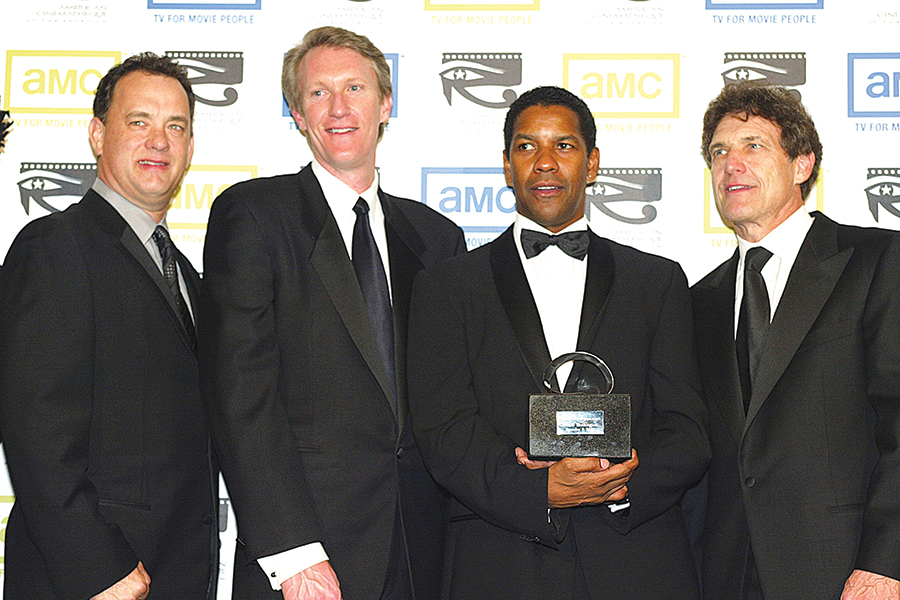
(L-R): Tom Hanks, Chris McGurk, Denzel Washington and Alan Horn (at the time, COO of Warner Bros.) at a Dec. 6, 2002, American Cinematheque award ceremony honoring Washington at the Beverly Hilton Hotel in Beverly Hills, Calif. (Photo by Kevin Winter/ImageDirect)

Where does he see Cineverse, say, five years from now?

“Hopefully, three or four times as big as we are right now, having made a couple of smart acquisitions and having really grown our technology business quite a bit,” McGurk says. “I think we’ve got a leverageable technology, and we’ve got a great team in place that’s out selling. I think you might see us do some more acquisitions in the technology space like we did with Giant. I see our film business rounding itself out, so we’re doing like eight films a year and expanding into other genres besides, you know, just horror.

“But I see us as a much, much bigger company, lean and mean and with a set of assets that are really unique in this space. Nobody has a streaming network like we have, with 30 channels and 60 podcasts on top of that. We have more than 70,000 titles in our library, all powered by a technology and AI that we own completely.

“I look around and there’s nobody who really lines up competitively with us. And so I think if we’re not three or four times bigger, we’ve screwed it up somehow. But I think the other thing I feel really good about is that for a little company, a microcap company like us that’s been trying to make sure we pivot and stay ahead of the industry, we’ve really built a really great executive team. People like Erick Opeka, Tony Huidor, Michele Edelman, Yolanda Macias — this is a team that’s capable of doing a hell of a lot more, of running a much, much bigger company. And I just feel good that we’ve been able to attract a team in a real difficult time in the industry and retain them. They’re all motivated, and I just think the future looks really bright.”

Subscribe HERE to the FREE Media Play News Daily Newsletter!
 

Reinventing a Studio

Hollywood loves reinvention stories, but few executives have executed one as thoroughly — or as pragmatically — as Chris McGurk. Having spent decades running legacy studios including Universal Pictures, MGM and Overture Films, McGurk now finds himself on the other side of the equation: building a modern entertainment company, with technology not as an accessory, but as the engine.

As chairman and CEO of Cineverse since 2011, McGurk has overseen the transformation of what was once a modest digital cinema business into a publicly traded entertainment and streaming technology company designed for an era when the traditional studio system no longer controls distribution, marketing or consumer access. At Cineverse, content and technology are inseparable — and that interdependence is central to the company’s strategy.

READ: FAST FORWARD AWARDS 2026: CHRIS MCGURK — MASTER OF REINVENTION

Cineverse today operates across every major window — theatrical, TVOD, FAST, subscription streaming and physical media — while feeding a library of more than 70,000 titles to over 50 million monthly viewers. Unlike legacy studios, however, Cineverse owns much of the underlying infrastructure powering that reach. Its Matchpoint platform automates streaming workflows, analytics, quality control and metadata enrichment, while its consumer-facing Cinesearch tool tackles one of streaming’s most persistent pain points: discovery.

That technological foundation is not theoretical. It has produced tangible results, particularly on the theatrical side, where Cineverse has demonstrated that streaming and cinemas can be complementary rather than cannibalistic. The company’s handling of Terrifier 2 and Terrifier 3 — marketed largely through Cineverse’s own horror-focused streaming channels and digital inventory — delivered blockbuster returns on minimal spend. Terrifier 3’s $90-plus million global box office gross on a modest marketing budget effectively rewrote the playbook for independent genre releases.

The key, McGurk argues, is data-informed efficiency. Cineverse’s vertically integrated network provides real-time insight into fandoms, viewing behavior and consumer preferences — intelligence that allows the company to activate audiences with precision. The same discipline has made lower-grossing box office releases such as The Toxic Avenger and Silent Night, Deadly Night highly profitable through post-theatrical TVOD and streaming windows.

That philosophy now extends into Cineverse’s broader ambitions. The formation of Cineverse Motion Pictures Group, led by Yolanda Macias, signals a push toward a steady slate of six to eight films per year built around known IP, disciplined budgets and asymmetric upside. Upcoming projects spanning horror, family and prestige titles suggest a portfolio approach rather than a swing-for-the-fences mentality.

On the technology front, Cineverse is positioning itself as a service provider as much as a content company. Cinesearch — developed with Google and showcased at CES 2026 — aims to modernize search and discovery through conversational AI, addressing a churn-driving weakness across streaming platforms. Meanwhile, the acquisitions of Giant Worldwide and IndiCue will allow Cine-verse and its partners to use Matchpoint’s automation and AI to replace costly and labor-intensive manual workflows while delivering improvements within the connected-tv advertising ecosystem.

What distinguishes McGurk’s vision is its restraint. Cineverse is not chasing scale for scale’s sake, nor competing head-on with tech giants. Instead, it is quietly assembling a hybrid model — part studio, part platform, part services company — optimized for efficiency in an industry still recalibrating after years of overspending.

In an era defined by contraction, Cineverse’s strategy feels refreshingly constructive. McGurk’s second act is less about nostalgia for Hollywood’s past than about engineering a sustainable future — one where technology strengthens creativity, rather than crowding it out.

Subscribe HERE to the FREE Media Play News Daily Newsletter!

Cineverse CEO Chris McGurk Cites Weather for Modest ‘Return to Silent Hill’ Theatrical Debut

Cineverse continues to look for a theatrical release to rival the distributor’s outsized “Terrifier” franchise that has generated $65.3 million in North American ticket sales through three movies with a combined production budget of $2.85 million.

Working with Iconic Events, Cineverse bowed Return to Silent Hill, the third release in the 20-year-old horror “Silent Hill” mystery franchise, which was No. 7 at the weekend box office Jan. 25 with $3.2 million in revenue — near the company’s total $3.5 million investment in the title.

The tally exceeded some industry expectations that pegged the title’s weekend debut at around $2.6 million.

David A. Gross, with industry newsletter FranchiseRE, said the the movie’s bow was “a weak opening” for the third installment in the franchise.

Even so, he noted, “The budget was a modest $23 million. At that cost, the film should recoup its investment after it finishes ancillary business around the world.”

Like “Terrifier,” and the recently released The Toxic Avenger ($2.86 million), Cineverse only has North American rights to “Silent Hill,” relying on its home entertainment release, including digital retail and streaming, to drive operating margins.

Cineverse recently licensed the streaming rights to The Toxic Avenger, starring Peter Dinklage, Kevin Bacon, Elijah Wood, Jacob Tremblay and Taylour Paige, to Hulu after releasing it theatrically.

In media comments, Cineverse CEO Chris McGurk attributed Return to Silent Hill’s modest debut largely to severe weather impacts across the Eastern part of the country rather than the movie’s quality or appeal.

“The weather clearly was a big factor this weekend and impacted the box office significantly for many films, including ours,” McGurk said.

He expressed hope that “the industry will get some of this missed demand back” once the blizzards and deep freeze subsided, suggesting pent-up audience interest could drive better returns in subsequent weeks.

Subscribe HERE to the FREE Media Play News Daily Newsletter!
Cineverse’s Chris McGurk Selected as MPN’s 2026 Fast Forward Honoree

Chris McGurk, chairman and CEO of Cineverse, is this year’s Fast Forward Award honoree, Media Play News announced Jan. 19.

The Fast Forward Award is presented each year by Media Play News, one of the five major Hollywood trades and the only one to focus on “last mile” home distribution of films and shows, to people, technologies, or organizations that move the home entertainment industry forward.

McGurk, who will be saluted in the February 2026 issue of Media Play News, is the architect of Cineverse’s transformation from a digital cinema company to an entertainment and streaming technology company, which is built around the principle that streaming and theatrical are synergistic rather than cannibalistic, and that technology is the engine that allows our industry’s crown jewel, content, to shine brighter than ever.

Cineverse distributes content across all windows and platforms, from theatrical to digital to physical, and has a library of more than 71,000 films, series and podcasts that reach 50 million unique monthly viewers. The company also has a technology organization that it built alongside its content business. Matchpoint is the company’s core technology suite for delivering streaming content, an automated and workflow platform that prides itself on efficiency and also provides tools for scalable app creation, analytics and predictive dashboards, and AI-powered quality control and metadata enrichment.

“Chris epitomizes the new type of studio executive who both understands and welcomes technology as an enabler,” said Thomas K. Arnold, publisher and editorial director of Media Play News. “After I moderated a discussion with Chris at AFM 2024, where we talked about the success of Terrifier 3 and how it was marketed through Cineverse’s own streaming platforms and technologies, I thought he would be an ideal candidate for this annual honor — and everyone I talked to about it later agreed.”

McGurk said, “I’m honored to be a part of an amazing team that continues to innovate, evolve, and surprise the industry. We have pivoted when needed, while staying true to our mission of redefining what a studio looks like in 2026. From bringing franchises back to fans in theaters — like Return to Silent Hill on Jan. 23, Guillermo del Toro’s Pan’s Labyrinth, and Air Bud Returns, our first family film — to growing our AI and streaming technology capabilities through our best-in-class engineering team, and strategic moves like our recent acquisition of Giant Worldwide, we are proving what’s possible when creative ambition and technical excellence come together.”

Past Media Play News Fast Forward honorees include Katherine Pond, Group VP at Vizio; Danny Fisher, CEO of FilmRise; Andrea Downing, president of PBS Distribution; and Eddie Cunningham, at the time president of Universal Pictures Home Entertainment.

The February 2026 issue of Media Play News becomes available in both print and digital editions on Feb. 23.

Subscribe HERE to the FREE Media Play News Daily Newsletter!
DEG Opens Registration to EnTech Fest 2026 With Announcement of Two High-Powered Keynoters

DEG: The Digital Entertainment Group has opened registration to EnTech Fest 2026, its big annual conference and party, with the announcement of two high-profile keynote speakers, Chris McGurk of Cineverse and Amy Reinhard of Netflix.

The trade group’s fifth annual EnTech Fest will be held Feb. 25, 2026, at the Skirball Cultural Center in Los Angeles. There is no cost to register for DEG members; non-members can save $200 off the $795 cost if they register before Dec. 15 using the code EARLYBIRD26.

As chairman and CEO of Cineverse since 2011, McGurk has been at the forefront of the company’s transformation into a global technology and entertainment company that distributes content across all windows and platforms, from theatrical to digital to physical. Previously, McGurk served for four years as founder and CEO of Overture Films and Anchor Bay Entertainment. From 1999 to 2005, McGurk was vice chairman of the board and COO of MGM, acting as the company’s lead operating executive. McGurk joined MGM from Universal Pictures, where he served in various executive capacities, including president and COO, from 1996 to 1999. Earlier, McGurk served in several senior executive roles at Walt Disney Studios.

Reinhard was named president of advertising in October 2023. She oversees global advertising sales, product development, operations and measurement teams — a critical function as Netflix increasingly relies on its ad-supported subscription tier to drive revenue growth. Previously, Reinhard led Netflix’s studio operations for three years, overseeing physical production, production facilities management and creative services. Reinhard joined Netflix in 2016 as VP of content acquisition, a role in which she led global live-action and animation production, production facilities management, global studio licensing for films and television series as well as local language acquisitions. Before Netflix, she held various strategy, finance, and operational roles at Paramount Pictures over a a 10-year span, ultimately rising to president of worldwide TV licensing and distribution. She started her career at Revolution Studios.

EnTech Fest 2026 is a one-day event that includes exhibits, conference programming, and DEG’s annual reception. Focus exhibit categories include emerging technologies, the consumer experience, immersive storytelling, AI, and advanced content delivery. The annual event is for content distribution and marketing executives, platform partners, technology enablers, trend trackers, connected device and display developers, and innovators in digital entertainment.

See photos from last year’s EnTech Fest 2025.

AFM Goes to Las Vegas to Celebrate Independent Films — and Indie Filmmaking

LAS VEGAS — The 45th American Film Market, and the first one in Las Vegas, is history. And while attendees and exhibitors were divided about the five-day event’s new home, the Palms Casino Resort, the five-day market saw plenty of deals and discussions — and lots of boosterism for independent film.

Iconic filmmaker Lloyd Kaufman, of Troma Entertainment and The Toxic Avenger fame, encouraged young filmmakers to make movies as inexpensively as possible, and then cast a wide net in seeking distribution. He said given their financial struggles, even the big streamers “are going to have to hire filmmakers like you who can make $200 million movies for $2 million. There’s lots of you out there, and it’s got to move in that direction.”

Chris McGurk, CEO of Cineverse, talked up the surprise box office success of the low-budget independent horror film Terrifier 3, which cost about $2 million to make and is now well past $70 million in global box office revenue. Cineverse marketing chief Lauren McCarthy said the marketing campaign, centered around social media, activations and partnerships with everyone from Venmo to Walmart, cost less than $500,000, and yet the film blew past the big-budget studio film Joker: Folie à Deux its opening weekend, earning more than $18 million to the “Joker” sequel’s sophomore weekend take of just $7 million.

In the wake of its success with Terrifier 3, Cineverse at AFM announced it had secured the global rights to a theatrical reboot of the 1984 low-budget horror film Silent Night, Deadly Night. The film, written and directed by Mike P. Nelson (Wrong TurnV/H/S/85) and produced by Scott Schneid and Dennis Whitehead, executive producers of the original 1984 Tri-Star Pictures film, alongside Jamie R. Thompson, is set to go into production shortly, with a late 2025 theatrical release.

Subscribe HERE to the FREE Media Play News Daily Newsletter!

With Terrifier 3, “we’ve established a new blueprint” for independent films with big viral fan bases, McGurk said during a Nov. 9 Main Stage presentation. Stressing the synergy between streaming and theatrical, he noted that the “Terrifier” franchise was brought to Cineverse — which is primarily a streaming and technology company— through its horror fan brand Bloody Disgusting, whose executives told him they thought the villainous Art the Clown could be the next Jason Vorhees or Freddy Krueger. After its theatrical run, Terrifier 3 will be released on TVOD, for digital purchase or rental, and then on disc — including a 4K Ultra HD Steelbook — before it launches on Screambox, the Bloody Disgusting streaming channel.

AFM2024 boasted participants from 80 countries, including 286 sales, production, and distribution companies, including Lionsgate, A24, AGC Studios, Anton, Arclight Films, Blue Fox Entertainment, Film Mode Entertainment, FilmNation, Gravitas Ventures, Pathé Films, Studio Canal, The Veterans and Voltage Pictures, among others.

“Everyone actively engaged in our industry was present and we exceeded our attendance goals with participants from over 80 countries,” said Jean Prewitt, president and CEO of the Independent Film & Television Alliance, which produces AFM. “Having all participants and activities under one roof created extraordinary energy and efficiencies for buyers and sellers, who were able to get to meetings and screenings without cars or shuttles.”

Prewitt also praised the expanded AFM Sessions program and networking opportunities.

“Buyers and sellers had a busy and productive week,” she said. “Our other participants — professionals in one or more aspects of our business — found the expanded slate of conferences and networking opportunities to have great value in building opportunities. The feedback was broadly positive, with numerous participants commenting on how the move jumpstarted the excitement surrounding the AFM.”

Among the other films that generated a buzz at AFM2024 were such high-end productions as Alpha Gang, an alien invasion comedy that stars, and was produced by, Cate Blanchett; Concord Studios’ Assassination, a fresh look at the John F. Kennedy assassination starring Brendan Fraser, Bryan Cranston, and Al Pacino; Cliffhanger, a remake of the 1993 Sylvester Stallone action hit starring Lily James and Pierce Brosnan; A24’s Marty Supreme, starring Timothée Chalamet; Never Alone, a film from director Klaus Härö that follows a band of Jewish refugees feeling to Finland during World War II; and Queen of the Dead, a zombie film from Tina Romero, daughter of Night of the Living Dead mastermind George Romero.

Cineverse CEO Basing Company’s Growth in Part on Horror Character ‘Art the Clown’

Streaming distributor Cineverse (formerly Cinedigm) is coming off a profitable fiscal quarter due in large part to the unexpected theatrical success of low-budget slasher movie Terrifier 2, which generated $15 million at the box office. The budding franchise, which has been extended to a third theatrical release slated for 2024, help jumpstart subscription’s to Cineverse’s Screambox streaming platform, among other revenue channels.

CEO Chris McGurk

Since the movie’s success, Cineverse initiated a reverse stock split, changed its name and sold $8 million worth of new stock to help funding the company. At the same time, Wall Street has been a tough sell, with the company’s stock trading below Nasdaq’s $1 minimum per share pricing, until the reverse stock split.

In a June 21 statement, CEO Chris McGurk said the company has been building its streaming channel and content portfolio, predominantly through M&A and strategic partnerships, which has upped the library to more than 70,000 titles.

“The net result of this has been the rapid growth of our namesake channel, Cineverse, which has already reached the Top 10 of all streamers in terms of title depth and breadth,” McGurk said. “Our reputation in the industry as a company that can successfully monetize channels and IP has grown alongside our library, with more than 650 partners ranging from Hallmark and Konami to American Public Media and All3Media.”

But it was horror character Art the Clown, who menacing presence in 2016’s Terrifier and last year’s Terrifier 2 that put Cineverse on the map with moviegoers and streaming consumers.

“That perception rose to a whole new level over the last two quarters on the back of [that movie],” McGurk said, calling Art the Clown this generation’s Jason or Freddy Krueger.

“I have been involved with the release of hundreds of films, both studio-level and independent, and I have never seen a movie that has had such a high ROI and enormous box office-to-marketing-dollar ratio,” he said.

The executive said Cineverse leveraged the 80 million visitors and billions of ad impressions across its portfolio of streaming properties to drive awareness for the movie and generated millions of dollars in earned media value on venues such as “Good Morning America,” “The Howard Stern Show” and “Saturday Night Live” through the effective viral and social marketing efforts of its Bloody Disgusting horror group.

The buzz more-than-tripled paid subscribers on the company’s Screambox horror channel. Most importantly, McGurk said the movie’s success created an industry-wide perception of major momentum for the company and underscored that Cineverse had become a key new destination to bring important IP.

The executive claims Cineverse has a “flood” of new partnership and M&A opportunities for “high value IP” over the past 90 days, which includes the Sid & Marty Krofft library.

“We are in the final stages of closing deals for one of the most loved, successful and profitable nonfiction television brands of all time, a highly valuable and recognizable children’s library of IP, and a seminal brand & library in the horror space,” McGurk said. “For these five deals alone, we beat out competing offers from at least three major studios and a major cable conglomerate.”

Cinedigm Changing Name to Cineverse in Business Reboot

Cinedigm May 22 announced it is rebranding its corporate name to Cineverse in an attempt to underscore the home entertainment distributor’s focus on streaming entertainment and technology.

Along with the corporate name change, the company’s stock symbol will also change from CIDM to CNVS, with its shares commencing trading on the NASDAQ Capital Market under the new symbol at the market opening on May 23.

Cineverse features content channels across every streaming model (FAST, AVOD, SVOD), in addition to a library featuring more than 60,000 movie and TV titles. And a podcast network of an estimated 70 million downloads across 28 podcasts.

Chris McGurk

“We have come a very long way from the Cinedigm of 10 years ago, which specialized in digital innovation within the cinema industry,” CEO Chris McGurk said in a statement.

McGurk said the renamed company, in addition to shoring up its stock price, plans to continue expanding its media library, currently at over 60,000 titles, focusing on niche genres, including horror and indie films.

“Our recent investments and acquisitions have enabled us to become a leader across multiple entertainment genres, spanning anime and Asian entertainment, to faith and family, and many other genres,” he said.

McGurk believes the new company name more accurately reflects the evolving business market and media brand operating at the intersection of entertainment and tech innovation.

Cineverse last year launched Matchpoint, a streaming technology and content distribution platform that offers a unified content management, preparation, delivery, programming and analytics solution incorporating AI and machine learning to automate tasks.

Subscribe HERE to the FREE Media Play News Daily Newsletter!

Cineverse says Entrepreneur Magazine and FUBU, among other brands, recently selected Matchpoint on a software-as-a-service (SaaS) basis to establish their streaming businesses.

“A key part of the company’s vision is to celebrate culture through entertainment, storytelling and innovation,” said Erick Opeka, chief strategy officer and president of Cineverse. “We already do this with our channel portfolio, providing a platform for storytellers to reach a broader audience, while connecting communities of fans — wherever they watch — with content that they often cannot find elsewhere as other major streaming services cut back on their content offerings.”

Cinedigm CEO Expresses Faith in Company’s Streaming Future

Cinedigm chairman/CEO Chris McGurk is staking the future of the Los Angeles-based home entertainment distributor/digital operator on faith-based content and streaming video.

Facing an underperforming stock price and growing investor concerns, McGurk March 2 issued a shareholder letter looking to reassure Wall Street that the company is firing on all cylinders — underscored in part by plans to repurchase 10 million worth of common stock through the next 12 months.

Chris McGurk

“We believe that purchasing undervalued Cinedigm shares is a superb investment strategy for the company,” McGurk wrote, adding that he, as owner of more than 2 million shares, “understand[s] the frustration that all our shareholders are feeling now.”

While Cinedigm’s current share price hovers around 50 cents (well below Nasdaq’s $1 minimum), McGurk says analysts who study and follow Cinedigm have targeted the company’s stock price at from $2.25 to $5 per share.

To get there, Cinedigm this week acquired two faith and family media properties, Dove.org and Christian Cinema, the eighth acquisition in the past two years. Both properties, McGurk believes, will help Cinedigm capitalize on a growing faith-based entertainment industry across movies, reviews, news, podcasts, ratings for films, TV shows, video games and online content, among other distribution channels.

Subscribe HERE to the FREE Media Play News Daily Newsletter!
“This past weekend’s box office success of [Lionsgate’s] Jesus Revolution demonstrates the huge opportunity in this important and growing entertainment segment,” McGurk wrote.

Through transactional VOD platform Christian Cinema, Cinedigm hopes to replicate the fiscal success it has with its Bloody Disgusting horror platform, which saw the theatrical release of Terrifier 2 defy box office odds and segue into a successful digital retail run.

“We are now well-positioned to compete in two of the hottest genres in Hollywood,” McGurk wrote.

Separately, the launch of ad-supported streaming video aggregator Cineverse, backend technology provider Matchpoint, Cinedigm Ad Solutions and the Cinedigm Podcast Network support his contention the company can reach more than 50% in annual streaming revenue growth and $150 million in revenue within four years while also significantly improving margins and attaining sustained profitability, he wrote.

Cinedigm currently sits on a content library of 60,000 indie movies and TV shows, including 25,000 titles added this year.

“[We aim to become] the Spotify of independent film and TV,” McGurk wrote.

The executive said the Matchpoint platform in January not only delivered 9,000 titles, comprising 50,000 content assets, into the streaming ecosystem, but the platform also facilitates content management, content preparation, content delivery, programming, video streaming apps and analytics.

“For perspective, that is 2.3 times the total number of movies on Netflix or 7.2 times the number of movies on Hulu that we processed in just a single month,” McGurk wrote, adding that Cineverse now has more than 19,000 titles available to buy, rent, stream with ads, or subscribe to commercial-free.

“Our goal is to have hundreds of thousands of titles over the next 30 months that, like Spotify before us, are expertly hand-curated or easily searched,” he wrote.

Cinedigm shares were up 4 cents in midday trading.

OTT.X Summit: Cinedigm’s Chris McGurk Says Entertainment Companies Must Quickly Embrace Change

Looking over his long career, Cinedigm chairman and CEO Chris McGurk said adapting to new ideas and technologies quickly is key to successfully navigating the entertainment marketplace.

Speaking during an Aug. 31 presentation at the OTT.X Fall Summit in Los Angeles, he noted that over the years, “The one constant has been profound change.”

“In a business where the only thing for certain is rapid technological change, you’ve got to be ready every year or every two years to revisit your business model,” he said.

He recounted several key experiences during his career that involved embracing new ideas. At the Walt Disney Co. in the early 1990s, he was tasked with visiting tech giant Steve Jobs to discuss distributing Toy Story, with its innovative CGI animation. At the time, Disney was focusing on highlighting its traditional animation business.

“It was going to be the engine that was going to drive the company,” McGurk recalled, adding, “The fact is, there was a huge, raging debate going on whether we should distribute Toy Story or not.”

In a meeting with Jobs, he recalled telling the tech giant, “Some people at Disney don’t want to do this deal because they consider it blasphemy.”

“Some people at Disney are idiots,” Jobs replied, McGurk said.

McGurk noted, “We embraced the new technology and look what happened.”

In a later experience at MGM, he recalled the studio’s successful shift from trying to compete with the major studios on theatrical releases to instead focus on a newfangled product: DVD.

“We looked to technology as the answer, and right at that point the DVD business was beginning to take off,” he said. Thus, MGM made theatrical a “secondary business” and “built an operation that could squeeze more money out of DVD than everybody else.”

At Cinedigm, McGurk embraced new tech as well. After going through a transformation to a streaming company a few years ago, executives began to see that competing in the subscription business might be a “losing proposition for us” with the big players in the market.

“We began looking at the growth of connected TVs and the enhanced lean-back experience,” he said. That shifted the thinking to the free ad-supported model that the company now champions.

“I think we launched our first FAST channel in 2018,” he said.

Subscribe HERE to the FREE Media Play News Daily Newsletter!

Now, big players are getting into the ad-supported model, including Netflix, where executive Reed Hastings had always eschewed ads as hurting the streaming experience.

“He’s eating crow now,” McGurk joked. “But in the long haul, they’ll do just fine.”

Ad-supported streaming has a bright future, he said.

“It’s a given that the ad dollars flowing into the streaming business are going to escalate,” he noted.

Cinedigm plans to sidestep the big players.

“Our strategy is to let the big guys kill each other why we launch channels that are complementary,” he said, noting that the company has channels that are “very targeted at a very specific fan base,” such as the Bob Ross channel.

He sees coming consolidation among the big streamers.

“Those that have big debt loads and are thumbing their nose at the creative community … they’re not going to be around,” he said.

The days of just gathering loads of subscribers and pleasing Wall Street are ending, he said. Profitability and cash flow have become key.

“They look at it differently than they looked at it a year ago,” he said, noting “we were profitable last year.”

Engagement is also important so that streamers can serve up ads.

“We are trying to superserve these enthusiast fan bases,” McGurk said.

For instance, Cinedigm linked with Bloody Disgusting to beef up its horror content, with an accompanying podcast.

The Bob Ross channel, featuring the late painter, is the company’s most successful channel, he said, noting Ross is “like Mister Rogers for millennials and Gen Z.”

As part of Cinedigm’s exploration of AI, recommendation engines and other tech, the company is looking into creating a “deep fake” Bob Ross.

“We’ll see where it goes,” he said.

In addition to ad-supported models, international expansion is also a big opportunity for streamers as most countries outside the United States are behind. Cinedigm likes to partner with local operators to enter foreign markets, he said.

While the company has 46,000 indie titles in its library, on most titles, Cinedigm has just North American rights, so the company is trying to increase the percentage of worldwide rights in its library.

McGurk believes the future is bright for independent content creators. Previously, “You had a system that was controlled by six or seven major studios,” he noted. Now, there are “hundreds of opportunities to get access to eyeballs.”

In the next three to five years, he sees consolidation.

“You’ll probably lose two or three of the bigger streamers,” he said, adding there will be “more channels and fewer companies.”

From Around the Web