StreamTV Show 2026 Announces Agenda, First Round of Speakers for June 16-19 Denver Show

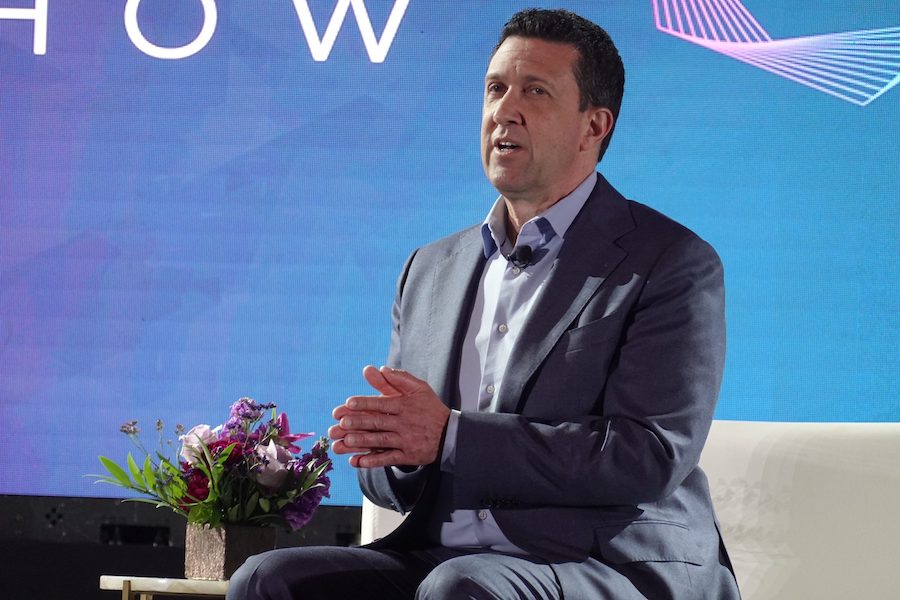
DENVER — Organizers of the StreamTV Show have unveiled the agenda and first round of speakers for the 2026 show, which will take place June 16-19 at the Gaylord Rockies Resort.

The show, produced by Questex, brings together senior executives across streaming platforms, studios, FAST operators, advertisers, OEMs, OS leaders and technology innovators.

In accordance with the show’s theme, “Streaming Rewired: AI, Audiences & Attention Driving the Next Era,” the show will include executive roundtables on CTV OS platform power, OTT bundling strategy, and retention models; discussions on AI in content decisions, discovery, advertising, and UX; FAST-focused programming on monetization, programming, creator channels, and ad scale; sports streaming strategy and monetization sessions across rights, distribution, and fan engagement; creator content sessions; CTV advertising innovation panels covering interactive formats, attention measurement, self-serve buying, and AI optimization; and product and UX leadership roundtables on personalization, discovery and platform experience.

“Streaming is no longer just a content conversation — it’s a product conversation, a data conversation, and a revenue conversation,” said Lucia Contreras, director of content and industry relations for StreamTV Portfolio at Questex. “This year’s agenda reflects the reality of where the industry is headed — and who is leading it.”

The first confirmed wave of 2026 speakers represents leaders across platforms, content, advertising, product, and distribution, including:

  • Tubi — Adam Lewinson, chief content officer, and Jess Borison, senior manager of creator partnerships
  • Comcast Corp. — John Dixon, SVP, consumer entertainment services
  • Radial Entertainment — Jeff Shultz, CEO, and Cristina Guggino, VP of co-productions and partnerships
  • Charter Communications — Elena Ritchie, SVP of video
  • Cineverse — Tony Huidor, president of technology and chief product officer
  • National Basketball Association (NBA) — Felipe Saltz, AVP of media distribution
  • Dish Network — David Teplinsky, VP of programming and content acquisition.


New events at the 20265 StreamTV Show include the StreamTV Marketers Summit, the Women at the Helm Leadership Breakfast, AI and Attention Economy Breakfast Tabletalks, creator economy strategy sessions, The StreamTV Open Golf Tournament, curated meet-ups and hosted buyer programs, and evening industry receptions and awards events.

Subscribe HERE to the FREE Media Play News Daily Newsletter!

StreamTV Europe Set for Inaugural Run in Lisbon April 13-15

Questex’s StreamTV Europe, an offshoot of the company’s successful StreamTV Show in Denver, is gearing up for its first-ever run in Lisbon April 13-15.

Held at EPIC Sana, StreamTV Europe will open with an inaugural address by Lisbon Mayor Carlos Moedas that show organizers say underscores the city’s growing role as a hub for media, technology and digital innovation.

The show itself already has broad participation from CTV operating systems, device manufacturers, streaming platforms, content distributors, ad-tech innovators, measurement firms and infrastructure leaders.

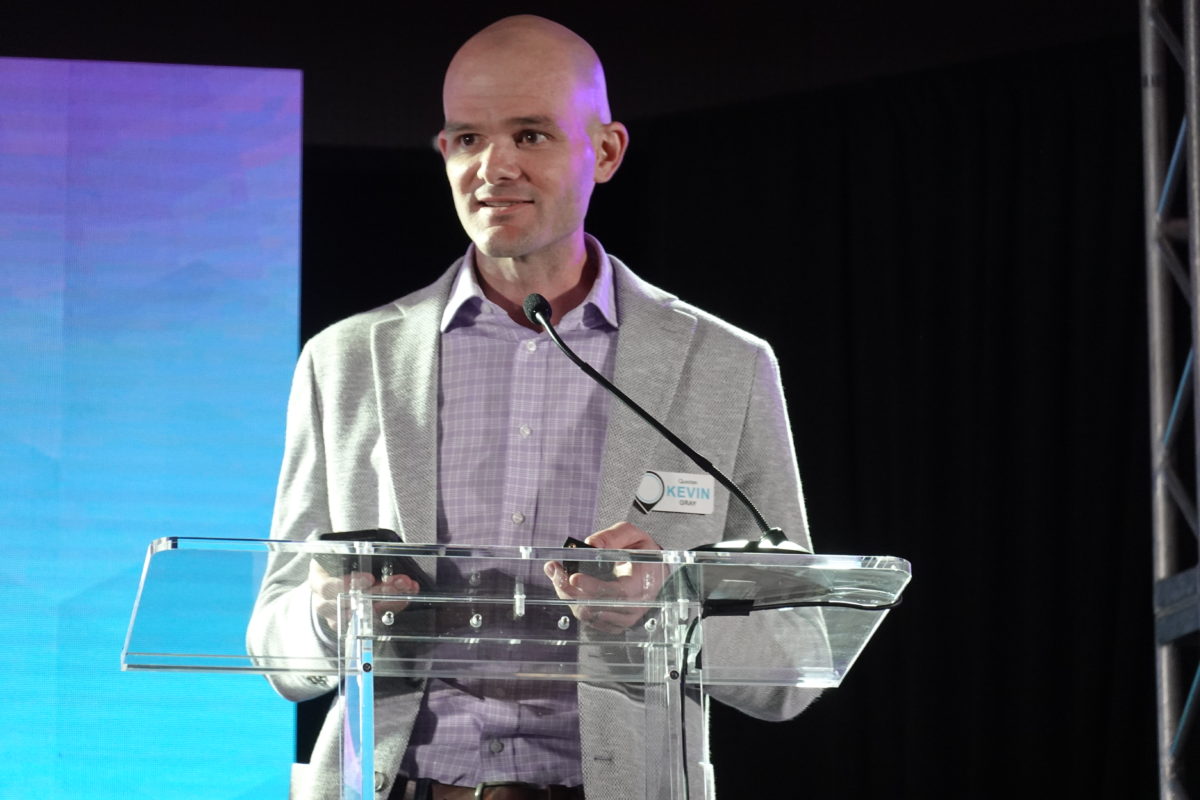
“This is a defining moment for streaming television in Europe,” said Kevin Gray, StreamTV Show founder and a Questex VP and market leader. “StreamTV Europe brings the global streaming ecosystem to Europe with a clear purpose: to advance the region’s CTV and streaming industry through deeper collaboration, practical insight and real-world solutions.”

Sponsors and participants that have already signed up for the show include:

  • CTV Platforms — Samsung TV Plus, Titan OS, V homeOS
  • Streaming Technology Partners — Bedrock Streaming, Wurl, Globecast, Encompass, GDS, Norigin Media, Red Bee Media, Brightcove, Accedo One, Sofast, Bango, Media Distillery, ThinkAnalytics, Backscreen
  • Content Owners, Distributors, and Channels — France 24, All3Media, Cinemavault, Radial Entertainment, Sawa Entertainment, Shoreline Entertainment, The Asylum, MPG Media Company, CNA Originals, Global Distribution Services
  • Advertising and Monetization Partners — Google Ad Manager, Indiecue, G-Mana, SyncMint, Wurl
  • Infrastructure, Data, and Analytics Partners — 24i, Deepdub, Irdeto, Mainstreaming, Synamedia, Cerberus Tech


Show organizers say sponsors are playing an active role in shaping the event experience through leadership sessions, high-impact case studies, and strategic discussions.

Subscribe HERE to the FREE Media Play News Daily Newsletter!

Final Figures Show 63% Growth for 2025 StreamTV Show in Denver

Final attendance figures show Questex’s StreamTV Show 2025, held June 11-13 in Denver, grew its attendance 63% from the prior year, with more than 1,700 attendees.

Taking place at the Gaylord Rockies Resort and Convention Center, the show brought together key players in streaming, CTV and digital media.

StreamTV Show 2025 also featured the show’s largest speaker lineup to date, with more than 200 speakers spanning content, tech, advertising, distribution and innovation. The show floor hosted more than 110 sponsors and exhibitors, making it the biggest networking and dealmaking environment in event history.

“StreamTV Show 2025 exceeded every benchmark we set — not just in terms of numbers, but in the level of connection, collaboration and momentum it sparked across the industry,” said Kevin Gray, VP at Questex and founder of The StreamTV Show. “This year’s growth demonstrates the hunger for smart, engaging, future-facing conversations — and we’re proud to provide a platform that brings together the most influential voices shaping the future of streaming.”

Recapping StreamTV Show 2025 in Pictures

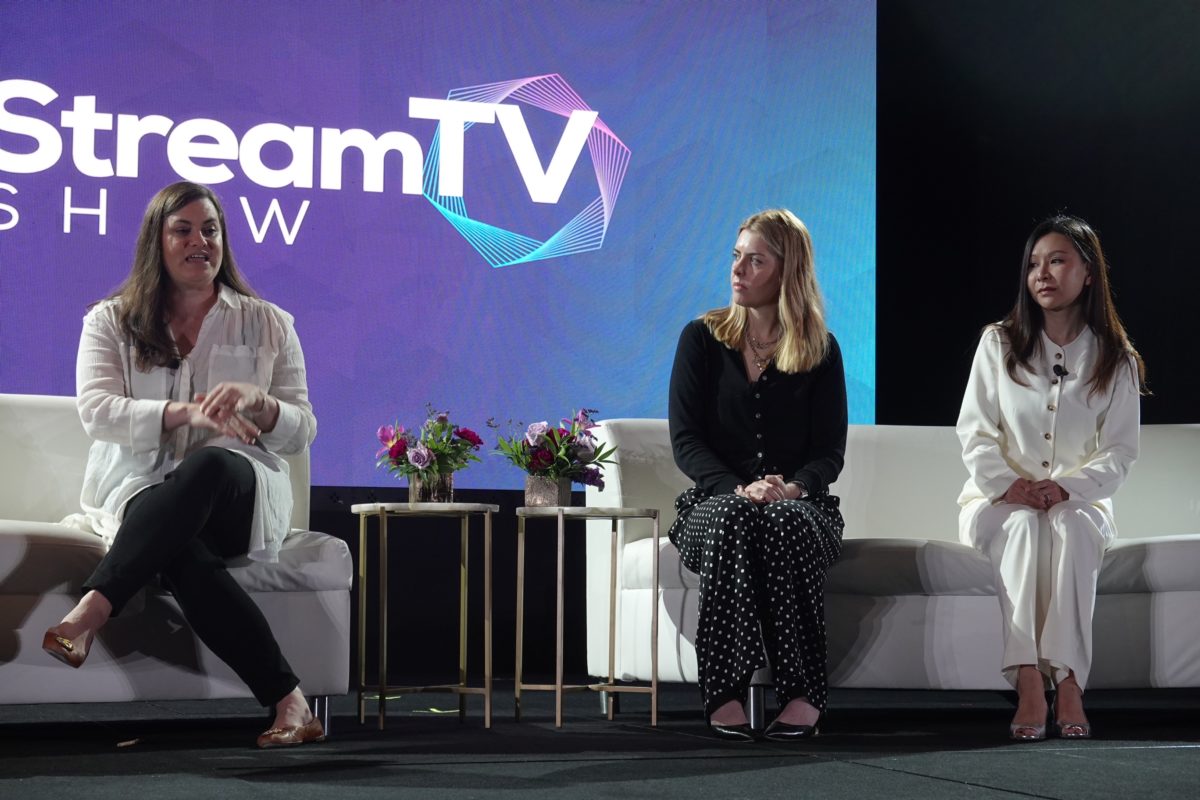
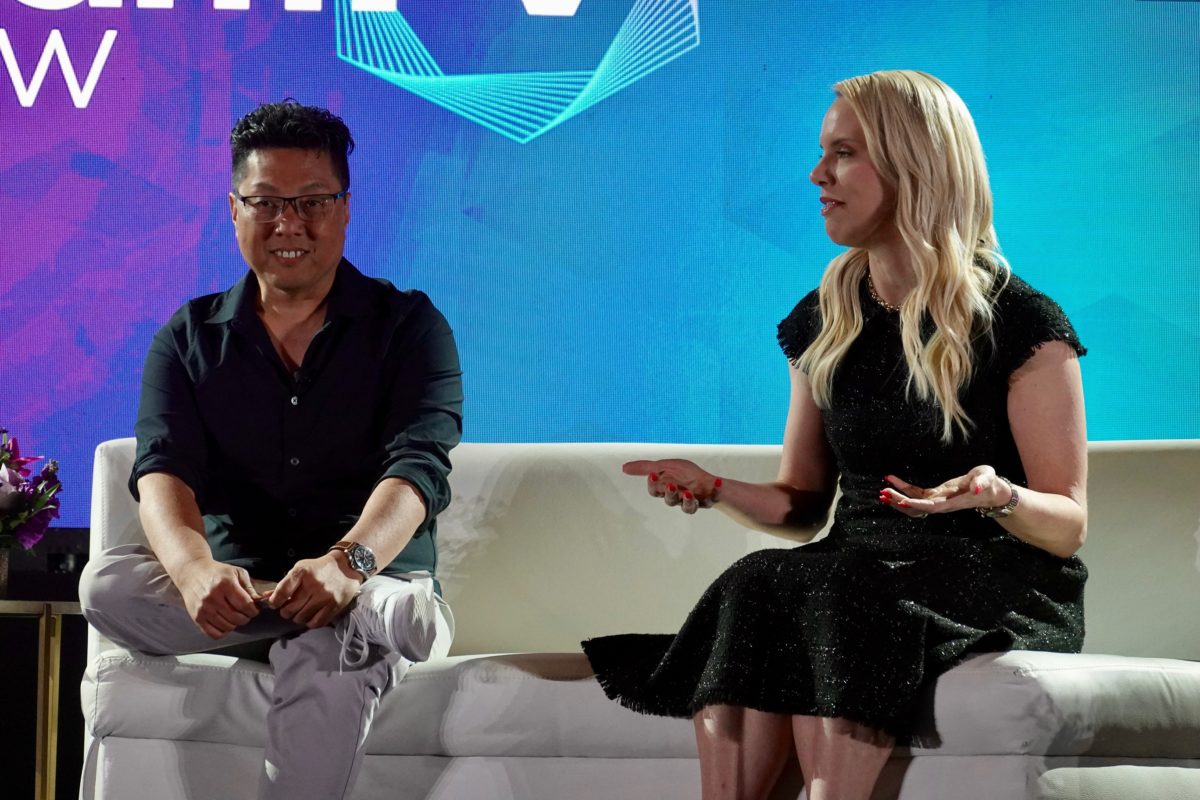
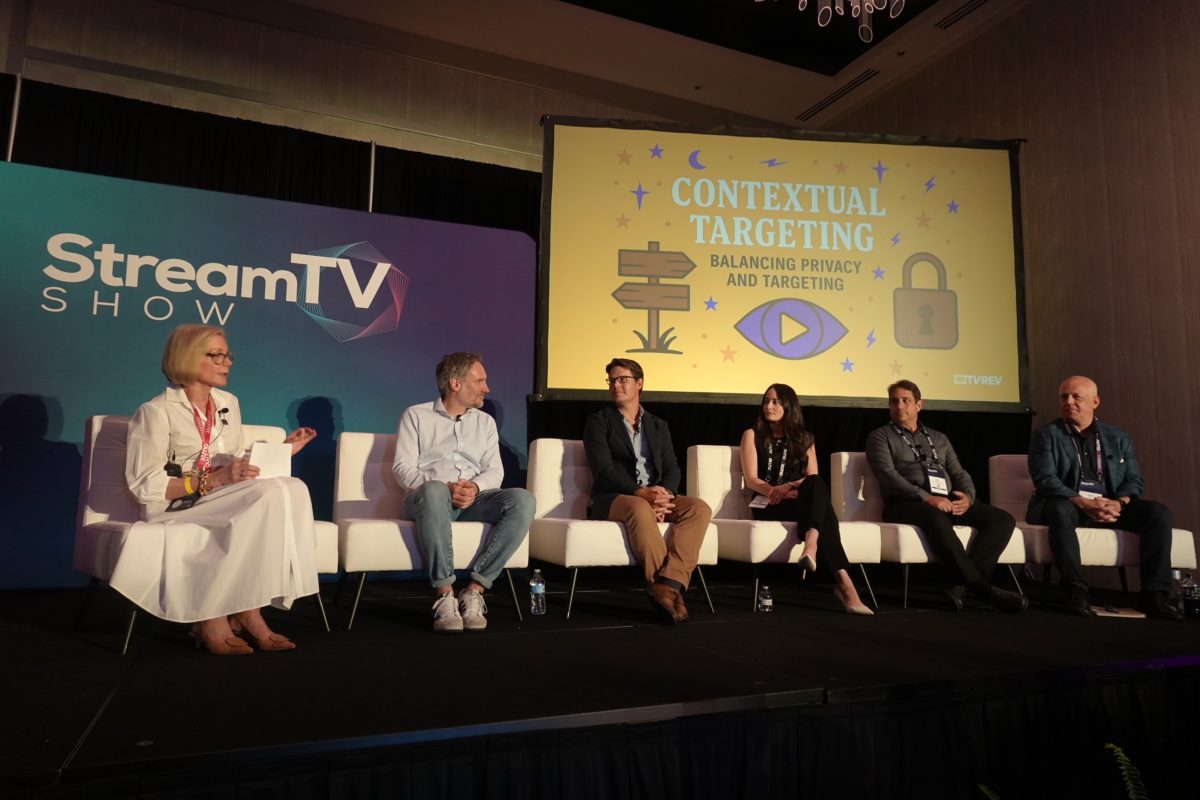
The fourth annual StreamTV Show touched down at the Gaylord Rockies Resort and Convention Center outside Denver June 11-13 for three days of conference sessions, networking and parties. Attendees praised the event, which saw attendance soar 55% from last year to more than 1,700, for bringing together the four key components of the streaming world: content, distribution, technology and advertising. All photos by Media Play News staff.

StreamTV Show Closes on High Note With Record Attendance, Accolades From Attendees

DENVER — The fourth annual StreamTV Show ended its three-day run June 13 with record attendance of more than 1,700 and rave reviews from attendees and exhibitors.

Attendance was 55% higher than last year’s show, with many first-timers drawn to Denver because they had heard good things about the show.

And repeat attendees marveled at how the show had grown and presented not just informative panels about CTV, FAST, content distribution and monetization, but also plenty of networking opportunities with key players from all of the four major segments of the streaming industry.

“StreamTV has become one of the few industry events that’s truly worth the time and investment,” said Andrea Downing, president of PBS Distribution. “It’s a rare opportunity to connect with so many key partners in one place. With tracks across content, tech, advertising, and distribution, it reflects the full scope of our business.”

Melissa Wohl, EVP of global distribution partnerships and content sales for FilmRise, added, “I am thrilled to see StreamTV Show 2025 build on the success of last year’s event. We’ve seen even greater diversity in content providers and platforms this time around. The incredible sessions offered valuable insights, and the international presence truly elevated the experience, reinforcing our position as a truly global streaming community. It’s been an outstanding showcase of innovation and collaboration.”

Subscribe HERE to the FREE Media Play News Daily Newsletter!

The StreamTV Show is produced by Questex, which was the parent company of Media Play News’ predecessor publication. The first StreamTV Show was held in Denver in June 2022 as a rebranding of what had been the PayTV Show, which launched in 2018 and then went dark during the pandemic years.  

The StreamTV Show 2025 had several keynotes that offered attendees a deep dive into the speaker’s company, including Tubi and Paramount+.

Tubi chief content officer Adam Lewinson said the Fox Corp.-owned streamer bridges the gap between YouTube and Netflix. The service is free, but the content is premium. The latest report from Nielsen’s The Gauge shows Tubi with around 2% of the TV viewing audience, a higher share than Peacock, Max and Apple TV+.

Paramount Streaming CMO and chief data officer Domenic DiMeglio talked about how recruiting and retaining subscribers to Paramount+ depends heavily on smart marketing and data-driven insights, with “early tenure churn” a particular hot-button issue for streamers.

Another keynote, by Dave Bernath, GM of Wurl, brought up YouTube’s continued dominance in the market and shared projections that suggest in two years YouTube will account for one out of every three hours streamed on TV.

Media “cartographer” Evan Shapiro, whose presentation on the end of the streaming wars and emergence of the media wars was the talk of the NATPE conference in Miami in February, presided over a Media Universe Summit that once again focused on the sea change in viewing habits now taking place as a younger generation that was raised on YouTube and social media rather than traditional television accounts for an increasing share of eyeballs centered around creator content.

And panel discussions on FAST, CTV and content distribution provided valuable insights and interesting statistics, including the assertion by  Cathy Rasenberger of Rasenberger Media that FAST viewership has 20% of the television audience but just 8% of the ad spend.

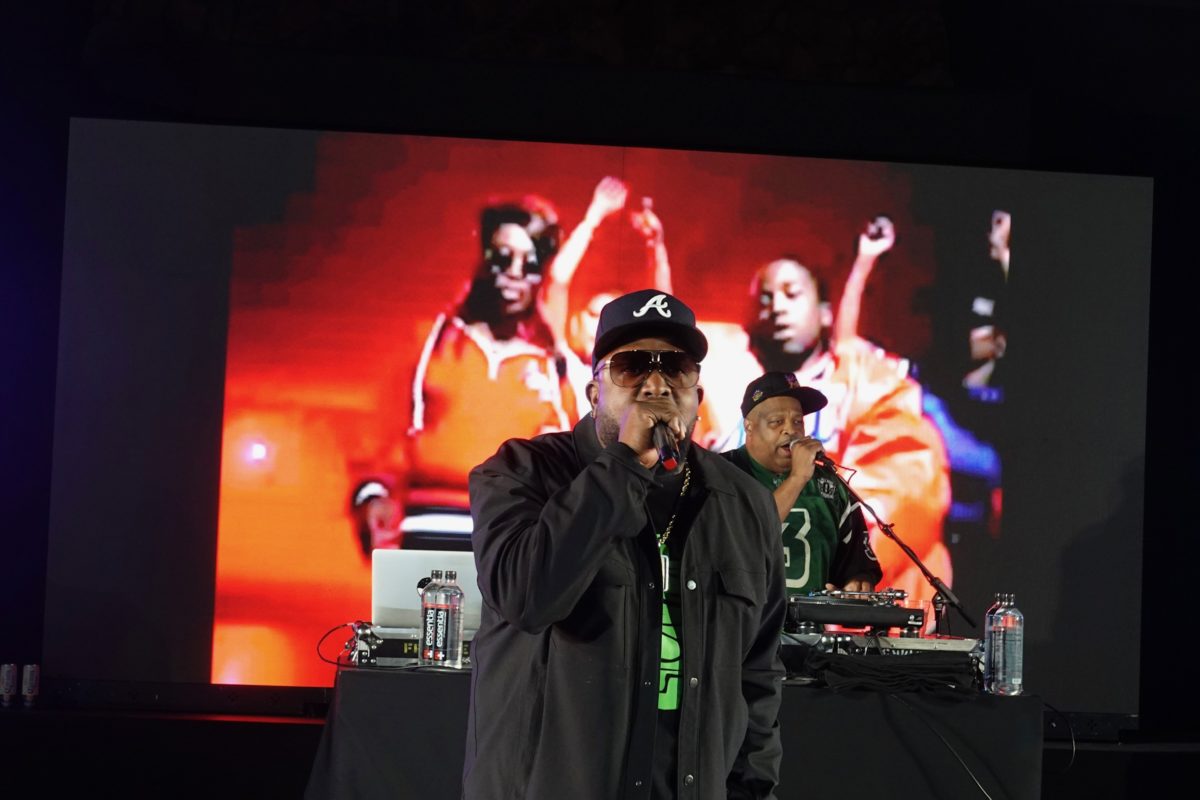
The show also presented attendees with plenty of networking opportunities with ample food and drink, from the opening day Big Bash featuring a performance by rapper Big Boi, formerly of Outkast, to subsequent cocktail receptions hosted by Xumo and others.

StreamTV Show Content Panel: It’s All About Putting the Right Content Into the Right Place, at the Right Time

DENVER — The StreamTV Show’s June 13 content panel has a message for content producers: Bring it on.

The proliferation of content in recent years has seen a similar mushrooming of platforms where consumers can view this content.

The challenge comes from picking and choosing the right content, for the right platform, at the right time, said panelists at the “Content Leaders’ Roundtable: Content Strategies and Trends in the Age of Streaming.”

Speakers also said FAST is no longer seen as a threat that could cannibalize viewers from pay platforms but, rather, can be a valuable marketing tool to attract new viewers to premium content.

And except for theatrical tentpoles, release dates don’t matter nearly as much as they used to.

“We really view a premiere as the very time that a viewer discovers and presses play on a piece of content, no matter where it is or when it came out,” said Courtney Thomasma, EVP of linear and streaming products at AMC Networks.

“The platform of origin could be an SVOD window, or it could be a downstream FAST opportunity where viewers first encounter that content,” she said. “So as we are thinking about programming our services in an era of uber-fragmentation,  we think it is increasingly important to track those fragments wherever and whenever they occur.

“It also provides a lot of opportunity for us because the long-tail consumption and discovery around catalog is massive and growing. It is not uncommon for us to see titles spike months or sometimes even years after we released a piece of content.”

Catherine Zhang, VP of content services and partnerships at TCL North America, agreed. That’s why optimal timing requires a thorough knowledge of the user, she said.

“The advantage of CTV is that we know our users,” she said. “We know who buys our TVs.”

Initially, she said, because research showed that the majority of TV buyers are male, TCL programmed a lot of action and adventure. But then came the realization that many of these men also have families, which prompted a shift toward more-diverse programming, such as a special holiday programming slot two Christmases ago focused on Hallmark movies and similar movies and shows.

“So now we keep adding more content to reach different groups of users,” Zhang said. 

Asked by the panel moderator about Warner Bros. Discovery leaning in more heavily toward its own IP, Madison Wojciechowski, VP of content licensing at WBD, said that because of the size and scope of the company, “we’ve always had a robust marketplace for licensing. It’s a big mechanism for revenue generation. But it’s also a way to get brand extensions with IP circulated. Not everybody is watching linear. Not everybody subscribes to HBO Max. And so if we had it behind a paywall, you’re really isolating and limiting your potential audience and reach.

“So, for us, we license in linear and pay and SVOD and AVOD, with FAST sort of our newer foray into the space to find new ways to reach audiences. And at a time when the dollar is being stretched and there’s a lot more pressure to have the dollar work for you and generate ratings or create audience retention and recruitment, you want reliable content that is known.

“It’s a little bit of betting on success. You’re mitigating risk to some extent.”

Still, she noted, “Not everything works in every platform. And audiences vary from platform to platform and time of year.” Data can help determine which content goes where, at what time, because in the end, maximizing the number of eyeballs is what it’s all about.

“We have an obligation to circulate the IP and have it be seen as by as many people as possible,” Wojciechowski said.

Spreading the content wealth also is top of mind at BritBox, said Jennifer Moon, head of editorial and programming strategy, North America, for the BBC-owned streamer.

“We are primarily a streaming service, and we’re not really held by that competitive linear space,” Moon said. “And that really frees us up to partner with a range of platforms, even traditional linear networks. We, as programmers, continually challenge ourselves to find creative windowing and partnering.”

On the topic of FAST, Moon noted that BBC Studios runs its own FAST channels, “and one of the benefits of being wholly owned by BBC Studios is a deeper partnership with their FAST channel portfolio, specifically a channel called BritBox Mysteries. And so we look at BritBox Mysteries on the demand side as a front porch tactic to invite viewers with brand adjacent content to market and, promote the upsell opportunity.

“The partners for FAST channels have become much more open with promotional messaging in recent years, and there’s more opportunity for call to action, which makes for more of a synchronicity in the space and the ecosystem. We can measure not necessarily direct attribution, but we’re certainly seeing correlation with upgrading.”

FAST remains “an important part of our programming, distribution, and advertising strategy,” added AMC Networks’ Courtney Thomasma. “We are still seeing growth in consumption with our FAST portfolio.”

AMC currently programs about 20 FAST channels that are distributed on about a dozen platforms, Thomasma noted, “and we see them as a real audience extender and brand builder for our streaming products. We have companion FAST channels for every single one of our SVOD products that are reaching new and incremental audiences that otherwise might never be exposed to our brands. And through our partnerships with the individual platforms that we’re distributed on, we are increasingly able to have better tools to sort of drive audiences into SVOD as an upsell tactic.”

She cautions, however, that “for us, it’s important that the FAST channel is engaging and compelling in and of itself. We do not view it as where I think it started in some spaces as kind of a library dumping ground for unsold inventory or lower-tier product. We want it to be a really great representation of our brands, of our products, and help us build awareness for what we do in other places across our ecosystem, from SVOD to stunting and big promotional opportunities back to returning series on linear.”

WBD’s Wojciechowski agrees. “We were not the earliest entrant, but we launched with 11 channels, which I think is maybe a little aggressive,” she said. “And it was a big learning experience for us. It’s a vertical that’s growing. Is it replacing any of our other businesses? No. It’s definitely additive. 

“There was a time when more was better, and now it’s shifted to a place where better is better. Consumers are more sophisticated. They’re engaging and leaning in with content that is good content and perhaps works in other mediums and perhaps is uniquely positioned to have success in a linear capacity, and maybe this audience isn’t watching traditional linear television. We’re using it as an upsell for HBO Max and Discovery+.

“We’re using it for revenue. But we’re also using it to learn. We’re still very much students of the space and looking at the data and seeing, you know, what content looks better in a FAST environment versus a brand environment. Right? They’re not the same.”

Subscribe HERE to the FREE Media Play News Daily Newsletter!

StreamTV Award Winners Announced During StreamTV Show’s ‘Big Bash’

DENVER — StreamTV Show organizers June 11 announced the winners of the annual StreamTV Awards during the event’s Big Bash opening party at the Gaylord Rockies Resort and Convention Center, which also featured a performance by rapper Big Boi, formerly of Outkast.

“This year’s competition was more exciting than ever,” said Kevin Gray, founder of the StreamTV Show and a VP at the show’s parent company, Questex. “Winners stood out for their bold innovation, unmatched audience engagement, sharp strategic thinking, revenue growth, and game-changing partnerships. Congratulations to the leaders and companies who are shaping the future of the streaming industry.”

The 2025 winners:

Content Partnerships Executive of the Year

Charlie Neiman, Amazon Prime Video


Emerging Leaders Class of 2025

Andrew Kerson Fubo
David Kinrich, Roku
Marc Forman, Spectrum Reach
Emily Mosbacher, Philo
Erik Bortz, Xumo
Ioanna Protogiannis, LG Ad Solutions
James Patrick, OTT Studio and Sports Studio
Laura Resnick, CBS Sports
Garrett Winkler, LG Electronics
Sebastian Quinn, Atmosphere TV


FAST Channel of the Year

MTRSPT1: The Pinnacle of FAST Motorsports Entertainment


Innovation in Advertising

Xumo Advertising Management Solution


Innovation in Content Delivery & Distribution

Schedule Automator: Dynamic creation and optimization of every schedule element by Frequency


Innovation in Monetization

The Evergent End-to-End Monetization Platform by Evergent Technologies Inc.


Innovation in User Experience

Fallout Global Fan Premiere by LCDigital


Marketing Campaign of the Year

Bird Ballparks by DIRECTV


Marketing Executive of the Year

Fern Feistel, Xumo


Streaming Platform of the Year

Freely


StreamTV Impact Award

Freely


Technology Executive of the Year

Vibol Hou, Paramount Streaming


StreamTV Creator of the Year Award

Trey Kennedy


StreamTV Show: Connected-TV Panelists Praise FAST, Vow to Enhance Customer Experience and Iron Out Monetization Kinks

DENVER — Key players in the connected-TV (CTV) space, including Vizio’s Katherine Pond and Takashi Nakado of Samsung TV Plus, agreed that the popularity of FAST has been a boon to TV makers, giving them a ready supply of compelling content.

And yet it’s not all smooth sailing.

Speaking June 11 on a StreamTV Show panel called “The CTV OS Leader Roundtable: From Growth Drivers to Engagement and Content Strategy,” David Bernath, VP of sales and partnerships for Wurl, which powers FAST channels all over the world, said, “The ride of the FAST linear channels has been a great thing to see. I come from cable TV programming. Linear was supposed to die seven or eight years ago, but it’s lived on with the FAST channels that are on all these guys’ platforms. And it’s been nice to see that whole ecosystem kind of evolve and grow over the last five or so years.”

And yet, he added, “It does feel like it’s plateauing a little bit on a couple of fronts. I think everyone’s struggling with the demand and ad fill and monetization. And I think also that the user experience that was familiar to people because it was an EPG (electronic programming guide) and they just had to flick around to find something, innovating how to evolve that and make it more personalized, create better paths to content discovery, to drive viewership, is sort of that next chapter.”

Jennifer Vaux, VP of content acquisition and programming at Roku, agreed that enhancing the customer experience is critical.

“We have an amazing product team, and the product team is hyper focused on getting folks into content as soon as they can without friction,” she said. “And so that might mean creating a sports zone where you go to the the sports zone and find what’s on live right now. You’ll find the best of clips and highlights, on-demand programming, as well as FAST channels if you want to watch the NFL or NBA. So it’s just kind of that aggregation and directing people into content based on personalization.”

Katherine Pond, group VP of platform content and partnerships at Vizio, said, “I’m going to double down on the growth of engagement because I think that is an important message here. Yes, FAST has been around for awhile. But we’re continuing to see really strong growth and engagement across our FAST platform and across our operating system as a whole.  And when it comes to how are we creating that, what are we doing, it’s many of the similar types of things about the home screen engagement.

“Earlier this year, we launched a reimagined WatchFree+ that’s focused on free entertainment your way for every customer. And it’s focused on surface sync, personalized content for customers, within the WatchFree+ experience. What does that mean for everyone out here, and why does that matter for you? You could be a niche channel. You could be a major channel. But we are now bringing in all of that data in an anonymous way that allows us to surface what is most interesting for that customer, not just in the traditional EPG format, but in a new interactive and engaging way that really brings what they’re looking for to the forefront, whether you’re the biggest player in the market or if you’re someone that’s a niche player.”

What Bernath said about reaching a plateau “is a good point,” said Takashi Nakado, senior director of business development and content acquisition at Samsung TV Plus. “Users consume content, and the user is the one who decides what they want,” he said. “The user, ultimately, is our boss. And I think what Dave is referencing about this transition around content is that we can’t keep it the same. It can’t be a single IP channel that you’ve launched eight years ago and you still have it on today. That’s going to deteriorate, decline, decelerate.”

The FAST explosion, he said, “is great. It got us to where we are today. And then I think the onus on all of us is to figure out what is that next evolution. Samsung is a nearly 100-year-old company. We think about the world in centuries, not just, you know, this quarter. So from that perspective, we don’t see this as a plateau. We see this as the next step up to something that’s better. You talk to our product team, you talk to our innovation labs, and we’re thinking about new ways to bring content to the forefront and not just the same stuff we’ve seen, but how do you bring new content?
How does the television change the way people consume content? And that’s really what it’s about. It’s about the relationship between the stuff that everyone’s creating, the stuff that we’ve created in the past, the glass, and the person on the other side of that glass. And if you can connect all those pieces together, you have a thriving ecosystem.”

Destination viewing also is a key consideration, given that research suggests 70% of viewers already know what they want to watch when they turn on their TVs.

“I have no idea what I want to watch, so I’m in the 30%,” Nakado said with a laugh. “But most people, as they come in and have a predestination where they want to go, it’s up to all of us to figure out, OK, how do we get our service in there? How do we make Samsung TV Plus a place where they’re intending to go, not just Netflix. So, yeah, they may go to Netflix or YouTube or Disney+ as a destination, but do they know exactly what they want to watch? I think it’s on all of us to say, OK, our television ecosystem, Samsung TV Plus, is a place people want to go.”

Vizio’s Pond agreed. “I think WatchFree+ is about making sure that we can cater to our audience,” she said. “I don’t like to use the phrase ‘something for everyone.’ I want there to be something for a person specifically, right? And so I think it’s important to make sure that we have the depth and the breadth of content that customers are looking for. We don’t want to be the place that you wound up by accident. We want it to be an intention as well. I think all of us do. We have amazing teams who are focused on bringing in the best content that they can, curating it, merchandising it, programming it in a way that makes it unique, that makes it feel different. And I think the piece of our approach that’s really specific is when we have all of that data flowing through the system, the ability to truly understand what resonates with our audience, and then make sure that we’re surfacing that content to our customers, is really kind of core to our philosophy.”

CTV panelists, like their counterparts earlier in the day on the FAST panel, noted there’s still a long way to go to get advertisers to fully understand the new streaming ecosystem.

“I was at an IAB (Interactive Advertising Bureau) event the other day and a major advertising executive made the crack that ‘we blew it with digital; it’s too complicated,'” Bernath said. “And in terms of supply and demand, when we compare it to the linear television space, where we had a common currency, that’s true. Everyone’s still trying to figure it out. These guys all have access to fantastic data on their services, but it makes them each a little bit of a bespoke offering, even if they’re integrated with various DSPs and SSPs.

“Ultimately, I think we just need to make the buying process easier. We need to make measurement types more consistent across the board that the media buying entities can really buy into. I think we’re we’re at the very beginning of that, but you’ve got to have some of those things in place. 

“I feel every year when I go to these ad events, everyone talks about more collaboration. And I think it is improving, definitely. But the execution is really important. And I think there’s still room to run.”

Matthew Henick is SVP of Ventura at the The Trade Desk. Ventura is a new CTV operating system that aims to improve transparency and objectivity within the advertising ecosystem by partnering with hardware manufacturers and integrating The Trade Desk’s privacy framework, Unified ID 2.0, to benefit both publishers and consumers.

“Our entrance into the operating system space is to help make this ad supply chain more fair and transparent,” Henick said. “The best metaphor is that it’s a financial market. There is a constant trading of inventory in dollars for ads that is happening and at The Trade Desk we see over 17 million ad opportunities from the internet, broadly. And so you have to make decisions incredibly quickly on behalf of your clients on whether or not this is a good ad opportunity for them, whether the creative matches, and whether it’s priced correctly.

“The CTV space in particular is at an interesting moment right now. It’s preaching to the choir, but it’s one of the best advertising products out there. It’s authenticated. People are logging in. It’s sandwiched between some of the best content ever produced in human history. And it’s usually on a big screen. So, for advertisers, it’s a great place to put it. But we need to let them know.”

StreamTV Show Keynote: Adam Lewinson on Tubi and the Era of Niche TV

DENVER — As far as chief content officer Adam Lewinson is concerned, Tubi bridges the gap between YouTube and Netflix, the industry’s two dominant streamers. The service is free, but the content is premium.

That’s the upshot of the June 11 keynote presentation at the StreamTV Show here called “Tubi Ushers in the Era of Niche TV,” in which Lewinson was interviewed by Julia Alexander, the media correspondent for Puck News.

Tubi, of course, is one of the streaming industry’s biggest, though mostly unsung, success stories. The latest report from Nielsen’s The Gauge shows Tubi with around 2% of the TV viewing audience, a higher share than Peacock, Max and Apple TV+.

Asked to explain this success, Lewinson said, “I can probably break it into three different pieces that make up the flywheel. One is I think at Tubi, we’ve always had a very clear vision about the future of television. We have always believed that the future of TV is going to be free and on demand.

“That’s what we’ve been building, and now, as you’ve been seeing in the trends, free TV is having a moment, which is kind of funny because the history of television is mostly free, right, with the pay tier being maybe 10% to 15% of the ecosystem.”

Subscribe HERE to the FREE Media Play News Daily Newsletter!

Another factor, said Lewinson — the former Fox, FX, and Crackle executive who joined Tubi in 2017, three years after its launch — “is really just understanding that our culture is no longer truly a monoculture. Unless it’s live sports, unless it’s live news, everything is fraction-wise. And so to do that you have to hyper focus on personalization, and making sure that your viewers are watching what’s really relevant to them. The thing I feel in the era of streaming is almost undervalued is really your brand, what you represent, you know, in a sea of sameness, so many streamers all kind of look and feel the same, but at Tubi we’ve been hyper focused on being youthful, being energetic, being edgy, and definitely being different. And that’s certainly true in our programming. It’s also true in our brand and in how we show up in the world, the Super Bowl ads, what we run, and all of those types of things. 

“So I think if you roll that together, that’s really our approach to the AVOD side, really the free TV side, of streaming.”

Alexander noted that pundits like to say we’ve moved past the era of peak TV and are now in the era of niche TV.

Asked for his thoughts, Lewinson said, “Let’s go back to the era of peak TV. As you know, I was at FX for a decade, so I got to learn firsthand from John Landgraf, the CEO who popularized the  concept of Peak TV with a sense that there was just too much and that the bubble was coming. So the bubble has burst, and it has certainly had a big economic impact on our business, on Hollywood, and on streaming. But the other side of it, too, is viewers have reacted to peak TV — and unless there are, and there still are, obviously, some big, outsized hit shows, it really is more niche. People are watching what’s within their own fandom.”

Lewinson noted that one of the biggest misconceptions of the term “niche” is that it means small. 

“And sometimes niche is small, right?” he said. “But certainly for Tubi, we’ve had pieces of content that speak to a more narrow audience, let’s call it a fandom, but they are still massive successes, and that’s the opposite of niche. So I think we’ve really gone from the era of peak TV to the era of personalized TV. It’s really just what do you want to watch when you go home on your couch? Is it comedy or drama? Is it horror? Is it true crime? Is it Bravo content? And anything in between.”

The topic of YouTube then came up.

“You can’t avoid it, and you also can’t underestimate their success — and kudos to their team. They’ve done a stellar job, and if you follow Nielsen’s The Gauge, they’re the No. 1 streamer…. If you think about YouTube, they have nearly endless user-generated content for free, primarily short form. If you look at the other major player, Netflix, right, Netflix is premium entertainment behind a paywall.

“And where we seem to be in this ecosystem is somewhere in between. Tubi is the home of free premium entertainment. So we are long-form movies and series similar to Netflix, to a lot of Hollywood content, a lot of indie content, original content. But, more similar to YouTube, we’re completely free, and we have this massive library of 275,000 movies and TV show episodes. And if you roll all that up, it’s got that scale where you can really hyper personalize. And so it’s really core to our team that we focus on that side of the business.”

The moderator noted that Tubi, too, has been experimenting with user-generated content, working with creators like TikTok sensation Noah Beck, who stars in the Tubi original movie Sidelined: The QB and Me, released last year and still Tubi’s most-watched original ever. A moment from the movie went viral, “and that kind of engagement just creates an exponential effect,” Lewinson said. “We’ve already filmed the sequel, to be premiered at a date TBD.

“But that really let’s you know a lot about our creator strategy. We’re not in short form, we’re not in UGC, we’re not looking to just replicate what others are doing on YouTube, because Tubi is a different platform. So as a programmer, you always have to understand your platform, you have to understand your audience, and you have to know really well what your audience wants to watch and what they don’t.

“A few people in this room probably have heard me talk about my feelings about FAST channels, the linear side of the business. And I’ve always had a counter narrative of, I don’t think that’s going to work well on Tubi, and we were very late in the game to adding those channels.

“That’s now 5% of our ecosystem. It’s not going to get to 10%. And it’s really just that I know who our viewers are. I know what they want to watch. And since our viewers are younger than most streamers, they’re not interested in linear. They don’t want to watch a feed. They don’t want to watch a movie that starts in the middle. They want to go to the beginning. So a lot of that is really just understanding where your audience is.”

According to Lewinson, “there’s an intersection between the creator economy and Hollywood, and it’s a lane that we’re investing in heavily. We announced another project with Chase Hudson, who’s another huge creator on TikTok. He is starring in a movie for us, as well. So we’re going to continue to do those types of things, which I think are very different than what people are doing on YouTube.”

Lewinson said Tubi does plan on stepping up its involvement with original content. In addition to the Sideline sequel, he said, “We’ve announced a Gen Z young adult slate of original movies that are going to come out at a more consistent cadence.”

“Originals, we have found, are a great way to bring in new viewers,” he said. “They’re also a great way to retarget viewers and bring them back into our ecosystem. And one more quick thing on that. A part of the programming strategy at Tubi — or really any free streamer — you have to understand that you’re optimizing for engagement. If a viewer is not watching content on Tubi, they’re not watching ads, they’re not making money.

“If I’m in SVOD, I’m really more focused on churn. And that’s a very different way to approach programming, because if people don’t churn but they’re not watching and you’re still making money, that’s fine. That’s not a bad transaction. So, with that, we always have to focus on hyper engagement through all of the different audience segments that we focus on.”

In addition to targeting Gen Z viewers with a young adult slate of movies, Tubi has launched a new feature called “Scenes” that lets users browse and watch 60- to 90-second clips of movies and shows available on Tubi.  This feature, accessed through a tab on the Tubi mobile app, allows users to browse and watch 60 second to 90 second clips of content available on Tubi. Users can “like” clips, save them, or tap “Watch” to view the full movie or show. 

“It’s a phone culture, and what we’re doing is just modeling after Gen Z behavior in a way that’s very Tubi,” Lewinson said. “And it has proven to create that flywheel effect of, ‘Oh, yeah, that’s a really cool scene from “Buffy.” I am going to come back and watch it.'”

The moderator closed the keynote by asking Lewinson, “What is the biggest misunderstanding about Tubi?”

His response: “That it’s impossible to have premium and free. Those two things don’t go together. I think we’ve proven that those two things do go together quite well, and then it creates this flywheel. And once you get that flywheel going, you can do premium entertainment, and Hollywood gets more and more interested in your platform. So, for instance, one of the things I’m most excited about that we rolled out at the Upfronts is an original adult animated series called ‘Breaking Bear,’ where our cast is Brendan Fraser, Sarah Michelle Gellar, Josh Gad, Elizabeth Hurley, Annie Murphy, and they love the material. They’re so phenomenal in this show, and I think 10 years ago, if I had said, ‘Hey, Tubi’s going to have a show with these people,’ I would have been told that’s not possible because you’re free.

“We’ve really proven that the business model works, and that you can create amazing content that creates amazing engagement for viewers and advertisers.”

Subscribe HERE to the FREE Media Play News Daily Newsletter!

StreamTV Show Panel Dissects the State of the FAST Business

DENVER — The current state of the FAST business was neatly summarized at the very start of the appropriately named “The State of FASTs” panel, June 11 at the StreamTV Show, by moderator Cathy Rasenberger of Rasenberger Media. 

“We’ve all heard how FAST has matured,” Rasenberger said. “we know that streaming now is basically on par, in terms of viewership, with cable and broadcast combined; we know that CTV is ubiquitous, with nine out of every 10 internet users having at least one CTV device; and we know that ad spend on streaming by 2029 is going to eclipse cable and broadcast”

Then came the obligatory “but.”

“So it’s all good news,” Rasenberger continued, “but we’re facing some issues right now.”

First, there remains a “huge gap” between viewership and ad spending, she said, noting that FAST viewership has 20% of the eyeballs but just 8% of the ad spend.

“Ad buyers are still very wary about buying CTV,” she said.

And the reasons for that discrepancy can be found in the other “issues” facing FAST: lack of a standardized method of measuring viewership, a lack of data transparency, and a lack of accountability.

This, in turn, has led to an assortment of other challenges, including low fill rates and CPMs for FAST programming and a lack of discovery options for viewers.

“These are all problems that we’ve heard from everybody,” Rasenberger said.

She then turned the microphone over to the panelists to share their strategies and solutions for overcoming these challenges “and to create more trust and value.”

Geoff Spence, VP of Magnite Streaming, an independent sell-side advertising company, talked up the recently announced next generation of his company’s SpringServe video platform, a CTV/OTT solution combining its SpringServe ad server with the advanced programmatic capabilities of the Magnite Streaming SSP. Initial clients include Disney Advertising, LG Ad Solutions, Paramount, Roku, Samsung and Warner Bros. Discovery.

“There’s a unique place in the marketplace that SpringServe can occupy to become, essentially, a mediation layer, which is something to meet specific needs for all clients,” Spence said.

Matt Knopf, VP of publisher partnerships of LG Ad Solutions, spoke of how important it is to selectively share data and collaborate with users, advertisers and content companies to increase the value of ad inventory. The company’s first-party data is powered by Automatic Content Recognition technology, which informs viewership behaviors across linear TV and OTT on LG Smart TVs at the glass level.

“The big tech firms that dominate all have proprietary data, and they keep it in house,” he said. “We have a different approach. We have what we call a ‘walled garden’ approach, in which we make our data available to our partners and others, including measurement companies and agencies.”

On the collaboration front, he said, he meets with publishers on a daily basis, either on the phone or in person, “trying to help them understand what they can do to make more money, make sure they’re passing the right data, make sure they’re accepting the right ads, and then we’re also totally open to new ideas.”

Jen Gale, director of digital advertising sales at Xumo, noted that Xumo has been focused on improving the consumer experience. “We really spent the last couple of years replacing traditional cable boxes with Xumo-branded streaming boxes, with the full device fusing the cable experience with the streaming experience, all in one place — meaning someone has their traditional cable feeds sitting right alongside their favorite streaming apps.”

This approach also gives Xumo better first-party data “because we can really capture broader household viewer behavior in that ecosystem. So from the user standpoint, that just screams personalization, because we can service a lot of relevant content based on the household’s consumption trends.”

This data is also shared with advertising partners, Gale said.

Bernd Riefler, founder and CEO of Veed, a German video intelligence company, said FAST in Europe is integrated into telco boxes and is seen by viewers as just another television option.

“The customers don’t even know what FAST is,” he said.

And David Purdy, chief revenue officer of Stingray, told the audience that FAST needs to continue focusing on putting the viewer first and maybe learn some lessons from cable, which was often too rigid and set in its ways.

“Weak things get broken, and the weakness of cable was customer centricity,” he said. “If you watched Netflix’s rapacious march through our industry, it was all about giving the customer the basic things they wanted, like being able to binge watch, that cable never gave them.”

Subscribe HERE to the FREE Media Play News Daily Newsletter!

From Around the Web