NATPE Global and Realscreen Summit 2026 Underline Convergence, Creators and New Content Economics

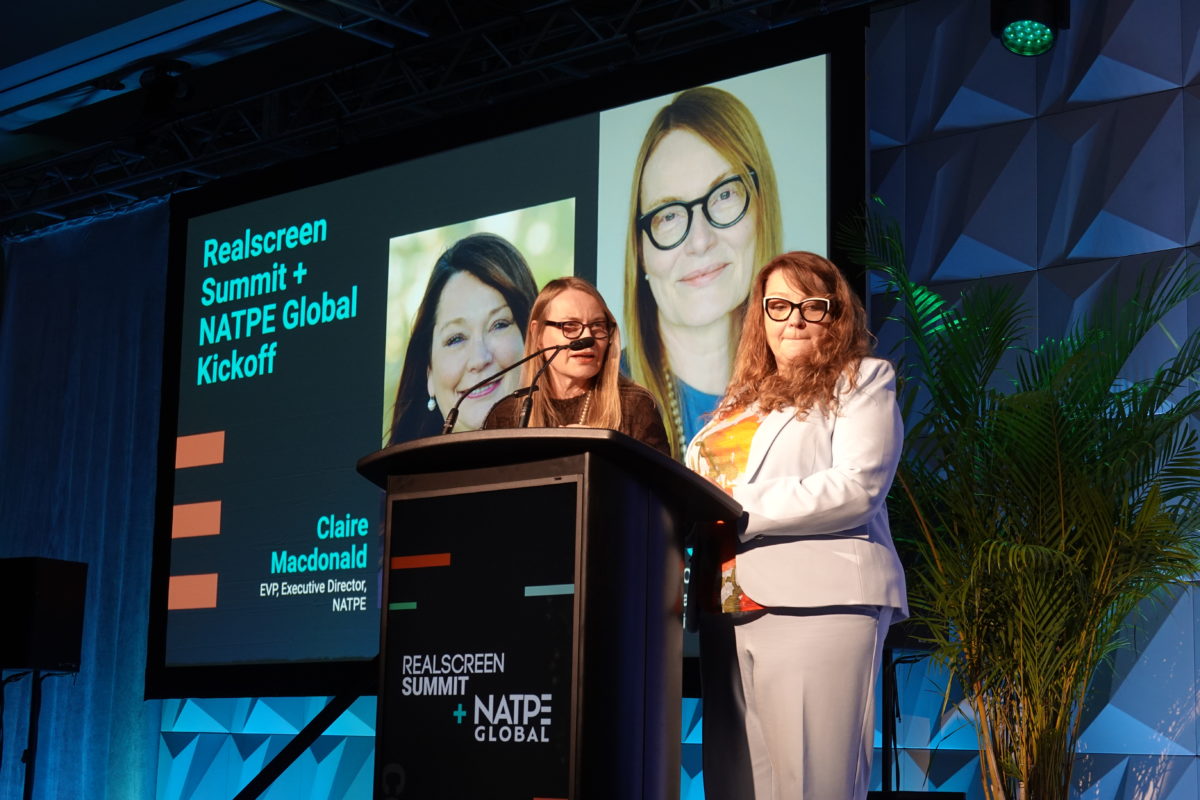
MIAMI — The 2026 edition of NATPE Global, co-located with the Realscreen Summit in Miami the first week in February, made clear that old boundaries are dissolving — between creators and legacy media, between traditional distribution and digital innovation. Delegates from across the production and distribution ecosystem upped the intensity of conversation from deal talk to strategic realignment, with a sharply pragmatic undertone reflecting an industry in transition.

The two events brought three major currents into focus: the growing influence of creator-led brands and platforms; the real-world use of AI to reshape production economics; and the ongoing search for sustainable distribution models across an increasingly fragmented marketplace.

Speakers on a panel on converging platforms said creators, brands and social platforms are converging with studios, streamers and broadcasters to change the way content is financed, produced, packaged and distributed.

“It feels like every day is new,” said Kim Larson, global managing director and head of creators at YouTube. “Every day something’s different, and we’re learning. I’ll tell you, some things are pretty constant when we think about audience behavior, and that is how passionate fans build community in a way that I don’t think everybody’s figured out how to financially unlock yet.”

As an example, Larson pointed to creator Markiplier, whose real name is Mark Fischbach.

“He had a passion project called Iron Lung,” Larson said. “It is a movie he made and self-financed. He spent $3 million on it. He literally went to these theaters and said, ‘Hey, will you show it for me?’ And his community, his installed base of 38 million followers, stepped up. He got in 4,000 theaters with a $21 million opening box office. Nobody thought that was possible. And I think that people are waking up to the power and the financial opportunity that comes with the community.”

In their respective keynote addresses, popular YouTuber Dhar Mann — whose studio’s short-form morality plays have driven massive engagement across social media platforms — and Bell Media President Sean Cohan highlighted the potential for collaboration rather than competition between creator studios and established media.

“There’s this conversation that’s happening that creators are eating traditional media players’ lunch or replacing them at the table,” Mann said. “I don’t believe that whatsoever. I think that there’s this bridge, and the folks who can create the bridge between these two islands are the ones that are going to really win in the long run.”

Mann was joined on stage by Dhar Mann Studios CEO Sean Atkins. The two pointed to value of blending Mann’s social media audience reach and real-time analytics with traditional storytelling expertise and distribution muscle, suggesting a hybrid model where creator content and legacy media can reinforce each other’s strengths rather than operate in silos. Dhar Mann Studios’ own deal with Fox Entertainment is the perfect example, Atkins said: “Our intellectual property is ours, we get to produce the content that’s great for us, we get to work with them on distribution and learn together, and they can exploit the assets on linear television and what-not that we don’t have the capability of doing on our own — it’s a win-win for both of us.”

Subscribe HERE to the FREE Media Play News Daily Newsletter!

Artificial intelligence emerged as both a tactical tool and a strategic imperative during the week. In discussions reflecting broader industry trends, executives such as Albert Cheng of Amazon MGM Studios and Jon Erwin of The Wonder Project framed AI not as a threat but as a partner in enhancing production efficiency, reducing costs, and expanding creative capacity.

“When it comes to all the film and TV series that we have in development, I’ll be sitting in these seats and going, ‘I wish we could green light all of these,’” Cheng said. “’How in the world can we do this?’ And the only way to do this is to figure out how do we lower the costs to make these — because the more we can reduce these costs, the more titles we can get on the service.”

Erwin likened AI to the emergence of digital cinema and CGI. “[It’s] a new set of tools that are very powerful,” he said, “and it’s a set of tools and a certain kind of intelligence that pairs incredibly well with human creativity and just amplifies and accelerates everything you do.”

Other sessions at NATPE focused on practical AI applications — from how studios can leverage machine learning to augment human creativity, to how brands and agencies can use data to tailor content to specific platforms and viewers. Rather than predicting the end of traditional workforce roles, speakers emphasized AI as a force multiplier, enabling smaller teams to produce more content, faster — crucial in a marketplace where the pace of delivery increasingly shapes competitive advantage.

While creator content and AI tools generated the most buzz, the traditional focus on distribution strategy, rights negotiation and monetization remained front and center as well. Distributors and buyers unpacked the escalating complexity of distribution terms — particularly as streaming platforms juggle SVOD, AVOD and FAST channels, and ad-supported tiers — in an effort to maximize reach without sacrificing profitability.

Global buyers at NATPE reiterated the importance of flexibility: the ability to structure deals that span multiple platforms and territories, adapt to shifting performance metrics, and integrate ancillary revenue streams such as FAST licensing or branded content integrations. Distribution execs also noted that linear and digital channels are no longer competing silos, but, rather, complementary components of broad strategies aimed at capturing audience attention where it naturally migrates.

Subscribe HERE to the FREE Media Play News Daily Newsletter!
Albert Cheng, Jon Erwin Talk AI Use at Amazon MGM Studios: Faster, Cheaper, Better

MIAMI — Amazon MGM Studios, which produces original movies and shows for the Prime Video streaming service, is continually looking at new ways to harness AI in the production cycle.

The reason is twofold: to enhance the filmmaking process, and to save money — in the hopes of being able to greenlight more movies and films, and produce them faster and at lower costs.

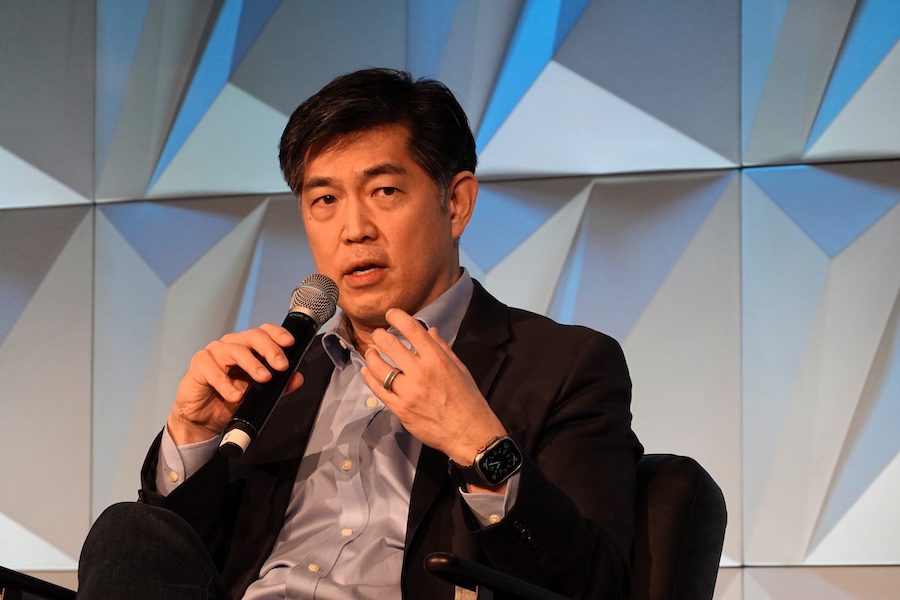
Amazon’s AI initiative was explored in depth Feb. 4 at a NATPE Global panel on which Albert Cheng, who heads AI Studios for Amazon, was joined by Jon Erwin, co-founder of The Wonder Project, the faith-based production company behind the big Prime Video hit series “House of David.”

Cheng talked a little about his 10-year career at Amazon, in which he also headed the studio and oversaw Prime Video in the United States.

“Ten years ago my job was to scale Amazon Studios to be able to produce,” he said. “At the time, we were only doing 16 shows, and we wanted to get to the point where we could do 250 shows released every year and up to about 400 productions at any point in time during the year. And I had to do it in nine months. That’s the thing about Amazon — how do you scale it pretty quickly.

“Now, the weird thing is that I’m asked to figure out how to we do it for less, and faster — which is a very different mindset, because you have to think about what is the impact of technology in that model. And the hard part about it is that in order to get to the transformation, there is a change management challenge. There’s a lot of tech that has to be built before you can even ask any one at our creator partners to adopt AI.

“So part of what I’m tasked to do is to define the new workflows, prove it, and use it as proof of concept to show that we can achieve a high level quality of production at much faster speeds and kind of more cost effective. So it’s very different — I have to be very entrepreneurial again. And we as a studio need to think about how do we scale this across all of our creators that really impact our business.”

Cheng noted that “sitting in the job of Prime Video, you still have a budget constraint on how much content you can invest in. And when it comes to all the film and TV series that we have in development, I’ll be sitting in these seats and going, I wish we could green light all of these. How in the world can we do this? And the only way to do this is to figure out how do we lower the costs to make these — because the more we can reduce these costs, the more titles we can get on the service.

“And the other thing is we are in the television business, and one of the challenges when you’re doing big epic scale television shows like ‘Fallout’ is those shows take 24 months to release one season after another,” Cheng said. “And we all know that over that long a period, you get pretty severe audience attrition, season to season. So you’re looking at your audience go down, season to season, pretty rapidly, because of the time [between seasons], while the costs keep going up. So it’s not economically viable to have a long-running series of that scope. And without AI, it’ll continue down that path.

“AI can help us make these large-scale shows much more economically viable, and we can also get them to release much sooner so that we don’t lose the audience engagement.”

And yet despite advances in generative AI, Cheng said, “what hasn’t changed is the human side. So what we can’t forget is that AI is not a replacement. It is an enhancement. And that’s one of the North Stars that we at Amazon, from an AI perspective, have held us to our principles because as much good as AI is, it still lacks the ability to translate or create things that are authentically human.

“So everything that we do, whether it be writer, director, actor, production designer, costume designer — we believe all these things are very important and critical to the process of making television shows and films. And so we’ll continue to do that. What AI will do is augment it and make things faster.”

Erwin agrees: “Is it a faster way to work? Absolutely. Are there a lot of efficiencies? Is it cheaper? Absolutely. But beyond those two, it’s a more creative way to work. It’s a more collaborative way to work. It’s a new set of tools that are very powerful, and it’s a set of tools and a certain kind of intelligence that pairs incredibly well with human creativity and just amplifies and accelerates everything you do.”

Big theatrical productions such as the “Dune,” “Mission: Impossible” and “Star Wars” movies are becoming increasingly rare in a world where streaming dominates.

“I love these big experiences, but they’ve gotten unsustainable,” Erwin said. “My argument and what I would say is my somewhat contrary point of view is that the primary reason for job loss and lack of green lights is the escalating cost of production, combined with the time of creation. So it takes a long time to create and things have gotten very expensive and if you combine those two things, there’s no green lights, there’s no jobs.

“So I actually see the integration of an AI tool set as an antidote to job loss.”

Partnering with Amazon on “House of David” required making two seasons in 20 months. “So not only did we have to make it cheaper, but we also had to make it faster,” Erwin said. “I had some very, very smart and wise television executives tell me, ‘Jon, we like you, but you’re crazy — not on Amazon. This is impossible what you’re setting out to do.’ And if I had listened to that status quo, there would be no show on Amazon.”

Erwin and his team used generative AI tools to produce many of the show’s visuals, particularly scenes that would have been difficult, and costly, to produce with traditional VFX workflows. In season one, he said, 73 AI-generated shots were used. By season two, the number had grown to upwards of 350.

“By innovating instead of compromising, we made the first season of the show for less than a single episode of some of the larger shows on streaming. So the ROI was great for everyone and we made it way faster. And we also employed 600 people making the show. And those are real jobs.”

Erwin said generative AI is just the latest in a long line of technological tools filmmakers have relied on over the years. He gave a nod to Steven Spielberg, who made film history in the early 1990s when he combined CGI with practical effects on the original Jurassic Park movie.

“So this is simply a new set of tools,” Erwin said. “The interesting thing is the speed in which they’re emerging in the world and how many industries it’s disrupting at once. I still remember the digital camera revolution. I had to learn a different camera every 18, 24 months. But this, if you’re two weeks behind, you’re out. The fascinating thing about ‘House of David’ is that it will actually be this time capsule to show the implementation of the technology, season to season.

“I think the barrier of entry is education and process and fear. So the most important thing for us to do is to engage with it. The worst thing we can do is hide our heads in the sand and hope it goes away, because it’s not going away.”

Subscribe HERE to the FREE Media Play News Daily Newsletter!
Amazon, Prime Video Executives Jay Marine, Albert Cheng Get Expanded, New Roles

Jay Marine, VP of global head of sports and advertising at Amazon, and Albert Cheng, VP of Prime Video U.S., are expanding duties and moving to new senior executive roles, respectively.

Jay Marine

Marine, who joined Amazon in 2022, will assume Cheng’s Prime Video duties, which includes subscriptions and third-party bundling, while continuing his Amazon responsibilities. Cheng, a 10-year veteran at Amazon, will now focus on the company’s growing AI initiatives, according to Mike Hopkins, head of Prime Video & Amazon MGM Studios.

In a staff memo, Hopkins outlined the management consolidation changes as a way to “create bigger roles, flatter orgs and single-threaded leaders” that will improve internal efficiencies at Amazon.

“Placing Prime Video’s full U.S. business under a single-threaded leader … will enable those teams to work faster and even more collaboratively going forward,” Hopkins wrote in the memo.

Albert Cheng

“Alongside our studios tech team, Albert will lead content creation and focus on empowering the very best filmmakers and showrunners to do their most innovative work in AI and — in doing so — create even more high-quality content for customers,” added Hopkins.

Hollywood and tech companies continue to embrace artificial intelligence (AI), with streamers employing the technology in content recommendation, dubbing and reducing production costs.

Netflix this week published generative AI guidelines for content producers that forbid replacing Screen Actors Guild workers without their consent, and stipulated that AI must be used in a secured setting, among other guidelines.

Subscribe HERE to the FREE Media Play News Daily Newsletter!

Amazon Ups Albert Cheng to VP, Prime Video U.S.

Amazon has promoted Albert Cheng to the newly created position of VP of Prime Video U.S. Cheng previously held the chief operating officer title at Amazon Studios, reporting to Jennifer Salke, head of Amazon studios. Cheng now reports to Prime Video CEO Mike Hopkins.

Albert Cheng

In an internal memo to staff announcing the promotion, Hopkins said Cheng would oversee all Prime Video business and operations in the United States, including “tentpole programming strategy, social branding, consumer insights, influencer marketing, media and audience insights, in addition to customer acquisition, retention, and engagement across the SVOD, AVOD and marketplace channels.”

Recent high-profile Prime Video content launches include the debut of original series “The Lord of the Rings: The Rings of Power,” reportedly the most-expensive TV show ever produced and launch of an exclusive 11-year distribution agreement for NFL “Thursday Night Football” — the latter reportedly generating Amazon’s highest-ever viewership rating following the Sept. 15 first game between the Kansas City Chiefs and Los Angeles Chargers. Amazon said it generated record Prime signups over the course of the three-hour game.

“This is a critical role, requiring the ability to think big and to deliver operational results. I can’t think of anyone better than Albert to take it on,” Hopkins wrote in the memo.

Subscribe HERE to the FREE Media Play News Daily Newsletter!

Amazon Studios Shuffles Executives Under New Boss Jennifer Salke

New Amazon Studios CEO Jennifer Salke April 9 announced division management changes, including expanding COO Albert Cheng’s responsibilities to include co-head of television development.

Prior to Salke’s arrival from NBC Universal, Cheng had been interim boss of Amazon Studios following the departure of Roy Price after allegations of inappropriate behavior in the workplace.

“I’m delighted that an opportunity for Albert to be elevated within the Television Studios has been created,” Salke said in a statement. “His business acumen, collaborative nature and clear goals toward continued success make him an invaluable team player as we move forward.”

Cheng’s co-head reportedly will be named in the coming months.

Meanwhile, former Fox TV executive Sharon Tal Yguado was named head of drama after filling to oversee scripted TV programing after Price and Joe Lewis’ departures.

Marc Resteghini was named head of drama, with former department boss Nick Hall named head of alternative programing. Georgia Brown, director of original TV programing in Europe, was named head of U.K.-original scripted television – reporting to Brad Beale.

Heather Schuster and Melissa Wolfe remain in charge of unscripted and kids programing, respectively. Ryan Andolina and Gina Kwon remain jointly in charge of comedy.

From Around the Web