MIAMI — Convergence will play a key role in the evolution of content over the coming years, according to panelists at the Feb. 3 NATPE Global session on the future of content.
Creators, brands and social platforms are converging with studios, streamers, and broadcasters to change the way content is financed, produced, packaged and distributed. And yet one thing that hasn’t changed is storytelling — a good story is still a good story, and that’s at the heart of all successful content.
YouTube creators are known for creating good stories that draw loyal legions of followers. And more and more, their success isn’t limited to YouTube.
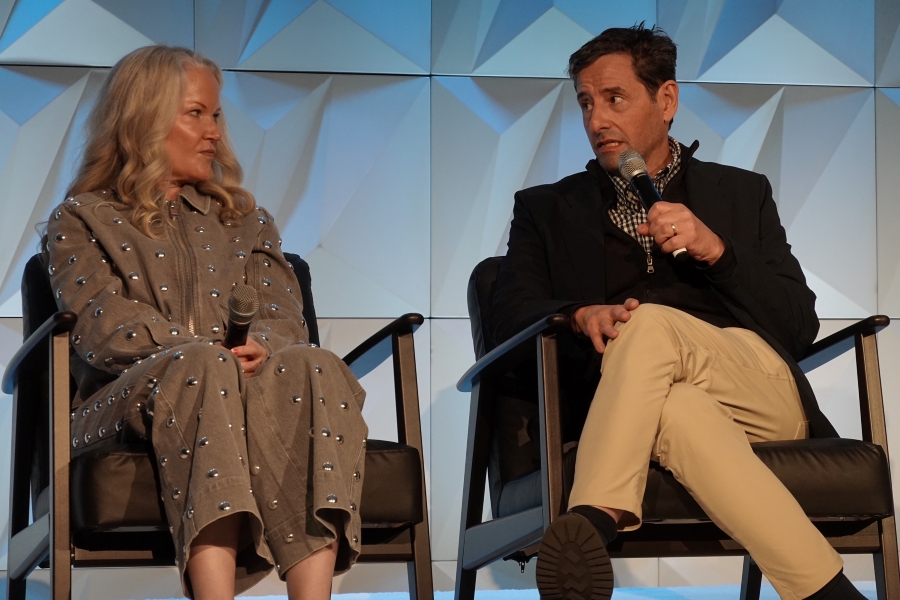
“It feels like every day is new,” said Kim Larson, global managing director and head of creators at YouTube. “Every day something’s different, and we’re learning. I’ll tell you, some things are pretty constant when we think about audience behavior, and that is how passionate fans build community in a way that I don’t think everybody’s figured out how to financially unlock yet.”
As an example, Larson pointed to creator Markiplier, whose real name is Mark Fischbach.
“He had a passion project called Iron Lung,” Larson said. “It is a movie he made and self-financed. He spent $3 million on it. He literally went to these theaters and said, ‘Hey, will you show it for me?’ And his community, his installed base of 38 million followers, stepped up. He got in 4,000 theaters with a $21 million opening box office last weekend. Nobody thought that was possible. And I think that people are waking up to the power and the financial opportunity that comes with the community.”
Subscribe HERE to the FREE Media Play News Daily Newsletter!
On the other hand, Larson added, “when we talk about audience behavior, I think we overestimate the degree to which people discern” about the different types of content.
“Live sports, scripted shows, creator-led entertainment — it’s just what do people want to watch in the moment,” she said. “What is entertaining? What’s going to captivate them? And so we’re just seeing these barriers coming down in a way that is probably scary for a lot of people, but also really fruitful, I think, for the industry.”
Robert Sharenow, president of programming for A+E Global Media, said even though A+E’s content is now available on multiple platforms, including YouTube, choosing content hasn’t changed all that much over the years.
“We look for things that have universal resonance,” he said. “And one of the odd things that I’ve noticed over the last 15 years is that when you look at old media and old platforms, the same things work everywhere.
“We are huge on YouTube in history — our stuff on history kills on YouTube, as does our crime and justice stuff. The things that work translate on every platform. So it’s not this incredible mystery. I think the mystery and the thing that is most exciting are the things that are surprising.
“No algorithm could have ever predicted the success of ‘Heated Rivalry’ (a Canadian sports romance series about two rival professional hockey players whose on-ice animosity conceals a secret romance). And when I took the pitch for ‘Project Runway,’ I was like, ‘Fashion design? Who’s interested in that?’ Boy, was I wrong. It’s a great show, but it’s really about creativity in its heart. And that’s a universal theme.
“It’s the same with ‘South Park,’ which began as two guys in their garage cutting out elementary school students from colored paper. And I do think there are all sorts of unpredictable moment, and a lot of our shows come out of that. Who would’ve thought a show about a pawn shop would be going on 500 episodes?
“Those are the things that get me excited — you just don’t know what’s coming next. Again, for us, we’re a multiplatform company, so we want everything to play everywhere. And it does. So it’s not like the game has changed. You’re still trying to attract a big audience — wherever they are.”
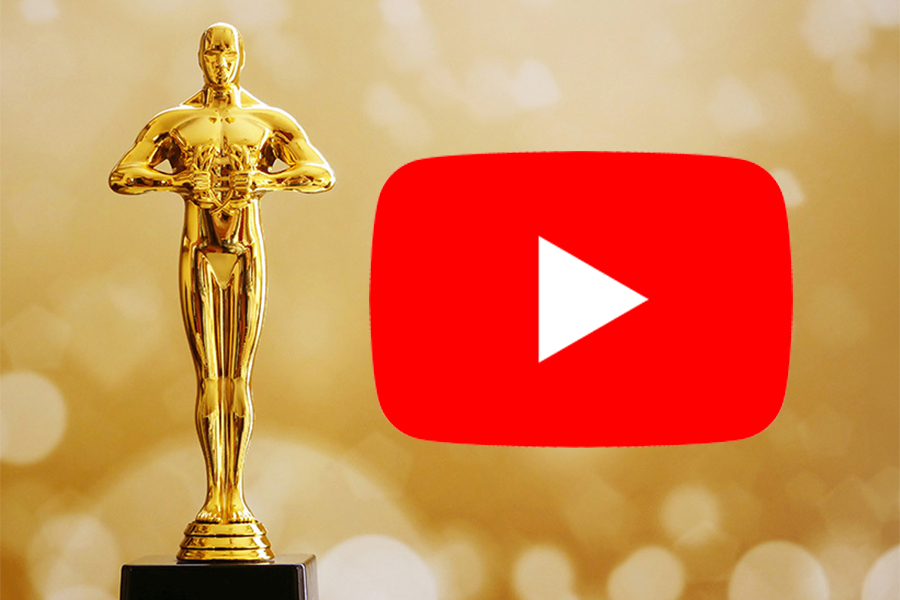
As more platform shifts occur, innovation and originality will become increasingly important, panelists said. YouTube’s Larson said that when the Oscars move to YouTube in 2029, viewers will see a whole new broadcast, including a digitization of the Academy Arts and Sciences Museum “so that we can really celebrate what’s gone before and have a more up-to-date way to consume it.”
Creators hoping to broaden their reach and move their content beyond social platforms must develop “a constructive and intimate relationship with their fans,” Larson said. “And their audiences are infinitely more monetizable. I always tell brands, ‘Hey, don’t just chase the big reach.’ You can get into every nook and cranny in culture and find a creator who does something about, say, vegan Indian cooking, and find their audience there.’”
The most successful creators, Larson said, all have certain common traits. “The first thing you have to do is have a point of view,” she said. “You have to be interesting. You have to be good. And you have to be willing to put yourself out there and package that up in a way that sometimes might be uncomfortable, but that’s endearing to your audience.”
One significant change in how content will be produced — but not how it will necessarily look or feel — is the integration of AI to cut costs, speed up production cycles and give filmmakers more tools to work with.
“I think the future of content is going to look like humans working with traditional workflows, how we’ve done before, but integrating AI in a very smart way, in an efficient way, without losing the story that they intend to do,” said Verena Puhm, head of Dream Lab LA, a Luma AI R&D studio in Los Angeles designed for filmmakers, studios, and artists to explore, experiment with, and integrate cutting-edge AI technology into professional storytelling.
“I think the future of content will include more choices, but also more winners and losers creatively,” said A+E’s Sharenow. “It always ends up being a creative footrace — whatever the disruption is, some people are going to win, some people are going to lose, and it all comes down to the creativity, no matter what we’re talking about. If it’s a micro drama, if it’s YouTube short, if it’s a 20-hour documentary on World War II with Tom Hanks, there are winners and losers in every single bucket.”
Asked about the next evolution for YouTube, from a content perspective, Larson said, “That’s a really hard question. I guess I would say that by giving people tools [like AI], we are now lowering the barrier of entry for all kinds of new content. So everything in here that everyone thinks is content, I think that’s going to be redefined because what those tools are enabling is me, you, you, you, you to all tell stories in really compelling and professional ways. And that is going to unlock something. I don’t know what that something is, but that is going to unlock a whole new generation of storytellers.”
Subscribe HERE to the FREE Media Play News Daily Newsletter!