
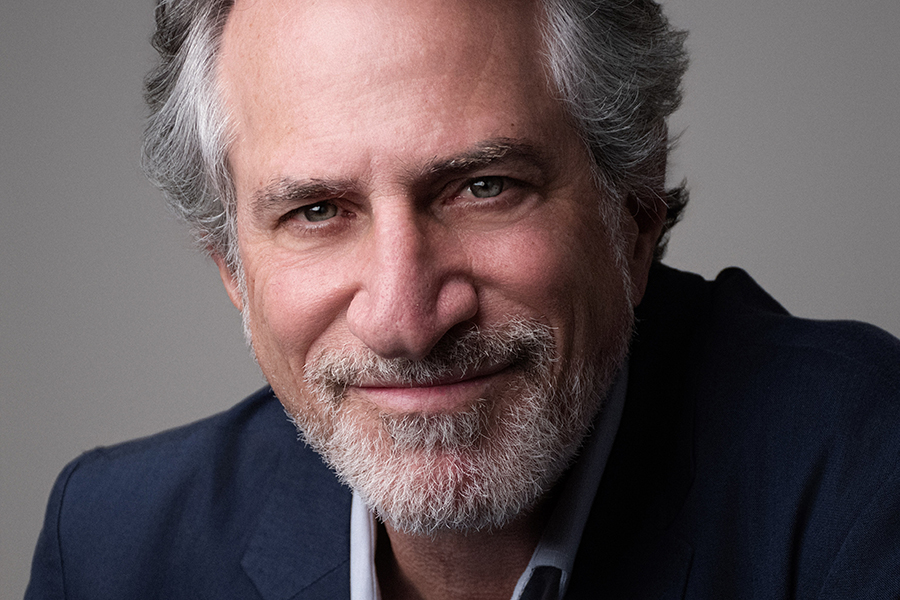
Garson Foos, CEO, Radial Entertainment (Photo by Cam Thrower)



October 27, 2025




Consolidation in Hollywood is hardly a new phenomenon. We’ve seen it unfold for decades, from the studio system’s slow unraveling to the cable roll-ups of the 1980s and ’90s, and, more recently, the digital land grabs that saw Netflix, Disney and the other big streamers rise to prominence and dominance.
But on the eve of the 2025 American Film Market confab, what fascinates me most is how consolidation is no longer just the purview of the majors. It’s now reshaping the independent film and television distribution landscape in ways that could have an equally profound impact on how content is acquired, monetized and ultimately consumed.
Case in point: the formation of Radial Entertainment, a new super-indie that was created in July through the merger of Shout! Studios and FilmRise under the auspices of private-equity giant Oaktree Capital. On paper, it’s a marriage of convenience. Shout! has a rich history of curating cult classics, fan-driven physical media, and disciplined multi-platform licensing. FilmRise helped ignite the AVOD/FAST revolution, leveraging data and scale to pump under-monetized libraries into every nook and cranny of the ad-supported streaming universe. Together, the two companies boast a staggering 70,000 titles, multiple robust revenue streams, and a management team that seems eager to prove that one plus one can, in fact, equal three.
I’ve been covering this business long enough to know that mergers are rarely seamless. Integrations are messy. Cultures clash. Redundancies get weeded out. But listening to Radial CEO Garson Foos lay out his vision, it’s clear this isn’t simply about cutting costs or bolting together two disparate outfits. It’s about building a scaled distribution engine nimble enough to play in multiple sandboxes: physical, digital, transactional, subscription, ad-supported and FAST. In an industry where the majors are retreating from risk, Radial sees opportunity in niches — genres, cult libraries, true crime series — that might not excite Disney or Warner Bros. Discovery, but which deliver dependable audiences across platforms.
Foos, of course, is no stranger to reinvention. He helped guide Shout! Factory through the DVD boom and the streaming pivot, always with an eye toward under-the-radar content that turned out to be far more valuable than the market assumed. “Freaks and Geeks,” “SCTV,” “Mystery Science Theater 3000” — these weren’t tentpoles in the traditional sense, but they generated passionate fan engagement and real revenue. FilmRise operated with a similar instinct, albeit turbocharged by data, turning such shows as “Forensic Files” and “Unsolved Mysteries” into evergreen AVOD staples. Together, the bet is that Radial can mine overlooked IP, then deploy it across every imaginable platform.
I find that the most interesting angle here. We’ve entered a moment when Hollywood’s biggest players are pulling back, tightening belts, and questioning streaming’s economics. Yet independents, historically the scrappy survivors, are embracing scale and diversification. They’re not trying to out-Netflix Netflix, but rather to play the gaps — global territories hungry for genre fare, FAST channels that need volume, transactional buyers still willing to pay for quality restorations, even collectors clamoring for boutique 4K editions.
Will it work? Foos thinks so. He’s predicting Radial will double in size within three years, fueled by smart acquisitions and international expansion. It’s a bold call, but one rooted in the same philosophy that’s guided independents for decades: find value where others don’t bother to look, and squeeze every possible ounce of revenue from it.
For all the talk of streaming wars and studio retrenchment, the Radial story reminds us that the middle class of content still matters. In fact, it may be the most important story of all. Because while Hollywood’s giants wrestle with Wall Street, it’s companies like Radial that are quietly keeping the pipes filled.