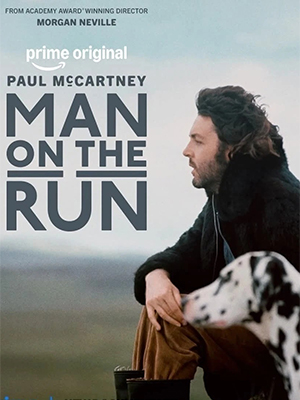
Man on the Run

STREAMING REVIEW:

Prime Video;
Documentary;
Rated ‘R’ for language.
Narrated by Paul McCartney.

Director Morgan Neville’s new documentary Man on the Run is not just another retrospective of a musical icon; it is an intimate study of a man navigating the wreckage of the biggest breakup in history. Neville, known for his keen ability to strip away the celebrity veneer to find the human ache beneath, approaches the 1970s not as a triumphant second act, but as a grueling period of survival for Paul McCartney.

The film skillfully clarifies the messy reality of the Beatles’ final days, moving beyond the public narrative that painted Paul as the villain. It was John Lennon who first walked away, famously mentioning in the film, “It’s kind of exciting. It’s like telling someone you want a divorce.” In the immediate wake of that collapse, Paul began to spiral, falling into a dark, heavy period of isolation and drinking as the foundation of his life disintegrated. It was his wife, photographer-turned-musician Linda Eastman, who became Linda McCartney, who became his inseparable partner in family, work and life — a grounding force who provided the steadying love he needed to save him from a total descent. Together, they sought a radical refuge from the industry pressures of London, retreating to the quiet, rugged hillside of a remote farm in Scotland to start over. There were even months of rumors regarding Paul’s death since he vanished from public view.

It was within this newfound domestic peace that the legal battles took center stage. With the help of the Eastman family’s legal prowess, Paul fought to liberate himself from the suffocating grip of manager Allen Klein — a man McCartney deeply mistrusted — while John remained an ardent supporter of Klein’s. Because Paul was the one forced to litigate to protect his creative future, the public backlash fell squarely on his shoulders, blaming him for killing the band he once thought would last forever.

The tension was exacerbated by the shift in their bond; what had begun as a pure teenage friendship had calcified into a fraught business partnership, and the strain of the Beatles’ dissolution threatened to cause a schism. They were divided by the influence of Klein, with each holding deeply entrenched views. Yet, as Sean Lennon deftly states in the film, their chemistry was so profound because “it was like they were two halves of the same person — a kind of mirrored genius that couldn’t exist without the other, even when they were trying to tear each other apart.” Man on the Run poignantly reveals the eventual thawing of that tension: John eventually acknowledged that Paul had been right about the business, and Paul shares how deeply meaningful it was to reclaim his friend before John’s life was tragically cut short.

What sets this film apart is that it never feels like a curated puff piece or a piece of manufactured truth; it feels startlingly real. Neville allows the edges to show, and even Paul is candid about the humble, experimental beginnings of his solo career. Reflecting on the transition from the world’s biggest band to his early solo efforts, Paul admits in the film, “Wings wasn’t exactly Sgt. Pepper, we were just playing around.” It’s this self-deprecation that gives the film some of its soul.

One of the most compelling takeaways is the psychological unraveling that followed. The film suggests that Paul’s legendary workaholism wasn’t just blind ambition; it was a form of running from the trauma of losing his mother at age 14. He sought refuge in the studio, in songs, because it was the only place he felt understood and secure. As Paul reflects on that period of transition and the public perception of his culpability, he admits, “My only plan is to grow up.”

The documentary gains significant emotional weight through Sean Lennon’s participation. His presence acts as a bridge across time, offering a perspective that feels both objective and deeply empathetic. Reflecting on the complex bond between his father and Paul, Sean adds, “They were like brothers who had been through a war together, and no one else could really understand that except for them.” Sean also provides the necessary grace regarding Paul’s famously awkward “it’s a drag” comment following John’s assassination, contextualizing it not as coldness, but as the reaction of a man in deep, paralyzing shock.

Watching this, one realizes that the Wings era was less about topping the Beatles and more about Paul simply learning to stand on his own two feet. The climax, framed by the raw power of “Live and Let Die,” captures that exact moment of letting go — a farewell to the ghost of the band and an acceptance of his own future. By the time the credits roll, Neville has successfully peeled back the layers of the myth to show the man behind it. It is a portrait of a class act, someone who lived through profound loss — enduring both the bitter collapse of his closest bonds and a cold displacement from his own life’s work — only to emerge on the other side by burying his grief in the only thing he knew how to do: create. Ultimately, this film is a reminder of why McCartney is likely the greatest songwriter of all time — not just for the hits, but for the resilience he wove into every measure.

Subscribe HERE to the FREE Media Play News Daily Newsletter!

Entertainment in a Brand World

For a century, the relationship between brands and entertainment was simply transactional. We called it “the commercial break.” Brands paid for the privilege of interrupting our stories, hoping that a short intrusion would earn enough loyalty to move a product off the shelf.

That era is dead.

Rob Tonkin

In a world of infinite choice and zero patience, “interruption” has been replaced by “destination.” Hollywood’s gatekeepers no longer hold the exclusive deed to the “greenlight.” The power has shifted to those who hold the capital and the culture. Today, the most ambitious stories aren’t always being told by studios seeking a box office hit; they are also being told by brands seeking a soul. We have moved from Sponsorship to Studio. The future of entertainment is self-liquidating: a world where the “ad” is so valuable that the audience pays to see it, shares it, and lives within it.

Product to Personality

To understand this evolution, we must first redefine the “brand.” In the 20th century, a brand was a product or a service — a static promise of quality. Today, a brand is a living entity, and products have personalities. It can be a corporate giant like Nike, a person like Tom Brady or Pharrell Williams, or a personality like the unhinged Duolingo owl. Even a meme — a fleeting unit of cultural energy — is a brand.

In a brand world, “celebrity” is the marketing department, and the “product” is the ticket to entry. Whether it is a luxury house, a creator on OnlyFans, or a viral joke, a brand is simply a vessel for a story that people want to belong to.

Long-Form Narrative

In the early decades of the 20th century, the airwaves were a quiet, experimental frontier. When radio began to hum to life in living rooms across America, the relationship between commerce and art was a subsidized arrangement. Families would gather around a heavy wooden cabinet, waiting for the vacuum tubes to cast a warm amber glow behind the dial. As the static cleared, a human voice would emerge, but it wasn’t alone.

Procter & Gamble and Colgate-Palmolive didn’t just want to sell soap; they wanted to buy time. They understood that if they provided the capital to keep the “lights on,” they could whisper their messages during the intermission. This was the dawn of the “age of the patron,” a time when the “soap opera” was engineered — not in a writers room in Hollywood, but in the marketing departments of household cleaners. The brand was the silent landlord of the airwaves, happy to stay behind the velvet rope as long as the sponsor’s name was on the marquee.

As the century turned toward the neon glow of the 1980s and ’90s, that polite distance began to dissolve. Brands realized they could no longer just stand next to the story; they had to become a character within it. This was the “age of the guest.” Pepsi-Cola shattered the mold by taking massive leaps, betting millions on icons like Michael Jackson and Britney Spears to create commercials that felt like high-budget music videos rather than sales pitches. This spirit reached a fever pitch when a bag of Reese’s Pieces became a literal plot point in Steven Spielberg’s E.T. Soon, brands weren’t just guest starring in films; they were building their own traveling festivals. We saw the rise of music sponsorship, in which the brand was the curator of the experience. The Vans Warped Tour and the Honda Civic Tour weren’t just logo placements; they were fully integrated cultural movements. Fans didn’t feel “advertised to” — they felt like they were part of a brand-sanctioned tribe. The product became the subculture’s parallel.

By the mid-2000s, Red Bull took this further, proving a brand could become a global media conglomerate. Through Red Bull Media House, they didn’t just sponsor extreme sports; they owned the record labels, the film studios, and the cultural events themselves. When Felix Baumgartner jumped from the edge of space, the world didn’t see an advertisement; they saw a brand-owned intellectual property that generated its own revenue. The marketing had begun to self-liquidate.

In 2026, we have entered the Age of the Architect. High-level entertainment executives have moved from major studios into corporate roles at retail giants like The Gap. They aren’t there to make and buy spots; they are there to treat a clothing line like a media franchise. In this landscape, traditional talent agencies like CAA and WME have reinvented themselves as “venture architects,” building equity-based empires for talent that bypass the traditional studio “greenlight” entirely.

This shift has signaled the death of the traditional brand ambassador. The static, polished celebrity spokesperson of the past has been replaced by the influencer — a cultural translator who doesn’t just “pose” with a product, but integrates it into a raw, daily narrative.

However, the most radical shift in this new world is the move from “polished perfection” to the “friction economy.” Brands have discovered that in a world of infinite content, the only way to pierce the cynicism of the scroll is to create a moment of genuine, jagged discomfort. This is the weaponization of rage-baiting and cringe-baiting. A “brand studio” today might release a sixty-second “prestige mini-drama” in which the protagonist commits a social “crime” — perhaps wearing socks with sandals or eating pizza with a fork. The “rage” ignites the algorithm, as thousands flood the comments to correct the behavior, inadvertently catapulting the video into the feeds of millions. To seal the deal, the brand leans into the “cringe,” releasing content so intentionally awkward or “unhinged” that it bypasses consumers’ defensive filters.

As the public grows weary of algorithmic feeds, the conversation is moving underground into “shadow channels” — platforms like Patreon, Fansly, and OnlyFans. This is the most complex frontier of the brand world. These platforms were pioneered by an explicit, adult industry where “shadow culture” mastered the art of the one-to-one connection. It is a dark and direct economy where pornographic enablers proved that intimacy is the ultimate self-liquidating product.

The infrastructure for this new world is the “digital mall.” Streaming giants like Netflix and Amazon have become the malls — neutral spaces providing the infrastructure for traffic — while FAST Channels (free ad-supported streaming TV) and social media act as the storefronts. While these entities exist on different technical planes, they function as a single economic ecosystem: Streamers provide the “real estate” of attention, while brand-owned channels and social feeds serve as the dedicated “storefronts” where the actual transaction of culture — and commerce — takes place. We see this play out with “anchor tenants” who no longer wait for a network invite. Red Bull TV owns its own 24/7 channel on Roku and Vizio, while Starbucks Studios places its “flagship store” inside the Netflix mall to capture a massive reach. Even in gaming, Nike built Nikeland as a persistent boutique within the virtual mall of Roblox.

In the gaming worlds of Fortnite and Roblox, this cycle completes itself. Players now pay real money for digital “skins” to fit out their avatars in Nike or Balenciaga. The “ad” has become a profit center. The space between a “cringe” laugh and a checkout button has evaporated.

The brands that succeed are those that realize they must act like studios first and marketers second. They must protect the narrative — even the uncomfortable parts — at all costs. The most successful entertainment company of 2030 may not be a legacy studio in Los Angeles; it might be a brand — whether it is a person, a product, or a meme — that finally realized it was a storyteller all along.

Survival of Art

The risk is that the production feels too contrived — where the corporate influence becomes overly obvious, and the art seems like just a checklist. But in today’s friction economy and era of private access, true authenticity isn’t about the perfect pitch; it’s often found in the imperfect moments. When a brand can get past its own “cringe” and find a place in your private subscription feed, it stops feeling like an outsider. Instead, it becomes a meaningful part of the story you tell about yourself.

Subscribe HERE to the FREE Media Play News Daily Newsletter!

His & Hers

STREAMING REVIEW:

Netflix;
Thriller;
Rated TV-MA.
Stars Tessa Thompson, Jon Bernthal, Pablo Schreiber, Rebecca Rittenhouse, Sunita Mani, Crystal Fox, Marin Ireland, Poppy Liu, Chris Bauer.

Netflix’s “His & Hers” is a sharp and engaging limited series (six 45-minute episodes) that retools the traditional small-town murder mystery into a study of domestic wreckage and professional rivalry. Set in the humid outskirts of Atlanta in Dahlonega, the story tracks a high-profile newscaster who, after a year of exile following the death of her infant, returns to her job and hometown to investigate murders involving her childhood friends. It is a sleek, industry-focused noir — a style that uses dark, cynical themes but polishes them with high-end production to show the cutthroat nature of the news media world. While it doesn’t reach the level of prestige series such as “Breaking Bad” or “Ozark,” it features a powerhouse cast and top-tier production, making it an addictive, “guilty pleasure” thriller.

The series avoids the sterile, “catalog-ready” look of many streaming mysteries. Instead, showrunner and British film and theatre director William Oldroyd uses gritty, tactile realism. You can practically feel the Georgia heat and the mess of the grieving households, which makes the small-town setting feel less like a safe haven and more like a weaponized trap. The show is a major project for Freckle Films, the banner led by Jessica Chastain, who partnered with Fifth Season — the studio behind “Severance” — to ensure the show looks expensive and cinematic, even when the plot gets “theatrical.”

Tessa Thompson holds the mystery together as Anna Andrews, a woman caught between professional ambition and personal ruin. Thompson, who you might recognize from her roles as Valkyrie in the Marvel Cinematic Universe and Bianca in the “Creed” franchise, brings a grounded, volatile energy to Anna. Opposite her, Jon Bernthal provides a necessary anchor as Jack Harper, Anna’s estranged husband and the lead detective. Bernthal is a veteran of intense, character-driven action, having led Marvel’s “The Punisher” and played the unforgettable Shane in “The Walking Dead.” Bernthal makes it work despite his character being deeply flawed and making several missteps.

The “juice” of the show is the web of infidelity: Jack slept with a murder victim, and Anna retaliated by sleeping with Richard (Pablo Schreiber), the cameraman husband of her professional rival. Their interracial dynamic is handled naturally, focusing on the remains of a broken marriage — defined here as the total emotional and structural collapse of a private life — rather than social tropes. By casting actors of Thompson and Bernthal’s stature, the production ensures that these messy, personal betrayals feel like high-stakes drama rather than simple tabloid fodder.

The supporting cast keeps the pacing lean, tracing a group of characters still stuck in high school pecking orders. Rebecca Rittenhouse shines as Lexy Jones, the rival newscaster who changed her name from Catherine Kelly to bury a past of being severely bullied for being fat. Her transformation from a victimized outsider into a thin, ruthless competitor highlights the theme that you can’t outrun your origins. Joining the investigation is Sunita Mani, known from “Glow” and “Mr. Robot,” as Detective Priya, Jack’s partner. Mani plays a vital role as the team player who throws us off; as a secondary sleuth, she often casts doubt on the primary investigation, keeping us wondering if the detectives themselves have something to hide. While the series occasionally goes over the top — like a grandstanding news report where you’ll want to yell at the mayor to grab the mic — the acting keeps you invested.

“His & Hers” isn’t perfect, but it respects our time by delivering a fast-paced, intentionally misdirected story that is worth watching.

Subscribe HERE to the FREE Media Play News Daily Newsletter!
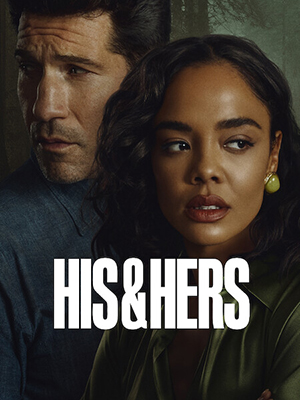
In Waves and War

STREAMING REVIEW:

Netflix;
Documentary;
Not rated.

The men who comprise the Navy SEALs are defined by an elite, almost superhuman physical standard. Yet the documentary In Waves and War — directed by the award-winning team of Jon Shenk and Bonni Cohen — reveals the hidden cost of that excellence. Now streaming on Netflix, the film follows these soldiers on a mission to find relief from the pain of traumatic brain injury and PTSD.

Shenk and Cohen, known for their Emmy-winning and Oscar-nominated work like Athlete A and Lead Me Home, were hand-selected for this project in 2019 by the late Diane Weyermann of Participant Media. Weyermann was profoundly moved by the story of the Navy SEAL’s Capone family and believed the directors’ history of navigating dark, sensitive subjects made them the perfect fit.

Beyond the scars of combat lies a near-addiction to the adrenaline of the mission, leaving many of the featured soldiers struggling with behavioral issues they’ve long attributed to the fog of war and the unknown of multiple tours of duty. It is a cycle of “drug cocktails” and standard military recovery that offers little more than a temporary bandage, until Amber Capone pushed her veteran husband, Marcus, to seek a radical alternative: ibogaine.

Ibogaine is a powerful alkaloid derived from the Tabernanthe iboga shrub, used for centuries in Central African spiritual rites. Its potential was discovered by the West in 1962 by Howard Lotsof, who found it ended his heroin withdrawal. Despite its perceived benefits as a tool for neuroplasticity — allowing the brain to “unlock” and process deep-seated trauma — it remains illegal in the United States. Placed on Schedule I in 1970 due to cardiac risks, specifically its ability to interfere with the heart’s electrical signaling, it forced the film’s subjects to seek treatment at the Ambio Life Sciences clinic in Baja California, Mexico.

This journey caught the attention of Dr. Nolan Williams, director of the Stanford Brain Stimulation Lab. Dr. Williams initiated an observational study to monitor these men before and after their treatment. By partnering with the Capones’ nonprofit, VETS (Veterans Exploring Treatment Solutions), they tracked 30 veterans through a protocol that combined ibogaine with magnesium to protect the heart. The results were dramatic, with researchers seeing an 88% reduction in PTSD symptoms and a total elimination of suicidal ideation.

As the film progresses and the men describe being “unlocked,” a startling common thread emerges. The primary breakthrough for these soldiers isn’t the trauma caused by war, but the childhood trauma they each recognize during the treatment process. This realization prompts a deeper, more uncomfortable question: Does childhood trauma draw these men to the SEAL program in the first place? For those of us who have endured our own childhood trauma and the resulting difficulties with relationships and addictive behaviors, it’s hard not to see a pattern. It suggests that the “elite” path might actually be a form of avoidance — a way to replace internal chaos with a high-stakes external “reprogramming” that provides the high degree of excitement needed to drown out old ghosts.

Perhaps the most jarring element of the film is watching this rigid military machismo break down. These men have been conditioned to be ultimate instruments of stoicism, but as they enter the process, the “tough guy” armor doesn’t just crack, it dissolves. They become incredibly emotional, confronting the very vulnerability they were trained to suppress. The ibogaine acts as a chemical sledgehammer to the ego, forcing a breakdown of the hyper-masculine facade to reveal the wounded child underneath.

While the film is emotionally resonant, it is not without its flaws. As a piece of storytelling, it can be confusing to identify the couples or keep them straight as it’s happening, as appearances in childhood photos and combat flashbacks vary significantly from current-day interviews. The directors cleverly use flowing animation to depict the involuntary, internal hallucinations of ibogaine journeys, offering a vivid window into their recollections of the experience, into their minds. While the point is effectively made that the drug “works,” the narrative stays focused on the chemical jolt. It offers very little insight into the intensive therapy and the grueling daily work required to maintain that progress once the initial effect wears off. It is a powerful look at a “miracle” cure, but it leaves the viewer wondering about the long, quiet struggle of recovery, self-discovery, and the healing that must follow.

Landman: Season 2

STREAMING REVIEW:

Paramount+;
Drama;
Not rated.
Stars Billy Bob Thornton, Ali Larter, Jacob Lofland, Michelle Randolph, Paulina Chavez, Kayla Wallace, Mark Collie, Guy Burnet, James Jordan, Colm Feore, Demi Moore, Andy Garcia, Sam Elliott.

In the sprawling, sun-scorched expanse of the Permian Basin — that massive sedimentary deposit in West Texas and Southeastern New Mexico that serves as the beating heart of the American energy empire — Taylor Sheridan has found his latest industrial altar. Season two of “Landman” arrives not just as a continuation of a story, but as a reinforcement of the “Sheridan Formula”: a potent cocktail of blue-collar philosophy, industrial espionage, and the kind of high-gloss artifice that only a massive budget can buy. To understand the series’ relentless entertainment, one must look at the architect himself. Sheridan’s rise to the heights of modern episodic storytelling is the stuff of Hollywood legend; a former actor who pivoted to writing with a visceral trilogy — Sicario, Hell or High Water and Wind River — that reclaimed the American West. Today, he is a prolific tycoon, commanding big stars and bigger budgets by giving the “flyover” heartland a cinematic voice that is simultaneously grounded and operatic.

The second season launches with a seismic shift in the corporate landscape. The ruthless tycoon Monty Miller (Jon Hamm), whose heart finally gave out at the end of the first season, is gone, leaving a power vacuum that Tommy Norris (Billy Bob Thornton) and Monty’s widow, Cami Miller (Demi Moore), must scramble to fill. Now elevated to the presidency of M-Tex, Tommy’s world has expanded from the mud of the oil patch to the leather seats of a corporate jet. He spends the season commanding the skies and his Ford-tough pick-up truck, shuttling relentlessly back and forth between the grit of Midland, the gleaming skyscrapers of Fort Worth, and points in between.

There is a fascinating contradiction at the heart of this production that mirrors the oil business itself. Sheridan has a penchant for casting legends who seem to have embraced the modern Hollywood “look” — from massive Botox and facial reconstructions to showcased boob jobs and meticulously restored hairlines. Yet, despite this aesthetic fakery, “Landman” drips with authentic grit. We follow Tommy as he chain-smokes his way through the stress, navigating a hierarchy that feels like a modern-day caste system. This world becomes even more dangerous with the arrival of Gallino (Andy Garcia), a slick criminal vulture who circles the vulnerable M-Tex like a shark. Garcia plays him with a predatory charm that makes every boardroom scene feel like a hostage negotiation. The season leans heavily into industrial espionage, portraying the high-stakes race to control geological data and bury the $400 million insurance secret regarding Monty Miller’s abandoned offshore well before rivals can use it as leverage to dismantle the company.

For those of us uninitiated in the Texas oil business, season two is a thrilling, educational adventure that shows us how the gears break. Throughout this journey, the legendary Sam Elliott serves as the vital presence of T.L. Norris, Tommy’s estranged father. While he is a constant thread, he enters the fray more prominently following the death of Tommy’s mother, Dorothy. Tommy’s outward reaction is one of cold relief — a survival mechanism born from a traumatic childhood — but T.L.’s presence forces a reckoning with that history, acting as a calming force that balances Tommy’s frantic energy.

This season also highlights a sharp contrast between the “rig grit” of the roughnecks and the “boardroom grit” required to survive the corporate shark tank. Demi Moore’s Cami Miller proves a woman can become a total badass in her own right, asserting dominance in the boardroom.

Adding a different kind of flair is the introduction of a new geologist, Charlie Newsom, played by Guy Burnet. Burnet brings a disarming energy and a now-famous mullet to the role, but one has to wonder if the name Newsom was slipped in for political reasons — a subtle, Sheridan-esque jab given the show’s West Texas setting. He quickly becomes the romantic focus of Rebecca Falcone (Kayla Wallace), a fierce young corporate liability lawyer. Rebecca isn’t looking for a mentor; she is cocky enough to think she can handle the patch with or without help. This creates a delicious friction as she is thrown together with the more experienced corporate lawyer Nathan (Colm Feore). They don’t so much collaborate as they spar, with Rebecca’s modern audacity clashing against Nathan’s patronizing, old-school legal tactics. Their world is further colored by the political climate of the region; Trump is mentioned a few times, and his influence surfaces in petty but telling ways — like the ongoing debate over whether to refer to the “Gulf of Mexico” or the newly branded “Gulf of America.”

Amid the industrial chaos, a softer yet no less complex theme emerges through Cooper Norris (Jacob Lofland) and his earnest quest for stability. Cooper’s desire to get married to his girlfriend, Ariana (Paulina Chávez), becomes a central pillar of his arc — a desperate attempt to anchor himself to a “normal” life while the world around him remains volatile. This craving for a traditional home is ironically juxtaposed against the bizarre “dormitory” man-camp at Tommy’s house in Midland. This residence functions as a glorified frat house where Tommy, Dale (James Jordan), and Nathan live like aging college roommates. The domestic structure is routinely shattered by chaotic, over-the-top themed dinner parties — like the infamous “Pirate Dinner” — that feel more like bacchanals than family meals. In this environment, privacy is a non-existent luxury; it’s not random women in the halls, but the constant presence of Angela (Ali Larter) and Ainsley (Michelle Randolph) — specifically Ainsley, whose striking confidence stops the men in their tracks — that keeps the domestic energy high-strung.

It is this frantic, Midland dormitory life that Angela is hell-bent on escaping. She is determined to up the ante, eyeing massive mansions in Fort Worth to distance herself from the Midland dust and secure a different kind of status. Her focus is entirely consumed by her “mini-me” daughter, Ainsley, who is headed to Texas Christian University (TCU) with singular dreams of becoming a star cheerleader. The move to Fort Worth is driven by the prestige of this religious institution, though it leads to a disastrous interview with the admissions director. During the exchange, Ainsley’s “athletic ascent” is revealed to be less about academic rigor and more about a bizarre “red-pill” theory regarding “super-babies,” a debate the director clearly finds repulsive despite the fact that Ainsley is ultimately admitted simply because the school needs her on the cheer squad. While the men are mired in the grit of the patch, Angela and Ainsley remain the show’s primary friction points, their ditzy shenanigans serving as a silly, sometimes pointless distraction.

Part of the “Sheridan Formula” is his blatant recycling of his favorite actors. James Jordan is the ultimate “Where’s Waldo?” of this universe, while Michelle Randolph and Billy Bob Thornton both have roots in the “Yellowstone” prequels. Ultimately, Sheridan’s genius lies in his unapologetic embrace of the obvious. He knows exactly how to play up clichés and weaponize the familiar. Viewers flock to his shows because he transforms the predictable into exaggerated drama, expertly packaged in layers of industrial grime.

As the story moves through catastrophes and legal firestorms, the pressure remains relentless. By the time we reach the finale, “Black Gold,” it’s clear that season two is less about the oil itself and more about the human cost of extraction.

Looking ahead to season three, one has to wonder if Sheridan’s ambitions aren’t larger than any single studio. Though his massive move to Universal isn’t slated until 2029, the trajectory is already clear; with a Midas touch that has produced an unprecedented volume of popular formulaic content, he seems to be vying for his own network. “Landman” is proof that Sheridan knows exactly how to drill for the cultural zeitgeist. It is a show of contradictions — fake faces in a real world, elite wealth built on immigrant sweat — but it remains a relentless ride that refuses to let go.

Subscribe HERE to the FREE Media Play News Daily Newsletter!
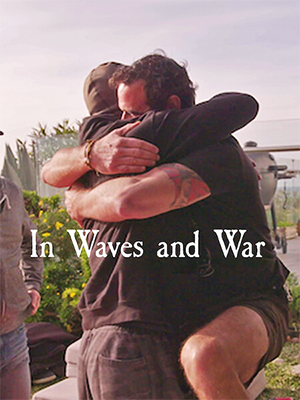
Accused: The Karen Read Story

STREAMING/TV REVIEW:

Lifetime;
Drama;
Not rated.
Stars Katie Cassidy, Luke Humphrey, Sebastien Roberts, Morgan Donald, Kurt Evans, Benita Ha.

In the flickering blue light of a streaming Lifetime movie, the January blizzard feels less like a weather event and more like a cover for a conspiracy. Accused: The Karen Read Story takes us into the heart of Canton, Mass., where the air is thick with local politics and old loyalties. The film centers on Karen Read, portrayed by Katie Cassidy, whose performance anchors the entire docudrama.

While Cassidy is often labeled “Hollywood royalty” as the late David Cassidy’s daughter, her path was paved with independence rather than privilege. She famously didn’t meet her biological father until she was in elementary school and was later left out of his will. Her success is entirely self-made; moving out at 18, she self-funded the acting classes that led to her reputation as a modern “Scream Queen.” Many fans will recognize her from her early pivotal role in the 2008 blockbuster Taken, where she played Kim’s ill-fated friend, Amanda — a performance that helped launch her into major television runs like “Supernatural,” “Gossip Girl” and her long-standing breakout as Laurel Lance (Black Canary) in “Arrow.” This tenacity makes her a perfect fit for a character fighting an uphill battle against an entrenched establishment.

The story itself is a “ripped from the headlines” dramatization of the death of Boston police officer John O’Keefe, played by Luke Humphrey. Humphrey, who previously showed his dramatic range in I Was Lorena Bobbitt, brings a sense of gravity to the role, though the on-screen romance between him and Cassidy feels a bit thin. The story begins with a warning that goes unheeded: Karen’s father explicitly tells her not to go out into the impending storm that night. Despite this, scenes unfold into a night of excessive indulgence. As a viewer, you almost feel drunk just watching the sheer volume of shots and cocktails consumed by this group. It is genuinely unsettling to see how much alcohol is poured before these individuals climb into their heavy vehicles to navigate a blinding snowstorm.

As the story progresses, the official version of events — that Karen struck John with her SUV and left him to die — begins to feel increasingly hollow. Instead, the film invites the viewer to look at the shadows within the house on Fairview Road. The tension in their social circle is palpable, fueled by flashbacks to a volatile relationship. The film weaves in the compelling forensic argument that John’s injuries were not caused by a vehicle. Real-life reports from forensic pathologists, such as Marie Russell, highlight that the deep, parallel lacerations on John’s arm are a near-perfect match for a large canine attack. It isn’t hard to imagine a confrontation involving the homeowner, who had been “flirt texting” with Karen weeks prior, spiraling into a fight where the family dog lunged and bit John, leaving him dazed before he was pushed back out into the freezing cold.

The most chilling realization comes during the depiction of the early morning hours. When the group realizes John is lying in the yard, the film highlights the infamous Google search: “How long to die in cold.” In that moment, the narrative shifts from a tragedy to a potential cover-up. It suggests a group of friends realizing they are all suddenly accomplices to a nightmare. To protect their own, they seem to reach a silent, desperate agreement to pin the entire catastrophe on Karen, the grieving outsider.

Ultimately, the film serves as a haunting cliffhanger, fitting given the real-world chaos that followed. It is especially poignant that this movie arrived in January 2026 — exactly four years to the month since that fateful night in January 2022. Since the events depicted, the actual case has taken turns that no screenwriter could have invented. In June 2025, a second trial resulted in a stunning acquittal on the most serious charges of second-degree murder and manslaughter. Today, the real Karen Read is a woman in limbo. In recent January 2026 interviews, she admits she “doesn’t feel safe in Massachusetts” and is struggling with financial ruin. She is currently fighting a wrongful death civil suit from the O’Keefe family while simultaneously pursuing her own explosive federal lawsuit against the investigators and “house defendants” she claims framed her.

Accused: The Karen Read Story leaves us with more questions than answers, ending just as the “Free Karen Read” movement was reaching a fever pitch. With the real-life lead investigator now disgraced and Karen recently launching “The Read Files” — a venture alongside her attorney Alan Jackson to continue exposing what they call the “Canton Cover-up” — the story is far from over. Cassidy has seemingly been off the scene for years since “Arrow,” but this performance ought to earn a way back. Someone like Taylor Sheridan should be casting her as a hot middle-aged fixture in one of his many series; she has the sharp, weathered energy his worlds demand. This film feels like the first volume of a tragedy; perhaps we’ll see a sequel once the civil suits finally drag the rest of the truth out from under the New England snow.

Subscribe HERE to the FREE Media Play News Daily Newsletter!

One Battle After Another

DIGITAL REVIEW:

Warner;
Comedy;
Box Office $71.6 million;
Streaming on HBO Max;
$6.99 VOD, $19.99 Sellthrough, $24.98 DVD, $29.98 Blu-ray, $34.98 UHD;
Rated ‘R’ for pervasive language, violence, sexual content, and drug use.
Stars Leonardo DiCaprio, Sean Penn, Benicio del Toro, Regina Hall, Teyana Taylor, Chase Infiniti, Tony Goldwyn, John Hoogenakker, Kevin Tighe, Jim Downey.

In One Battle After Another, Paul Thomas Anderson has crafted a film that feels like a jagged transmission from an immediate future. Anderson, the Studio City, Calif.-born visionary director best known for modern classics like Boogie Nights, Magnolia and There Will Be Blood, has always been a master of immersive worlds, but here he pushes that immersion to its limit. For me, it took a solid 30 minutes or more of deep focus to figure out what was going on, but once the film finds its rhythm, it never lets you up for air. Battle doesn’t offer a traditional “way in”; instead, you are dropped directly into a scene as if the story had been running long before you arrived. It is a frenzied, exhilarating experience as your mind frantically dissects the options and tries to guess what is about to happen next, and that breathless “ride” sensation continues for the full three-hour duration.

The story opens with a prologue set 16 years earlier, tracing the origin of the “French 75,” a radical leftist group led by the fierce “Perfidia Beverly Hills,” a character played by Teyana Taylor. After a raid on a detention center and a botched bank heist, the movement scatters. One member, “Ghetto” Pat Calhoun (Leonardo DiCaprio), vanishes into the shadows of present-day Northern California, reinventing himself as Bob Ferguson: a man trying to raise a daughter while the world he once tried to blow up slowly closes in on him.

This epic was brought to life by Warner Bros. executives Michael De Luca and Pamela Abdy, who handed Anderson an estimated (and staggering) $150 million budget. It remains a rare, almost defiant vote of confidence for a three-hour, ‘R’-rated odyssey that lacks a traditional hook. While the film rights weren’t won in a typical Hollywood bidding war, the project was born from Anderson’s decades-long obsession with the “unfilmable” novelist at the heart of the story.

The film’s eerie foresight is rooted in its source material, Thomas Pynchon’s Vineland, which was a massive literary event and a New York Times best-seller upon its release. This is not Anderson’s first time at bat with the author, following 2014’s Inherent Vice, a film that struggled to find an audience. The timing of this latest adaptation is optimal. By updating Pynchon’s Reagan-era warnings for the mid-2020s, Anderson has effectively bridged two eras of national anxiety, proving that the author’s themes are relevant and terrifyingly durable. Pynchon is still alive at 87 as of January 2026, and his notoriously reclusive presence was recently felt with the release of his latest novel, Shadow Ticket, on Oct. 7, 2025. This unconventional mystery, set in the 1930s Great Depression, was his first new book in 12 years and arrived to critical acclaim just as One Battle After Another was becoming a cultural flashpoint. There is a haunting subtext here; by choosing to look back at the economic collapse of the 1930s now, Pynchon may be signaling that history is about to repeat itself, suggesting that the “impossible timing” of this film isn’t a fluke, but a head-on collision with a future he is already beginning to map out in his newer work.

To document a warning of this magnitude, Anderson required a canvas as wide as the history it mirrors, so to capture that sprawling landscape, Anderson used vintage cameras. VistaVision was a high-definition widescreen process created in the 1950s that ran 35mm film horizontally through the camera rather than vertically. This creates a much larger negative area, resulting in a picture with incredible depth, sharp detail, and a “bigness” that digital cameras often struggle to replicate. By using this technology, Anderson gives the modern chaos an organic, timeless grit, making the film feel like a rediscovered classic from a future that hasn’t happened yet. This attention to detail extends to the character names, which deserve recognition as both comical flourishes and sharp narrative shorthand. Names like Perfidia Beverly Hills, Steven J. Lockjaw, and Sergio St. Carlos aren’t just absurd; they are clear signals for what kind of person you’re dealing with. They highlight the cartoonish intensity of American archetypes — the underground icon turned revolutionary, the rigid military zealot, the zen-like karate master — anchoring the film in a hyper-reality where the humor is as pointed as the political critique.

The film’s profound accuracy likely stems from the unique collaboration between Anderson and Pynchon. It is widely believed that the two share a direct line of communication. Buzz suggests the author didn’t just give his blessing but actively participated, possibly even consulting on the script to help translate his 1980s paranoia into the 2026 landscape. This likely participation explains why the dialogue feels so authentically Pynchonian while remaining so sharp in its engagement with current events.

Battle delivers an essence of our “sensory whiteout” present-day political landscape, presenting a “fascist police state” that critics on both sides have claimed as a mirror to their own anxieties. Anderson remains remarkably neutral, mocking the left’s obsession with purity tests — as seen when a revolutionary on a payphone scolds Bob for not “studying the text” while his life is in danger — just as sharply as he skewers the hypocritical “racial purity” of the right-wing elite. However, viewers should be warned: This is a relentlessly violent film. The brutality on screen is often as raw as the narrative, and for many, the core message may be better served by returning to the source book, where Pynchon’s prose allows for a more contemplative digestion of these heavy themes. Simultaneously, some softened edges ground this thriller in the intimate, messy bond between a father and his daughter, where Anderson creates something explosive and deeply human.

DiCaprio delivers a stellar lead performance, with supreme comedic range, as Bob, a perpetually stoned, bathrobe-clad “degenerate” who navigates his paranoid existence with a roach clip or beer constantly in hand. He looks more like a suburban casualty than a former revolutionary, yet beneath the suds and clouds of smoke, DiCaprio keeps Bob sharp, portraying a father whose bumbling exterior masks a desperate, protective instinct. While DiCaprio provides the comedy pulse, Sean Penn is its terrifying, indelible engine. As Colonel Steven J. Lockjaw, Penn marvelously plays a sandblasted officer whose psychosexual obsession with the woman he’s hunting — Perfidia — drives the plot into dark territory. He seeks to join the “Christmas Adventurers Club,” a fictional white supremacist secret society of billionaires that feels uncomfortably close to real-world headlines. Penn brings a relentless, almost supernatural energy to the character; no matter the wreckage or the odds, Lockjaw simply never dies.

Opposite this darkness is Taylor, who makes a superstar turn as Perfidia. A former choreographer for Beyoncé, Taylor brings a “badass” energy to the screen that suggests she could easily anchor a major superhero franchise, yet she grounds the character in the grit of a woman who has sacrificed everything for a cause. Or did she? Anderson leaves us with a lingering, uncomfortable doubt: After her proximity to Penn’s Lockjaw, the film makes us wonder if her fire for the resistance was extinguished or merely traded for a different kind of survival. Another discovery of the film, however, is Chase Infiniti as Bob’s daughter, Willa. In her film debut, Infiniti acts as the story’s moral anchor and heart. The entire movie eventually revolves around her; she is the prize everyone is trying to get, whether to protect or destroy. Her performance is quiet and resolute, holding its own against heavyweights like Benicio Del Toro, who plays Sergio St. Carlos, Willa’s karate sensei. Del Toro is the film’s “soulful counterweight” — cool, collected and slightly tipsy — operating a modern-day underground railroad with a nonchalant grace. He is essentially a “Latino Harriet Tubman,” echoing the heroic 19th-century abolitionist who led others to safety through a secret network of safe houses; here, Del Toro provides that same sanctuary, offering Bob weapons, coverage and wisdom without ever breaking his nonchalant vibe.

Everything culminates in a finale shot in the desert over rolling hills — a one-of-a-kind car chase dubbed the “River of Hills.” Unlike the typical curves or lane-passing of standard action cinema, the undulating landscape here acts as a character in its own right, with cars vanishing and reappearing over steep, vertical peaks. The nail-biting cinematography, paired with a Jonny Greenwood score that ramps up the heart rate like a metronome of suspense, creates hairy tension. The sequence might even turn road topography into a metaphor for the blind dips of our American future.

Ultimately, One Battle After Another will be remembered as the definitive, prescient document of the mid-2020s. It captures the specific vibration of a nation holding its breath, waiting for a storm that is already here. It suggests that while the names of the “battles” change and the actors on the stage rotate, the fundamental struggle to remain human in an inhumane system is eternal. In a filmscape of disposable blockbusters, Anderson has delivered a rare, heavy artifact: a film that is more than a movie; it is an urgent, unflinching statement about the state of America today — a warning and a brilliant work of art all at once.

Subscribe HERE to the FREE Media Play News Daily Newsletter!

The film is now available for streaming on HBO Max, and for digital purchase or rental. It arrives on DVD, Blu-ray and 4K Ultra HD disc Jan. 20 without bonus materials. Some supplements are being prepared for a 4K Steelbook slated for March.

Train Dreams

STREAMING REVIEWS:

Netflix;
Drama;
Rated PG-13 for some violence and sexuality.
Stars Joel Edgerton, Felicity Jones, Kerry Condon, William H. Macy, Nathaniel Arcand, John Diehl, Paul Schneider, Clifton Collins Jr., Will Patton.

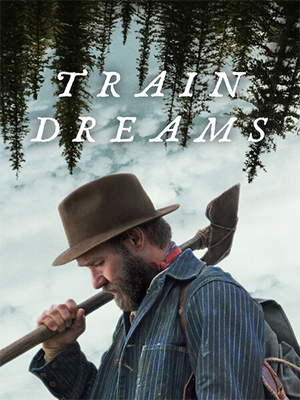
Clint Bentley’s Train Dreams is not a film that moves with the frantic pulse of modern cinema, but rather one that breathes with the slow, deliberate respiration of the Earth itself. Adapted from Denis Johnson’s 2011 novella, the movie serves as an ode to a lost American era, centering on the life of Robert Grainier, a man whose existence is defined by the very landscape he helped scar and settle. The production design at times feels a bit too “magic hour” and curated for a period known for its documented grit, but there is an undeniable, haunting power in its aesthetic. It presents the Idaho Panhandle not as it strictly was, but as it remains, in the haze of a long-lived memory: a cathedral of timber and ghosts.

This approach evokes the spirit of Robert Redford’s 1992 A River Runs Through It. Much like that film, which earned an Academy Award for best cinematography, Train Dreams uses the natural world as a primary character. However, where Redford’s Montana was a place of grace and familial bonding, Bentley’s Idaho and Oregon are landscapes of brutal isolation. The cinematography by Adolpho Veloso captures the vastness of the Pacific Northwest through a naturalist lens, making the human figures within it look almost fragile and temporary. The panoramas of the Columbia River Gorge and the dense, claustrophobic groves of the Panhandle create a visual tension between the beauty of the wilderness and the violence required to “tame” it for the railroad.

Joel Edgerton delivers a performance of profound quiet as Grainier, an itinerant laborer. We meet him in a rugged world of “misery whip” saws and horse-drawn sleds, where the physical cost of progress is measured in the broken bodies of men like Arn Peeples. Played with a sharp, philosophical wit by William H. Macy, Arn is the camp’s resident intellectual until a falling tree branch — a “widow-maker” — clocks him into a tragic mental decline. Watching Macy transition from a man who muses that “the dead tree is as important as the living one,” to a shell-shocked dimwit whose presence quickly vanishes from the camp, is a stark reminder that while the railroad was building a nation, it was simultaneously discarding the men who laid its tracks.

The film pivots on the Great Fire of 1910, a historical “palisade of flame” that remains one of the most destructive events in American history. In reality, the “Big Burn” consumed three million acres — an area the size of Connecticut — in a mere two days, killing 87 people and leaving behind a charred landscape. In the film, this fire consumes Grainier’s home and his family. Felicity Jones brings a luminous, fleeting warmth to the role of Gladys, Grainier’s wife. Their love is portrayed through brief, tender domesticities — planning where a bed might sit in a cabin not yet built — which makes the forest’s subsequent silence all the more deafening. When the fire roars through, sounding like a thousand freight trains, it robs Grainier of his wife and their young daughter, Kate. This loss turns the film into a psychological study of grief, where the scenery begins to mirror Grainier’s fractured mind.

Between these moments of tragedy are quiet men gathered around campfires, where the movie attempts to grapple with an environmental angle. Here, the laborers speak of the “murder” of the forest for the growth of the railroad and the nation. While these dialogues are beautifully written, they feel disconnected from the characters’ reality. It is difficult to believe that hardened laborers in the early 1900s, struggling for survival in a “pre-OSHA” world, would possess such modern, eco-conscious sensibilities. This choice feels like a contemporary perspective forced into a historical context. The men were surely aware of the destruction, but the way they philosophize about it feels more like the voice of a 21st-century screenwriter than a 20th-century logger.

The movie continues to challenge our imagination through its depictions of the mystical. In a haunting sequence, Grainier encounters wolf howls followed by a feral child, played with startling, animalistic intensity by Zoe Rose Short. In the film’s literal eye, she is a girl raised by the wild, but I interpreted this encounter as a profound hallucination born of long-term isolation. To me, Grainier was caring for an injured wolf, his mind so warped by sorrow that he projected the image of his lost daughter onto the beast. When he wakes to find the “girl” gone and the window open, it feels less like a child has run away and more like the wild has reclaimed a memory he was never meant to keep, a form of grieving that transcends words.

As the story progresses over its concise yet weighty 1 hour and 45 minutes, Grainier’s subtle aging mirrors the West’s modernization. It took me a beat to realize that the world had shifted until the horse was replaced by the automobile and the hand-saw by the introduction of the chainsaw. Grainier, now too old for the dangerous work, becomes a relic. The film relies heavily on Will Patton’s narration, whose gravelly, rhythmic cadence provides the necessary “clocks” for this journey. While I prefer a film to show its story visually rather than rely on a voiceover, Patton’s performance is the exception, his voice feeling as though it were pulled directly from the bark of the trees.

Subscribe HERE to the FREE Media Play News Daily Newsletter!
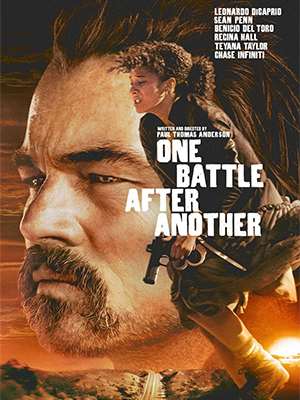
Train Dreams played in select “arthouse” cinemas in major U.S. cities (such as New York, L.A. and Chicago) and across regions of the Pacific Northwest (Spokane and Seattle), where it was filmed. Now it’s widely available on Netflix, where it has found a second life in streaming, reaching a global audience that can appreciate its slow-burn intensity from home.

In the final act, we encounter a Department of Forestry worker, Claire, who lives in a watchtower overlooking the expanse. She speaks of loss and how the forest returns from fire with surprising speed. It is a provocative thought: that nature is indifferent to human tragedy. This is punctuated by the closing image of Grainier finally riding a train, looking out the window at the land he once walked on foot. He is a passenger now, a man who lived to see his world finally fold into history. This is a moving, atmospheric work that honors the unremembered laborers of history. It reminds us that beneath every modern vista lies a palisade of flame and the quiet, haunted dreams of those who stood before it.


Jingle Bell Heist

STREAMING REVIEW:

Netflix;
Comedy;
Not rated.
Stars Olivia Holt, Conner Swindells, Lucy Punch, Peter Serafinowicz, Poppy Drayton.

Jingle Bell Heist is Netflix’s latest offering in the holiday rom-com genre, but with a welcome twist: it’s a Christmas caper. Directed by Michael Fimognari (of the “To All the Boys” trilogy), the film wisely grounds itself in the very real, very un-Hallmark-like city of London, which ends up being one of its biggest strengths. The movie stars Olivia Holt as Sophie, an American retail worker whose mother is British. Sophie moved her mother back to the U.K. specifically to access the public healthcare system for her cancer treatment, hoping it would be better than the U.S. system. However, the doctor informs her that the public system has a long waiting list for the treatment she needs, forcing Sophie to pay out of pocket and go private — putting her right back where she started. This financial crisis drives her entire character arc, lending the film its sharp social commentary on healthcare.

Sophie’s desperation brings her into contact with Nick (Connor Swindells), the film’s true hero and a desperate father. Nick is a jaded British ex-security consultant who not only lost his job but served time by pleading guilty to the crime the corrupt store owner, Maxwell Sterling (Peter Serafinowicz), framed him for. Now he’s either estranged or divorced from his wife, and she is threatening to move to Birmingham with their young daughter. Nick’s whole motivation for the heist is to secure cash for a two-bedroom apartment to stabilize his life, obtain visitation rights, and keep his daughter close in London. Swindells, who you might remember as Adam Groff from “Sex Education,” brings a nice, familiar British groundedness to the role. When Nick catches Sophie making petty thefts, he blackmails her into a larger scheme to rob the luxury Sterlings London Department Store, less for the cash and more for revenge.

The movie is certainly overstuffed, meaning it tries to cram too many disparate plots —like a heist, a romance, a social commentary and a family secret — into a single, short runtime.

While I found the film entertaining, it does suffer from the usual contrivances — though I would say this film is way less contrived than The Merry Little Ex-Mas. The production design, which relies heavily on interior sets and very little outdoor space, attempts to capture a posh London look, clearly styled after a Harrods-type department store to evoke that exclusive Knightsbridge neighborhood feel. While the exterior locations were actually shot in South London neighborhoods like Brixton, I personally didn’t notice the difference. And honestly, for most U.S. audiences, that distinction won’t even register, allowing the atmosphere to work despite the slightly artificial look.

Furthermore, the movie tells us that Sophie works at the department store and as a bartender at night, but that exhausting reality is barely developed. This constant rushing contributes to continuity errors such as having Sophie perform an activity the day before that didn’t make any sense in the timeline. It’s a minor thing, but it interrupts the flow when the movie is rushing through its plot points.

Despite its faults — including the fact that while the romance itself is fairly believable given the shared, desperate circumstances, the on-screen chemistry between the leads is just okay — Jingle Bell Heist is a streaming success, having topped the Netflix charts globally. The key to its watchability is simple: discipline. The film’s success is also due to good acting, visual appeal and a fairly decent story with some teeth, but its primary flaw is apparent: Strong ideas are sacrificed for execution and development to squeeze all its genres and twists into that tight 1 hour and 36 minutes. The runtime (including the running footage in the credits) is a perfectly bite-sized seasonal treat. Had it been any longer, those thin plot points and the lack of truly sizzling chemistry would have become fatal flaws. It is a worthwhile, family-friendly view if you are looking for background cheer and a low-stakes escape. But let’s be clear: This film will not be a Christmas classic by any stretch. It’s a pleasant, disposable distraction for a cozy night when you can’t find anything better to watch this holiday season.

Subscribe HERE to the FREE Media Play News Daily Newsletter!
A Merry Little Ex-Mas

STREAMING REVIEW:

Netflix;
Comedy;
Not rated;
Stars Alicia Silverstone, Oliver Hudson, Jameela Jamil, Melissa Joan Hart, Pierson Fode.

A good Christmas movie, whether it be the pure, childlike joy of Elf or the frantic, heartfelt family chaos of National Lampoon’s Christmas Vacation, should feel like a warm, spontaneous embrace. A Merry Little Ex-Mas, however, is not a charmingly bad holiday film but “a field guide for content created by committee,” where every element, from the script to the set design, fumbles like a cynical function rather than genuine entertainment.

It is worth noting that, amid the film’s structural shortcomings, the producing team did manage one clever beat: the title itself. While still cliché, A Merry Little Ex-Mas is a neat, instantly recognizable twist on the standard holiday phrase, perfectly packaging the film’s core theme of post-divorce conflict with a touch of seasonal wit.

However, the film quickly succumbs to a level of calculated contrivance that is arguably worse than its annual peers. While a standard saccharine Hallmark Christmas film commits to its earnest, simple fantasy, A Merry Little Ex-Mas attempts to be a savvy critique of the rom-com genre, only to fall flat on both counts. It introduces a modern dynamic — the pain of a midlife divorce — but then immediately degrades its own premise, leaning on painfully dated jokes, such as the repeated, unfunny reference to the separation as a “conscious uncoupling.” The film is so laden with predictable elements that, were there more clichés, this could easily be a textbook on cinematic clichés.

The entire production lacks authenticity, justifying the feeling that the production design itself is contrived. Much of the running time is spent around meticulously set dinner tables or in scenes of picturesque activities in the snow. These moments exist purely to maximize the film’s holiday aesthetic. Even the attempts at low-stakes humor fall flat, such as a bizarre sequence involving a drone being run over, which fails utterly as a relatable laugh for anyone. The charming, absurdly named small town of “Winterlight” feels less like a real place and more like an elaborate, synthetic movie set, reinforcing the impression that we are watching a film built solely to fill a slot on a holiday streaming slate.

Alicia Silverstone’s performance as Kate deserves a better vehicle. Kate’s story, sacrificing a career as an architect in Boston to become a “trad wife” in a small town for her workaholic doctor-husband, is the core of the film’s sentiment. This potentially interesting conflict, however, is undermined by reducing her character to a checklist of modern trends: She is into everything cliché about living healthily and being environmentally PC. The script and casting commit a cynical disservice by structuring the romance around her performing a “cutesy” repertoire of mannerisms. This dynamic, exacerbated by a jarringly younger love interest, feels utterly unearned and highlights the industry’s ongoing struggle to write authentic romantic tension for middle-aged women. Watching a star of Silverstone’s nostalgic status lend her talent to such aggressively disposable content borders on embarrassment, suggesting her handlers should have known better.

The ensemble cast only compounds the problem. The children exist to necessitate the family reunion, and the daughter’s complexity is reduced to her attending Oxford and having a “Harry Potter”-obsessed British boyfriend. Even more egregious are the ex-husband’s parents, the gay fathers, who are so contrived that they are challenging to watch, with one being Black solely to tick a diversity box. The appearance of Melissa Joan Hart as Kate’s best friend, April, adds further weight to this cynicism; given her role as a producer, her limited, undeveloped screen time feels like a blatant casting checkbox for a recognizable name rather than a necessary narrative addition. The core dramatic conflict with the ex-husband, Everett, and his younger, successful, model-like, multicultural girlfriend is agonizingly predictable, resolved with the emotional depth of a flowchart.

The entire endeavor attempts to satisfy everyone — the ’90s nostalgia crowd, the comfort viewers, and those seeking a slightly subversive relationship story — by ticking every item on a market research checklist. It is “a calculated piece of content” that never risks genuine emotion or a real laugh. Though Netflix does not release its numbers, my professional estimate is that the final working budget falls between $5 million and $7 million USD before Canadian tax credits. One can only wish that Netflix had discounted monthly subscriptions by lottery, or sent random subscribers some holiday funny money, rather than greenlighting this utterly humorless, instantly forgettable Christmas movie.

Subscribe HERE to the FREE Media Play News Daily Newsletter!

From Around the Web